Male horned larks perform one of the more theatrical courtship displays among North American songbirds: climbing nearly 800 feet into the air, circling while singing, then folding their wings and diving straight down before pulling up just above the ground. This species, Eremophila alpestris, is a lark in the family Alaudidae found across much of the Northern Hemisphere, known as the horned lark in North America for the small black feather tufts on the heads of summer males, and as the shore lark in Europe, where it favors coastal flats in winter. It carries an IUCN status of Least Concern.
Despite its unassuming brown plumage, the horned lark's striking facial pattern and its reliance on some of the world's starkest open landscapes, from Arctic tundra to desert flats, make it a distinctive presence wherever bare ground meets sky.
Identification and Appearance
The most useful field mark is the bold black and yellow face pattern set against brown-grey upperparts and pale underparts, a combination unlike that of most other larks. The bird measures 16 to 20 centimeters in length, weighs between 28 and 48 grams, and has a wingspan of 30 to 34 centimeters. Its tail is mostly black except for the central feathers, creating a strong contrast with the paler body that becomes especially obvious in flight.
In summer, males grow small black "horns," two tufts of feathers on the head that give the species its American name. Numerous North American races differ in face pattern and back color, particularly among summer males. The southern European mountain race E. a. penicillata is greyer above and replaces the yellow facial markings with white.
On the ground, horned larks are unmistakable among open-country birds thanks to this facial contrast, while their high-pitched, lisping, tinkling calls and ascending warbling flight song offer an additional way to confirm identification even when the bird is hard to see.
Distribution and Habitat
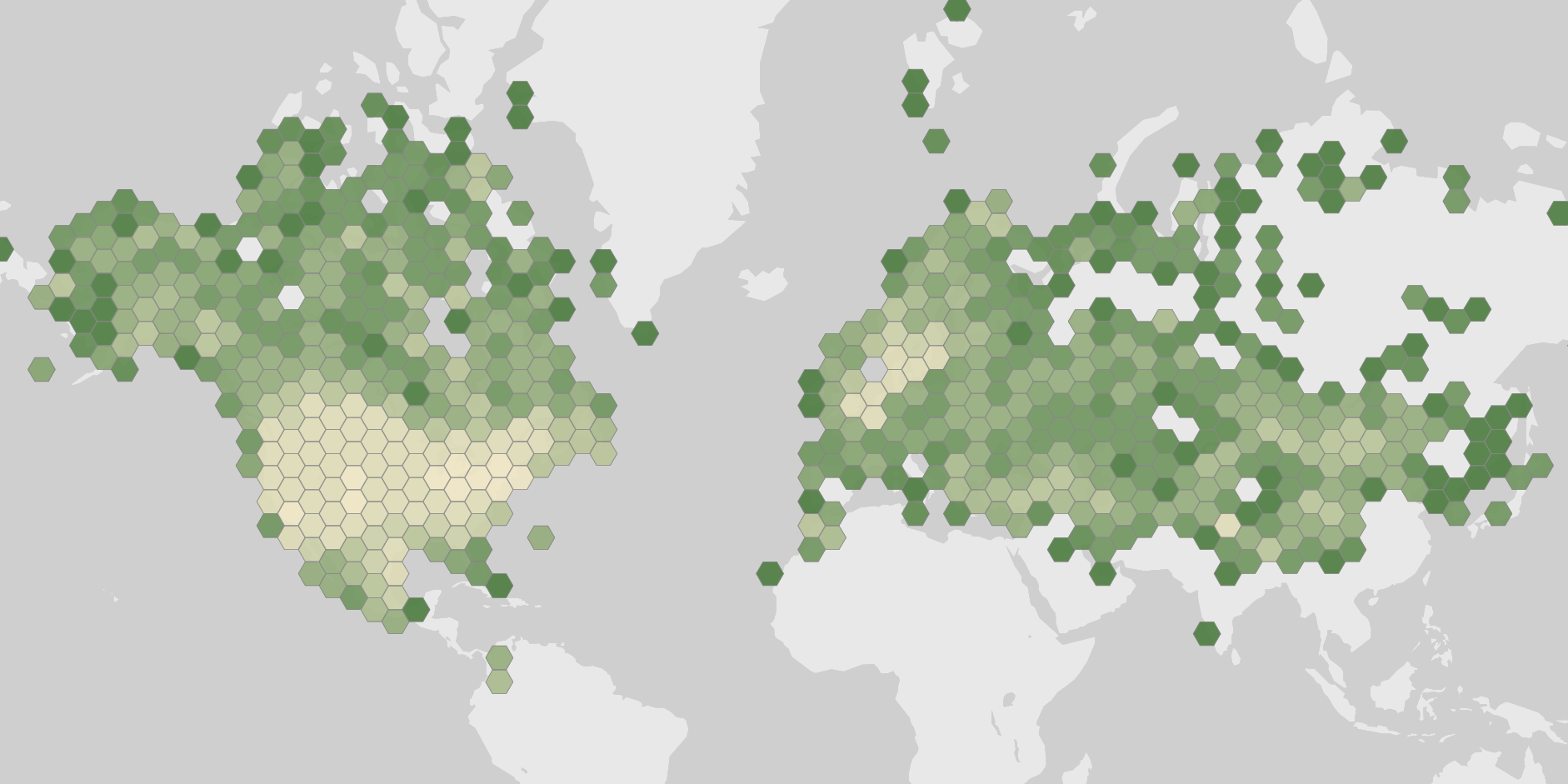
The Horned Lark occupies one of the widest ranges of any lark species, breeding from the high Arctic south to the Isthmus of Tehuantepec in Mexico, across northernmost Europe and Asia, and in the mountains of southeast Europe. An isolated population also persists on a plateau in Colombia. Its range covers roughly 35,100,000 square kilometers.
This is a bird of open, treeless ground. In Eurasia it breeds above the tree line in mountains and the far north, while in winter it is most often seen on European seashore flats, which is the origin of its name in that region. In the UK it turns up mainly as a winter visitor along the coast and in eastern England.
In North America, where it faces no competition from other larks, the Horned Lark ranges much more widely, using farmland, prairies, deserts, golf courses, and airports in addition to natural tundra and grassland. It favors large open spaces free of trees and other obstacles, and it forages and nests almost entirely on bare or sparsely vegetated ground.
Most populations in the south of the range are resident year-round, while northern populations are migratory, moving south for the winter months.
Behavior and Lifestyle
Horned Larks show a mix of social and solitary tendencies, with flocking most pronounced in populations living near ocean shores. Many northern populations are migratory, flying south for the winter, while some populations remain sedentary throughout the year.
One of the species' most distinctive behaviors is the male's "song flight," used both to attract mates and to defend territory. Rather than hopping, Horned Larks forage on the ground by walking or running, and they sing both from the ground and while airborne at various elevations.
Males are territorial during the breeding season, patrolling and defending their claimed ground through song and display flight rather than direct confrontation.
Communication
The Horned Lark's song is irregular and high-pitched, a tinkling, rapid warble often rendered as "tsip, tsip, tsee, didididi." This vocalization serves multiple roles: defending territory against rival males, attracting a mate, and general contact with other birds in the flock.
Communication relies primarily on acoustic signals, though the species also perceives its environment through visual, tactile, and chemical cues.
Recordings
flight call · France · Sonothèque ADVL · Public domain
Diet and Nutrition
Horned Larks are omnivores that forage entirely on foot, walking across open ground rather than scanning for food in flight. Outside the nesting season they typically search for food alongside others from their flock rather than alone.
Animal prey includes a range of insects and other arthropods such as spiders, ants, grasshoppers, and wasps, along with snails. Plant material makes up the rest of the diet, including seeds, fruits, and berries.
Recorded feeding records reflect this mixed diet, spanning both general animal and plant categories, with some records naming specific plants such as buckwheat and knotweed, and specific arthropod groups like grasshoppers and aphids.
Nesting and Breeding
Courtship centers on the male's dramatic song flight: he rises up to eight hundred feet above the ground, circles while singing, then dives toward the ground with wings closed, opening them just before landing to soften his touch down. Horned Larks are monogamous, and males defend their territories from rival males during the breeding season while females occasionally chase off intruding females.
The female alone selects the nest site in early spring, spending two to four days preparing a natural depression or a cavity she digs herself with her bill and feet. She weaves a nest of fine grasses, plant stems, and roots, lining it with down, fur, or feathers, and often adds a "doorstep" of small pebbles or debris along one edge, possibly to conceal the excavated dirt.
A clutch typically contains three to four glossy eggs, gray to greenish-white with light brown spots. Incubation lasts ten to fourteen days, and chicks fledge nine to twelve days after hatching, leaving the nest before they can fly and continuing to be fed by both parents for some time afterward. In warmer climates successful pairs can raise two or three broods per year, while in northern areas a single brood is more typical. Nest structure and placement can vary with local microclimate, weather, and predation pressure, reflecting flexibility in nesting behavior.
Population and Ecological Role
Horned Larks play a role in their ecosystems both as consumers, shaping populations of the insects and plants they feed on, and as hosts to parasitic cowbirds. When cowbirds lay eggs in Horned Lark nests, the much larger cowbird chicks outcompete the lark's own young for food brought by the parents, reducing the survival of the host's chicks.
The species is also preyed upon by a range of predators across its range, including wild cats, raptors such as the rough-legged buzzard and harriers, corvids like the raven and carrion crow, and mammals such as jackals, wolves, and genets.
Conservation and Threats
The Horned Lark is currently assessed as Least Concern on the IUCN Red List, and it is not listed under the US Endangered Species Act or CITES. It is, however, protected in the United States under the Migratory Bird Treaty Act.
Despite its broad range and stable overall status, the species faces a genuine population decline. The North American Breeding Bird Survey has recorded downward trends, and the 2016 Partners in Flight Landbird Conservation Plan classified it as a "Common Bird in Steep Decline." Contributing pressures include loss of open habitat to agricultural pesticide use, reforestation of the disturbed or open sites the birds prefer, urbanization, human encroachment, and collisions at wind farms and airports.
Human activity has a mixed effect on the species: the clearing of land for agriculture and grazing can create new open habitat that Horned Larks favor, but the same development also erases native grassland and prairie. In 2013 the U.S. Fish and Wildlife Service listed the streaked horned lark subspecies as threatened under the Endangered Species Act, reflecting more severe regional pressure than the species faces overall.
Cultural Significance
Horned Larks have held symbolic meaning in Indigenous North American cultures. In Lakota tradition, the lark's association with Okaga, guardian of the South Wind and the direction of the sun, made the bird a symbol of warmth and liveliness. The Sioux regard larks with reverence as an emblem of friendship and devotion, while the Blackfoot see them as harbingers of peace and harmony.
Beyond symbolism, the species provides a practical benefit to people: as an insectivore it helps control populations of insect pests.
Fun Facts
- The male's courtship display can carry him up to eight hundred feet into the air, where he circles while singing before diving straight down with his wings folded.
- Rather than hopping like many small birds, Horned Larks walk or run along the ground when foraging.
- The species is shared across Lakota, Sioux, and Blackfoot traditions as a symbol tied to warmth, friendship, and peace.
- The longest recorded lifespan for this species is eight years.
Photos
Photographs from via iNaturalist, licensed under CC0 1.0., by Charlie Pavlisich via iNaturalist, licensed under CC BY 4.0., by Dan Riley via iNaturalist, licensed under CC BY 4.0., by Derek Duplessis via iNaturalist, licensed under CC BY 4.0., by Анна Васильченко via iNaturalist, licensed under CC BY 4.0., by Lauren Markewicz via iNaturalist, licensed under CC BY 4.0., by louisiv826 via iNaturalist, licensed under CC BY 4.0., by Martin Tremblay via iNaturalist, licensed under CC BY 4.0., by Kalvin Chan via iNaturalist, licensed under CC BY 4.0., and by Ryan van Huyssteen via iNaturalist, licensed under CC BY 4.0., credited on each photo.
Ecology and classification
Classification
- Phylum
- Chordata
- Class
- Aves
- Order
- Passeriformes
- Family
- Alaudidae
- Genus
- Eremophila
- Species
- Eremophila alpestris
Sources
- GBIF Species names and classification
- iNaturalist Photos
- Wikidata Common names and conservation status
- Wikipedia Summary extract
- Xeno-canto Audio recordings
- Animal Diversity Web Animal habitat, behavior and diet
- AnAge Longevity
- AVONET Bird mass, habitat, migration, diet and range size
- GloBI What it eats, what eats it, parasites and pollinators
- trophiCH
- HWML Parasite Collection
- TETRA-EU