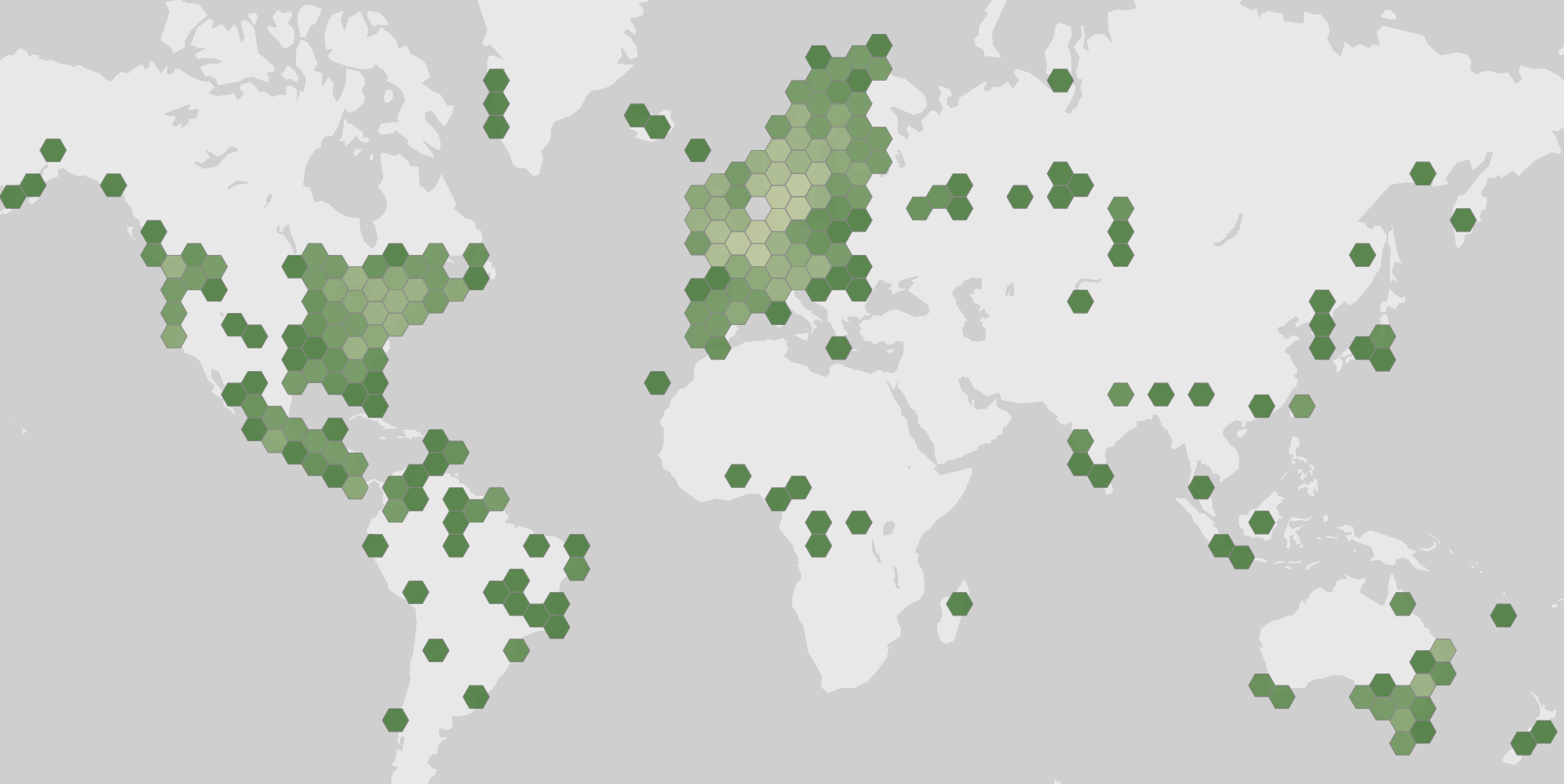
The vermilion waxcap is a small mushroom with a bright red or red-orange cap, and it is found in many parts of the world. Hygrocybe miniata is a cosmopolitan species of the waxcap genus Hygrocybe in the family Hygrophoraceae.
In Europe, it grows in fields, on sandy heaths and in grassy clearings, typically in autumn. In Australia, it is found in rainforest and eucalypt forest as well as heathland.
Its bright color and wide range make it a striking find for anyone who looks closely at grassland and forest floors. Identifying it, however, is not always simple, because it belongs to a group of similar Hygrocybe species.
Fruiting Body and Identification
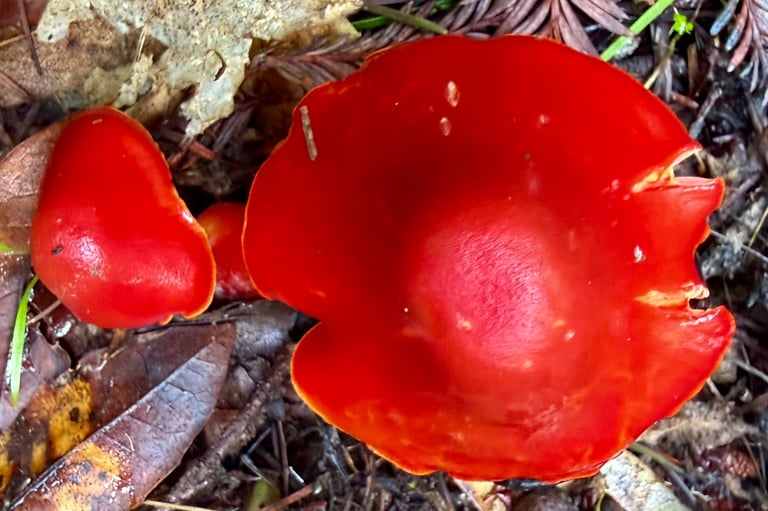
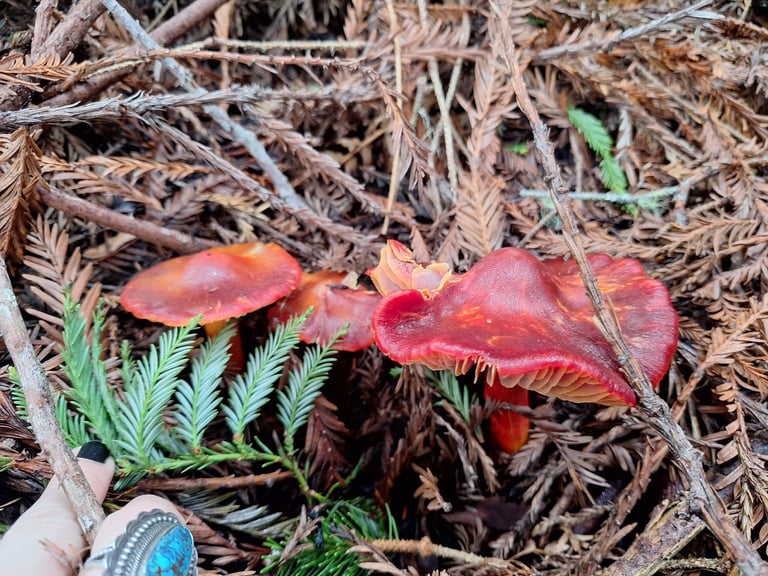
The cap is the most useful feature for identifying this mushroom. It is red-to-yellow and convex when young, then flattens and becomes depressed with a wavy edge. The cap is scarlet-orange with a yellow striate margin and measures 0.5 to 3.5 cm across.
On mature specimens, the center of the cap is noticeably scurfy, or scaly. Small scales can be seen with a magnifying glass, and the cap is hygrophanous, so its color changes with moisture. The scaly center shows most clearly on dry specimens that have not been rained on.
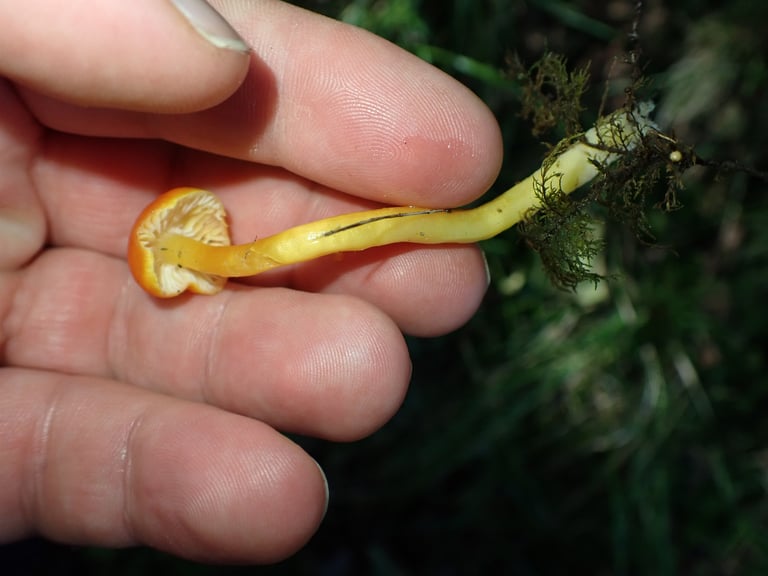
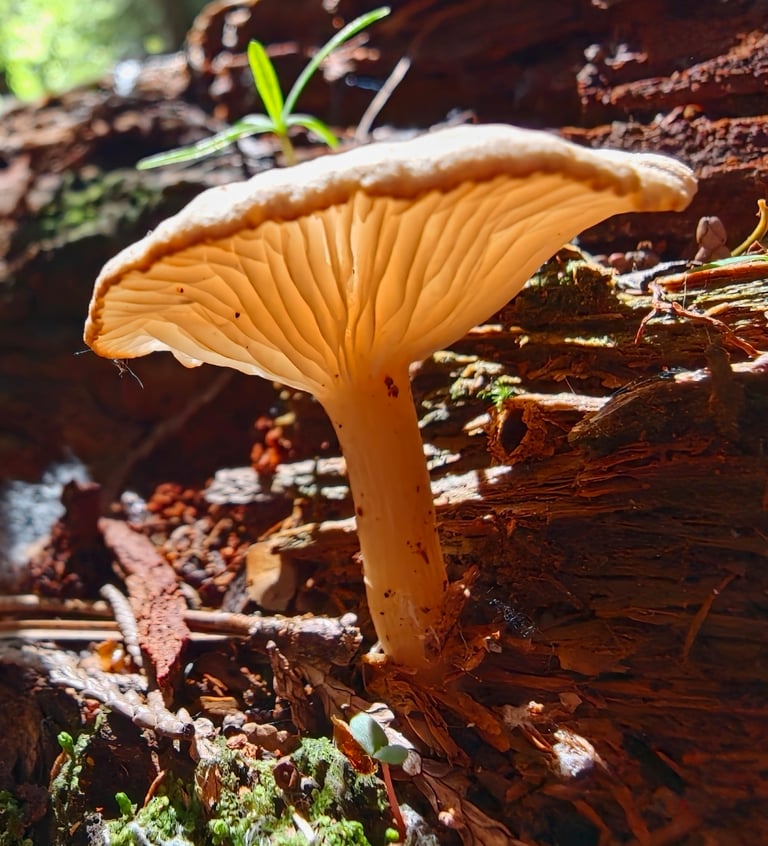
The stem is bare and often long, reaching up to three times the cap diameter. It tapers toward the base and may flatten. The stem is the same color as the cap or slightly paler, with a white base. The gills are orange, adnate or slightly decurrent, widely spaced and somewhat notched. The flesh is orange and has no distinct odor. The spore print is white, and the ellipsoid spores measure 7 to 9 by 4 to 5 μm.
Several look-alikes make identification difficult. Hygrocybe helobi is very similar but appears earlier in the season, prefers less acidic soils, and smells of garlic. Hygrocybe mollis, H. moseri and H. strangulata are also very similar, and some may be synonyms.
Distribution and Habitat
Hygrocybe miniata is found across most temperate zones. It has been collected in Britain, Europe and eastern North America, as well as in the Southern Hemisphere, including eastern and southern Australia. In Australia, it occurs in Queensland, New South Wales, Victoria and Tasmania.
In Britain, it prefers sandy heaths, grassy clearings and unimproved fields. It often grows alongside mouse-ear hawkweed (Hieracium pilosella). It appears in autumn, particularly during periods without frost.
In Australia, it grows in temperate to subtropical rainforest, eucalypt forest and heathland. Its fruiting bodies may appear in groups among the leaf litter from January to June.
Across its range, the mushroom's activity peaks in October, based on the monthly pattern of observations. Observations are records of presence, so they do not show how common the species is.
Photos
Photographs from via iNaturalist, licensed under CC0 1.0., by Michel Langeveld via iNaturalist, licensed under CC BY 4.0., by Wang.QG via iNaturalist, licensed under CC BY 4.0., by Rajan Rao via iNaturalist, licensed under CC BY 4.0., and by scaup via iNaturalist, licensed under CC BY 4.0., credited on each photo.
Ecology and classification
Classification
- Phylum
- Basidiomycota
- Class
- Agaricomycetes
- Order
- Agaricales
- Family
- Hygrophoraceae
- Genus
- Hygrocybe
- Species
- Hygrocybe miniata
Sources
- GBIF Species names and classification
- iNaturalist Photos
- Wikidata Common names and conservation status
- Wikipedia Summary extract