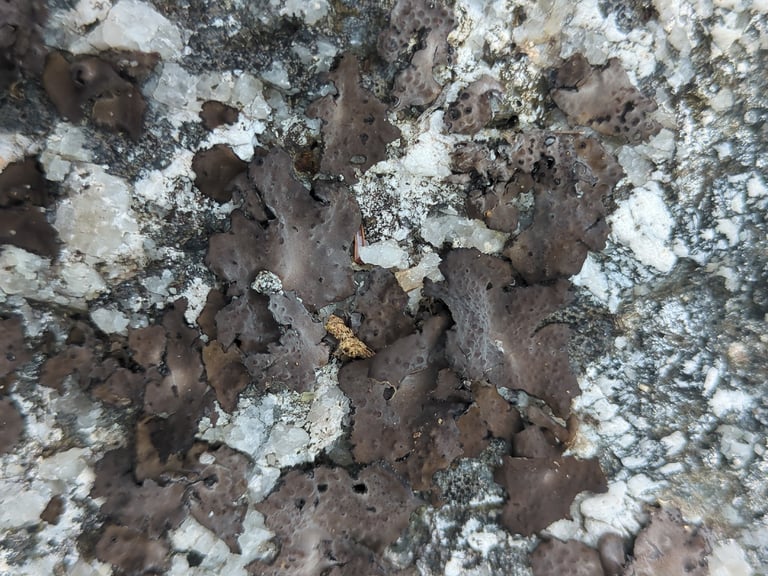
The shaggy fringe lichen gets its name from the irregularly branching, linear lobes that fringe its flat, appressed thallus across tree bark.
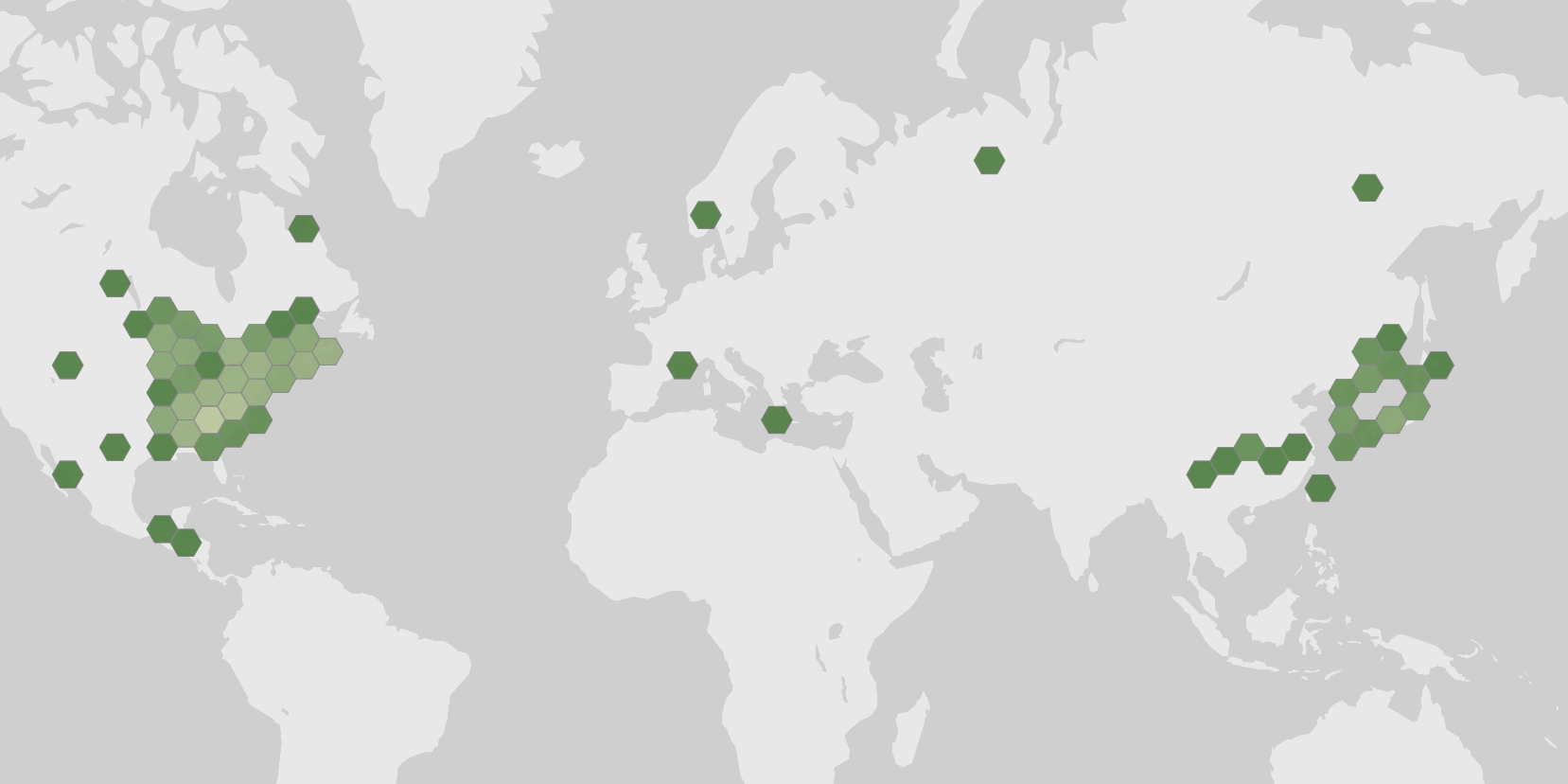
Kurokawia palmulata is a foliose lichen in the family Physciaceae, part of the class Lecanoromycetes within the phylum Ascomycota. It is corticolous, meaning it grows on bark, and is found across eastern North America and eastern Asia.
Its distinctive chemistry and lobe structure make it a useful species for lichenologists studying bark-dwelling communities in deciduous forests.
Fruiting Body and Identification
The most reliable identifying feature of Kurokawia palmulata is its foliose thallus, appressed to the substrate and reaching up to 9–10 cm (3.5–4 inches) in diameter. Coloration ranges from brownish-grey to tan-brown, with lobes that are elongated and linear, branching irregularly while remaining mostly flat at their tips.
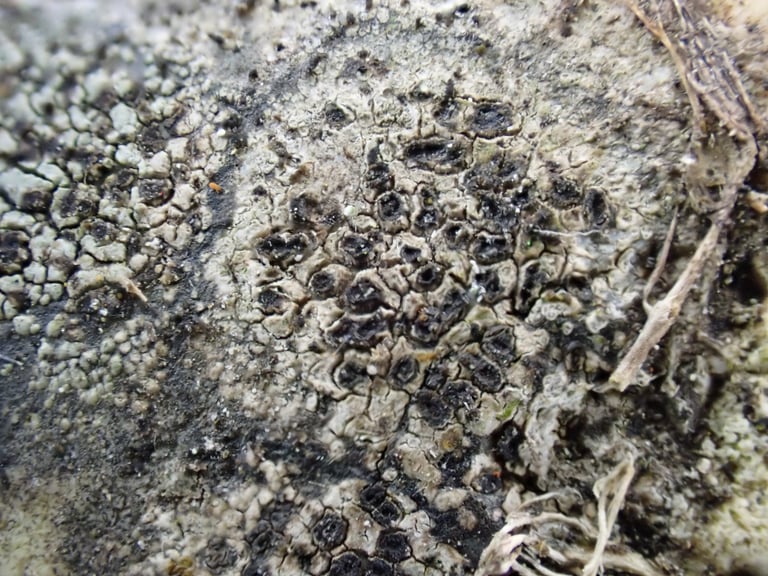
Unlike many related lichens, this species lacks soredia or isidia, though it frequently develops lateral secondary lobules. The lower surface begins white or off-white and darkens over time to a tawny or light brown shade, with a superimposed layer of hyphae that notably lacks rhizines. Apothecia are commonly present, laminal in position and reaching up to 4 mm in diameter.
Chemical spot tests are key to confirming identification: the upper surface typically gives a K+ (yellow) reaction, and variolaric acid has been detected in specimens, though the strength of these reactions can vary.
Distribution and Habitat
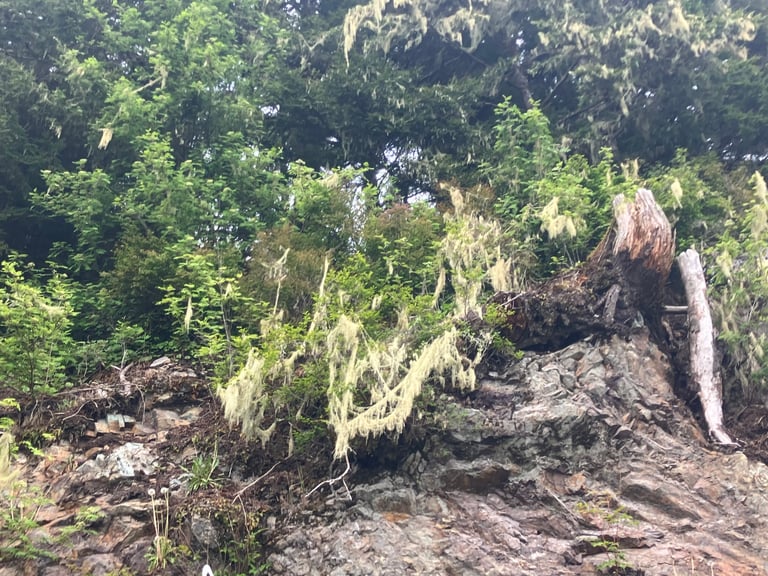
Kurokawia palmulata is endemic to eastern North America and eastern Asia, with a strong preference for the bark of hardwood trees, though it can also grow on rock surfaces, either bare or over mosses. It is particularly common in the eastern deciduous forest region.
Its North American range extends north into southern Ontario and into the coniferous old-growth forests of southwestern Nova Scotia. A notable range extension came with its first report from Ohio, marking new territory for the species in western North America.
An interesting geographic pattern has been noted in the squarroseness of its rhizines: southern specimens tend to have less squarrose rhizines than those found farther north.
Observation data collected throughout the year show presence across all months, with more records in the warmer months, though this reflects reporting activity and detectability rather than a change in actual abundance.
Uses and Cultural History
Beyond its biology, Kurokawia palmulata has found a place in cultural storytelling by association: it is sometimes referenced alongside discussions of Filipino folklore figures such as the Kapre, a creature said to dwell in large trees, though this connection lies purely in the realm of imagination and storytelling rather than any documented traditional use of the lichen itself.
Fun Facts
- The species was originally described under the name Anaptychia palmulata and has also been classified as Lecanora palmulata before being placed in the genus Kurokawia.
- Its current taxonomic authority citation credits Michaux along with Kondratyuk, Lőkös, and Hur.
- It is catalogued in major taxonomic databases including Index Fungorum and the Catalogue of Life.
Ecology and classification
Habitat
Classification
- Phylum
- Ascomycota
- Class
- Lecanoromycetes
- Order
- Caliciales
- Family
- Physciaceae
- Genus
- Kurokawia
- Species
- Kurokawia palmulata