Leccinum aurantiacum is instantly recognizable for its large, vividly orange-red cap sitting atop a tall, scaly white stem, making it one of the more eye-catching boletes found in temperate forests.
It belongs to the genus Leccinum within the family Boletaceae, part of the order Boletales in the phylum Basidiomycota. In North America it is sometimes called the red-capped scaber stalk, though its taxonomic identity there remains debated.
Beyond its striking looks, the species carries a long history of folk association with the turning of the seasons, and its close resemblance to several related boletes makes it a genuinely interesting case study in mushroom identification.
Fruiting Body and Identification
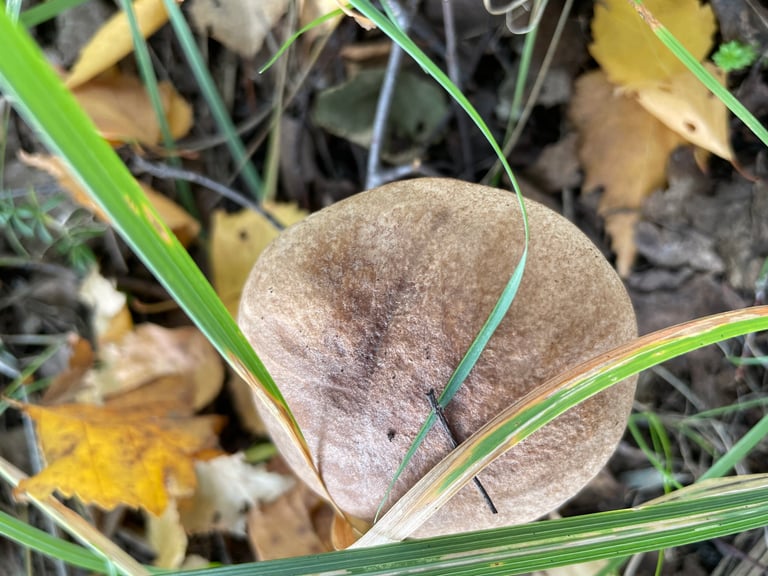
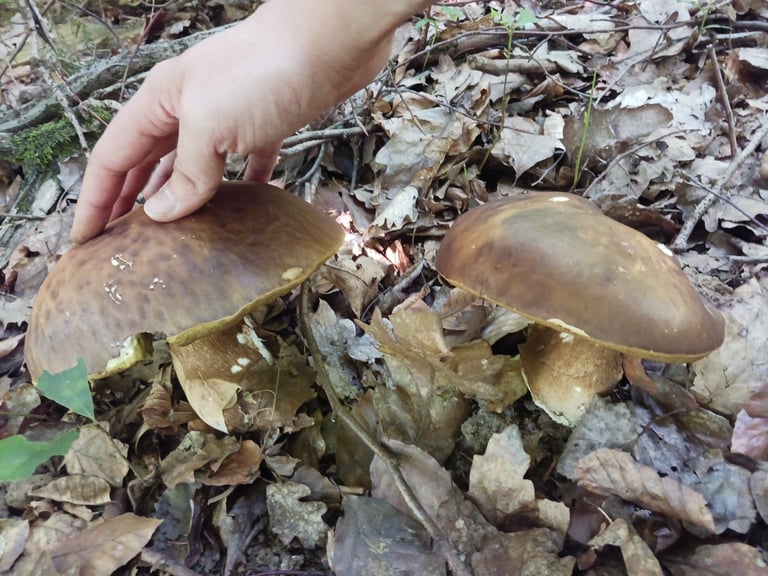
The most reliable identifying feature is the combination of an orange-red cap, 5 to 15 centimeters across, paired with a stout, scaly stem 8 to 16 centimeters tall and 2 to 3 centimeters thick. The stem is whitish and covered in short, rigid projections called scabers, which darken from brown to black as the mushroom ages.
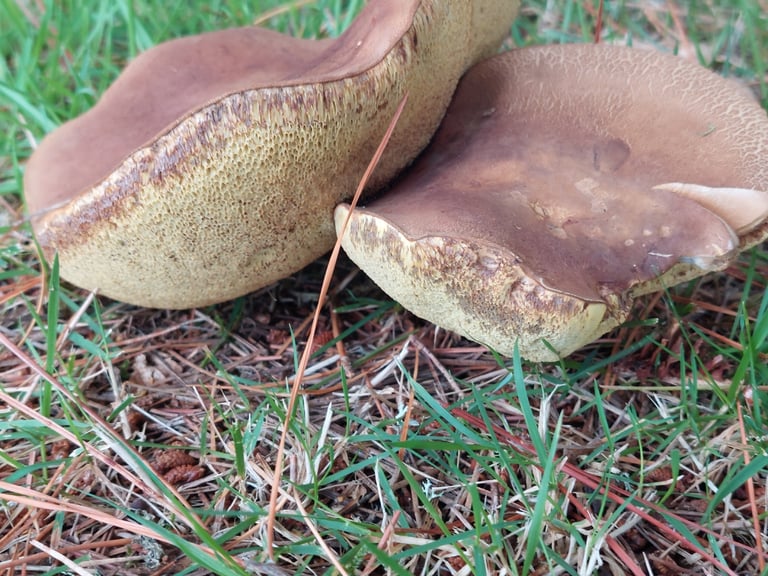
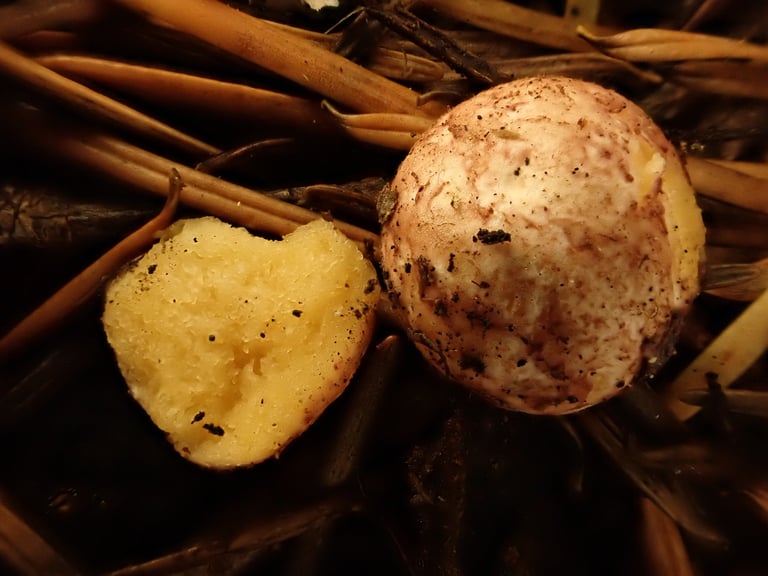
The flesh is white when cut but reacts quickly to air, first bruising burgundy before settling into a grayish or purple-black tone. On the underside of the cap, the pore surface is made up of very small, whitish pores that bruise olive-brown with handling or age. The stem itself can develop a blue-green bruise in places.
Across Europe, several other orange-red-capped Leccinum species can be confused with this one, distinguished mainly by their host trees. L. albostipitatum grows with aspen and has white scales on its stipe, while L. vulpinum favors coniferous forests with pine and spruce; not every mycologist treats these as separate species from L. aurantiacum. In North America, L. insigne associates with aspen or birch and L. atrostipitatum with birch, and both are considered edible, alongside the similar L. versipelle.
Distribution and Habitat
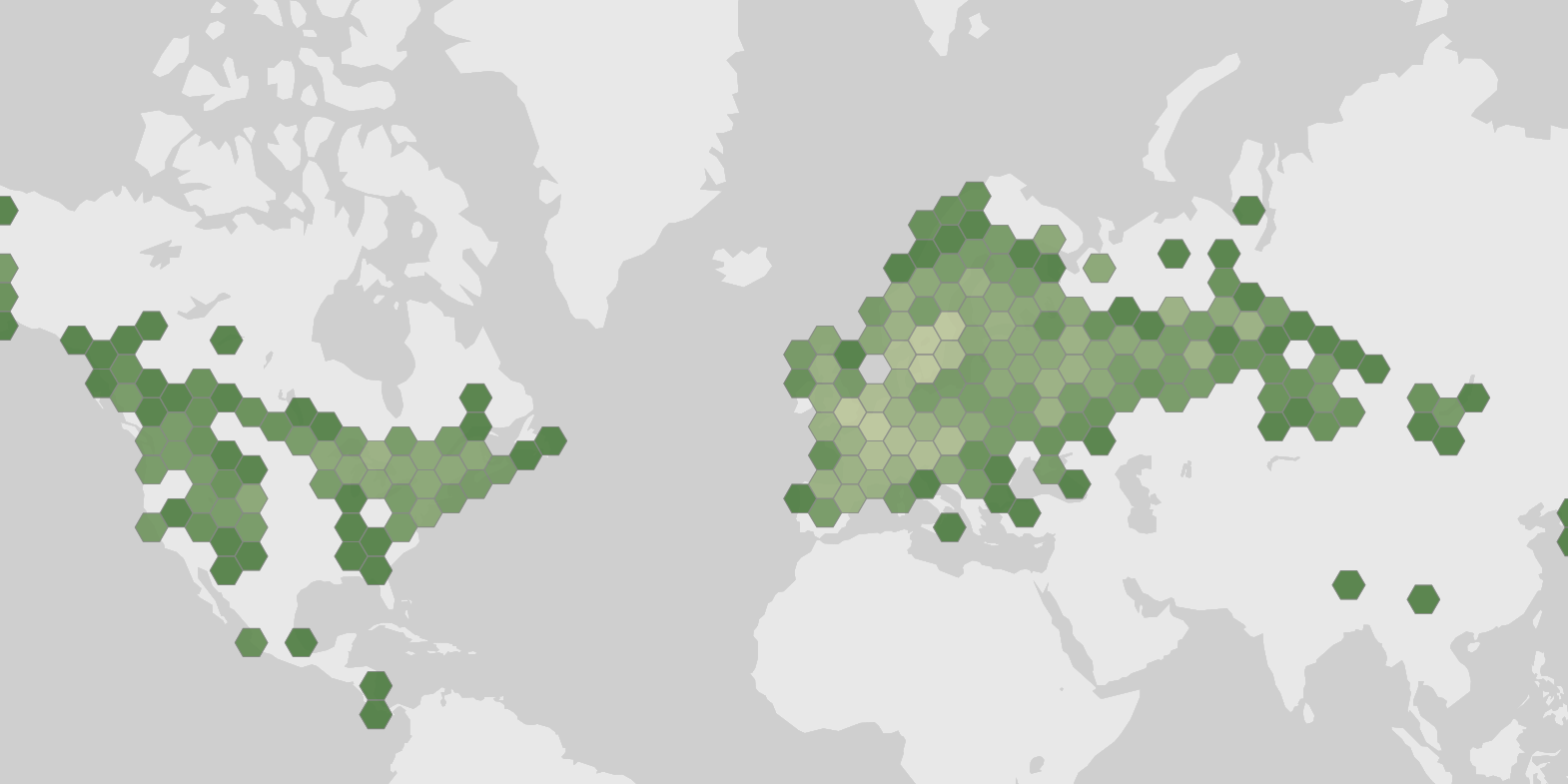
Leccinum aurantiacum fruits in forests across Europe and North America during summer and autumn, forming a mycorrhizal partnership with its host trees rather than growing independently. In Europe it has traditionally been linked to poplar, and it is also found among oak, beech, birch, chestnut, willow, and trees in the genus Tilia. Notably, it is not known to associate with conifers in Europe.
GBIF presence records show observations rising sharply through summer and peaking in September, with high counts also in August and October, consistent with its stated summer-to-autumn fruiting season. These figures reflect only where the species has been observed, not its abundance or full range.
The picture in North America is far less settled. Populations there have been recorded in both coniferous and deciduous forests, but it is uncertain whether coniferous-forest collections are actually L. aurantiacum or the similar L. vulpinum. Deciduous-forest specimens have often been reassigned to other North American species such as L. insigne and L. brunneum.
Uses and Cultural History
The appearance of Leccinum aurantiacum has long been treated as a seasonal marker in folk tradition, with its arrival heralded as symbolic of the end of summer. This connection ties the mushroom to the broader rhythm of the agricultural and natural calendar in the regions where it grows.
In Slavic mythology, mushrooms appearing beneath birch trees, including species like this one, are linked to fertility and rebirth deities, an association rooted in their dependence on moisture and their emergence from the forest floor at a particular time of year.
Fun Facts
- Leccinum aurantiacum is considered a favorite species for eating and is prepared in the same ways as other edible boletes.
- Its flesh turns very dark when cooked, a dramatic change from its white raw color.
- Like most members of the Boletaceae, it is commonly targeted by maggots.
- Its tendency to bruise dark or bluish is sometimes mistaken as a sign of toxicity, but numerous edible mushrooms, including Imleria badia and Leccinum aurantiacum, share this harmless reaction.
- A number of poisonings linked to Leccinum mushrooms have been traced to the difficulty of correctly identifying species within the genus.
Ecology
Habitat
- Forest
- Woodland