Cut into this mushroom and the pale flesh turns dark blue almost before your eyes, one of the fastest and most dramatic bruising reactions among the boletes. Commonly known as the scarletina bolete, red foot bolete, or dotted stem bolete, it belongs to the Boletaceae family within the order Boletales, a group of fungi best known for producing mushrooms with pores instead of gills beneath the cap.
Found across woodlands in Europe and North America, this bolete is worth knowing both for its striking color-changing flesh and for the identification care it demands, since several similar-looking boletes share its habit of bruising blue.
Fruiting Body and Identification
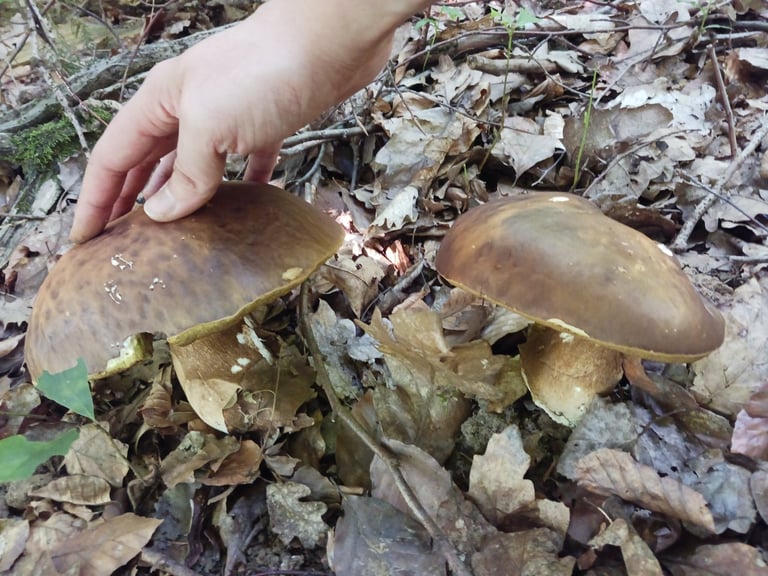
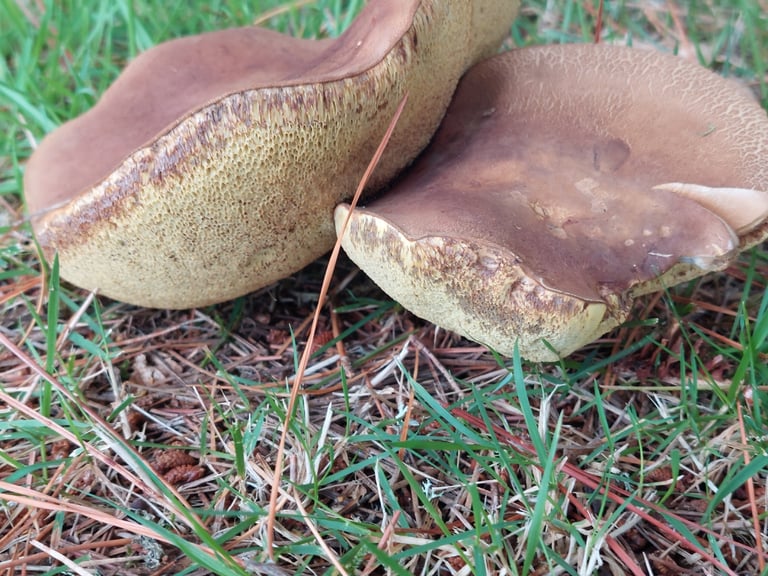
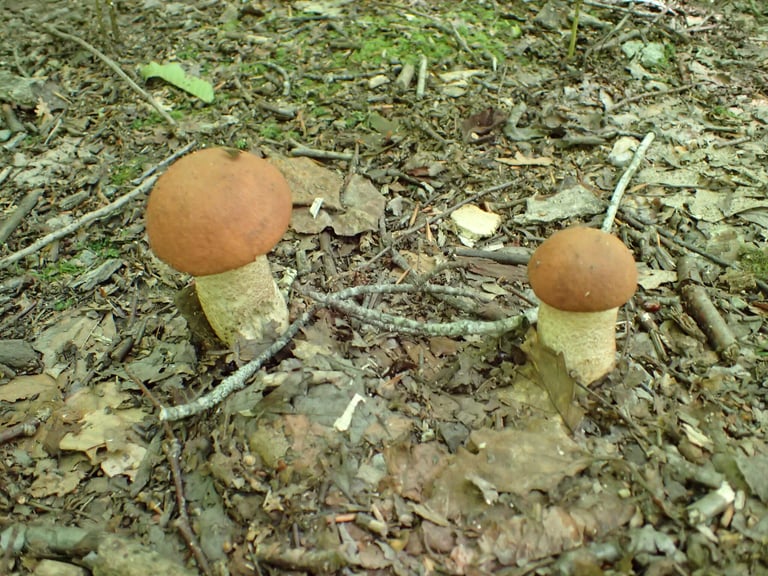
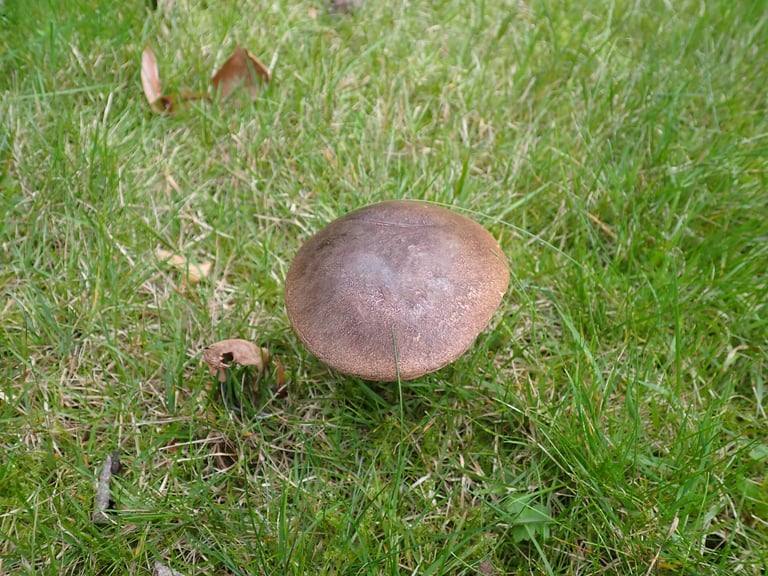
The most reliable way to recognize this species is by combining three features at once: a velvety bay-brown cap, red-orange pores that were yellow when young, and a stout yellow stem densely covered in red dots without any raised network pattern. The cap is hemispherical to convex and can reach up to 20 centimeters across, starting velvety in texture. Beneath it, small pores run yellow in youth before turning rusty red-orange with age, and bruise blue to black at the slightest touch. The tubes underneath are yellowish-green but turn blue almost immediately when cut.
The stem itself is thick, colorful, and measures 4 to 15 centimeters long, its surface stippled with fine red dots but never marked by the netted ridges (reticulation) seen in some relatives. The flesh throughout the mushroom stains a deep, dark blue wherever it is bruised, broken, or sliced, though it carries little distinctive smell. Its spore print is olive-brown.
Distribution and Habitat
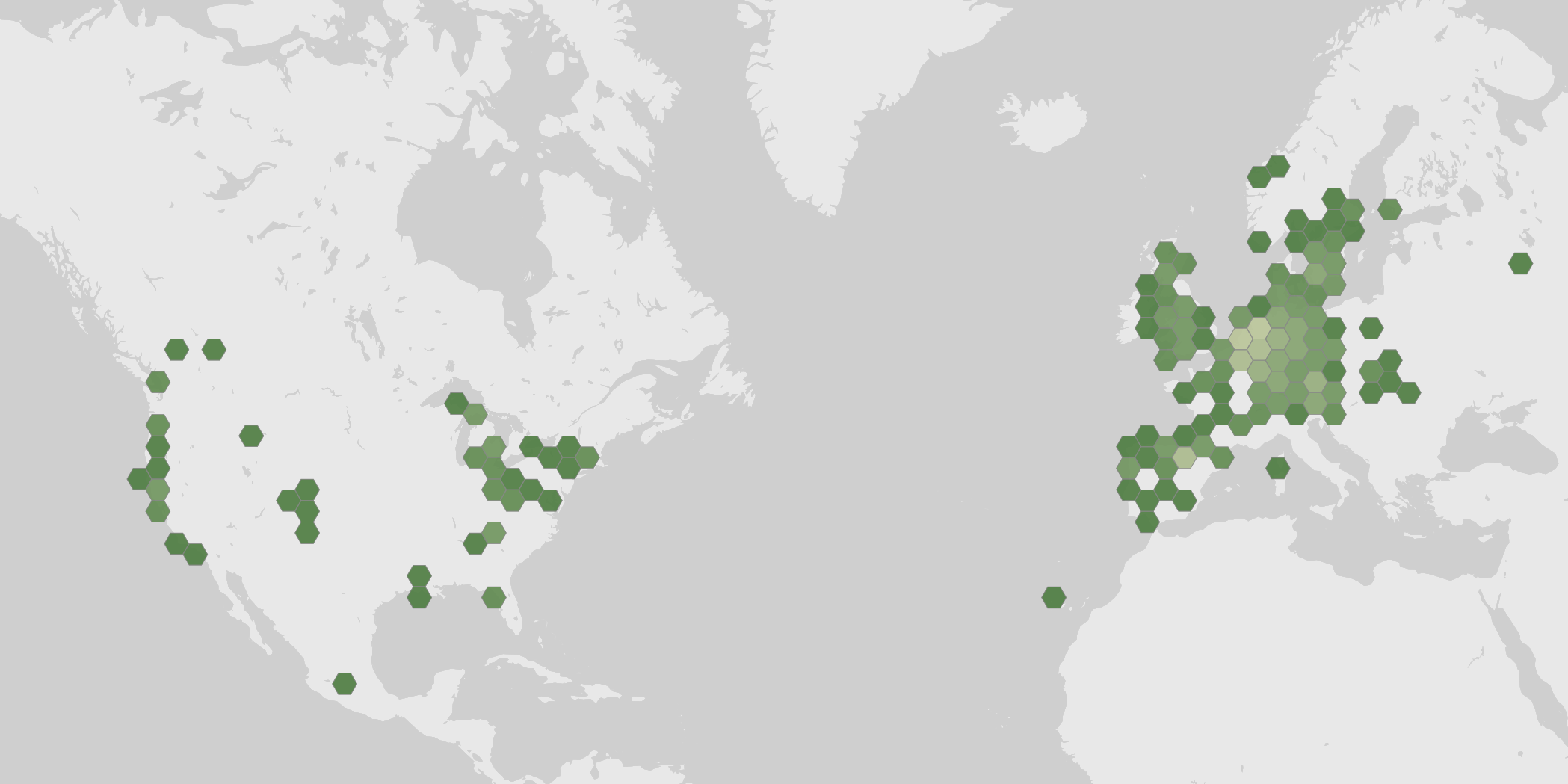
This bolete is common across Europe, where it grows in both deciduous and coniferous woodland through summer and autumn, often appearing alongside Boletus edulis in the same patches of forest. It is also widely distributed in North America, where it is especially frequent under spruce from Northern California up through Alaska. In eastern North America, it associates with both softwood and hardwood trees.
Observation records show a pronounced seasonal pattern, with sightings climbing through early summer and peaking in the months around August and September before tapering off by late autumn, consistent with its known summer-to-autumn fruiting habit in woodland settings.
Uses and Cultural History
Described as a mushroom of great qualities and extraordinary beauty, this bolete has long been appreciated for its culinary value, though always framed as something requiring knowledge and moderation when handled. Its appeal appears to rest as much on its striking appearance as on its use at the table.
Fun Facts
- In some foraging traditions, finding this mushroom was considered a sign of good fortune, treated almost like a treasure of the forest that finders sometimes kept secret from their neighbors during foraging season.
- For decades, field guides listed it under the name Boletus erythropus, but modern DNA studies revealed it actually belongs in a separate genus, leading to its reclassification as Neoboletus luridiformis.
Photos
Photographs from via iNaturalist, licensed under CC0 1.0., by Carminda Santos via iNaturalist, licensed under CC BY 4.0., by Andrejus Gaidamavičius via iNaturalist, licensed under CC BY 4.0., by bogsuckers via iNaturalist, licensed under CC BY 4.0., by Marius K. via iNaturalist, licensed under CC BY 4.0., by Heiko Weber via iNaturalist, licensed under CC BY 4.0., by Gabriele Vaudano via iNaturalist, licensed under CC BY 4.0., by Shane Austin via iNaturalist, licensed under CC BY 4.0., by Мирослав Соболев via iNaturalist, licensed under CC BY 4.0., by Paula Nimigean via iNaturalist, licensed under CC BY 4.0., and by Andrea Gobetti via iNaturalist, licensed under CC BY 4.0., credited on each photo.
Ecology and classification
Classification
- Phylum
- Basidiomycota
- Class
- Agaricomycetes
- Order
- Boletales
- Family
- Boletaceae
- Genus
- Boletus
- Species
- Boletus erythropus
Sources
- GBIF Species names and classification
- iNaturalist Photos
- Wikidata Common names and conservation status
- Wikipedia Summary extract