Populations of this bolete in North Africa were once considered an entirely separate species, Boletus mamorensis — until genetic studies revealed they are simply the same fungus as the queen bolete found across Europe. That taxonomic reshuffling reflects how closely this species sits among a tight cluster of prized European boletes.
Boletus aereus, known as the queen bolete, dark cep, or bronze bolete, belongs to the family Boletaceae within the phylum Basidiomycota. French mycologist Pierre Bulliard first described it in 1789, and it remains closely related to B. reticulatus, B. pinophilus, and the widely known B. edulis, or porcini.
This close kinship to Europe's most celebrated edible mushrooms, combined with its own reputation among foragers, makes the queen bolete a species worth knowing well beyond its scientific classification.
Fruiting Body and Identification
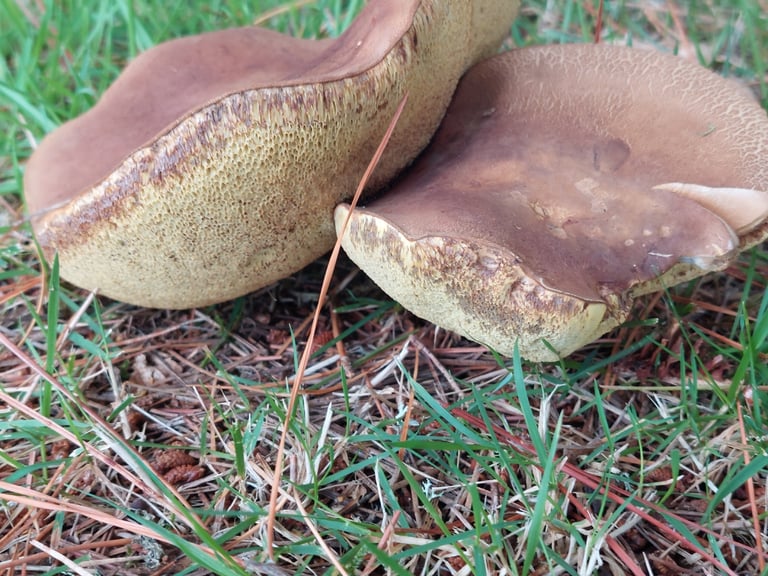
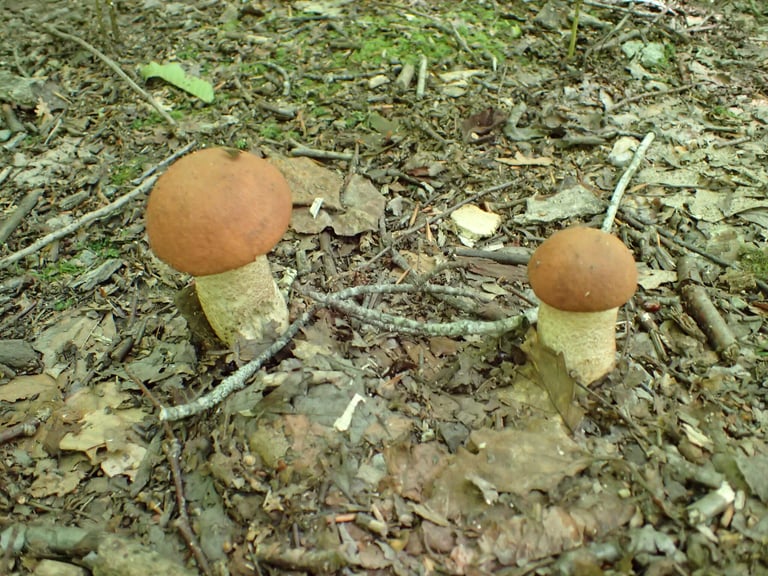
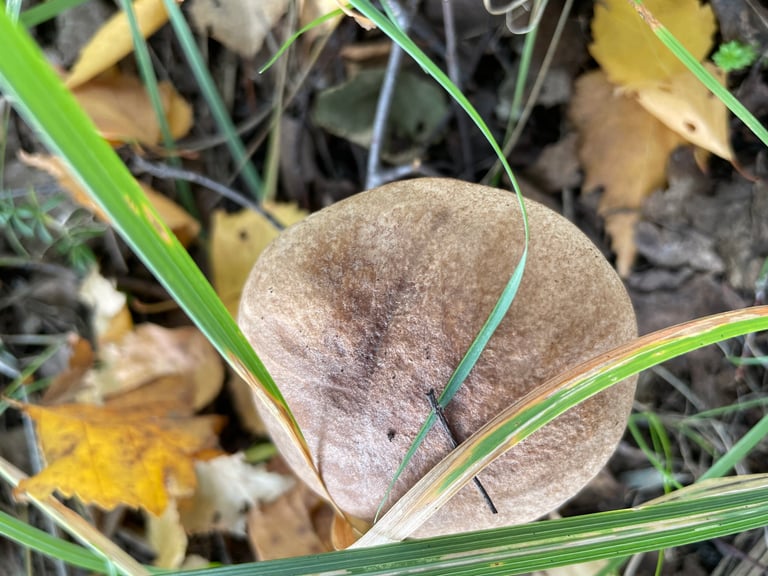
The most reliable identifying feature is the cap's dark, velvety surface, ranging from dark brown to greyish-brown, violet-brown, or purple-brown, often mottled with copper, golden, or olivaceous patches. The cap is hemispherical to convex and typically measures 15 to 20 centimeters across, though exceptional specimens up to 40 centimeters have been recorded.
The stipe runs 5 to 15 centimeters long and 2 to 5 centimeters thick, usually shorter than the cap's diameter. It starts barrel-shaped and gradually becomes club-shaped, tapering toward the base. In color it shifts from white to brown, chestnut, or reddish-brown, overlaid with a brown or concolorous network of raised ridges called reticulation.
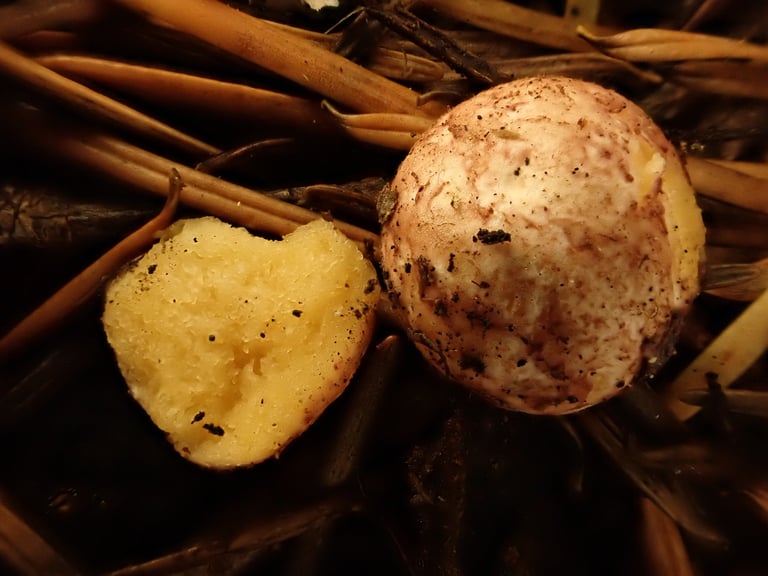
Like other boletes, this species bears tubes rather than gills beneath the cap. The small, rounded pore openings start whitish, slowly turning yellowish or greenish-yellow with age, and can bruise wine-colored when handled. The tubes themselves begin white and become yellowish to olivaceous over time. The thick white flesh gives off a robust, pleasant smell reminiscent of hazelnuts, with a mild, sweet taste. Spores are spindle-shaped, measuring 10.5 to 19 by 4 to 7 micrometers.
Several close relatives can be confused with it. Boletus reticulatus shares the same summer fruiting season under broadleaf trees but has a paler, often cracked cap and a more pronounced whitish reticulation extending down the stipe. Boletus pinophilus grows under conifers like Scots pine and shows a reddish-brown cap, while Boletus edulis fruits later in cooler weather, mostly under spruce, with a paler, sticky cap and a sharply defined white reticulation on the stipe.
Distribution and Habitat
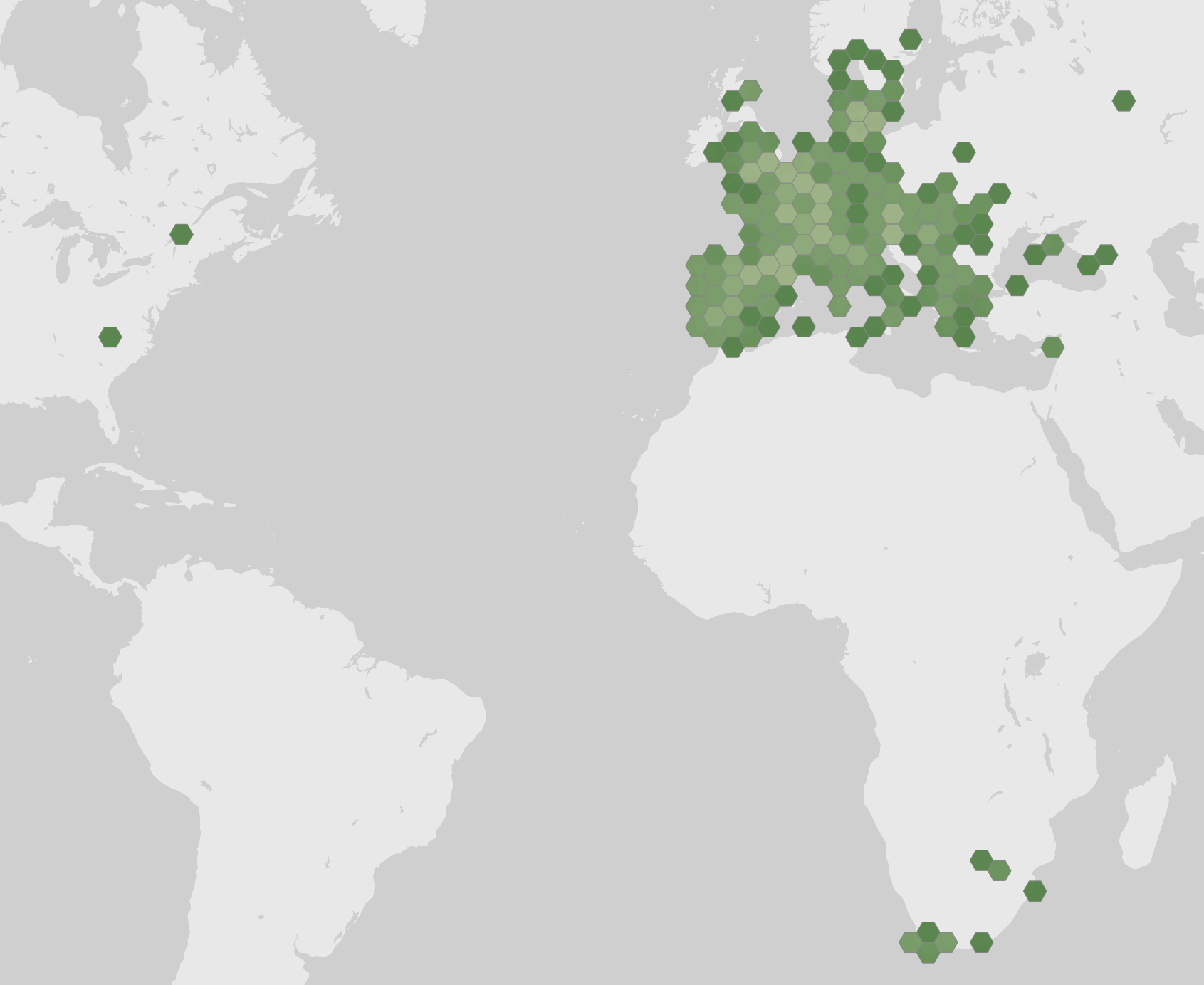
The queen bolete is found mainly across central and southern Europe and North Africa, though its abundance varies considerably from place to place. It is rare in colder regions such as England, and conservation assessments have flagged it as vulnerable in the Czech Republic and placed it on a provisional regional Red List in Montenegro. Despite these regional concerns, it can be locally abundant — it is the most common bolete in the woodlands of Madonie Regional Natural Park in northern Sicily, and it has also been documented on Mediterranean islands including Corsica, Cyprus, Lesvos, and Naxos.
The species forms mycorrhizal partnerships with broadleaf trees and sclerophyllous shrubs, particularly oak, beech, chestnut, strawberry trees, tree heath, and rockrose, generally favoring acidic soils. Roadsides and parks are common settings for it as well. Cork oak stands out as a particularly important partner, and the fungus's distribution closely tracks that of cork oak across Europe and North Africa.
Monthly observation records show fruiting concentrated from midsummer into autumn, with counts climbing sharply from June onward and peaking around August through October before dropping off by November. Read cautiously, as these are presence records rather than a measure of abundance, this pattern lines up with the described preference for hot spells in summer and autumn. Older reports of the species occurring in China have not held up; molecular studies indicate Asian porcini-type boletes belong to different species entirely.
Uses and Cultural History
This mushroom holds a strong culinary reputation across southern Europe, where many foragers and cooks consider it gastronomically superior to the more famous porcini, Boletus edulis. Around Borgotaro in Italy's Province of Parma, it is one of four bolete species — alongside B. edulis, B. reticulatus, and B. pinophilus — officially recognized under the name Fungo di Borgotaro, a designation tied to centuries of commercial collection and export in the region.
In Spain it ranks among the wild edible fungi most commonly gathered for the table, especially in Aragon, where it is harvested for sale in local markets, and it is similarly popular in Navarre, the Basque Country, France, and Greece. Cultural commentary describes it as an emblem of Mediterranean and Cantabrian forests, valued for both its culinary tradition and its ecological role.
When collected, the cap skin is typically left intact and simply brushed clean of dirt, with pores removed only if they have become old and soft. The species is especially well suited to drying, a process said to intensify its flavor and aroma; mushrooms are sliced and strung on twine or dried in a basket near a heat source, then stored in an airtight jar. Reconstituted in hot water for about twenty minutes, the resulting liquid can be used as a flavorful stock, and even a small amount of the dried mushroom is said to improve less flavorful fungi-based dishes.
Fun Facts
- Some foraging communities have regarded the mushroom as more than food — a sign of good fortune and a treasure of the forest, at times kept secret from neighbors during the foraging season.
- It was first formally described in 1789 by French mycologist Pierre Bulliard, making its scientific documentation more than two centuries old.
- Mycologists note that Boletus aereus, B. edulis, and B. pinophilus are subtly distinguished at the microscopic level, yet ecological and macroscopic differences are considered strong enough to keep them classified as separate species.
Ecology
Habitat
- Forest
- Woodland
- Shrubland
- Urban