The deadly webcap causes kidney failure that is often irreversible, making it one of the most dangerous mushrooms a forager can encounter. Cortinarius rubellus belongs to the Orellani, a group within the genus Cortinarius in which every member is highly toxic.
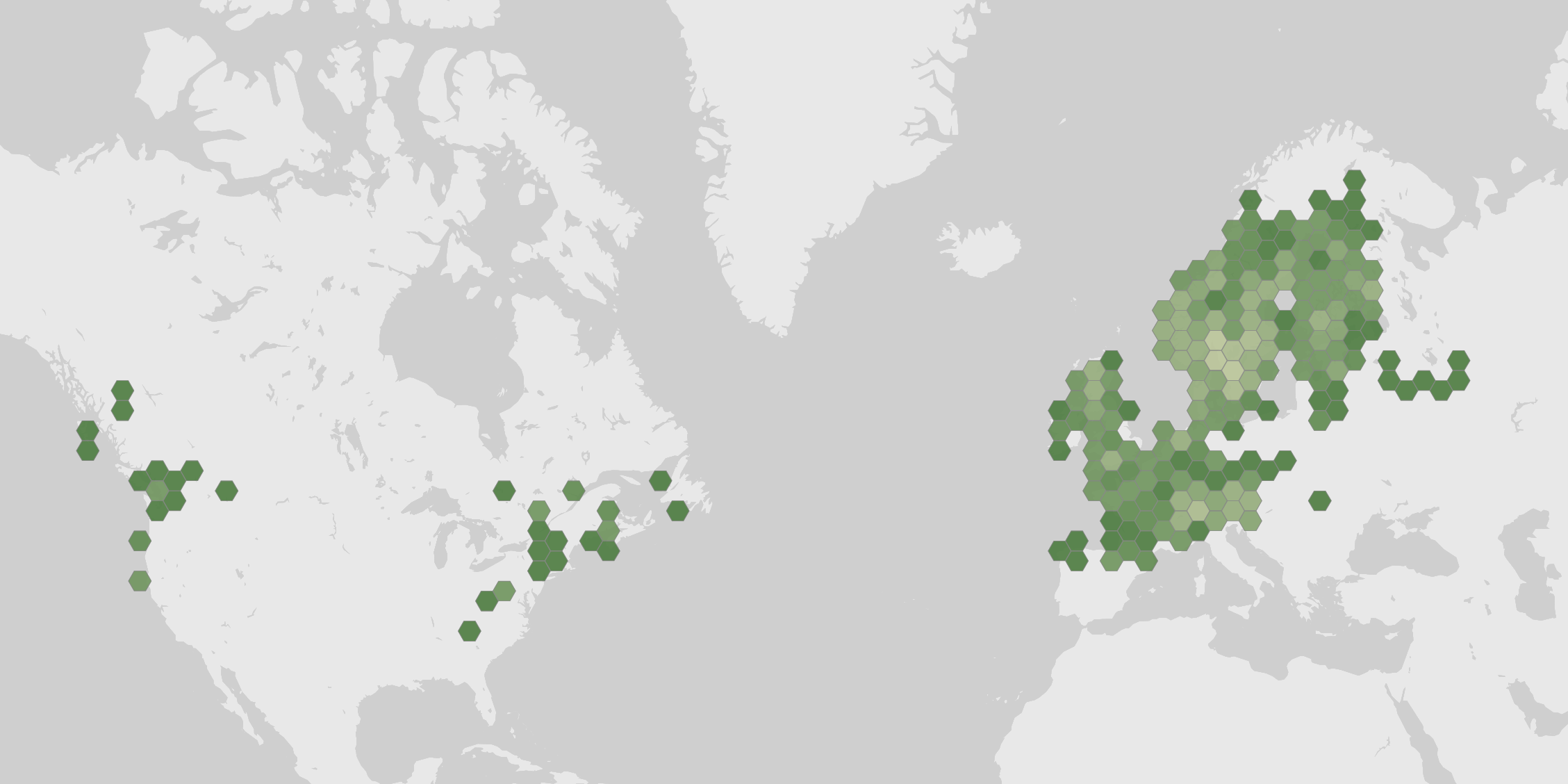
The species grows in high-latitude temperate to subalpine forests across Eurasia and North America. Beyond its toxicity, it stands out as a case study in how easily a toxic species can be confused with prized edible fungi.
Fruiting Body and Identification
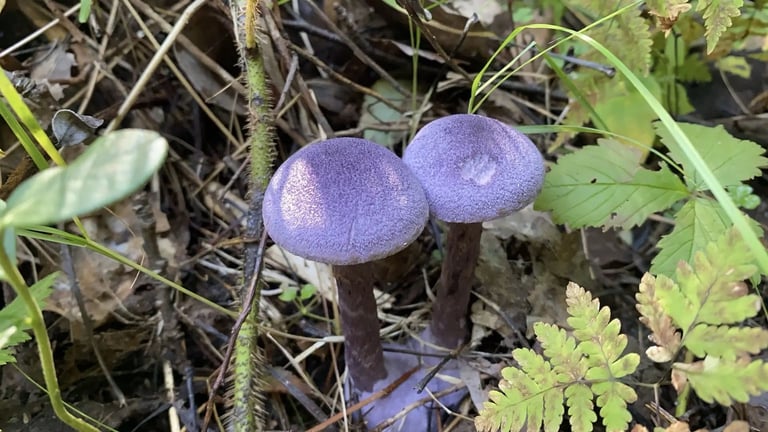
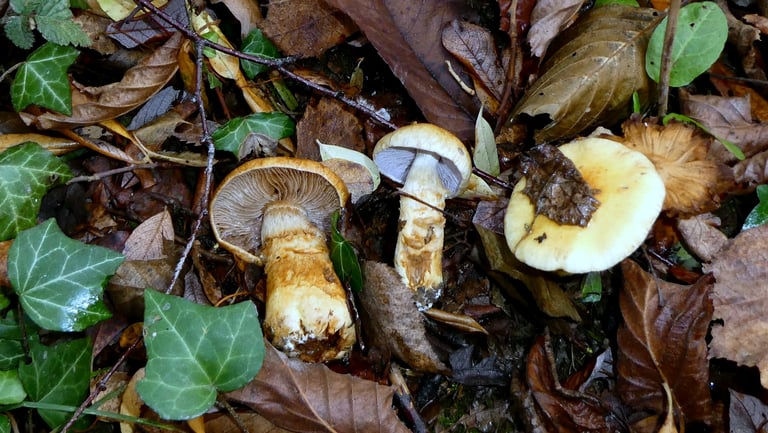
The cap is the clearest starting point for identification: conical to convex, 2.5 to 8 centimeters across, tawny to date brown with paler margins and covered in fine, fibrous scales. With maturity the cap can flatten and develop a central bump, or umbo.
The gills are ochre or caramel-colored when young, deepening to a darker brown as the spores mature. They attach to the stipe in an adnate fashion. The stipe itself stands 5.5 to 11 centimeters tall and 0.5 to 1.5 centimeters thick, with a bulbous base, colored the same as the cap or slightly paler, and sometimes carrying yellow fragments of the cortina veil on its lower half.
The flesh is cream to pale yellow, turning more tan beneath the cap surface and in the stem base. It gives off a slight smell of radishes and has no strong taste.
Distribution and Habitat
Cortinarius rubellus occurs in high-latitude temperate to subalpine forests across the northern hemisphere. It has been recorded in subalpine conifer forest in the Yatsugatake Mountains of Yamanashi Prefecture in central Japan, and in North America it is known from British Columbia and western Washington, including Mount Rainier National Park.
In Europe it occurs in Scandinavia and in the north of the British Isles, where it favors wet areas within conifer or mixed conifer and broadleaf woodlands, though it remains uncommon there.
Across its range the species appears tied to cooler, higher-elevation forest conditions rather than lowland or warmer habitats.
Uses and Cultural History
The mushroom holds no positive associations in folklore or traditional medicine; its cultural significance instead centers on danger and its influence on public health awareness.
In September 2008, author Nicholas Evans, his wife Charlotte Gordon Cumming, and two relatives were poisoned after gathering the mushrooms on holiday, having mistaken them for ceps and overlooking their gills. All four were told they would eventually need kidney transplants; Evans later received a kidney from his daughter, and the others received transplants after searching for donors. Charlotte had eaten only three mouthfuls. The group went on to help found the charity Give a Kidney.
Fun Facts
- Within its genus, Cortinarius rubellus belongs to a small group called the Orellani, all of which are highly toxic.
- Cortinarius orellanus and C. rubellus together make up the two best-known deadly webcaps found across Europe and North America.
- The mushroom has become something of a cautionary tale in foraging communities and academic circles, cited repeatedly as an example of how toxic and edible species can be confused.
Photos
Photographs from via iNaturalist, licensed under CC0 1.0., by Andrejus Gaidamavičius via iNaturalist, licensed under CC BY 4.0., by Johan Adler via iNaturalist, licensed under CC BY 4.0., by ionafraser via iNaturalist, licensed under CC BY 4.0., by Andreas Schneider via iNaturalist, licensed under CC BY 4.0., by vuikaan via iNaturalist, licensed under CC BY 4.0., by Noah How via iNaturalist, licensed under CC BY 4.0., by Phil Clifford via iNaturalist, licensed under CC BY 4.0., by Jenni Ly via iNaturalist, licensed under CC BY 4.0., by Dietmar K. L. Moser via iNaturalist, licensed under CC BY 4.0., by W Rao via iNaturalist, licensed under CC BY 4.0., and by Alexis Tinker-Tsavalas via iNaturalist, licensed under CC BY 4.0., credited on each photo.
Ecology and classification
Classification
- Phylum
- Basidiomycota
- Class
- Agaricomycetes
- Order
- Agaricales
- Family
- Cortinariaceae
- Genus
- Cortinarius
- Species
- Cortinarius rubellus
Sources
- GBIF Species names and classification
- iNaturalist Photos
- Wikidata Common names and conservation status
- Wikipedia Summary extract