Few Australian tussock herbs carry as much cultural weight as the wattle mat-rush. Lomandra filiformis is a sparsely tufted, perennial herb native to Australia, with strap-like leaves and yellow flowers.
It grows in dry sclerophyll forest and grassy woodland, favoring well-drained rocky or sandy soils. Beyond its modest appearance, the plant's long history as a weaving material makes it a quietly significant part of Australia's native flora.
Identification and Appearance
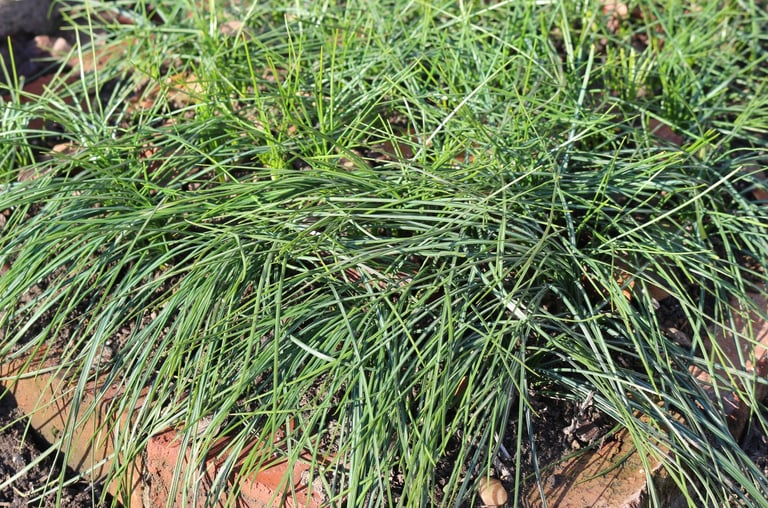
The most useful field mark is its fine, narrow leaf width of 3 to 5 millimeters, noticeably finer than related species such as Lomandra longifolia. The leaves are strap-like and blue-green, arranged in a sparse tuft rather than a dense clump.
The plant stays compact, growing to no more than about 30 centimeters high, which gives it a low, ground-covering habit. Small yellow flowers appear on slender stalks rising above the foliage.
Its finer leaves and drier tolerance distinguish it from Lomandra longifolia, which has broader leaves and prefers moister conditions.
Distribution and Habitat
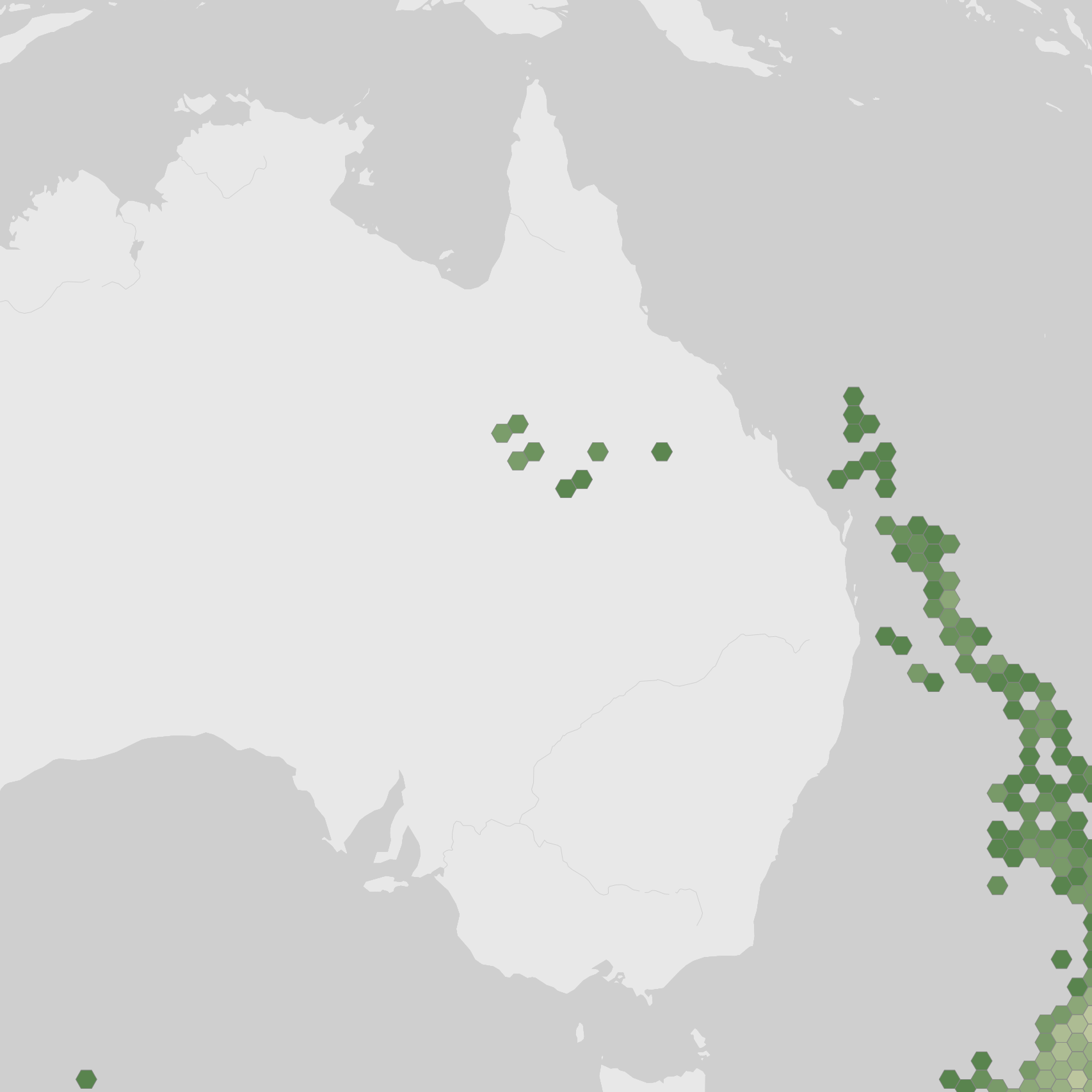
Lomandra filiformis occurs naturally from Queensland south through New South Wales to Victoria, in a seasonally dry tropical climate. It favors dry sclerophyll forest and grassy woodland, typically on well-drained rocky or sandy soils.
Observation records show activity through every month of the year, with counts rising noticeably from September through November, suggesting stronger seasonal presence in spring. These figures reflect where the species has been observed rather than its true abundance or the full extent of its range.
Growth and Form
As a perennial herb, Lomandra filiformis persists from year to year rather than completing its life cycle in a single season. It forms a sparse tussock of strap-like leaves, staying low and compact, reaching no more than about 30 centimeters in height, which suits it for ground cover or foliage contrast in a planted setting.
Uses and Human Relationships
Fiber from the mat-rush has long been used by Aboriginal women on Australia's east coast for weaving, particularly in basket making and fish traps. This tradition continues among contemporary weavers, who draw on the plant's leaves as a practical and culturally significant material.
Fun Facts
- Its leaves are finer than those of Lomandra longifolia, measuring just 3 to 5 millimeters wide, which lets it tolerate drier conditions.
- The plant's compact size, no more than about 30 centimeters tall, makes it a popular choice for ground cover or contrasting foliage in gardens.
- Aboriginal women on the east coast of Australia have traditionally used its fiber for weaving baskets and fish traps, a skill still practiced today.
Photos
Photographs from by grampianshiker via iNaturalist, licensed under CC BY 4.0., via iNaturalist, licensed under CC0 1.0., by M Howe via iNaturalist, licensed under CC BY 4.0., by Ian Rainbow via iNaturalist, licensed under CC BY 4.0., by Peter Crowcroft via iNaturalist, licensed under CC BY 4.0., by Kevin Jäger via iNaturalist, licensed under CC BY 4.0., by Scott W. Gavins via iNaturalist, licensed under CC BY 4.0., by Steven Taylor via iNaturalist, licensed under CC BY 4.0., by Matthew Lincoln via iNaturalist, licensed under CC BY 4.0., and by Alex Stuart via iNaturalist, licensed under CC BY 4.0., credited on each photo.
Ecology and classification
Classification
- Phylum
- Tracheophyta
- Class
- Liliopsida
- Order
- Asparagales
- Family
- Asparagaceae
- Genus
- Lomandra
- Species
- Lomandra filiformis
Sources
- GBIF Species names and classification
- iNaturalist Photos
- Wikidata Common names and conservation status
- Wikipedia Summary extract
- Plants of the World Online Native range, life form and climate (WCVP)