Few forest plants cover the ground of temperate Eurasia as widely as Maianthemum bifolium, the false lily of the valley, yet it often goes unnoticed until its small star-shaped white flowers open in a shaded understory.
This rhizomatous flowering plant belongs to the asparagus family (Asparagaceae) and grows natively across a vast range, from western Europe through Siberia to China and Japan.
What makes this plant worth a closer look is not size or color, but persistence and reach: a modest woodland herb that has quietly established itself across an entire continent's forests.
Identification and Appearance
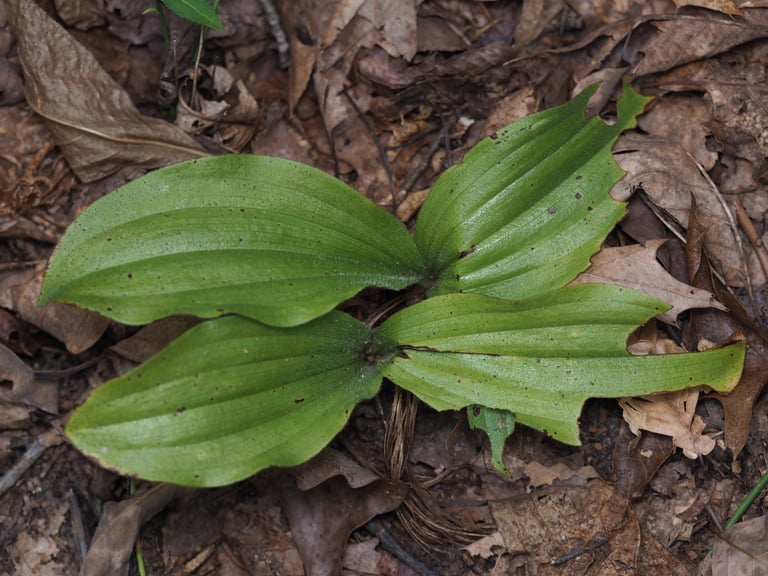
The clearest field mark is the pairing of leaves: non-flowering stems carry just one waxy leaf, while flowering stems bear two leaves produced alternately, heart- to triangular-shaped, 3 to 8 centimeters long and 2 to 5 centimeters broad, with fine hairs along the veins.
Flowering stems reach 10 to 20 centimeters tall and are topped with clusters of many small, star-shaped white flowers, each with four tepals, four stamens, and a two-chambered pistil. Flowering runs from mid spring into early summer. A basal leaf present on flowering plants withers before the flowers open, leaving only the two stem leaves visible at bloom time.
Maianthemum bifolium is one of only a few species in its genus, alongside Maianthemum canadense and Maianthemum dilatatum, that bears four tepals rather than the more typical count, a useful detail for distinguishing it from relatives.
After flowering, round berries form, green and speckled red while immature, turning fully red with age. Each berry holds an average of 1.8 seeds and persists on the plant for about 100 days. The plant is considered safe to touch.
Distribution and Habitat
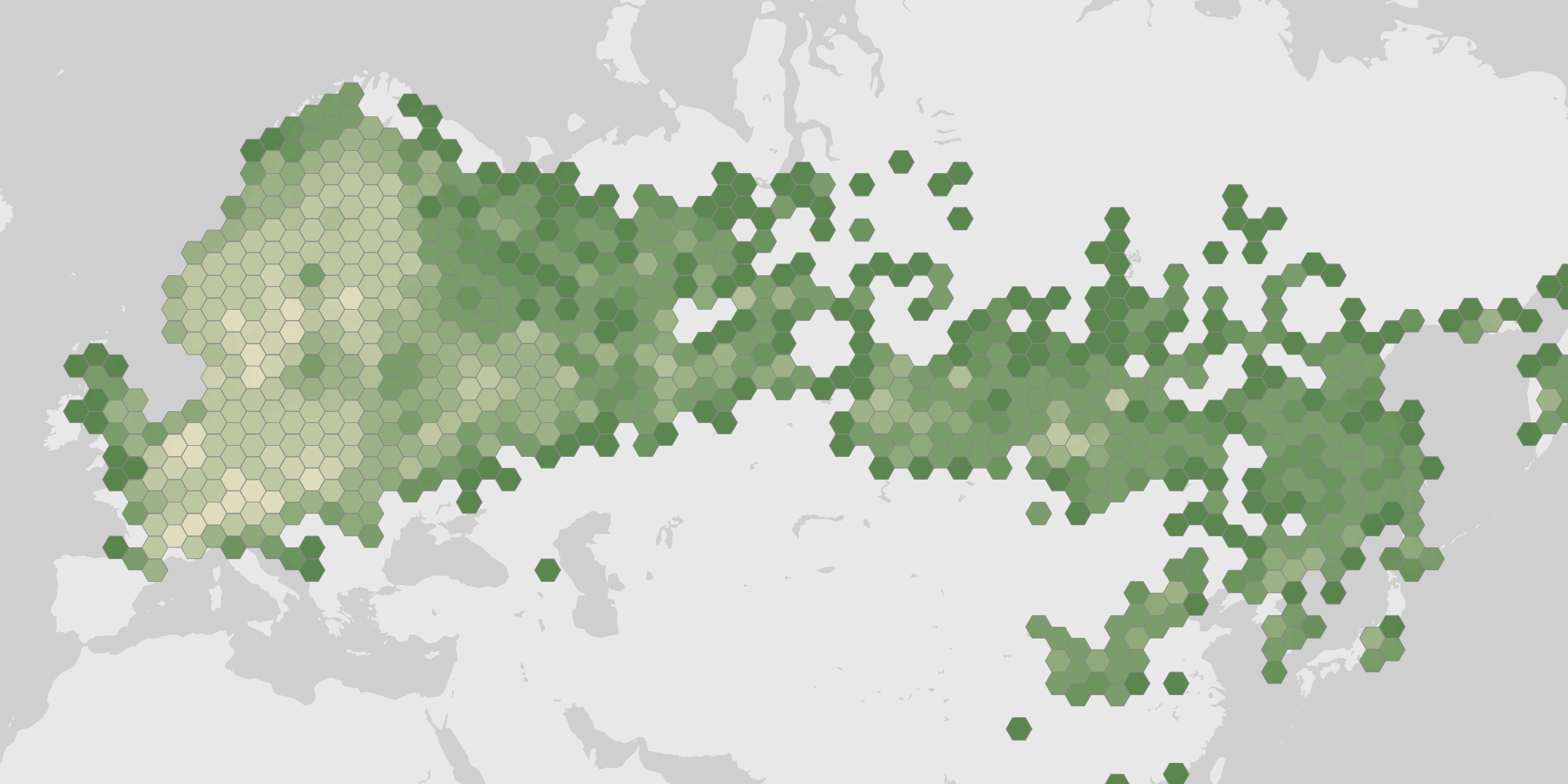
Maianthemum bifolium occupies an immense native range across temperate Eurasia, from Britain, France, Spain, and Scandinavia in the west through Central Europe, the Baltic states, and Russia to Siberia, Mongolia, China, Korea, and Japan in the east. It has also become established in Ireland outside its native range.
The species favors forests, thickets, and moist places, often along hillsides and streams, at elevations from about 500 to 2,700 meters. It grows in large groups in open forests and on damp, humus-rich soils, including grassy ditches and thickets, generally preferring partial shade and well-drained, slightly acidic ground.
Observation records through the year show the plant recorded far more often from spring into mid-summer, with counts peaking around May and June, consistent with its flowering and greatest visibility during that season, before dropping off sharply by autumn and winter.
Growth and Form
Maianthemum bifolium grows as a rhizomatous geophyte, spreading below ground by a creeping rhizome rather than relying solely on seed for its persistence in a site. This growth habit allows it to form the large colonies characteristic of the forest floors it inhabits, with new shoots arising along the spreading underground stem.
Ecology and Relationships
Maianthemum bifolium takes root in humus-rich, partially shaded forest soils, where it forms mycorrhizal partnerships, with Entrophospora lamellosa recorded among its fungal associates.
Its flowers attract small visiting insects such as sweat bees of the genus Lasioglossum, though a visit alone does not confirm that pollination occurs. Its fruits and foliage draw a range of birds, including finches, larks, partridges, ducks, and geese, alongside aphids such as Aulacorthum majanthemi, which feed directly on the plant.
The plant's preference for damp, well-drained, slightly acidic soil under partial shade ties it closely to the open woodland and thicket conditions where it is most often found growing in dense stands.
Fun Facts
- The species is also known by the common name May lily, alongside false lily of the valley.
- Its berries carry a fruit composition of roughly 71.1% water, with a dry weight made up of about 26.9% carbohydrates and 0.5% lipids.
- The plant has accumulated numerous historical scientific synonyms, including names once placed in the genera Convallaria and Maia, reflecting shifting classification over time.
Photos
Photographs from via iNaturalist, licensed under CC0 1.0., by Марина Садыкова via iNaturalist, licensed under CC BY 4.0., by Мирослав Соболев via iNaturalist, licensed under CC BY 4.0., by Oleksandr Shynder via iNaturalist, licensed under CC BY 4.0., by Markus Krieger via iNaturalist, licensed under CC BY 4.0., by Igor Balashov via iNaturalist, licensed under CC BY 4.0., by aga_l_ via iNaturalist, licensed under CC BY 4.0., by shadow_385 via iNaturalist, licensed under CC BY 4.0., by Екатерина Гущина via iNaturalist, licensed under CC BY 4.0., by Марина Давлетшина via iNaturalist, licensed under CC BY 4.0., and by Ondřej Křivan via iNaturalist, licensed under CC BY 4.0., credited on each photo.
Ecology and classification
Classification
- Phylum
- Tracheophyta
- Class
- Liliopsida
- Order
- Asparagales
- Family
- Asparagaceae
- Genus
- Maianthemum
- Species
- Maianthemum bifolium
Sources
- GBIF Species names and classification
- iNaturalist Photos
- Wikidata Common names and conservation status
- Wikipedia Summary extract
- Encyclopedia of Life Habitat, diet and behavior traits
- Plants of the World Online Native range, life form and climate (WCVP)
- GloBI What it eats, what eats it, parasites and pollinators
- trophiCH
- GlobalAMFungi