The variable-leaved crestwort is a liverwort that changes its leaf shape along a single stem. It belongs to the order Jungermanniales, the largest order of liverworts.
As a member of the family Lophocoleaceae, Lophocolea heterophylla is a nonvascular plant in the phylum Marchantiophyta. It has no true roots, stems or leaves in the flowering-plant sense, and it grows close to the ground in damp, shaded places.
Its name refers to its variable leaves, which make it easy to distinguish from many similar plants once the pattern is known.
Identification and Appearance
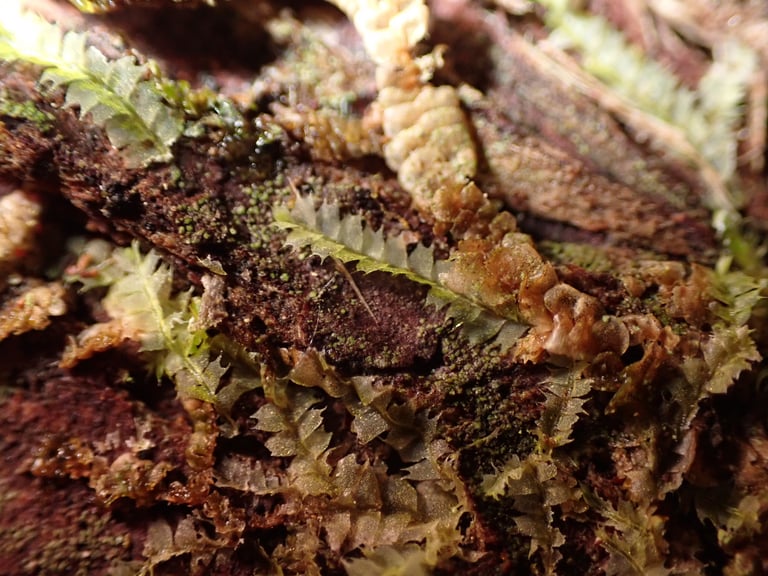
The most useful field mark is the leaf shape. Near the base of the stem, the leaves are bilobed, meaning they split into two lobes. Higher up the stem, the leaves become notched or completely smooth, with no notches and no lobes.
The plant is pale green and translucent. Its shoots can reach about 3 mm wide, and the leaves are no more than 1.5 mm across and long.
The plant has a strong scent, which can help identify it in the field.
In the British Isles, it is often found with reproductive structures present. Small gemmae, which are structures for asexual reproduction, sometimes appear on the edges of the leaves and bracts.
Distribution and Habitat
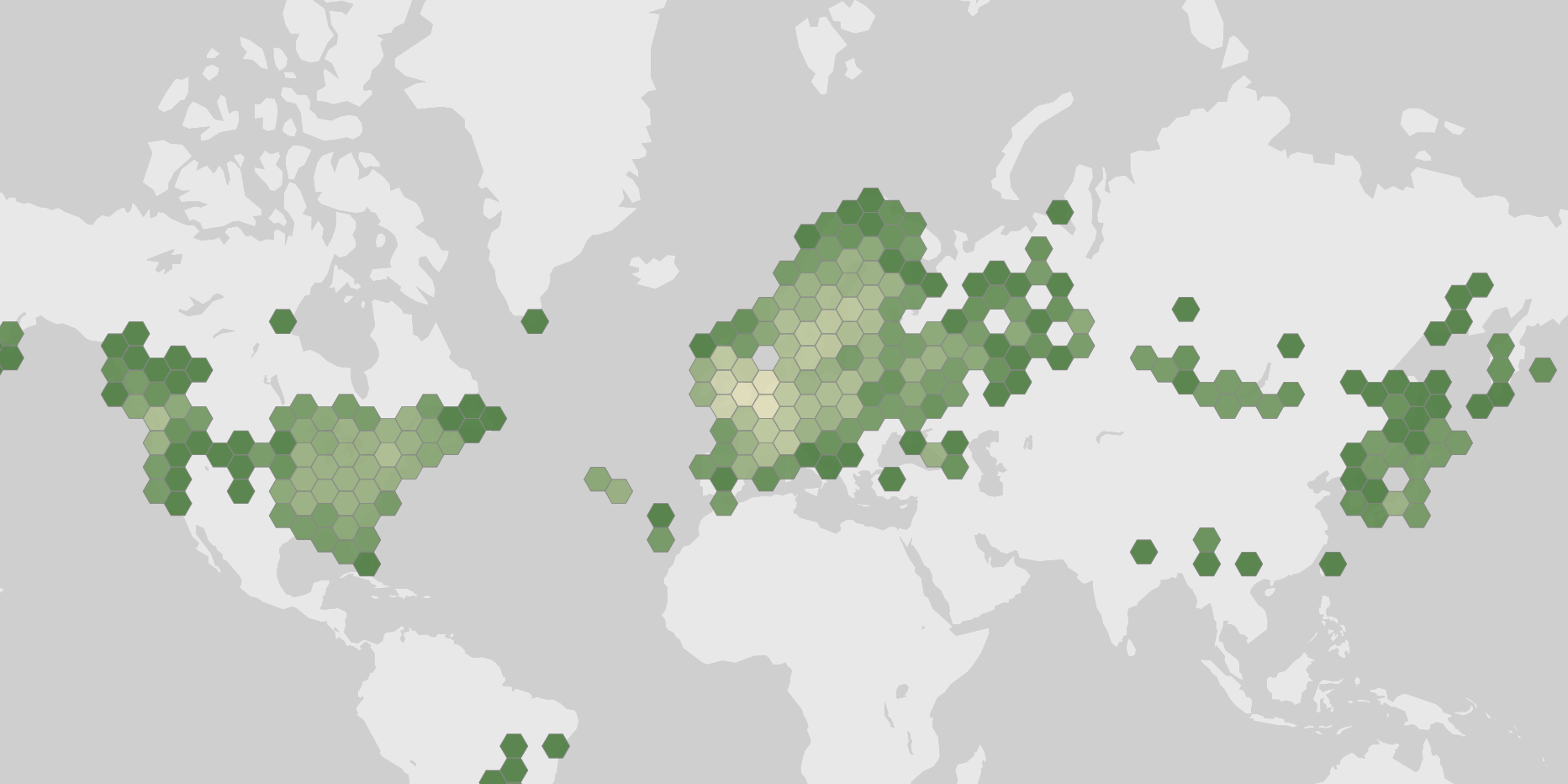
In Britain, the variable-leaved crestwort is most frequent in the south, especially in England. It reaches as far north as Inverness in Scotland. It also occurs on the Isle of Man and in parts of the Republic of Ireland.
It grows mostly on the bases of trees. It also grows on fallen wood, soil, leaf litter and roots.
The species can be found in most types of woodland. Ancient woodland is a key habitat in the west and north of its range.
Observation records show presence across the year, with the most records in the spring and summer months.
Growth and Form
Lophocolea heterophylla is a nonvascular plant, so it lacks the water-conducting tissue found in most land plants. It forms low, flattened shoots that spread over bark, wood and soil.
Its shoots are small, reaching about 3 mm in width. Individual leaves are no more than 1.5 mm across and long, which keeps the whole plant compact.
The pale, translucent leaves give the mats a light green appearance in shaded woodland.
Photos
Photographs from via iNaturalist, licensed under CC0 1.0., by Bethany Dennis via iNaturalist, licensed under CC BY 4.0., by Steven Lamonde via iNaturalist, licensed under CC BY 4.0., by Wiljam Eklund via iNaturalist, licensed under CC BY 4.0., by Charlie Pavlisich via iNaturalist, licensed under CC BY 4.0., by Михаил Языков via iNaturalist, licensed under CC BY 4.0., by Мирослав Соболев via iNaturalist, licensed under CC BY 4.0., by Bartosz Czołczyński via iNaturalist, licensed under CC BY 4.0., and by Andrew Sebastian via iNaturalist, licensed under CC BY 4.0., credited on each photo.
Ecology and classification
Classification
- Phylum
- Marchantiophyta
- Class
- Jungermanniopsida
- Order
- Jungermanniales
- Family
- Lophocoleaceae
- Genus
- Lophocolea
- Species
- Lophocolea heterophylla
Sources
- GBIF Species names and classification
- iNaturalist Photos
- Wikidata Common names and conservation status
- Wikipedia Summary extract
- USDA Plants US plants: growth habit and growing conditions