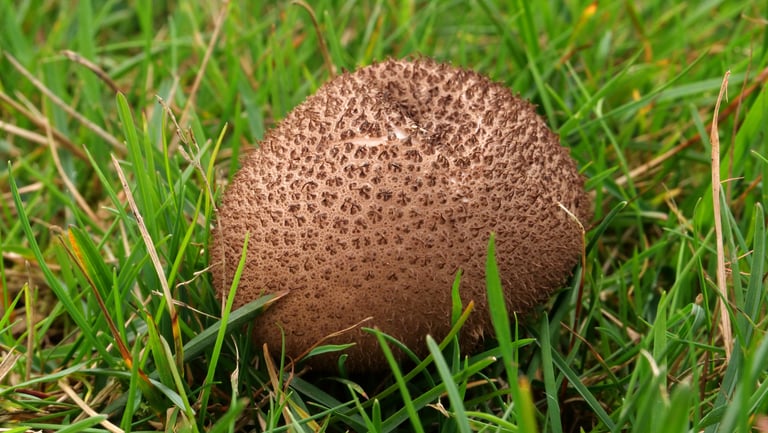
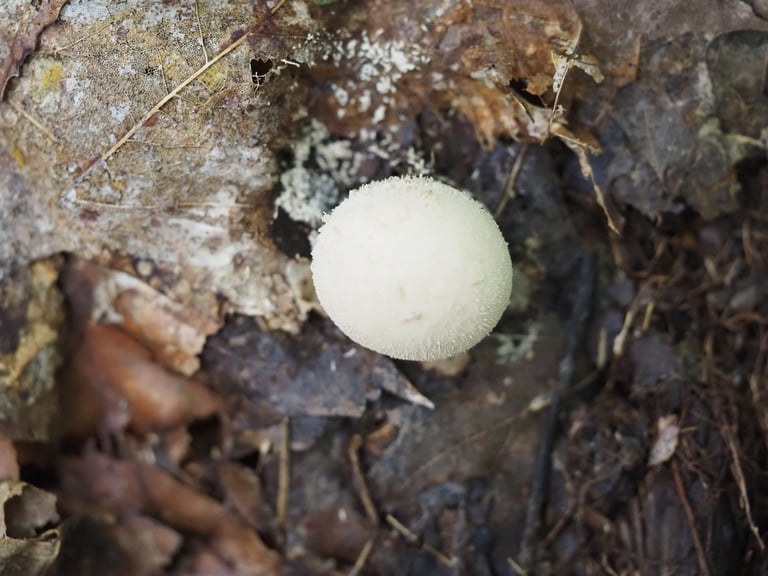
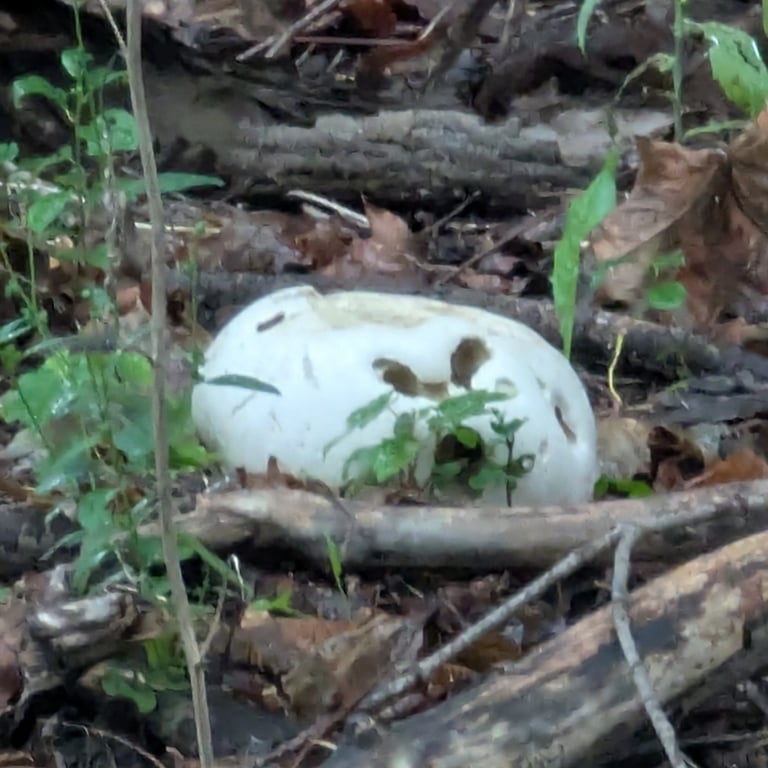
The pestle puffball can tower to 25 centimeters tall, making it one of the largest puffballs found in northern temperate grasslands and woods. Its common names, pestle puffball and long-stemmed puffball, describe the club-like shape of its fruiting body, which broadens to 15 centimeters across at the head.
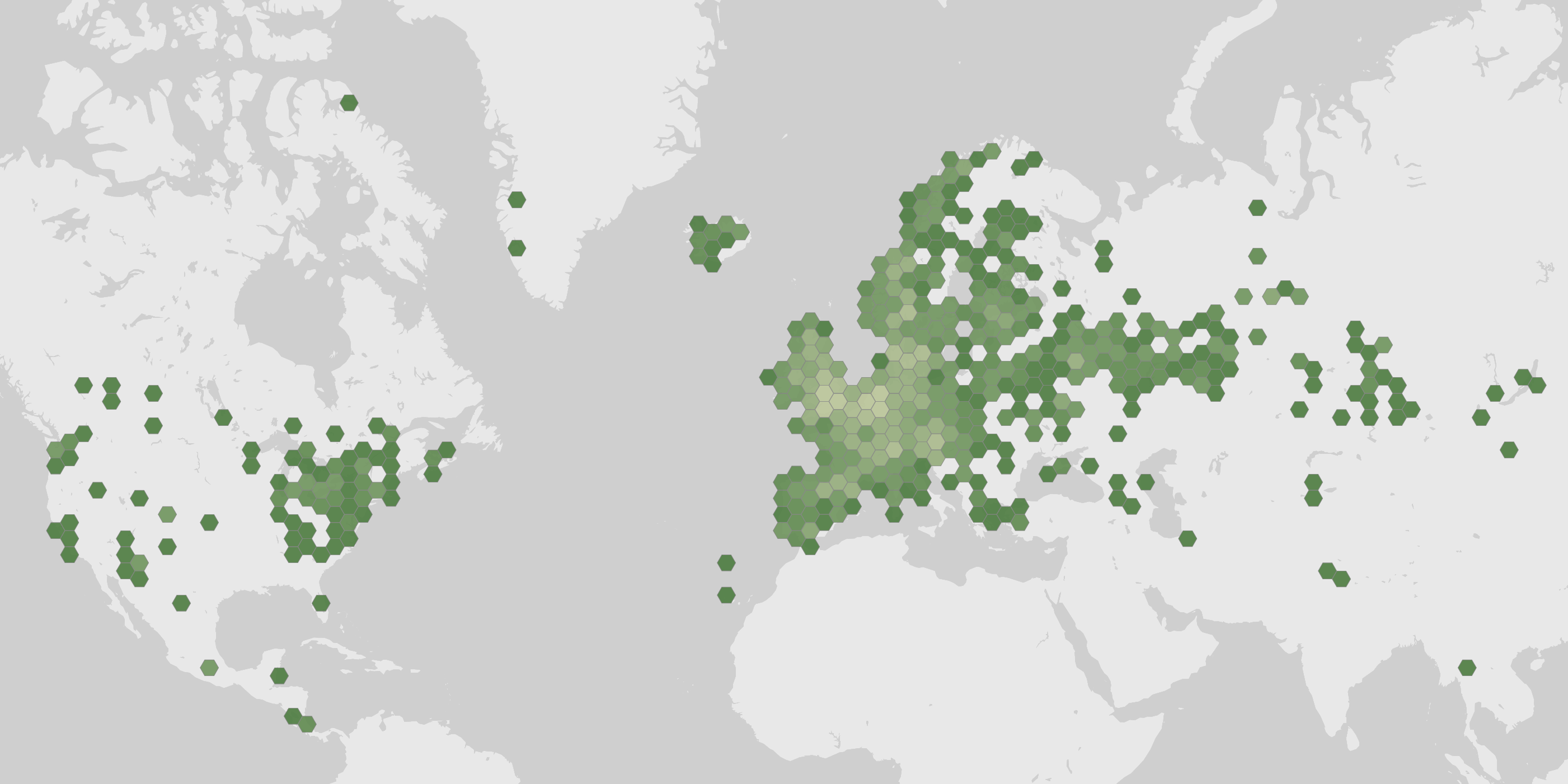
Classified in the order Agaricales and kingdom Fungi, this species is widespread across northern temperate zones, where it turns up often on pastures and sandy heaths. No conservation status has been assigned to it. Its combination of size, distinctive shape, and frequent appearance in open ground makes it one of the more recognizable puffballs a forager or naturalist might encounter.
Fruiting Body and Identification
The pestle-like shape is the clearest identifying feature: a rounded, spore-bearing head that narrows into a thick, stem-like base, giving the whole fruiting body the outline of a kitchen pestle. Young specimens measure 6 to 12 centimeters across and are white or pale grey-brown, smoothing or slightly roughening as they age.
Like all puffballs, Lycoperdon excipuliforme produces a gasteroid basidiocarp, meaning its spores form internally rather than on external gills or pores. The spores are only released once the mature fruiting body dries out and splits open, or is broken by an outside force such as rain, animal contact, or decay.
At maturity the fruiting body can reach 15 centimeters broad and 25 centimeters tall. Its underside connects to the soil by a rhizomorph, a root-like mass of hyphae that anchors the puffball and draws it nutrients from the substrate below.
Distribution and Habitat
Lycoperdon excipuliforme is common and widespread from late summer into autumn, appearing singly or in small groups. It grows in soil in both coniferous and broadleaf woodland, and it is also found frequently on short grassland, pastures, and sandy heaths.
Monthly observation data show a sharp seasonal pattern, with counts rising through August, peaking in October near 9,330 recorded observations, and tapering off by December. This pattern lines up with the species' known late-summer-to-autumn fruiting window, though the counts reflect presence records rather than actual population size or a complete picture of its range.
The species' broad tolerance for both wooded and open grassy ground helps explain its wide distribution across northern temperate zones.
Uses and Cultural History
In parts of Europe and East Asia, puffballs including this species appear in folklore as embodiments of magic or transformation, often linked to forest spirits or a sense of mystic energy tied to nature. This symbolic role reflects the puffball's unusual biology, from its unexpected size to the sudden release of spores when the mature body is disturbed.
Fun Facts
- Its common name, pestle puffball, comes directly from its shape: a rounded head narrowing into a thick stem, resembling a kitchen pestle.
- In European and East Asian folklore, puffballs have been described as embodiments of magic or transformation, often associated with forest spirits.
- Recorded observations of this species peak sharply in October, consistent with its known late-summer-to-autumn fruiting season.
- It belongs to the family Lycoperdaceae within the order Agaricales, alongside other puffball species that share its internal spore production.
Ecology
Habitat
- Woodland
- Grassland