Long before its leaves unfurl, Magnolia stellata covers its bare branches in a haze of star-shaped white or pink blooms, turning a leafless shrub into one of the earliest floral displays of the year.
Known as the star magnolia, it is a slow-growing deciduous shrub or small tree native to Japan. Its combination of an early bloom time, a compact habit, and delicate flower form has made it one of the most recognizable magnolias in cultivation, even where it does not grow in the wild.
Identification and Appearance
The clearest field mark is the flower itself: star-shaped, slightly fragrant blooms 7 to 10 centimeters (3 to 4 inches) wide, built from at least 12 thin, delicate petal-like tepals, with some cultivars producing more than 30. They open on completely bare stems in late winter or early spring, well before the leaves appear, and their color varies naturally from pure white to rich pink, with the depth of pink even shifting from year to year on the same plant.
Mature plants reach 1.5 to 2.5 meters (5 to 8 feet) in height and spread up to 4.6 meters (15 feet) wide. Young specimens grow in a tidy, upright oval shape, but the form loosens into a broader, mounding silhouette with age. The species blooms while still young, so even small plants can flower heavily.
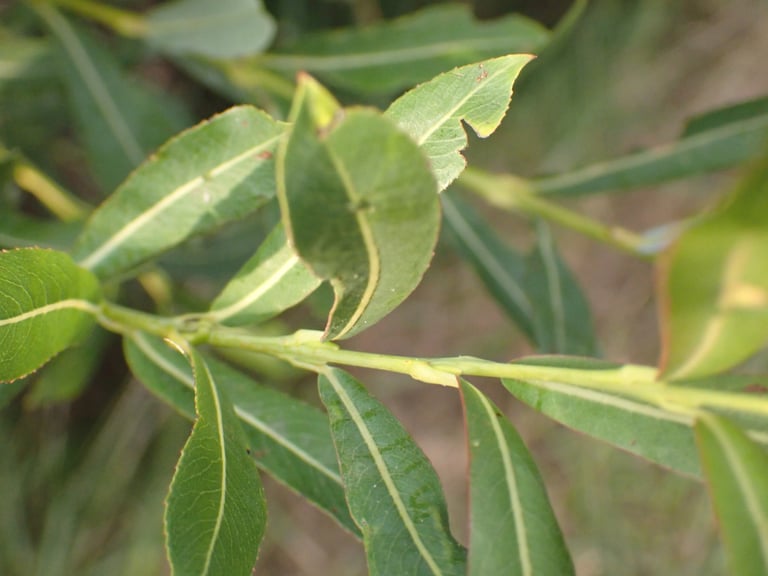
Leaves emerge bronze-green after flowering, mature to deep green through summer, and turn yellow before dropping in autumn; they are oblong, about 10 centimeters (4 inches) long and 4 centimeters (1.6 inches) wide. By early autumn the plant produces a knobby, reddish-green aggregate fruit around 5 centimeters (2 inches) long that splits open to reveal orange-red seeds, though fruits often drop before fully developing.
Bark offers a secondary clue: young twigs are smooth and shiny chestnut brown, while older trunks develop smooth, silvery grey bark. In winter the plant stands as a twiggy, naked frame, and its thick, fleshy roots sit close to the surface, making the base of the plant sensitive to disturbance.
Distribution and Habitat
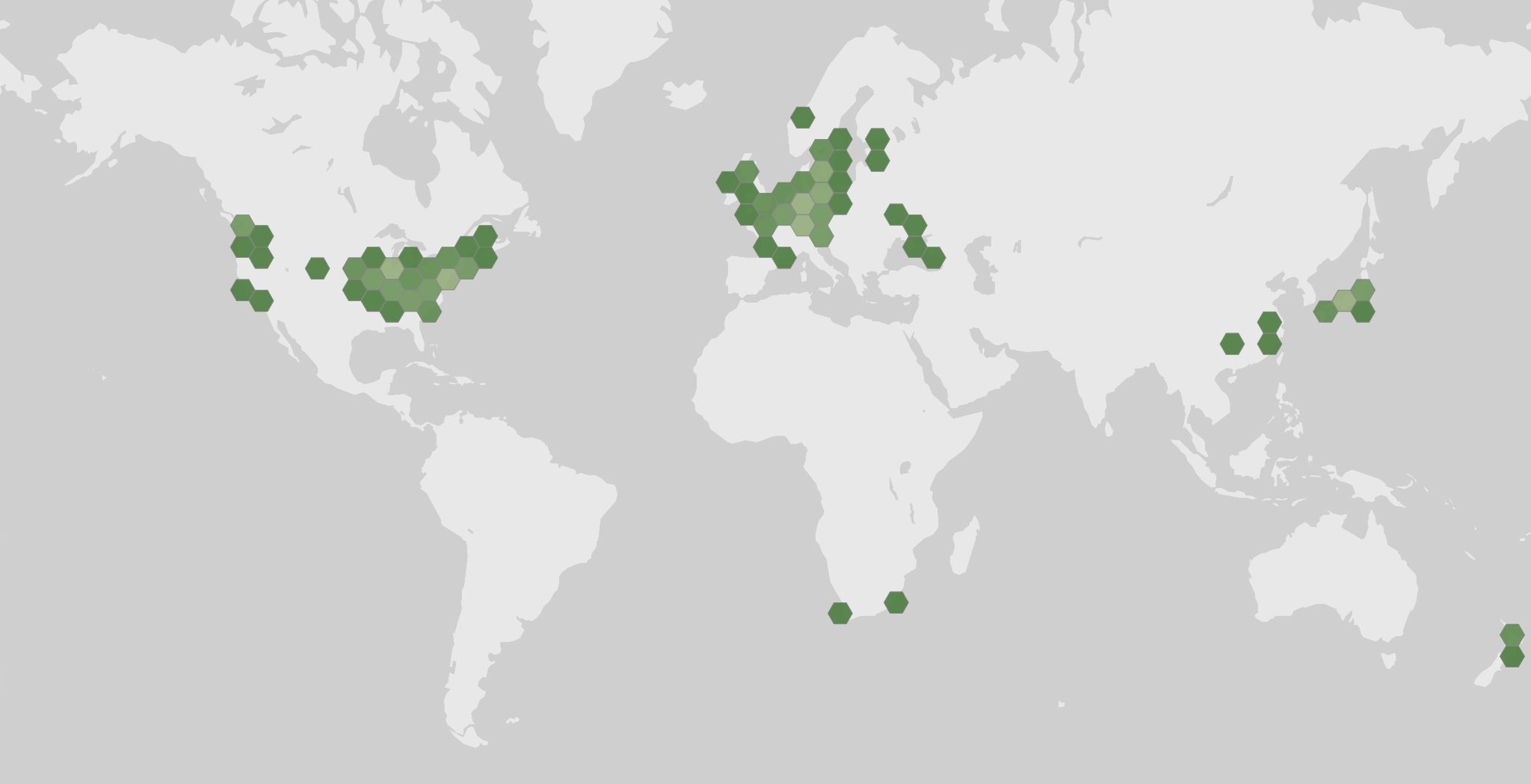
Magnolia stellata is native to Japan, and observation records reflect its strongly seasonal visibility rather than year-round abundance. Monthly counts rise sharply in March and peak in April, the height of its leafless flowering period, before falling away through the summer and into a low winter baseline.
This pattern lines up with the species' biology: the star-shaped flowers appear before the leaves, making flowering plants far more conspicuous and more likely to be noticed and recorded in early spring than at any other time of year. As the observation caveat notes, these are presence records only, not measures of population size or a complete picture of its native range in Japan.
Uses and Human Relationships
Since Dr. George Robert Hall introduced Magnolia stellata to the United States in 1862, it has become widely cultivated across much of North America, occasionally escaping cultivation in a few places. It also became a common ornamental in Europe after its introduction to the United Kingdom in 1877 or 1878.
Its compact size makes it well suited to small gardens, where its early flowers on otherwise bare stems provide color at a time when little else is blooming. Three cultivars, 'Centennial', 'Jane Platt', and 'Royal Star', have each received the Royal Horticultural Society's Award of Garden Merit, a mark of their garden value. Growers propagate the species by seed or, more easily, by rooting cuttings taken after the flower buds have formed, and gardeners are advised that spring frosts can damage the flowers and that the shrub prefers deep, acidic soil.
Magnolias more broadly carry symbolic weight in several cultures: yellow-flowered magnolias appear in Hindu mythology tied to Kamadeva, the god of love, whose arrows are said to be tipped with flowers including yellow magnolia, and in Greek mythology magnolia is associated with the goddess Demeter. These associations reflect the broader cultural standing of magnolias rather than uses specific to the star magnolia itself.
Fun Facts
- Magnolia stellata was only recognized as a distinct species in 1998, when David Hunt's monograph separated it from its close relative, the Kobushi magnolia.
- Its flowers open on completely bare branches, appearing before a single leaf has emerged for the season.
- Flower color is not fixed: individual plants can shift between white and richer pink tones from one year to the next.
- Some cultivars push far beyond the wild form's minimum of 12 tepals, producing more than 30 slender, petal-like segments per flower.
- In Japan's Hanakotoba flower-language tradition, magnolias are linked to a love of nature and to dignity, while Chinese tradition treats them as symbols of purity and nobility.
- Magnolias as a group have drawn scientific attention beyond horticulture, including research into the compound honokiol, though this interest applies to the magnolia lineage broadly rather than to Magnolia stellata alone.
Photos
Photographs from by Jiao Sun (孙娇) via iNaturalist, licensed under CC BY 4.0., via iNaturalist, licensed under CC0 1.0., by Jason E. Farabaugh via iNaturalist, licensed under CC BY 4.0., by Viktor Strenada via iNaturalist, licensed under CC BY 4.0., by Daniella Marie via iNaturalist, licensed under CC BY 4.0., by Oleksandr Shynder via iNaturalist, licensed under CC BY 4.0., by Jose Gutierrez Higa via iNaturalist, licensed under CC BY 4.0., by toad-wife via iNaturalist, licensed under CC BY 4.0., by scohlendorf via iNaturalist, licensed under CC BY 4.0., by Albert Rainbow via iNaturalist, licensed under CC BY 4.0., and by danabuchbinder via iNaturalist, licensed under CC BY 4.0., credited on each photo.
Ecology and classification
Growth habit
- Shrub
Classification
- Phylum
- Tracheophyta
- Class
- Magnoliopsida
- Order
- Magnoliales
- Family
- Magnoliaceae
- Genus
- Magnolia
- Species
- Magnolia stellata
Sources
- GBIF Species names and classification
- iNaturalist Photos
- Wikidata Common names and conservation status
- Wikipedia Summary extract