Crushed leaves of Mentha pulegium give off a very strong fragrance similar to spearmint, yet this mint is toxic to the liver and has caused some deaths.
Commonly called European pennyroyal or pennyrile, it is also known as mosquito plant and pudding grass. It is a flowering plant in the mint family, Lamiaceae, native to Europe, North Africa and the Middle East. In Britain it is considered rare and declining, except where it has been introduced.
Pennyroyal has long been a folk remedy, a culinary herb and a pest repellent, which makes it a plant many people handle. Its related American species, Hedeoma pulegioides, shares similar chemical properties despite belonging to a different genus.
Identification and Appearance
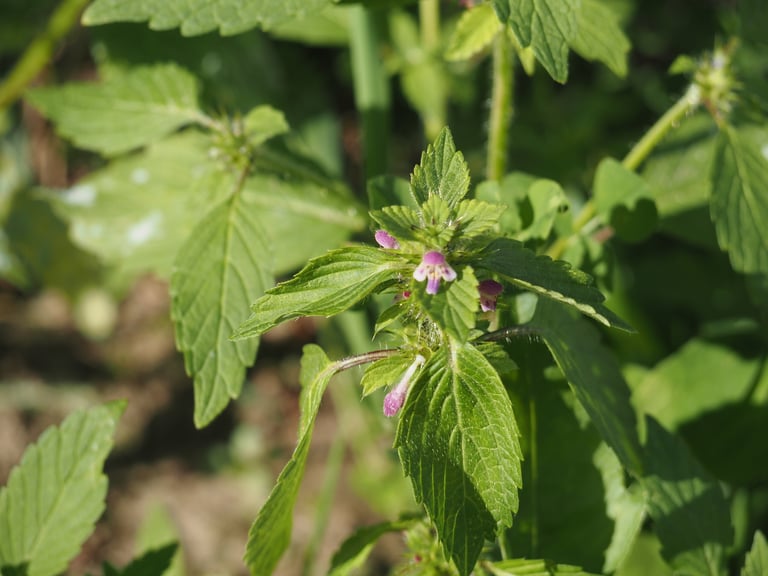
The most useful field mark is the square stem, which is common to all mints. On Mentha pulegium the stems are green, sometimes red or purplish, and may be hairless or densely hairy.
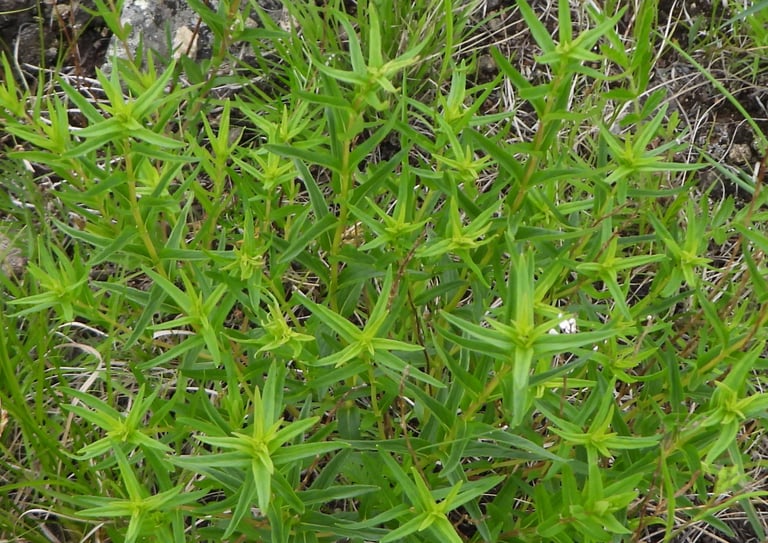
The plant grows as a creeping or erect, branched herb to about 40 cm tall. Its leaves grow in opposite pairs and are narrowly oval, about 2–3 cm long and 1 cm wide. They are downy, sparsely toothed toward the tip and taper into a short stalk.
Crushing any part of the plant releases a strong scent. Unlike many mints, it has no noticeable glands on its surface.
The small flowers, about 6 mm across, are densely packed in whorls at the nodes, with the whorls widely spaced along the stem. Each whorl sits above a pair of leaf-like bracts. The four mauve corolla lobes are hairy only on the outside. Four long stamens, two or all four of which project beyond the lobes, and a forked style with two stigmas also extend from the flower.
Distribution and Habitat
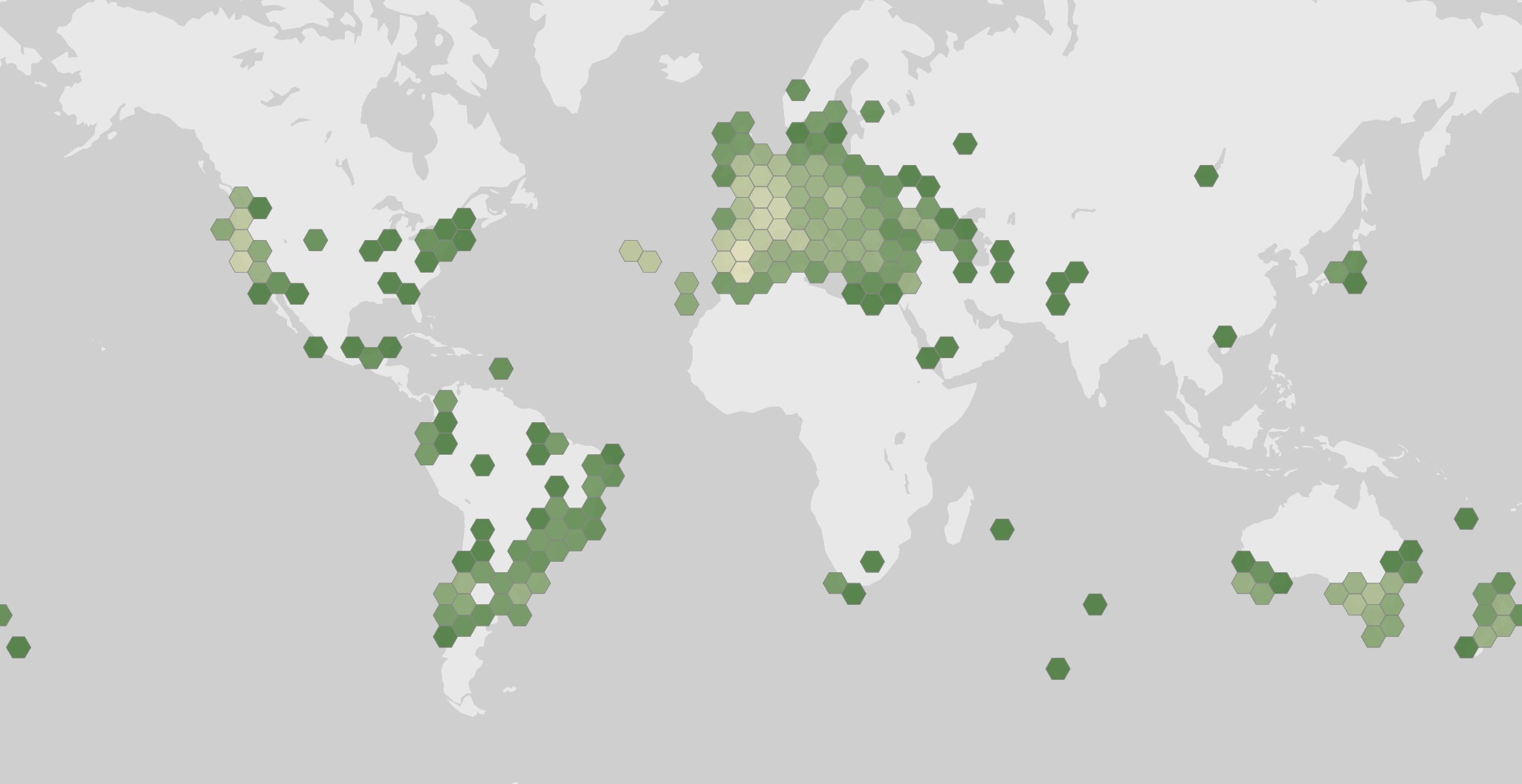
Mentha pulegium is thought to be native to the eastern Mediterranean. It is now widely established around the world, including North and South America, throughout Africa, Asia, Australia and New Zealand. In many places it is a troublesome weed of agriculture.
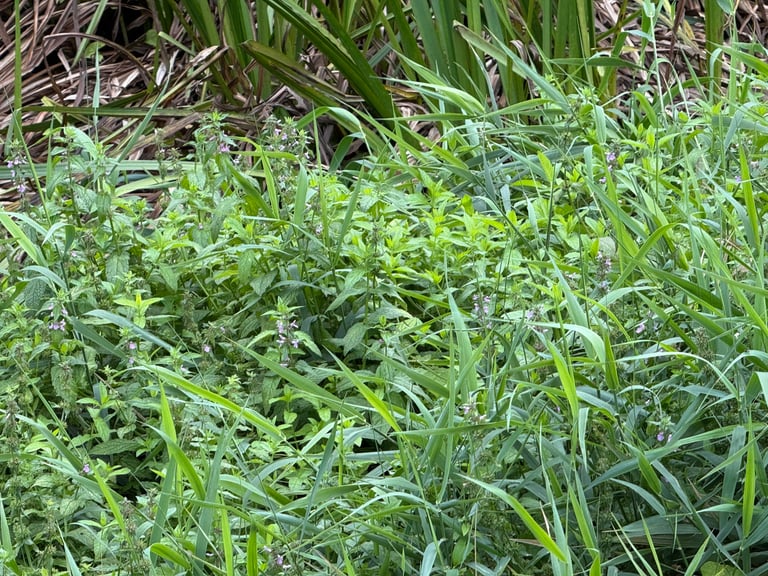
In its native range the plant grows in damp meadows, around pools and along stream margins. Its core habitat is seasonally damp pasture, where standing water over winter leaves bare ground in summer and livestock tend to graze other plants first.
The same niche appears on roadsides, where trampling or disturbance leaves similarly bare soil, especially where the ground is waterlogged in winter. The plant also grows along watercourses, in wet woodland and in abandoned fields.
In California, where it is regarded as invasive, it grows in seeps, streamsides, vernal pools, swales, marshes and ditches. Monthly observations in the available records peak in mid-summer, though these reflect where people have seen the plant rather than how many plants there are.
Growth and Form
Mentha pulegium is a herbaceous perennial, though some plants behave as annuals. Its branched stems creep along the ground or grow upright, reaching about 40 cm in height.
The stems are square in cross-section and vary from hairless to densely hairy depending on the plant. Their colour ranges from green to red or purplish.
Ecology and Relationships
Insects are the main visitors to the flowers of Mentha pulegium. Bees in the family Halictidae, such as sweat bees, and mason and leafcutter bees visit most often, followed by bumblebees and hoverflies. These insects visit the flowers but are not known to be its pollinators.
Several groups of animals feed on the plant. Among insects, beetles, moths and butterflies, and true bugs feed on it, with leaf beetles in the genus Chrysolina among the partners. Seed-eating songbirds, such as the skylark, also take it as food, along with waterfowl and game birds.
In Britain, few insects feed on it. The one most often noted is a seed bug that normally feeds on wild thyme. The plant is a sign of low-intensity pasture, and it is considered an indicator species in many British counties.
Uses and Human Relationships
Pennyroyal is used as an insecticide and pest repellent. Crushed stems have been tucked into pockets or clothing to ward off insects, and some flea collars for pets contain its oil or have the crushed herb in their lining.
Historically the herb has been used to flavor herbal teas and foods. In Rome and the surrounding area, its fresh leaves, known locally as menta romana, flavor lamb and tripe in the capital's cuisine. The plant has also been used as an emmenagogue and an abortifacient in folk medicine.
Photos
Photographs from via iNaturalist, licensed under CC0 1.0., credited on each photo.
Ecology and classification
Growth habit
- Herb
Classification
- Phylum
- Tracheophyta
- Class
- Magnoliopsida
- Order
- Lamiales
- Family
- Lamiaceae
- Genus
- Mentha
- Species
- Mentha pulegium
Sources
- GBIF Species names and classification
- iNaturalist Photos
- Wikidata Common names and conservation status
- Wikipedia Summary extract
- Encyclopedia of Life Habitat, diet and behavior traits
- Plants of the World Online Native range, life form and climate (WCVP)
- USDA Plants US plants: growth habit and growing conditions
- GloBI What it eats, what eats it, parasites and pollinators
- trophiCH
- DoPI
- Schwarz et al. 2021