The rust fungus Naohidemyces vaccinii needs two unrelated plant groups to finish its life cycle. It infects members of the Vaccinium genus, which includes lingonberries, blueberries and cranberries, and it also infects hemlocks in the genus Tsuga.
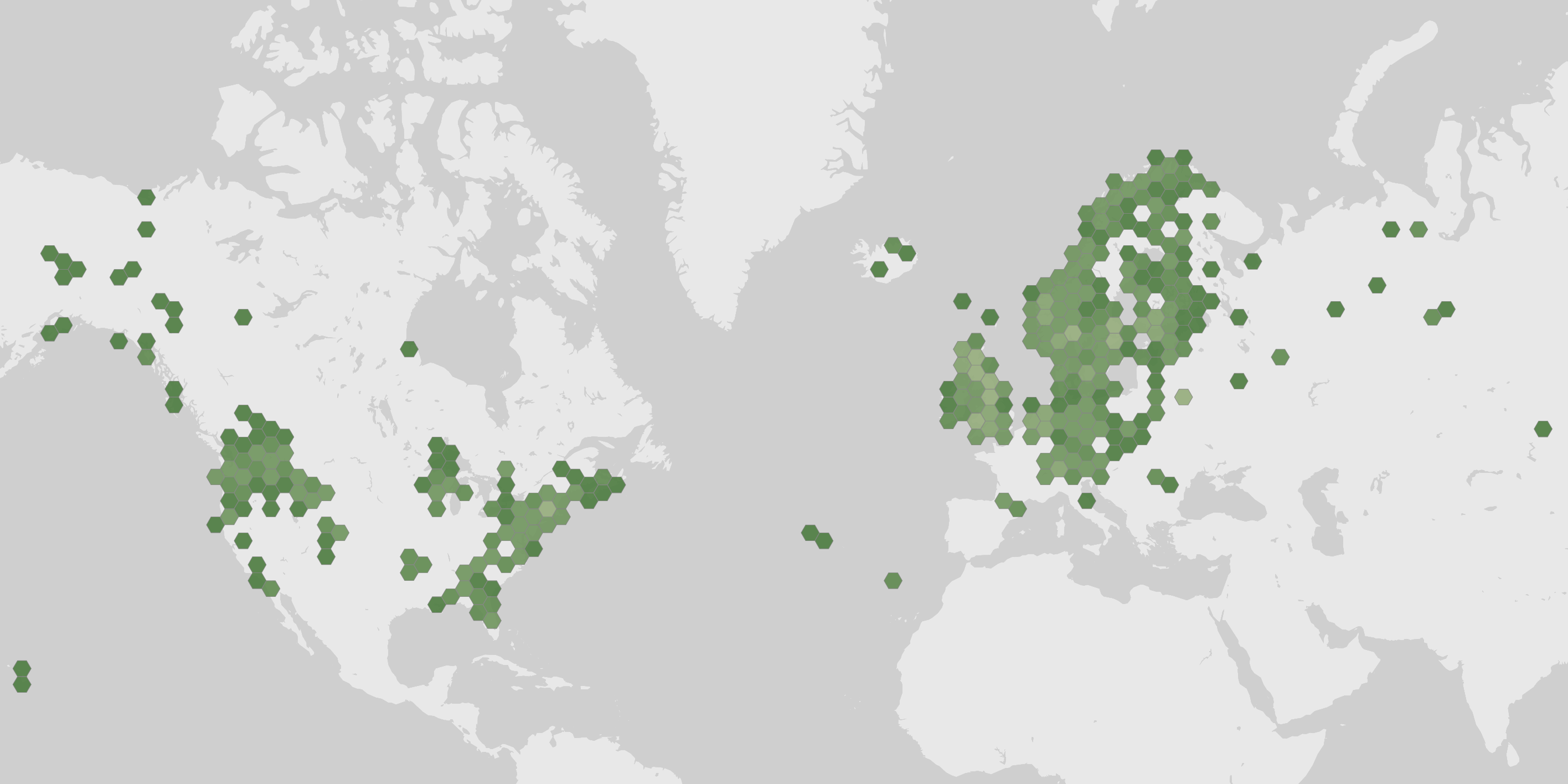
On Vaccinium plants it causes leaf rust. On hemlocks it causes early needle cast. The fungus is a plant pathogen, found on Vaccinium in Canada, the United States, the United Kingdom, Europe, Russia, China, Korea and Japan. On hemlock it occurs in Alaska, Idaho and Washington in the United States, in British Columbia in Canada, and in Japan.
The fungus is worth reading about because it links two plant groups that rarely share a pathogen. Its life cycle shows how a rust can move between a shrub and a tree.
Distribution and Habitat
Naohidemyces vaccinii occurs on Vaccinium plants across a wide area, including Canada, the United States, the United Kingdom, Europe, Russia, China, Korea and Japan. On hemlock it is known from Alaska, Idaho and Washington, from British Columbia, and from Japan.
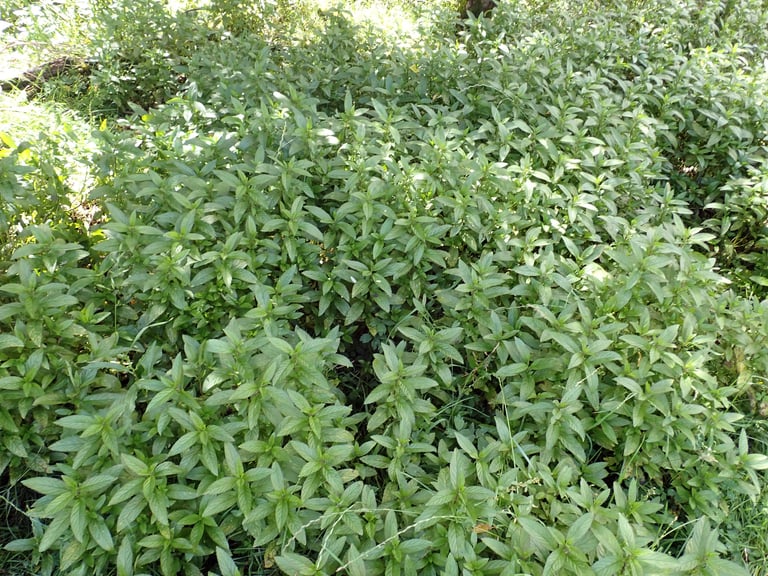
The fungus uses Vaccinium shrubs as its main summer host, where it forms leaf rust. Hemlock trees are its second host, where it causes early needle cast.
Observation records for the species are concentrated in late summer. Most records fall between July and September, with a clear peak in August and September. These are presence records, so they show when the fungus is seen rather than how common it is.
Life Cycle
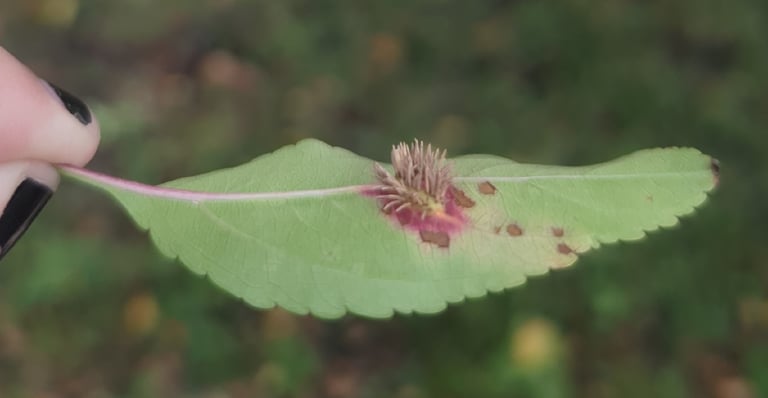
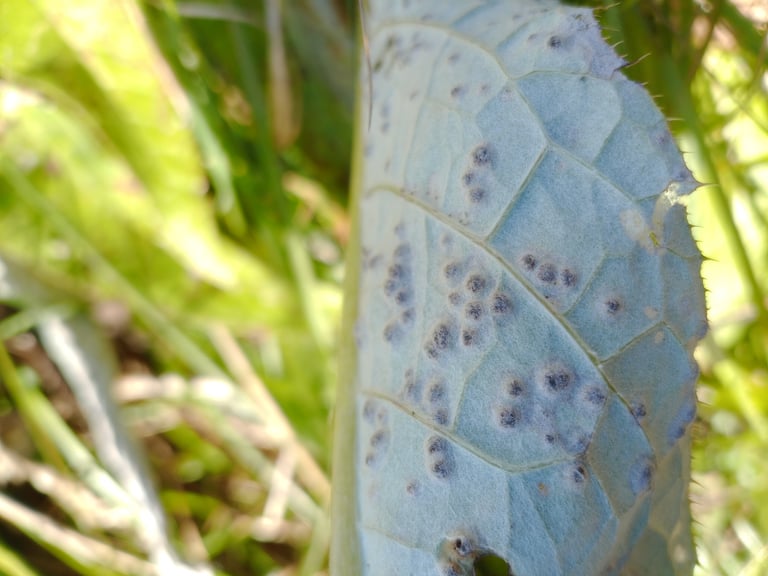
The fungus starts its season on Vaccinium leaves. In midsummer, wind-borne urediniospores form in yellow-orange pustules on the underside of the leaves. These spores reinfect Vaccinium leaves and build up the number of infections through the summer.
In late summer, flat telia crusts form, which carry the fungus through winter. Telia are rare on lingonberries. In spring, teliospores germinate and form basidia, which release basidiospores. These spores travel to hemlock trees, where they land on the needles.
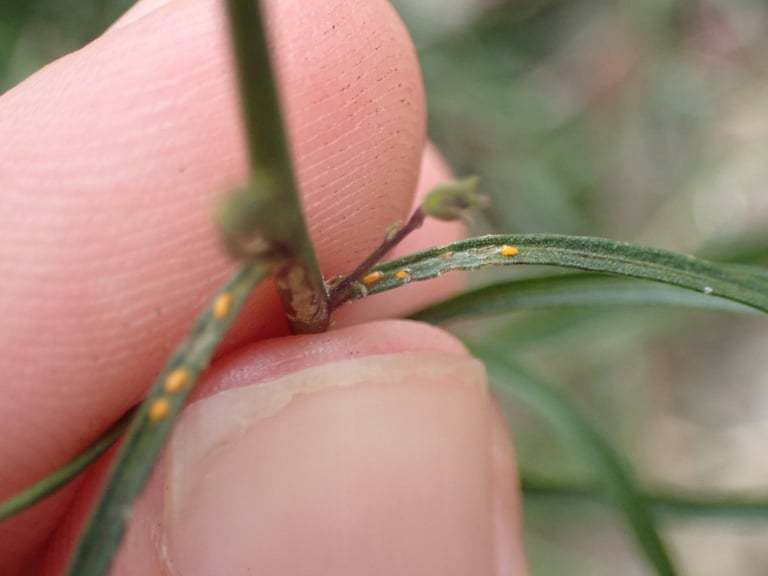
Once on the needles in spring, the fungus forms pycnia. In early summer, yellow-orange aeciospores develop in shallow, cone-shaped aecia on the underside of the needles. The aecia sit in two rows along the length of each needle.
Photos
Photographs from via iNaturalist, licensed under CC0 1.0., by Marco Iboshi via iNaturalist, licensed under CC BY 4.0., by Marina E. via iNaturalist, licensed under CC BY 4.0., by cigazze via iNaturalist, licensed under CC BY 4.0., by Z via iNaturalist, licensed under CC BY 4.0., by Tim Aßmus via iNaturalist, licensed under CC BY 4.0., by Adam J. Searcy via iNaturalist, licensed under CC BY 4.0., by David Anderson via iNaturalist, licensed under CC BY 4.0., by Senna Bryce Robeson via iNaturalist, licensed under CC BY 4.0., by Jake Dalzell via iNaturalist, licensed under CC BY 4.0., by Johan Adler via iNaturalist, licensed under CC BY 4.0., and by Sam Bucciarelli via iNaturalist, licensed under CC BY 4.0., credited on each photo.
Ecology and classification
Classification
- Phylum
- Basidiomycota
- Class
- Pucciniomycetes
- Order
- Pucciniales
- Family
- Pucciniastraceae
- Genus
- Naohidemyces
- Species
- Naohidemyces vaccinii
Sources
- GBIF Species names and classification
- iNaturalist Photos
- Wikidata Common names and conservation status
- Wikipedia Summary extract