The common evening-primrose opens its yellow flowers visibly fast every evening, a spectacle that gave the plant its name. Oenothera biennis belongs to the family Onagraceae and is native to eastern and central North America, from Newfoundland west to Alberta, southeast to Florida, and southwest to Texas.
The plant has spread far beyond its homeland and has become established on every continent except Antarctica. Evening primrose oil is produced from it, which makes this North American native a useful case of a wild herb that has traveled the world.
Identification and Appearance
The yellow flowers are the easiest field mark. Each bloom measures 2.5 to 5 centimeters (1 to 2 inches) across and has four bilobed petals, and it opens every evening.
In its first year the plant is a low, spreading herb only a few centimeters tall. Its lanceolate leaves, 8 to 18 centimeters (3 to 7 inches) long and 2 to 6 centimeters wide, spread in a tight rosette over the ground.
In its second year it grows up on a semi-woody stem to around 1.6 meters (5.2 feet) tall. The leaves are then arranged spirally along the stem, and the flowers are carried on a tall spike.
The fruit is a capsule 2 to 4 centimeters long and 4 to 6 millimeters wide. It holds numerous seeds 1 to 2 millimeters long and splits into four sections when mature.
Distribution and Habitat
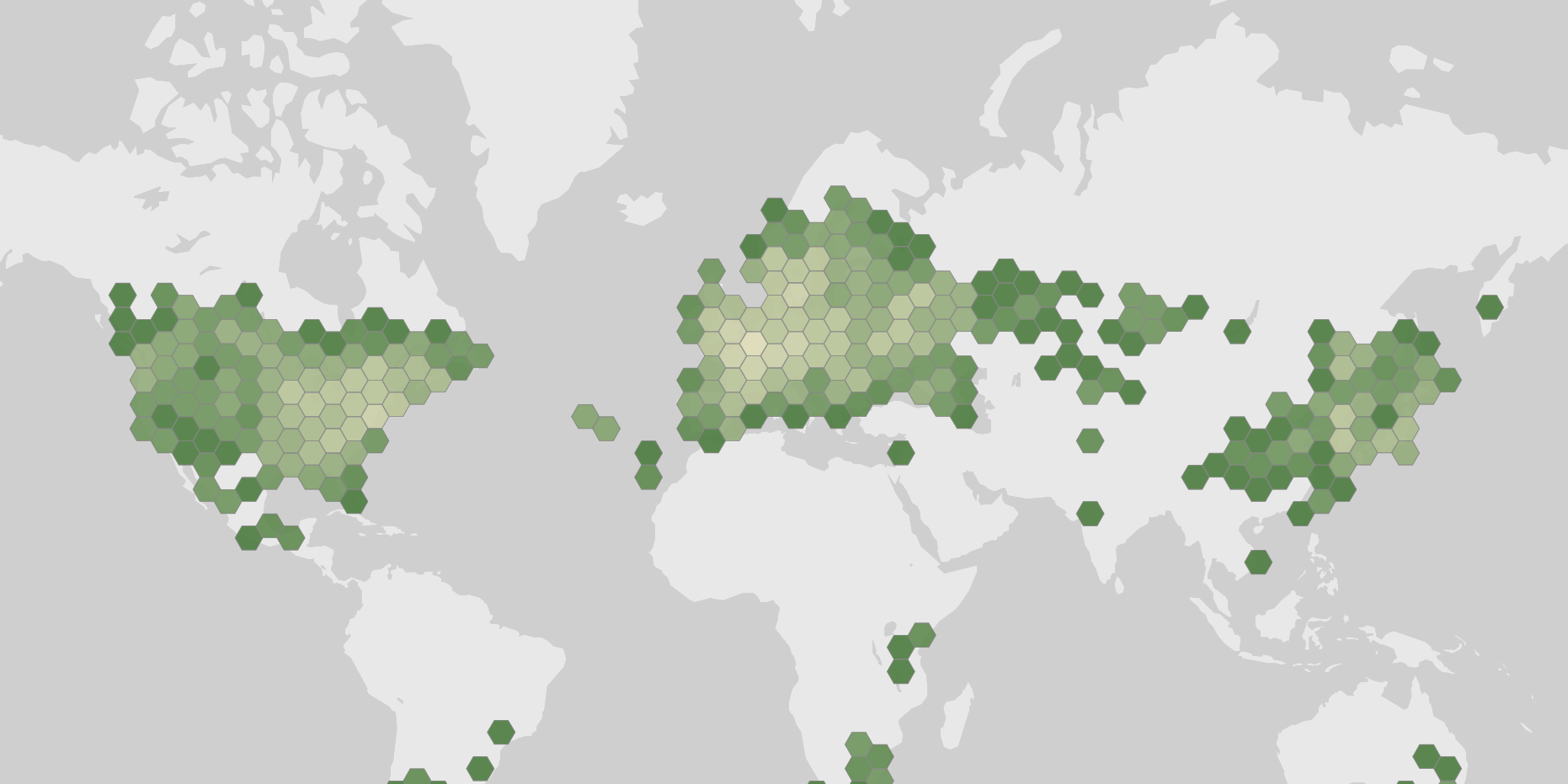
The species is native across much of eastern and central North America, with its range running from Newfoundland west to Alberta, southeast to Florida, and southwest to Texas. Its native range also reaches across many states from the Atlantic coast through the Great Plains, and into central and northeastern Mexico.
Outside North America, it is established in much of Europe and Asia, including China, Japan, India, and Iran. It is also present in parts of Africa, such as Ethiopia, Morocco, and Tunisia, and in South America, including Argentina, Brazil, and Chile. Tasmania and Hawaii also host established populations.
It favors disturbed ground and sunny, arid places with loamy soil. It grows below about 700 meters (2,300 feet) above sea level.
Sightings peak in July, with a smaller rise in August, which likely reflects when the plants are most conspicuous in flower.
Growth and Form
The common evening-primrose is a biennial, completing its life over two years. The first year is spent as a low rosette while the plant stores energy in a thick root, and the second year brings the flowering stem.
Growth is rapid. Mature plants reach about 1.5 meters (5 feet) tall in their seeding year.
The plant usually dies at the first frosts after flowering. Occasionally it produces another stem in a third year.
Ecology and Relationships
The plant is a weedy species that thrives in disturbed environments, and it is an important food source for birds. Seeds are eaten by passerine birds, including the American goldfinch, and by other seed-eating birds such as the northern bobwhite and the mourning dove.
Moths and beetles feed heavily on it. Caterpillars of moths such as the primrose moth (Schinia florida) and the white-lined sphinx moth use the plant as a larval host, and the primrose moth lays its eggs on the flowers, so the emerging caterpillars feed on the plant. Leaf beetles and true bugs also feed on its tissues.
Bees and hoverflies visit the flowers most often. Honeybees and bumblebees come to the blooms, and seeds can remain viable in the soil seed bank for 70 years or more.
Cultivation and Care
The plant tolerates shade well and has medium drought tolerance. It grows in soil with a pH between 5 and 7, and it survives winter temperatures down to about -33 degrees Celsius (about -28 degrees Fahrenheit). Its bloom period is late spring, and its flowers are yellow.
Seeds are tiny, and they need shallow sowing at a depth of 0.5 to 1.0 centimeter (0.2 to 0.4 inch), since the seeds need light to germinate. Seeds can be sown in early April for spring crops or from mid-July to mid-August for autumn crops. Germination takes two to three weeks, so young plants compete poorly with weeds. The crop suits no-till farming but needs intensive mechanical weed control.
Harvest falls about 75 to 80 days after flowering for spring seeds and about 100 days for autumn seeds. Seed maturity is very uneven, which makes harvest timing difficult. Without proper field management, the plant can become invasive.
Uses and Human Relationships
Indigenous peoples in North America used the plant as food and in traditional medicine for centuries. The leaves and stems were used to treat skin, digestive, and throat conditions.
The evening primrose was introduced to Europe in the early 17th century as an ornamental plant in botanical gardens. Today it is grown commercially for its seed oil. Clinical evidence does not support evening primrose oil as a treatment for any medical condition. A Cochrane review found no effect of primrose oil on eczema, and the Mayo Clinic reported no good evidence that it helps eczema, diabetic neuropathy, or premenstrual syndrome.
Photos
Photographs from via iNaturalist, licensed under CC0 1.0., by Elliot Greiner via iNaturalist, licensed under CC BY 4.0., by Philip Stepnowski via iNaturalist, licensed under CC BY 4.0., by Kai Löhr via iNaturalist, licensed under CC BY 4.0., by Sawyer Baran via iNaturalist, licensed under CC BY 4.0., by Carter Ertel via iNaturalist, licensed under CC BY 4.0., and by froggymum via iNaturalist, licensed under CC BY 4.0., credited on each photo.
Ecology and classification
Habitat
Growth habit
- Herb
Classification
- Phylum
- Tracheophyta
- Class
- Magnoliopsida
- Order
- Myrtales
- Family
- Onagraceae
- Genus
- Oenothera
- Species
- Oenothera biennis
Sources
- GBIF Species names and classification
- iNaturalist Photos
- Wikidata Common names and conservation status
- Wikipedia Summary extract
- Plants of the World Online Native range, life form and climate (WCVP)
- USDA Plants US plants: growth habit and growing conditions
- GloBI What it eats, what eats it, parasites and pollinators
- trophiCH
- DoPI
- EuPPollNet