The zombie-ant fungus, Ophiocordyceps unilateralis, takes control of carpenter ants. The British naturalist Alfred Russel Wallace discovered it in 1859, and its infected ants are found mostly in tropical rainforests.
The fungus belongs to the family Ophiocordycipitaceae, in the order Hypocreales and the class Sordariomycetes. The name covers a species complex, a group of closely related fungi that share the same name and host pattern.
What makes it worth reading about is its control over behavior. The fungus changes how an ant moves and where it dies, so the ant's last act serves the fungus's growth and spread.
Fruiting Body and Identification
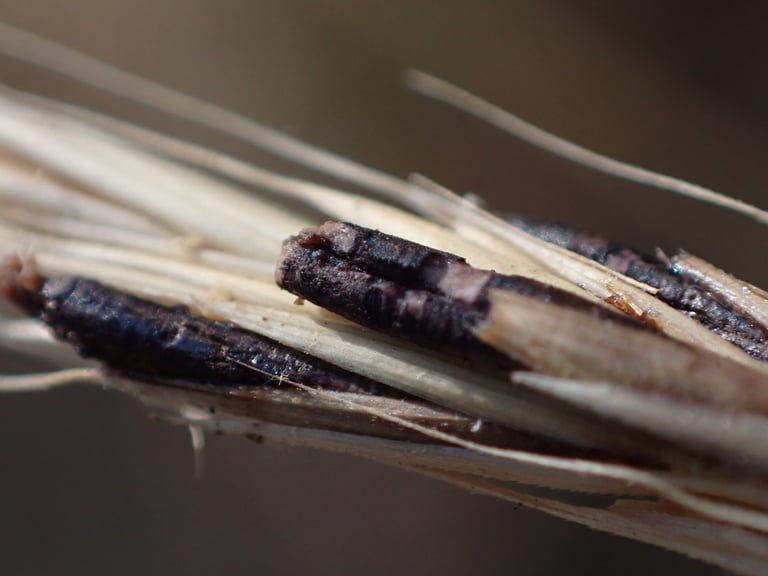
The fruiting body is easy to spot once it emerges from a dead host, which is usually a carpenter ant. A single, wiry but flexible, darkly pigmented stroma grows from the ant's body, and spore-bearing perithecia sit on the stalk just below its tip.
Most species in the complex have both a sexual form (teleomorph) and an asexual form (anamorph). The asexual forms are generally Hirsutella and Hymenostilbe, two genera of asexually reproducing fungi.
The species show morphological variation across a wide range that stretches from Japan to the Americas. One explanation is that each fungus maximizes infection of one specific host ant species, and different ant subspecies share the same area by occupying different niches.
The core clade has a single stroma with a Hirsutella asexual form. It grows from the dorsal neck region of the dead ant and bears dark brown perithecia on its stalk. Its hosts are all Camponotini ants, and after death they are usually found clamped by their mandibles to the undersides of leaves.
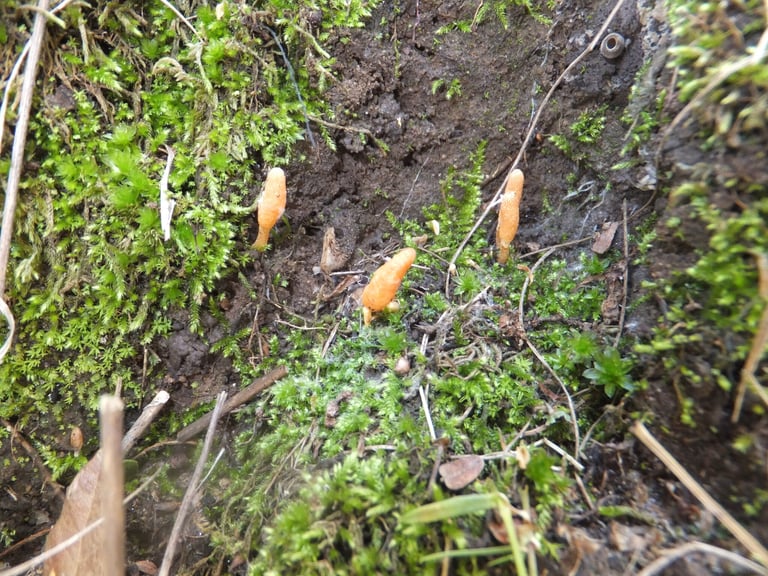
The O. kniphofioides subclade differs. Its stroma grows sideways from the host's thorax and produces an orange ascoma. These species lack the "death grip" typical of the core clade, and their hosts usually die at the base of large trees among moss carpets in the Amazon rainforest.
Distribution and Habitat
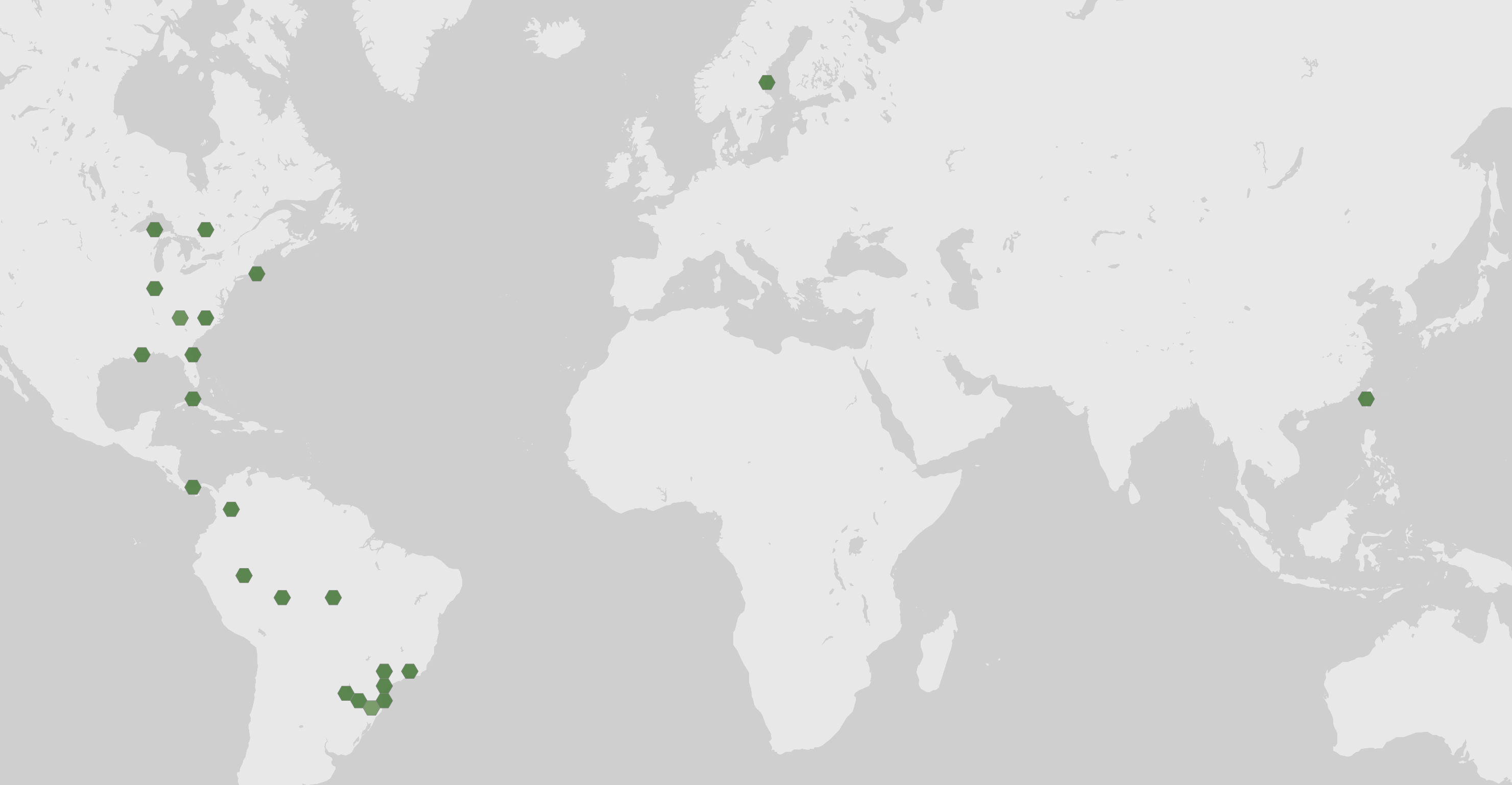
The fungus occurs mainly in tropical forest ecosystems, so it is described as pantropical. It has also been found in warm-temperate ecosystems.
Its known range includes tropical rainforests in Brazil, Australia and Thailand. It also occurs in temperate forests in South Carolina, Florida and Japan.
The fungus is older than most of its present-day sites suggest. A fossil leaf stem from the Messel pit in Germany, about 48 million years old, carries dumbbell-shaped marks made by an ant in the fungus's death grip.
Observations peak in the middle of the year, with the highest counts in August and September. The strongest presence is in the second half of the year, although the observation data reflect where people look, not the full extent of the fungus.
Life Cycle
Infection begins when the ants descend from their canopy trails to the forest floor. The ant Camponotus leonardi lives in the high canopy, and its aerial trails sometimes cross gaps too wide to bridge, forcing the ants to the ground. Spores attach to the ant's exoskeleton and break through it using mechanical pressure and enzymes.
Inside the ant, yeast-like stages spread through the body. The fungus is thought to produce compounds that affect the hemocoel, the ant's body cavity, and the altered behavior that follows is tuned to help the fungus grow and spread.
The infected ant has irregular, full-body convulsions that drop it from the canopy to the forest floor. It then climbs a plant stem and uses its mandibles with abnormal force to clamp onto a leaf vein on the northern side of the plant, about 26 cm above the ground. The site has 94–95% humidity and temperatures between 20 and 30 °C (68 and 86 °F). Infections can leave 20 to 30 dead ants per square meter.
Atrophy then weakens the mandible muscles, so the ant can no longer release its grip and hangs upside down. A study in Thailand found that this biting behavior is synchronized at solar noon. In temperate forests, infected ants instead attach to the underside of twigs.
The fungus kills the ant, and its hyphae invade soft tissue and strengthen the exoskeleton. Mycelia anchor the body to the plant and secrete antimicrobials that ward off competitors. Fruiting bodies then grow from the ant's head and burst open to release spores, a process that takes 4–10 days.
Dead ants pile up in areas called graveyards, which hold high densities of ants infected by the same fungus. The term "zombie ants" is popular in media, though some researchers call it catchy yet misleading.
Ecology and Relationships
The fungus is attacked by hyperparasites, including Niveomyces coronatus and Torrubiellomyces zombiae. These organisms attack the fungal stalk as it emerges from the ant's body, which can stop it from releasing its spores.
Hyperparasites reduce the number of viable sporangia, which limits spread and the damage to ant colonies. Only about 6.5% of fruiting bodies are viable spore producers. Ants also groom one another to combat microscopic organisms, and other fungi help the colony.
The fungus is one of the best-known examples of an extended phenotype, a form of host manipulation that increases the parasite's transmission. The infected ant leaves its normal foraging path and climbs to about 25 centimeters (9.8 inches) above the ground, a height that suits fungal growth because of its humidity and temperature.
The spores are clear, thin-walled and sensitive to UV radiation and dryness. Studies suggest that short spore viability drives the fungus to invest in growth in the dead ant, and it fortifies the cadaver to keep it from decaying while the fruiting body develops.
Photos
Photographs from by Denis Zabin via iNaturalist, licensed under CC BY 4.0. and by Shiva Pires via iNaturalist, licensed under CC BY-SA 4.0., credited on each photo.
Ecology and classification
Habitat
Classification
- Phylum
- Ascomycota
- Class
- Sordariomycetes
- Order
- Hypocreales
- Family
- Ophiocordycipitaceae
- Genus
- Ophiocordyceps
- Species
- Ophiocordyceps unilateralis
Sources
- GBIF Species names and classification
- iNaturalist Photos
- Wikidata Common names and conservation status
- Wikipedia Summary extract