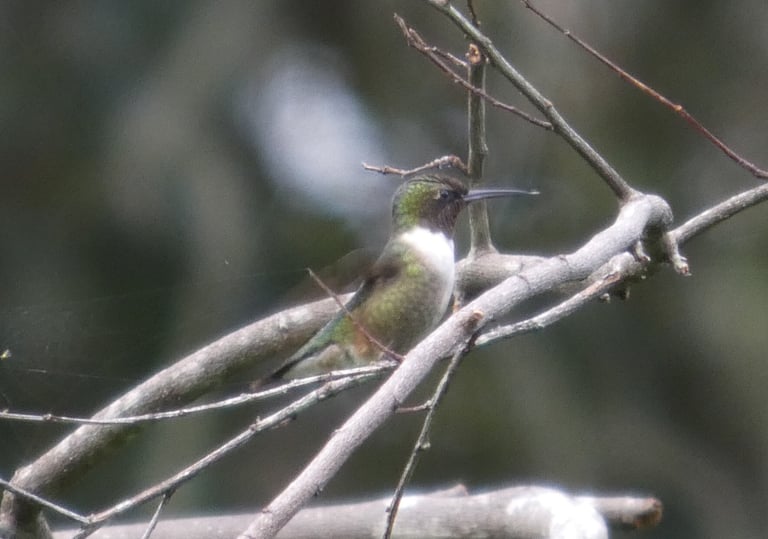
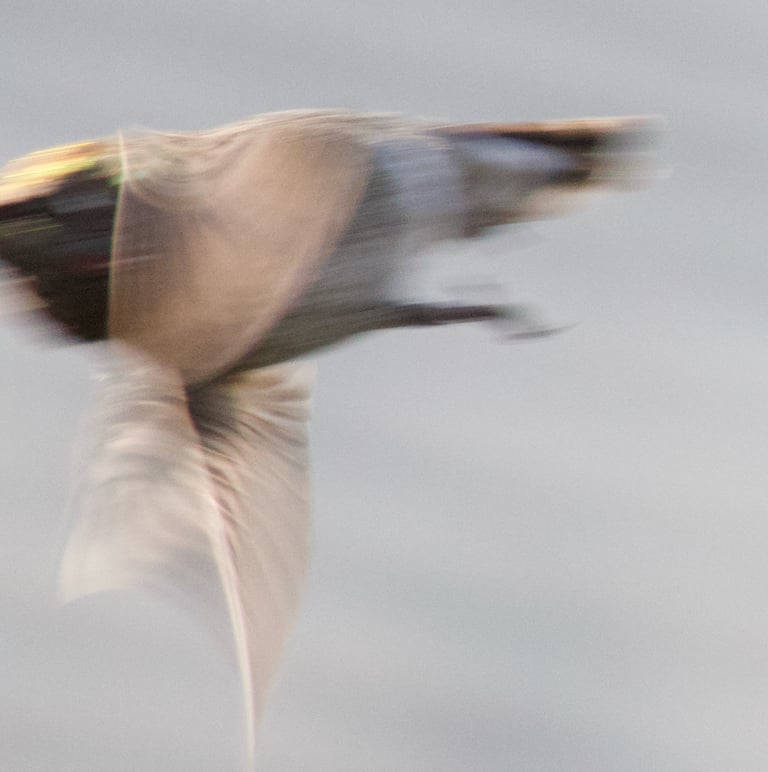
The pallid swift spends nearly its entire life in the air, drinking, feeding, and even resting on the wing rather than settling on the ground like most birds.
This member of the swift family (Apodidae) belongs to the order Apodiformes and is classified as Least Concern. It lives largely on insects caught in flight, and its almost entirely airborne lifestyle makes it one of the more unusual birds to observe and identify.
Identification and Appearance
The most reliable field mark is the large white throat patch, often visible from a distance against an otherwise dark body. The pallid swift measures 16 to 17 centimeters (6.3 to 6.7 in) long and weighs about 0.042 kg, with a short forked tail and long, swept-back wings shaped like a crescent or boomerang.
Compared to the closely related common swift, the pallid swift looks chunkier and browner, with slightly paler flight feathers, underparts, and rump that create more contrast against the rest of the plumage. Its belly also appears scalier, and its flight action is subtly different.
Because the two species are so similar, separation is only possible with good, close views. The call offers another clue: a loud, dry scream like that of the common swift, but possibly more disyllabic.
Distribution and Habitat
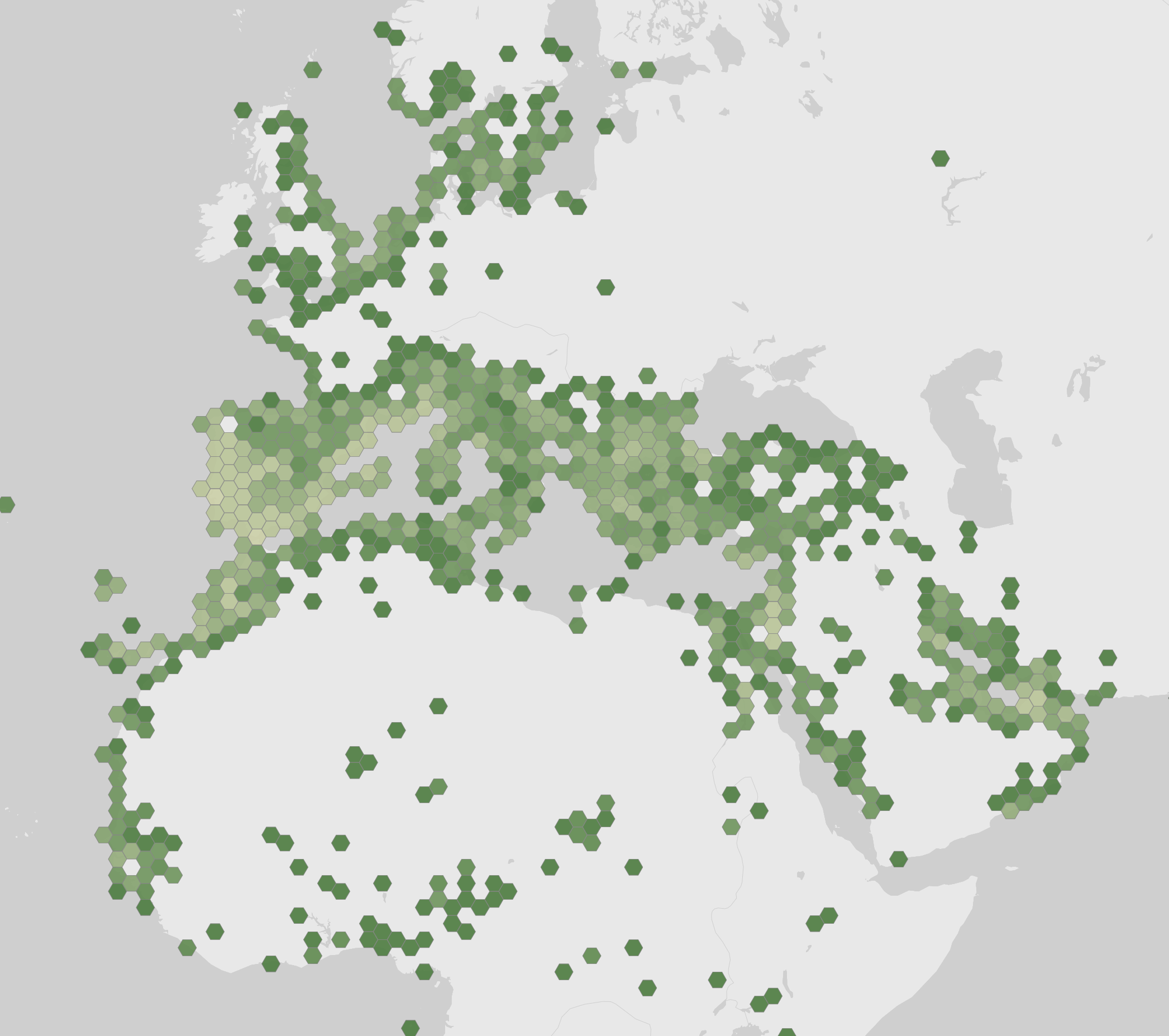
Pallid swifts breed on cliffs and eaves around the Mediterranean, as well as on the Canary Islands and Madeira, where they lay two eggs. Their overall range covers about 1,720,000 km², and they favor rocky habitats such as sea cliffs and building eaves for nesting.
The species is migratory, wintering in southern Africa or southeast Asia. Because its breeding range lies farther south than that of the common swift, the pallid swift arrives earlier in spring and departs later in autumn, meaning unusually early or late swifts seen north of the normal range deserve careful scrutiny.
GPS tracking of birds breeding in Gibraltar has revealed multiple wintering grounds south of the Sahara, used at specific times of year. One tracked bird showed strong fidelity to the same African areas across two consecutive winters, and two tracked individuals showed no sign of ever landing throughout the non-breeding season, supporting the idea that swifts live an essentially airborne existence outside the breeding period.
The species is rare north of its breeding range, though identification difficulties mean it is likely under-recorded there.
Cultural Significance
The constellation Apus, which shares its name with the swift's genus, has little mythological background of its own, unlike many northern-hemisphere constellations rooted in Greek and Roman myth.
In contrast, the Inca Empire attached deep spiritual meaning to the word "apu," using it for mountain spirits believed to protect the people and places around them, offering a connection between the human world and the sacred realm of Hanan Pacha.
Fun Facts
- The genus name Apus comes from Ancient Greek roots meaning "without foot," reflecting the ancient belief that swifts were a footless kind of swallow.
- The species name pallidus is Latin for "pale," a reference to its lighter tones compared to the common swift.
Photos
Photographs from by Mourad Harzallah via iNaturalist, licensed under CC BY 4.0. and by Zac Peterson via iNaturalist, licensed under CC BY 4.0., credited on each photo.
Ecology and classification
Classification
- Phylum
- Chordata
- Class
- Aves
- Order
- Apodiformes
- Family
- Apodidae
- Genus
- Apus
- Species
- Apus pallidus