Few mosses grow as tall as Polytrichum commune. Its stems often exceed 30 cm (12 inches) and rarely reach 70 cm (27.5 inches), although most plants are only 5 to 10 cm high.
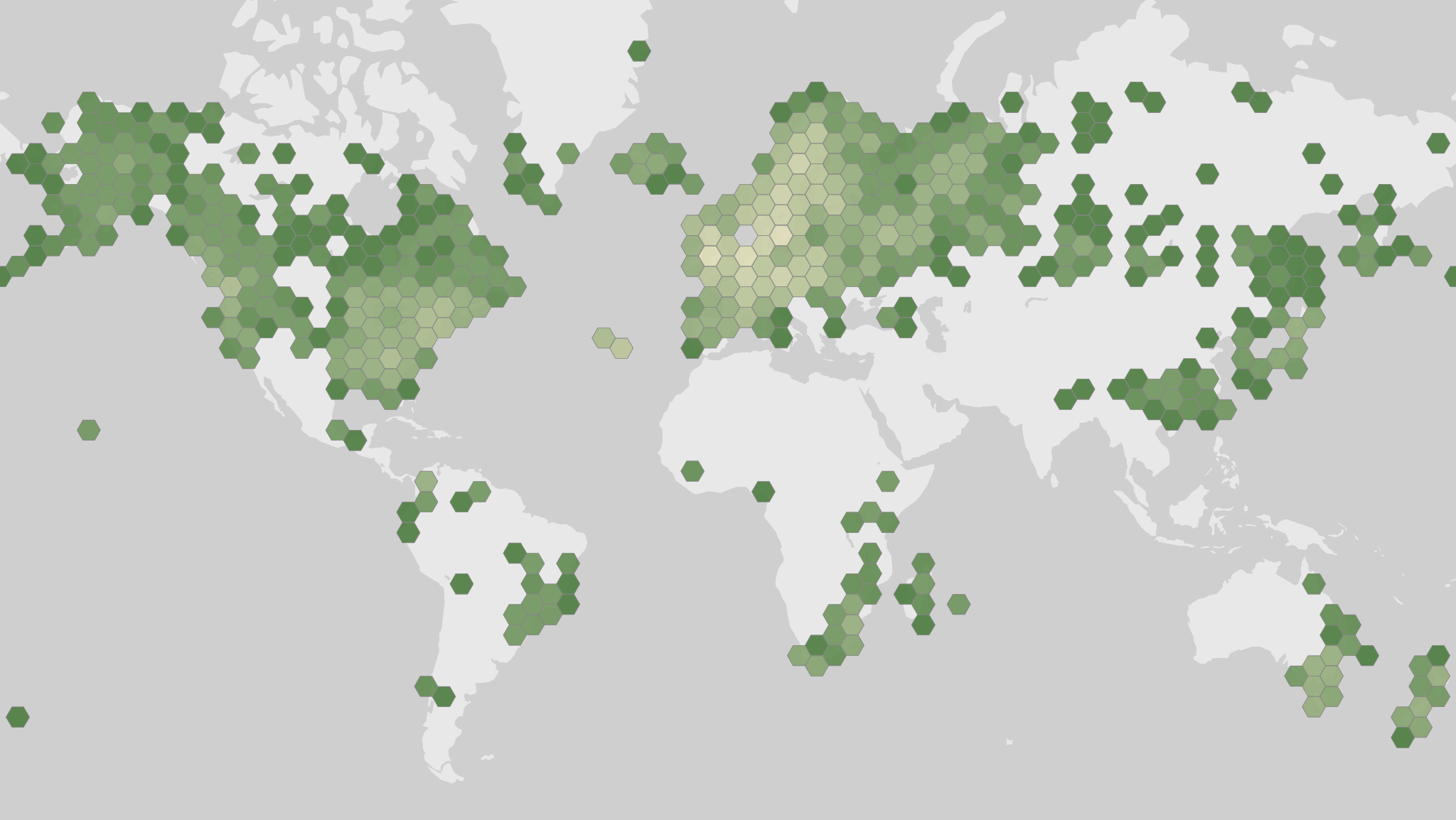
This is a moss in the family Polytrichaceae, within the class Polytrichopsida. It is found in many regions with high humidity and rainfall, and it is widely distributed through temperate and boreal latitudes of the Northern Hemisphere. It also occurs in Mexico, several Pacific Islands including New Zealand, and Australia.
The species typically grows in bogs, wet heathland and along forest streams. It also thrives in partly open ground that has been recently disturbed by people or livestock, which makes it a common moss in altered landscapes.
Identification and Appearance
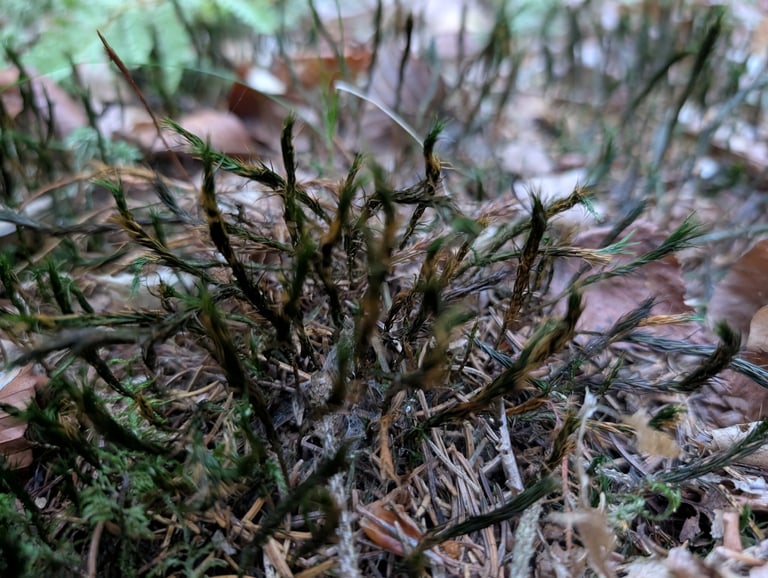
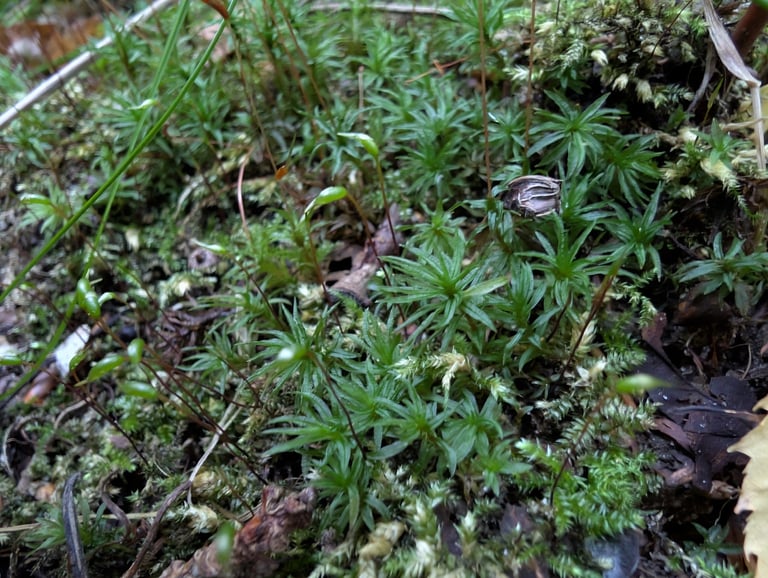
The most useful field mark is the colour and form of the leaves: the dark green, erect tufts become brownish with age, and moist leaves are sinuous with recurved tips. Its stems are the tallest feature, most often 5 to 10 cm (2.0 to 3.9 inches) long, though they can be as short as 2 cm or as long as 70 cm (28 inches).
The stems range in stiffness from erect to decumbent, meaning they recline. They are usually unbranched, and only rarely forked. They grow in either loose or quite dense tufts and often form extensive colonies.
The leaves are densely to rather distantly arranged and typically measure 6 to 8 mm (0.24 to 0.31 inches) long, with a maximum of about 12 mm (0.47 inches). Each leaf sheath is golden yellow and shiny, clasping the stem and abruptly narrowing to a narrowly lanceolate blade. The blade margins are toothed from base to tip, and the central stalk, or costa, extends beyond the tip as a short, rough awn.
The capsule sits on a stout stalk, or seta, that is 5 to 9 cm (2.0 to 3.5 inches) long and yellowish to reddish brown. The capsule is 3 to 6 mm (0.12 to 0.24 inches) long, sharply four-winged and glaucous when fresh, and its golden yellow to brownish calyptra covers it completely.
Distribution and Habitat
Polytrichum commune is widely distributed across temperate and boreal latitudes in the Northern Hemisphere. It is also found in Mexico, several Pacific Islands including New Zealand, and Australia, so its range extends well beyond the north.
It grows most often in bogs, wet heathland and along forest streams. These wet habitats match its need for high humidity and rainfall.
The moss also colonizes partly open ground that has recently been disturbed by human activity or livestock. This allows it to persist in areas where soil has been opened up.
Observation records show a clear seasonal peak from about June through August, with fewer records from December through March. This pattern reflects when the moss is most often seen and recorded, not its abundance through the year.
Growth and Form
Polytrichum commune is a nonvascular plant, so it has no true roots, stems with vascular tissue or leaves like those of flowering plants. Its tufts are built from erect or reclining stems that are usually unbranched.
Most stems are 5 to 10 cm (2.0 to 3.9 inches) long, but the species can grow from as short as 2 cm (0.79 inches) to as long as 70 cm (28 inches). Stems that exceed 30 cm are considered unusually tall for a moss.
The plants grow in loose or dense tufts that can spread into extensive colonies. The leaves are arranged densely or more distantly along the stem, and the colonies can cover broad areas of wet ground.
Photos
Photographs from via iNaturalist, licensed under CC0 1.0., by Philokretes via iNaturalist, licensed under CC BY 4.0., by Mary E. Macaulay via iNaturalist, licensed under CC BY 4.0., by Hanna Larsson via iNaturalist, licensed under CC BY 4.0., and by Полина Полежанкина via iNaturalist, licensed under CC BY 4.0., credited on each photo.
Ecology and classification
Habitat
Growth habit
- Moss
Classification
- Phylum
- Bryophyta
- Class
- Polytrichopsida
- Order
- Polytrichales
- Family
- Polytrichaceae
- Genus
- Polytrichum
- Species
- Polytrichum commune
Sources
- GBIF Species names and classification
- iNaturalist Photos
- Wikidata Common names and conservation status
- Wikipedia Summary extract
- USDA Plants US plants: growth habit and growing conditions