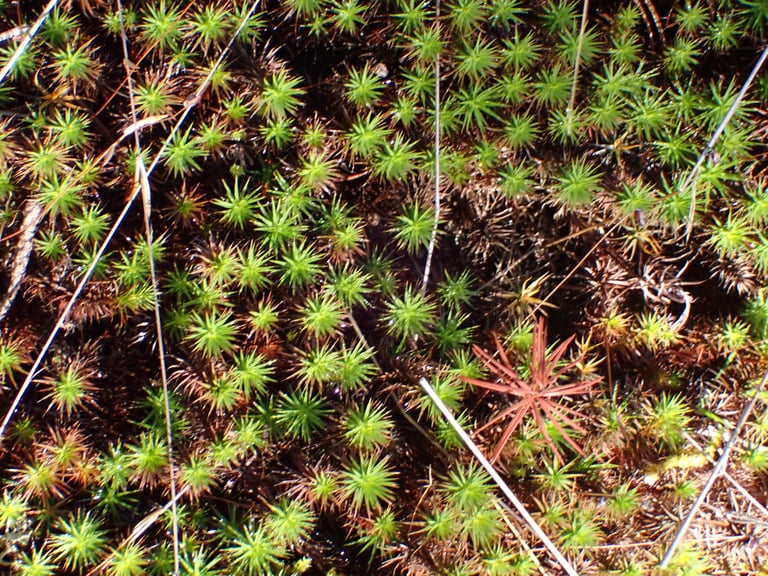
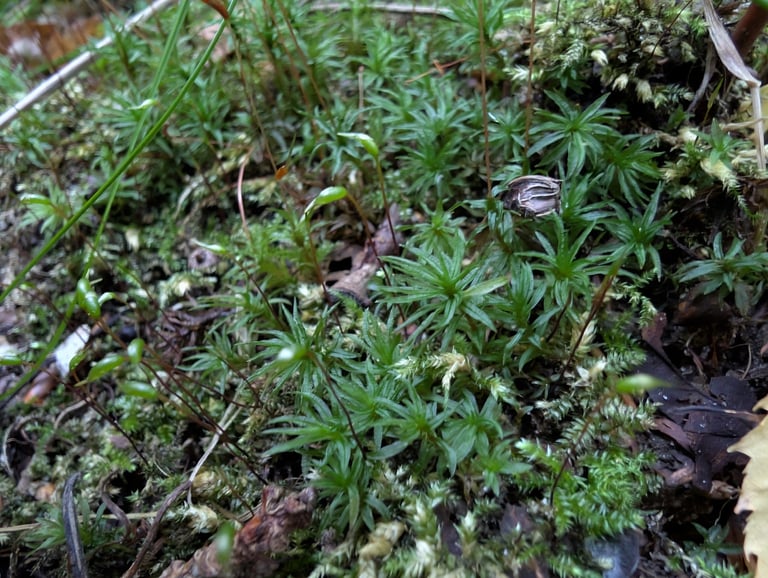
Bank haircap moss is a moss whose male and female reproduction depends on falling rain. It belongs to the family Polytrichaceae, within the order Polytrichales and the class Polytrichopsida, and it is also known under the synonym Polytrichastrum formosum.
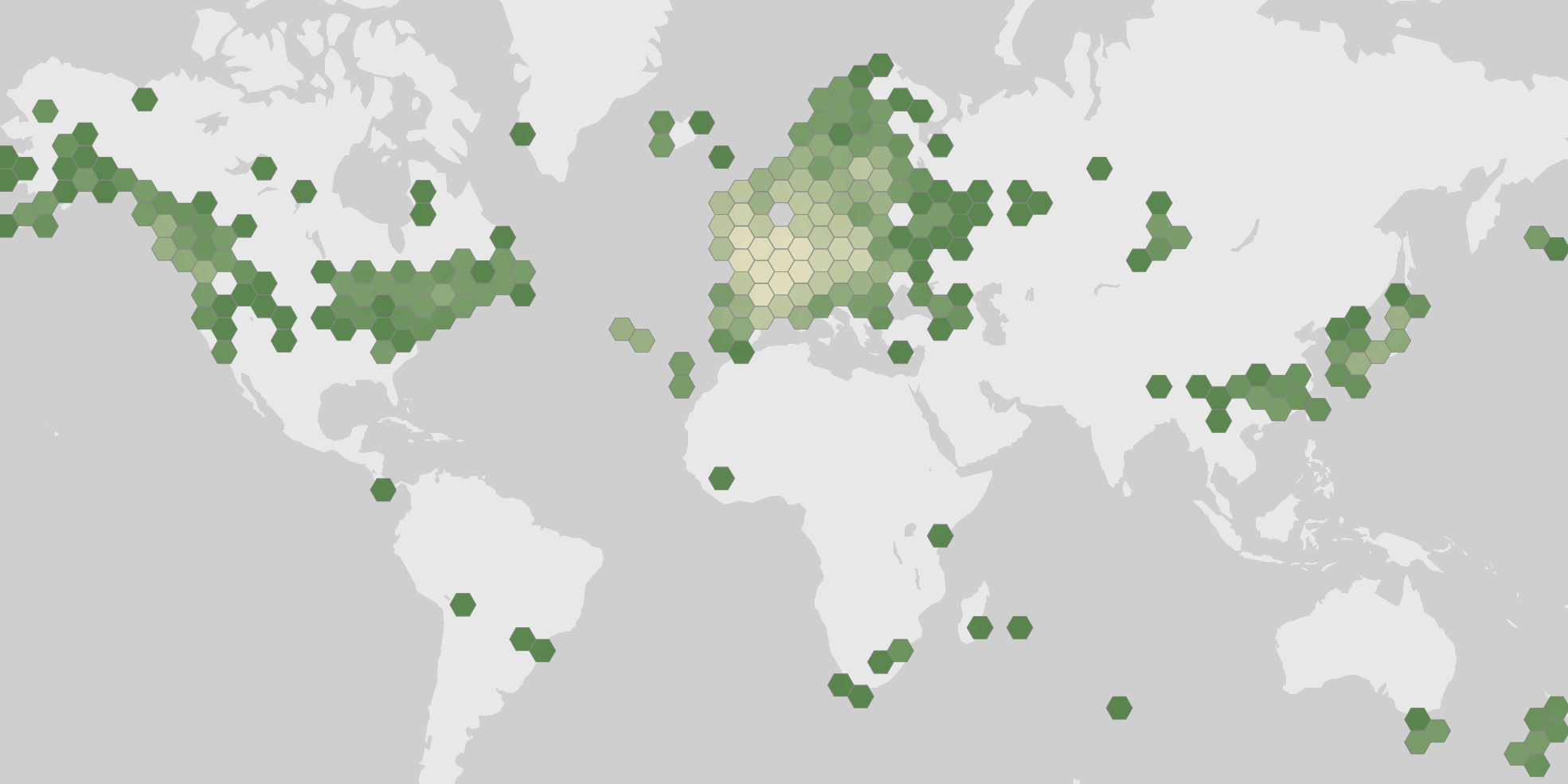
The species is most common in Europe, where it grows across a range of habitats from forest floors to open ground. Its large family group, the haircap mosses, is named for the hairy look of its capsules, and this species is one of the more widespread members of that group in its range.
Distribution and Habitat
Bank haircap moss grows mainly in shaded places with poor soils and humus. It is found in damp coniferous forests and cool temperate rainforests, where the ground stays moist and the light is low.
The species is most common in Europe. It also grows in grasslands, lowland heaths and acidic moorlands, and it colonizes rocky slopes and old buildings.
Observation records peak in July and August and are lowest in December, which suggests the moss is most often seen in the warmer months.
Growth and Form
Bank haircap moss is a nonvascular plant. It has no true roots, stems or leaves carrying water internally, and it takes up water and nutrients directly through its surface.
It forms compact, cushion-like growth, with reproductive structures borne at the tips of its stems.
Reproduction and Life Cycle
Bank haircap moss is dioicous, so male and female reproductive structures grow on separate plants. Its reproductive structures sit at the tip of the gametophyte stem, as in all members of the Polytrichaceae.
The female structure, the archegonium, is surrounded by perichaetial leaves that look like the other stem leaves but are longer. The male structure, the antheridium, sits at the apex of the male plant inside a cup formed by modified stem leaves called perigonial leaves.
When the antheridia are mature, raindrops splashing into the cup release the sperm. Sperm can travel up to one meter from the male plant, and if it reaches an archegonium, the egg is fertilized and grows into a diploid sporophyte. Asexual reproduction is less important in this species, but it does occur locally through the vegetative proliferation of genets.
Photos
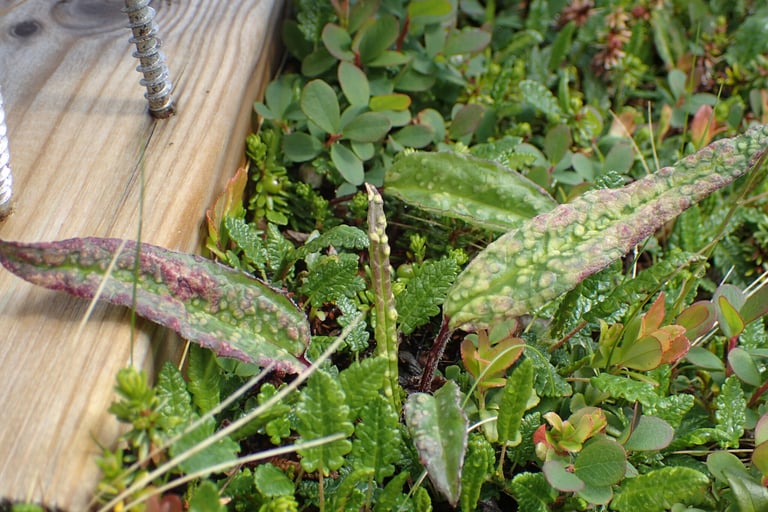
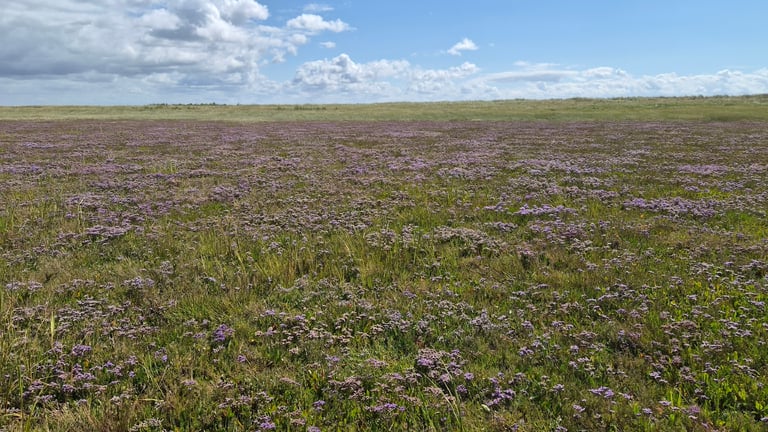
Photographs from via iNaturalist, licensed under CC0 1.0., by aga_l_ via iNaturalist, licensed under CC BY 4.0., by guywallbanks via iNaturalist, licensed under CC BY 4.0., by Daniel Buczkiewicz via iNaturalist, licensed under CC BY 4.0., by Полина Полежанкина via iNaturalist, licensed under CC BY 4.0., and by Alexis Tinker-Tsavalas via iNaturalist, licensed under CC BY 4.0., credited on each photo.
Ecology and classification
Classification
- Phylum
- Bryophyta
- Class
- Polytrichopsida
- Order
- Polytrichales
- Family
- Polytrichaceae
- Genus
- Polytrichum
- Species
- Polytrichum formosum
Sources
- GBIF Species names and classification
- iNaturalist Photos
- Wikidata Common names and conservation status
- Wikipedia Summary extract
- USDA Plants US plants: growth habit and growing conditions