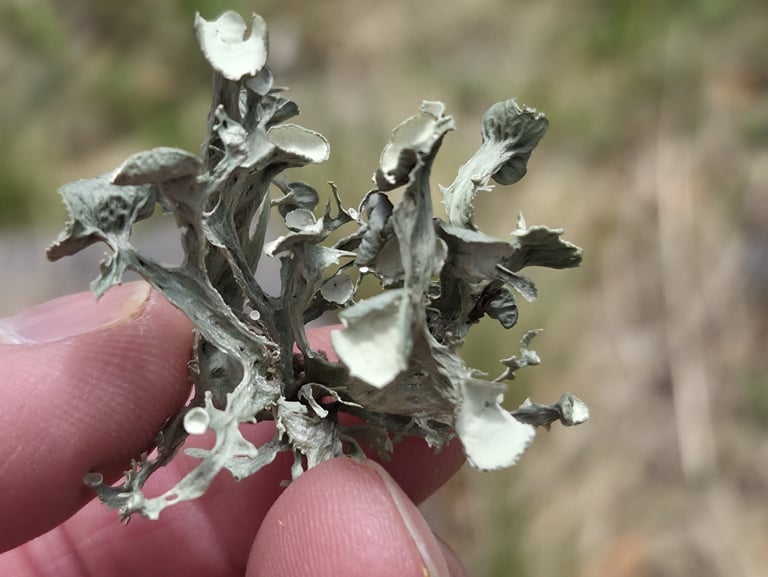
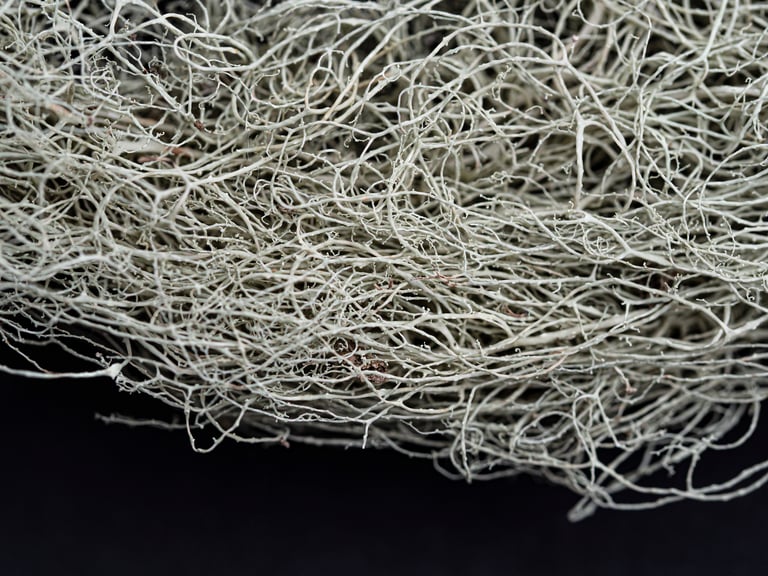
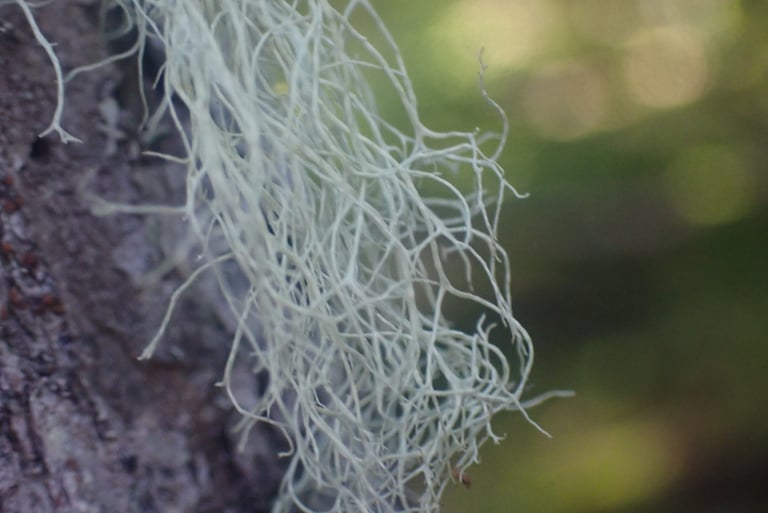
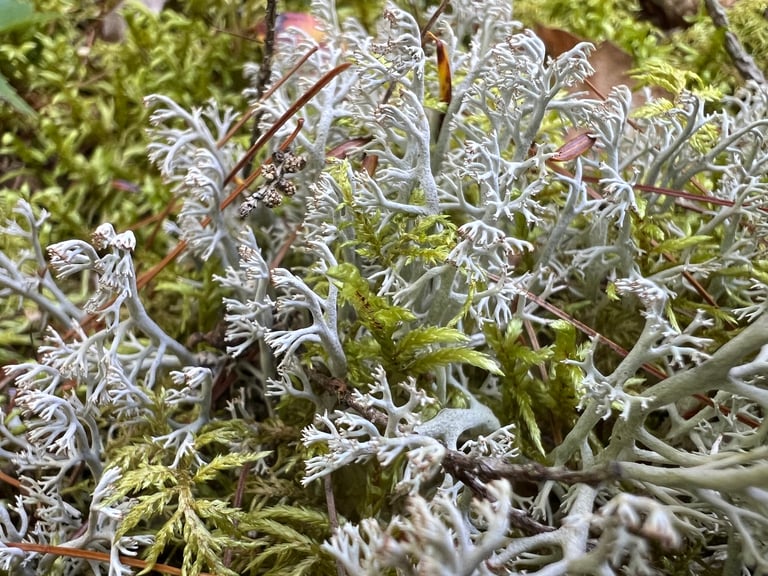
Ramalina celastri is a fruticose lichen that can grow as a hanging, branching structure reaching up to 15 cm in length, giving it a shrub-like or pendulous form quite distinct from crustose lichens that lie flat against bark.
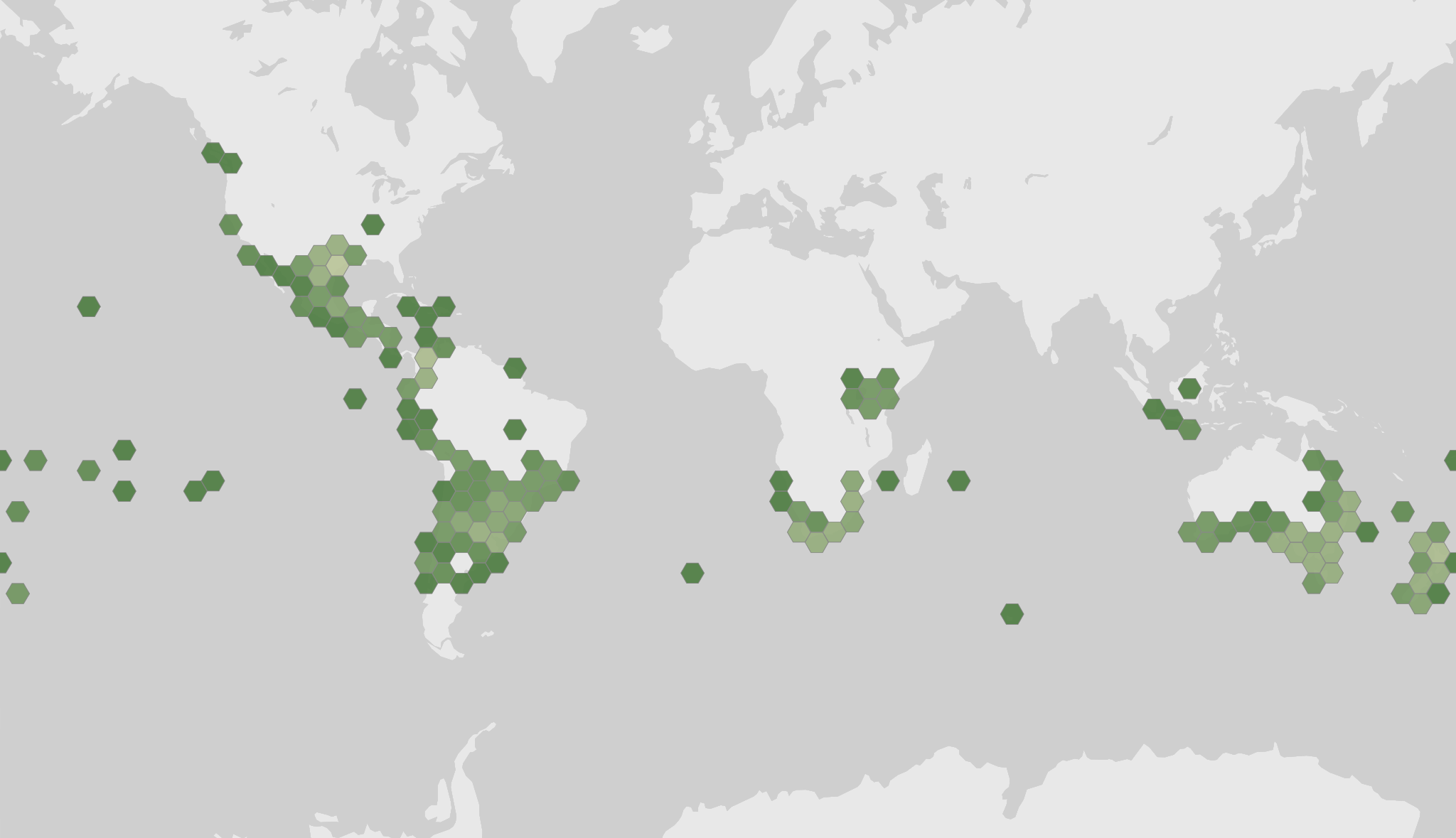
It belongs to the family Ramalinaceae, within the phylum Ascomycota, and is classified as corticolous and lignicolous, meaning it typically grows on tree bark and wood. Its distribution is pantropical, spanning warm and humid regions across multiple continents.
What makes this lichen notable is not a single dramatic trait but its broad, adaptable presence: a species equally at home on a tree trunk in Queensland or a coastal rock in New Zealand.
Fruiting Body and Identification
The most reliable identifying feature of Ramalina celastri is its erect to pendulous, flattened thallus, which can extend up to 15 cm and emerges from a broad base with sparing to moderate branching. The branches are straw-colored to pale green, solid, and lanceolate in shape, either flat or slightly channeled, with widths ranging from 1 to 20 mm but most commonly between 3 and 5 mm.
Young branches start out thin and smooth, but as the lichen ages, the surface develops longitudinal or net-like ridges formed by strands of cartilaginous tissue. Holes and cracks often appear in older branches, and short linear or irregular pseudocyphellae, small pores that allow gas exchange, are commonly present. Soralia, structures used for asexual reproduction, are absent from this species.
Reproductive structures called apothecia appear laterally and along the surface of the thallus, each supported by a short stalk. Their disc is flat to convex and surrounded by a smooth thalline rim. Spores measure 4 to 7 by 11 to 16 micrometers. Chemically, the species lacks medullary substances, and its only reliable secondary metabolite is usnic acid, with atranorin present only inconsistently.
Distribution and Habitat
Ramalina celastri is widely distributed across tropical regions of the world, growing on bark, wood, and occasionally on rocks. It is found on trees, shrubs, and even wooden posts, favoring warmer, humid environments.
The species occurs in New South Wales and Queensland in Australia, and in northern New Zealand, where rock-dwelling populations on the North Island are restricted to coastal environments. These coastal, saxicolous forms show distinct morphological differences from tree-dwelling ones, developing a more robust structure with wider, longer thalli and a thicker medulla in cross-section.
In East Africa, the lichen is common and widespread at elevations between 800 and 3,400 m. It is less common in Brazil than in other tropical countries where it occurs, and has also been recorded in India. In North America, its range extends north to southern Texas.
Fun Facts
- Rock-dwelling forms of Ramalina celastri found along the coast of New Zealand's North Island grow more robust, with wider and longer thalli and a thicker medulla, compared to the tree-dwelling forms of the same species.
- The lichen can be found at elevations as high as 3,400 m in East Africa, showing its ability to persist across a wide range of altitudes.
- Despite its wide tropical range, Ramalina celastri is notably less common in Brazil than in other tropical countries where it is found.
Photos
Photographs from via iNaturalist, licensed under CC0 1.0., by gwynmwilliams via iNaturalist, licensed under CC BY 4.0., by Pluto Hooper via iNaturalist, licensed under CC BY 4.0., by Frank Ashwood via iNaturalist, licensed under CC BY 4.0., by Sam Kieschnick via iNaturalist, licensed under CC BY 4.0., by RAP via iNaturalist, licensed under CC BY 4.0., by Michelle W. (鍾偉瑋) via iNaturalist, licensed under CC BY 4.0., by Em Lamond via iNaturalist, licensed under CC BY 4.0., by Linda Jo Conn via iNaturalist, licensed under CC BY 4.0., by Christopher Hynes via iNaturalist, licensed under CC BY 4.0., and by Nico Yak via iNaturalist, licensed under CC BY 4.0., credited on each photo.
Ecology and classification
Classification
- Phylum
- Ascomycota
- Class
- Lecanoromycetes
- Order
- Lecanorales
- Family
- Ramalinaceae
- Genus
- Ramalina
- Species
- Ramalina celastri
Sources
- GBIF Species names and classification
- iNaturalist Photos
- Wikidata Common names and conservation status
- Wikipedia Summary extract