Every part of Sambucus nigra except its flowers and ripe berries is mildly to seriously toxic, yet people across Europe have turned those same flowers and fruit into cordials, wines, and folk remedies for centuries.
Elder is a deciduous shrub or small tree in the family Viburnaceae, native to the Azores, Europe, and the Middle East and common throughout the British Isles. The International Union for Conservation of Nature lists it as Least Concern, reflecting its wide range and tolerance of many soils and conditions.
Few garden plants carry as much folklore, chemistry, and culinary history in one species. Elder's story runs from Celtic beliefs about fairies to the modern trade in elderflower cordial and elderberry syrup.
Identification and Appearance
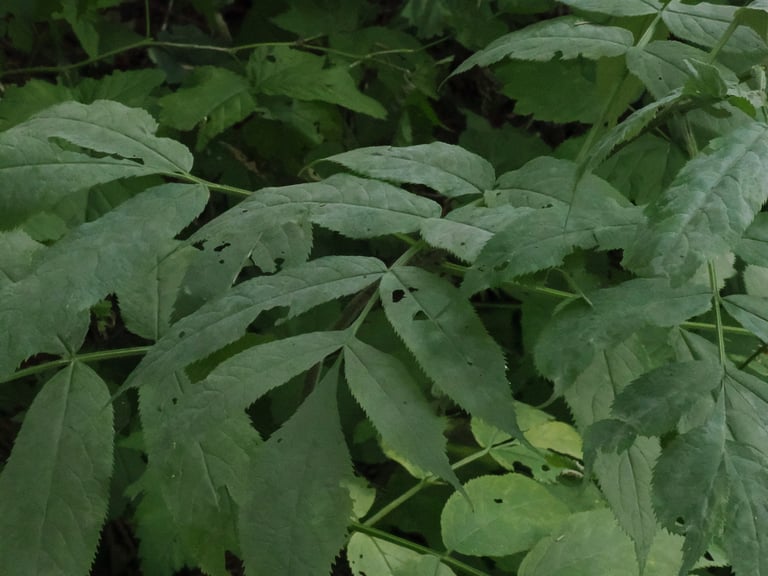
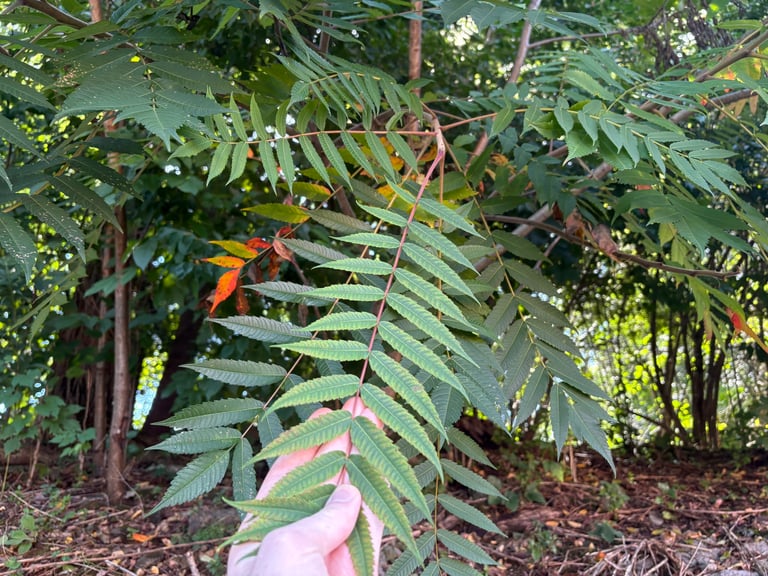
The clearest field mark is the combination of opposite, pinnate leaves with five to seven toothed leaflets and, in season, large flat-topped clusters of small ivory-white flowers or drooping bunches of glossy black berries.
Elder typically grows to 6 meters (20 feet) tall and wide, though it can rarely reach 10 meters (33 feet). Young bark is light gray and smooth, maturing into a coarse, gray, longitudinally furrowed bark studded with prominent lenticels. The young stems are hollow, a useful check when the plant is not in leaf.
Leaves run 10–30 centimeters (4–12 inches) long, with individual leaflets 5–12 centimeters (2–4.75 inches) long and 3–5 centimeters (1.25–2 inches) wide, edged with a serrated margin. The hermaphroditic flowers, each with five petals and five stamens, measure 5–6 millimeters across and are gathered into corymbs 10–25 centimeters in diameter that open from late spring into midsummer; flies are the main pollinators.
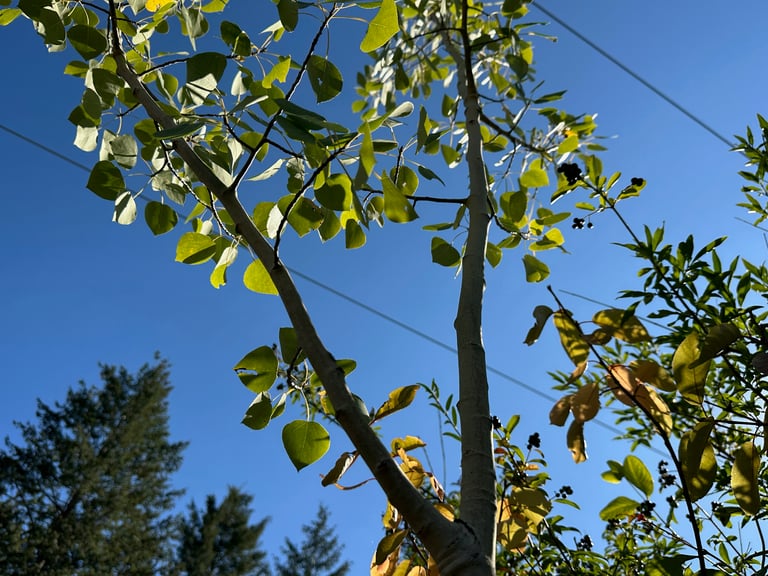
The fruit is a glossy berry 3–5 millimeters across, ripening from green through red to a dark purple-black in late autumn. That deep color comes from a high concentration of phenolic compounds, particularly anthocyanins, in the ripe skin.
Distribution and Habitat
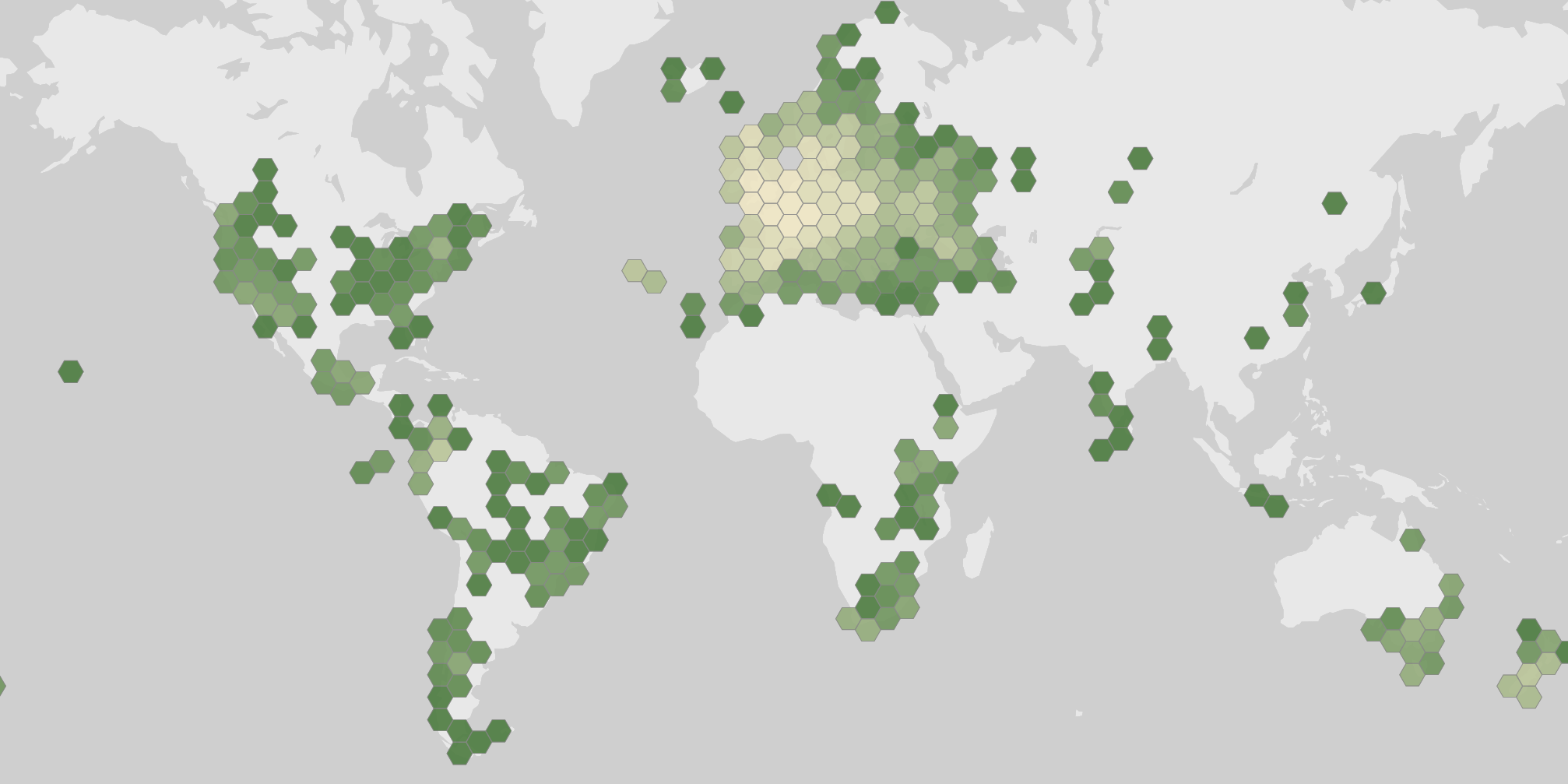
Elder's native range stretches across Europe as far east as Turkey, and it is native to, and common throughout, the British Isles; it has since been introduced to parts of most other continents. Within this range it favors open or disturbed, nutrient-rich ground rather than deep, undisturbed forest.
Typical habitats include woodland edges and forest gaps, grassland, hedgerows, scrub, river banks, roadsides, railway banks, abandoned fields, and waste ground. It does not tolerate drought well and avoids saline soils, which excludes it from the driest and most coastal-salted sites even within its broader range.
Monthly observation counts show a sharp rise from a low in December and January through spring, peaking in June, before falling away again by autumn. This pattern most likely tracks the plant's flowering period and the increased visibility and recording of the species when it is in bloom, rather than any change in how much elder actually grows in a given area; as with all such presence data, the counts describe where and when the species has been recorded, not its abundance or a complete map of its range.
Ecology and Relationships
Elder supports a small community of specialist organisms and feeds a wide range of wildlife. The shrub is host to elder whitewash fungus and jelly ear fungus, and its strongly scented flowers draw large numbers of tiny flower thrips, which likely help move pollen between the flat flower clusters.
As forage, elder rates fair to good for mule deer, elk, sheep, and various small birds. Its berries are an important late-season food for many fruit-eating birds, notably blackcaps, and for migrating band-tailed pigeons in northern California, which can strip an entire bush of fruit in a short time.
This value to wildlife comes with a caveat: every part of the plant except the flowers and ripe berries, including the ripe seeds, is poisonous to mammals, owing to the cyanogenic glycoside sambunigrin in the leaves, bark, and unripe fruit, and the bark additionally contains calcium oxalate crystals.
Uses and Human Relationships
People have used elder as food, drink, medicine, and material for generations, and it remains a common ornamental shrub or small tree in hedges, wildlife gardens, and mixed borders. It is also grown commercially for its flowers and fruit, tolerating sun or partial shade and a wide range of soils from sand to clay, though it performs poorly in deep shade or very dry ground; commercial plantations are usually raised from hardwood cuttings rather than seed, since seedlings vary and the seeds carry dormancy requirements.
Cooked, the dark berries go into jam, jelly, chutney, and Pontack sauce, and into traditional soups such as the German Fliederbeersuppe. The flowerheads are infused into elderflower cordial and pressé, popular across Northern Europe and the Balkans, made into syrups such as Romanian socată or Swedish fläder(blom)saft, dipped in batter and fried as fritters, or fermented into elderberry wine, Hungarian elderberry brandy (which needs about 50 kilograms of fruit for a single liter), Swedish elderflower snaps, and liqueurs such as St-Germain, including a sparkling elderflower
Fun Facts
- Sambucus nigra has long been regarded as a protector from evil in folk tradition, a belief tied closely to the plant across many European cultures.
- Researchers have described elder as a cultural keystone species, a concept that combines ecological importance with deep socioeconomic and symbolic value for the communities that rely on it.
- The plant's cultural weight even shows up on maps: the Irish town of Trim, Co. Meath, carries a name connected to the elder's presence in the landscape.
- Elder's flower clusters carry layered meanings in folklore, standing for protection, healing, and transformation all at once.
- Native to the Azores, Europe, and the Middle East, Sambucus nigra is adaptable enough to grow in both wet and dry fertile soils, as long as it gets plenty of sun.
- Its usefulness and appearance have made it a favorite outside the wild too, and it's widely planted as an ornamental shrub or small tree in gardens and parks.
Conservation status
- LC
- NT
- VU
- EN
- CR
Least Concern
Ecology
Habitat
- Woodland
- Shrubland
- Grassland
- Urban
Growth habit
- Shrub