Every part of Sassafras albidum is aromatic, and its roots once gave root beer much of its flavor. This medium-sized deciduous tree belongs to the laurel family, Lauraceae, and is native to eastern North America.
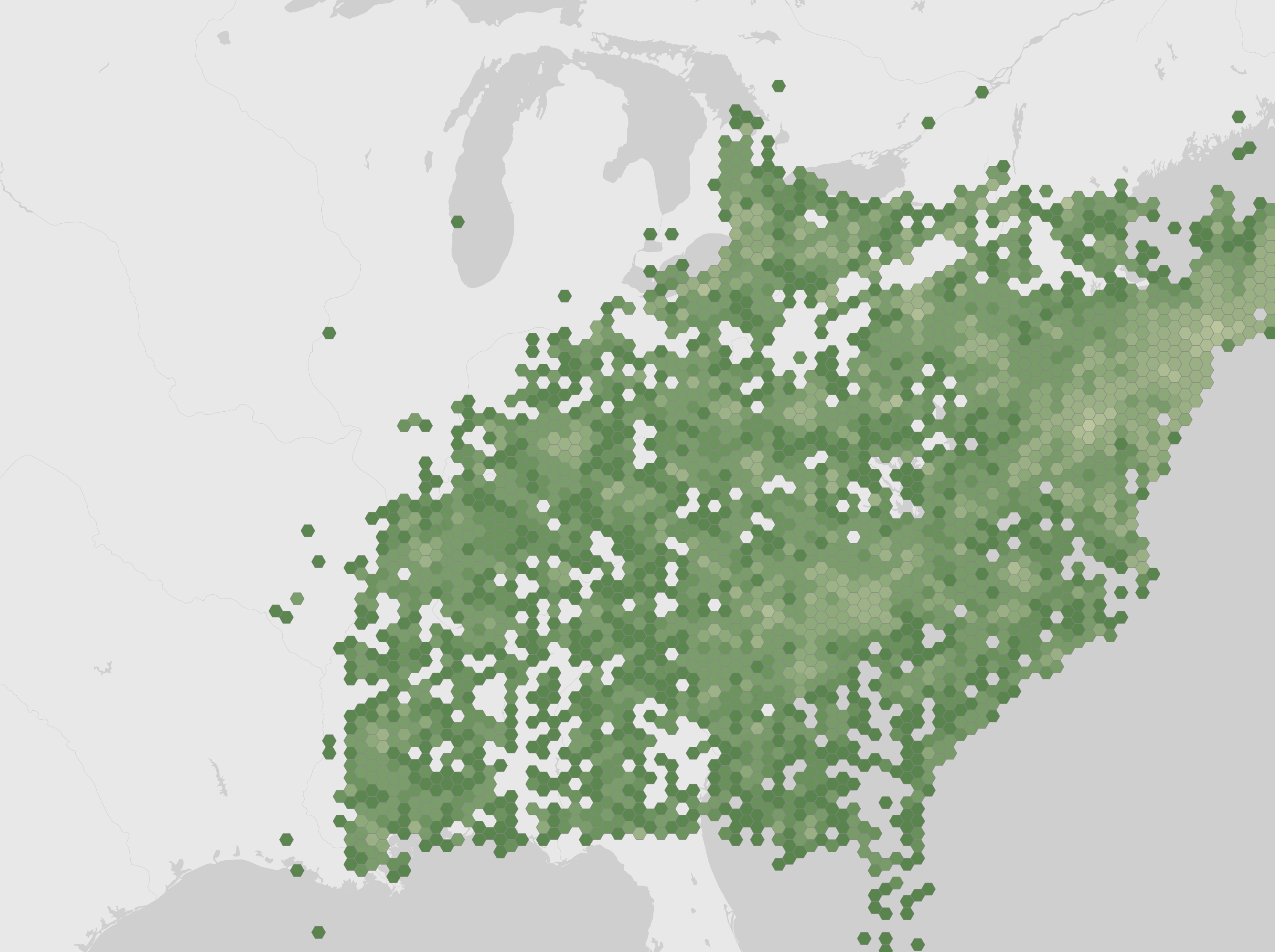
The species ranges from southern Maine and southern Ontario west to Iowa, and south to central Florida and eastern Texas. Its conservation status is Least Concern, and it grows across a wide variety of forest and open-land settings.
The tree is worth reading about for its unusual mix of ecological and cultural roles. It feeds caterpillars of many moths and butterflies, and people have used it in cooking, crafts, and medicine for centuries.
Identification and Appearance
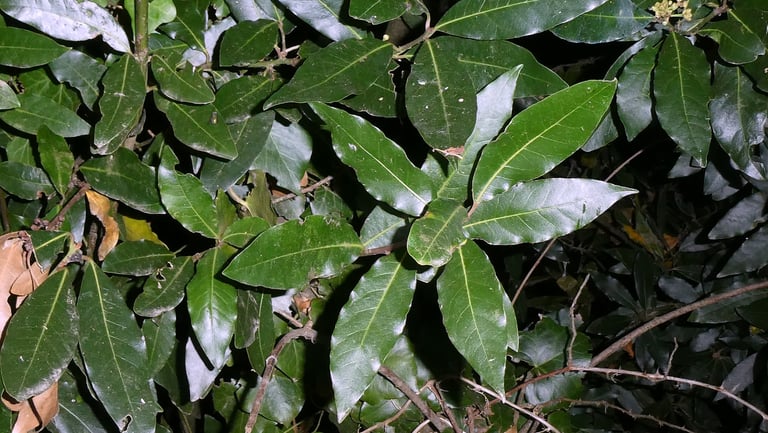
The most useful field mark is the leaf, which can be unlobed, two-lobed, or three-lobed, and all three forms may appear on one branch. The leaves are green to yellow-green, ovate or obovate, and typically 10 to 15 cm (4 to 6 in) long and 5 to 10 cm (2 to 4 in) wide, on a short, slender petiole. In fall they turn shades of yellow tinged with red.
Mature trunks grow up to 60 cm (24 in) in diameter and have thick, dark red-brown bark that is deeply furrowed. Young shoots are bright yellow-green with mucilaginous bark, turning reddish brown as they age. The crown is made of many slender branches.
The flowers appear in early spring, before the leaves open. They are yellow to greenish-yellow, borne in loose, drooping racemes up to 5 cm (2 in) long. The species is usually dioecious, so male and female flowers grow on separate trees.
The fruit is a dark blue-black drupe about 1 cm (0.39 in) long, held on a red, club-shaped stalk about 2 cm (0.79 in) long. All parts of the plant are aromatic and spicy.
Distribution and Habitat
Sassafras albidum is native to eastern North America, with records across the eastern United States and southeastern Canada. Its native range includes Alabama, Arkansas, Connecticut, Delaware, Florida, Georgia, Illinois, Indiana, Iowa, Kansas, Kentucky, Louisiana, Maine, Maryland, Massachusetts, Michigan, Mississippi, Missouri, New Hampshire, New Jersey, New York, North Carolina, Ohio, Oklahoma, Pennsylvania, South Carolina, Tennessee, Texas, Vermont, Virginia, West Virginia, Wisconsin, and Ontario. The species has also been introduced to Romania.
The tree grows throughout the eastern deciduous forest. Annual rainfall ranges from 760 to 1,400 mm (30 to 55 in), and the frost-free period lasts 160 to 300 days. Northern populations face snowfall of 76 to 102 cm (30 to 40 in) each year.
Sassafras grows on nearly all soil types within its range but does best on moist, well-drained sandy loams in open woods. It is a pioneer on abandoned fields, along fence rows, and on dry ridges and upper slopes, especially after fire. It occurs from Mississippi River bottomlands up to about 1,220 m (4,000 ft) in the southern Appalachian Mountains.
On the sandy soils of the South Atlantic and Gulf Coast States, mature trees seldom grow beyond sapling size. In Indiana, the species even grows on pure, shifting sand dunes along Lake Michigan.
Growth and Form
Sassafras is a perennial that can grow as a shrub or a tree. Mature trees can reach about 22.9 m (75 ft) tall. Its growth rate is moderate.
The tree often spreads by root sprouts. Its thick, fleshy roots send up new shoots in every direction, and those shoots can develop into new trees. Shoots can grow about 1.2 m (4 ft) in the first year and about 4.5 m (15 ft) in four years. Over time, one tree can become the center of a large clonal colony.
In dry pine-oak forests, the species sprouts prolifically and can become a dominant in the shrub layer.
Ecology and Relationships
Sassafras grows quickly from root sprouts, and in forests it typically regenerates in gaps created by windthrow. Seedlings tolerate shade, but saplings and older trees need full sunlight to grow well. Root sprouts often form dense thickets that few other woody plants can enter.
The tree supports a wide range of insects. It hosts the caterpillars of 37 butterfly and moth species, including the eastern tiger swallowtail, the spicebush swallowtail, and several giant silk moths such as the cecropia and polyphemus moths.
Sassafras also faces a serious threat. Laurel wilt, a disease carried by the invasive redbay ambrosia beetle, can kill members of the laurel family. The tree is susceptible to the disease and can support beetle broods, and the epidemic has spread from the Everglades through the Carolinas and into northern Kentucky by 2024.
Cultivation and Care
Sassafras prefers full sun for good growth when it is young and tolerates shade well. The species grows in soils with a pH from about 4.5 to 7.3 and handles drought well. It tolerates cold, with minimum temperatures to about -32.8 °C (-27 °F).
Its growth rate is moderate, and it blooms in late spring with yellow flowers. The mature height can reach about 22.9 m (75 ft), so allow space for it to spread.
Because its roots send up many shoots, a planted tree can form a thicket if left unchecked. Growers who want a single trunk should remove suckers regularly.
Uses and Human Relationships
People have used every part of the plant, including the stems, leaves, bark, wood, roots, fruit, and flowers. Native peoples of the southeastern United States used sassafras for cooking, medicine, dyeing, and flavoring long before Europeans arrived. The Choctaw used the leaves in cooking, and their filé powder is linked to the development of gumbo, the signature dish of Louisiana Creole cuisine.
The wood is dull orange-brown, hard, and durable in contact with soil. It was once used for posts, rails, small boats, and ox-yokes, though small size and scarcity now limit its use. Some is still used to make furniture.
In North America, sassafras is closely linked to traditional root beer. The U.S. Food and Drug Administration banned sassafras roots for commercially mass-produced foods and drugs in 1960. Most commercial root beers now use methyl salicylate instead.
Photos
Photographs from by Kaden Slone via iNaturalist, licensed under CC BY 4.0., via iNaturalist, licensed under CC0 1.0., by Sandy Wolkenberg via iNaturalist, licensed under CC BY 4.0., by Andre Knocklein via iNaturalist, licensed under CC BY 4.0., by Bobby McCabe via iNaturalist, licensed under CC BY 4.0., by Harold Smith via iNaturalist, licensed under CC BY 4.0., by Brandon Corder via iNaturalist, licensed under CC BY 4.0., by Jacob Weston via iNaturalist, licensed under CC BY 4.0., by Alan Prather via iNaturalist, licensed under CC BY 4.0., and by Jake McCumber via iNaturalist, licensed under CC BY 4.0., credited on each photo.
Ecology and classification
Growth habit
- Tree
Classification
- Phylum
- Tracheophyta
- Class
- Magnoliopsida
- Order
- Laurales
- Family
- Lauraceae
- Genus
- Sassafras
- Species
- Sassafras albidum
Sources
- GBIF Species names and classification
- iNaturalist Photos
- Wikidata Common names and conservation status
- Wikipedia Summary extract
- Encyclopedia of Life Habitat, diet and behavior traits
- Plants of the World Online Native range, life form and climate (WCVP)
- USDA Plants US plants: growth habit and growing conditions