Despite its moss-like look, Selaginella selaginoides is a vascular plant, a non-flowering member of the spikemoss genus Selaginella.
It has a wide distribution around the Northern Hemisphere and goes by several common names, including lesser clubmoss, club spikemoss, northern spikemoss, low spikemoss and prickly mountain-moss.
Its closest relative is Selaginella deflexa, native to Hawaii. The two form a small clade that is sister to all other Selaginella species.
Identification and Appearance
The most useful mark is the plant's creeping habit with tiny leaves. Its sterile stems are short, slender and irregularly branched, reaching up to 15 cm in length. They lie along the ground but usually turn upward near the tip. The small, pointed, triangular leaves are about 1–2 mm long, and each bears a ligule on its upper surface near the base.
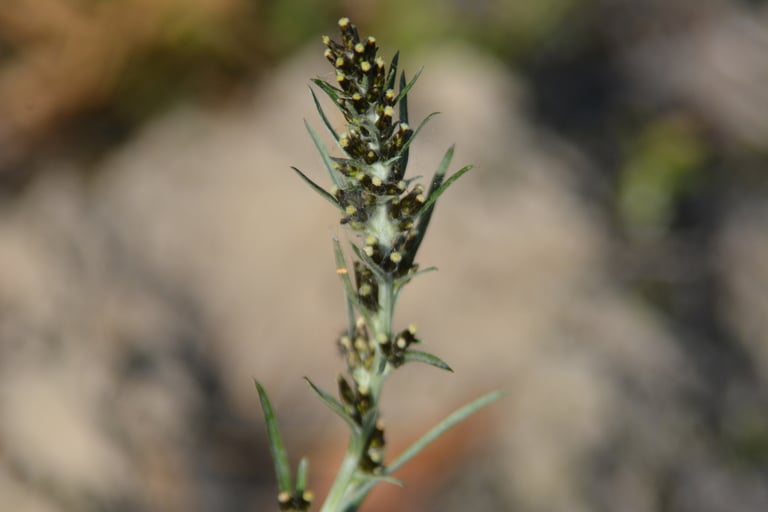
The plant also produces annual fertile shoots that are sturdier than the sterile stems and stand erect. They are usually 3–6 cm tall and 4–6 mm across, though they can reach 10 cm when conditions are favorable. Their leaves are slightly longer than those of the sterile stems and spiral around the stem, pointing upward.
The fertile shoots bear stout, yellowish cones that are only slightly differentiated from the branch. Each cone usually holds two kinds of sporangia. Lobed megasporangia sit in the lower part and produce megaspores, while simple microsporangia in the upper part produce many tiny microspores.
Distribution and Habitat
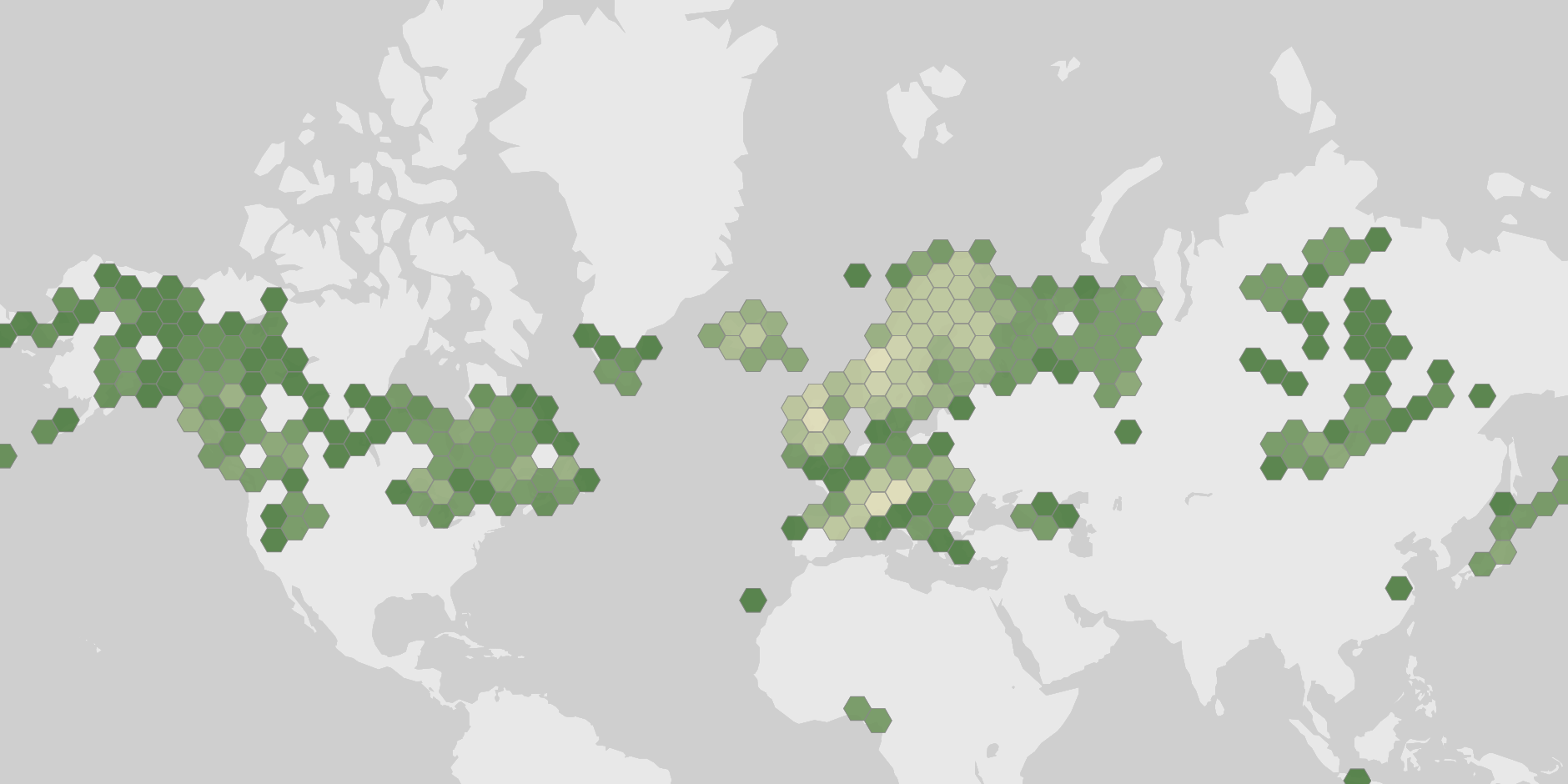
Selaginella selaginoides has a near-circumpolar distribution in the Northern Hemisphere. It occurs across northern Europe, Asia and North America, including Greenland, Iceland and the Faroe Islands. In Europe it extends south to the Pyrenees, Apennines and Caucasus. In Asia it reaches Japan, and in North America it extends south to Nevada, Wisconsin, Michigan and Maine.
The plant grows in damp places with neutral to alkaline soils, most often in mountainous areas. It inhabits bogs, the shores of streams and lakes, wet cliffs and ledges, grassland and dune slacks. It is a poor competitor and does not grow where tall, dense vegetation covers the ground.
Elevation varies by region. In North America it mainly grows from 600 to 2900 m above sea level and occasionally reaches 3800 m. In Britain it has been found from sea level up to 1170 m.
The species is not considered globally threatened, but it has declined in some areas through drainage and habitat destruction. In Britain and Ireland it had mostly disappeared from lowland areas by 1930, and its upland range has also contracted. In Southern Finland, ditch drainage and the conversion of meadows into fields or lawns have removed its rich fen habitat.
Growth and Form
Selaginella selaginoides is a perennial herb. Its sterile stems persist from year to year, creeping along the ground in a low, delicate mat that rarely rises much above a few centimeters.
The erect fertile shoots are annual. Each year the plant produces new shoots, usually 3–6 cm tall, that can reach about 10 cm when conditions are favorable.
Ecology and Relationships
Passerine birds are the main group that feeds on this plant, and finches, larks and buntings stand out among them. Common redpoll (Acanthis flammea) and skylark (Alauda arvensis) are among the birds that eat it. Smaller numbers of pigeons, gamebirds, waterfowl and cranes-like birds also feed on it, as do some carnivorous mammals.
Butterflies and moths of the order Lepidoptera are the main insects that visit its flowers, though they are not established pollinators of the species.
The plant needs damp ground with neutral to alkaline soil. Because it is a poor competitor, it persists in open wet sites such as bogs, stream and lake shores, and dune slacks, where tall, dense vegetation does not crowd it out.
Uses and Human Relationships
In Finnish traditional medicine, the plant was once used as a remedy for rickets.
Photos
Photographs from via iNaturalist, licensed under CC0 1.0., by Matthew Flood via iNaturalist, licensed under CC BY 4.0., by Matt Berger via iNaturalist, licensed under CC BY 4.0., by FloraJenensis via iNaturalist, licensed under CC BY 4.0., by Elias via iNaturalist, licensed under CC BY 4.0., by James Cunningham via iNaturalist, licensed under CC BY 4.0., by elik03 via iNaturalist, licensed under CC BY 4.0., by Em Calam via iNaturalist, licensed under CC BY 4.0., by Martin Scheidleder via iNaturalist, licensed under CC BY 4.0., by Katrin Simon via iNaturalist, licensed under CC BY 4.0., and by Claude Kolwelter via iNaturalist, licensed under CC BY 4.0., credited on each photo.
Ecology and classification
Classification
- Phylum
- Tracheophyta
- Class
- Lycopodiopsida
- Order
- Selaginellales
- Family
- Selaginellaceae
- Genus
- Selaginella
- Species
- Selaginella selaginoides
Sources
- GBIF Species names and classification
- iNaturalist Photos
- Wikidata Common names and conservation status
- Wikipedia Summary extract
- Plants of the World Online Native range, life form and climate (WCVP)
- USDA Plants US plants: growth habit and growing conditions
- GloBI What it eats, what eats it, parasites and pollinators
- trophiCH