Hedge mustard carries a curious nickname in French, the herbe aux chantres, or singer's plant, earned from centuries of belief that it could restore a lost voice.
This member of the Brassicaceae family, in the order Brassicales, grows as an unassuming annual or biennial across roadsides and waste ground worldwide. What makes it worth a closer look is how a plant once prized as a medicinal remedy is now simply an overlooked weed underfoot, and a modest food source for insects and birds.
Identification and Appearance
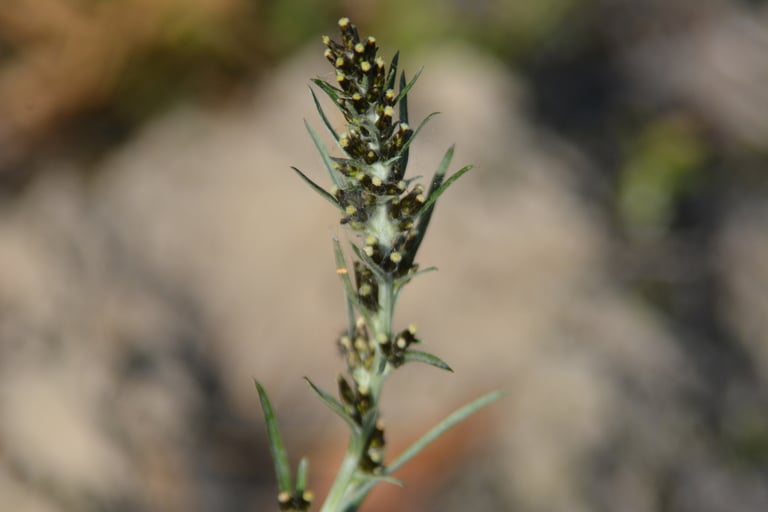
The clearest field mark is the shape and position of the fruit: the seed pods grow compacted and pressed close and parallel to the stem, rather than hanging free as in related plants. This trait separates Sisymbrium officinale from other species in its own genus, Sisymbrium, and also distinguishes it from the true mustards of the genus Brassica.
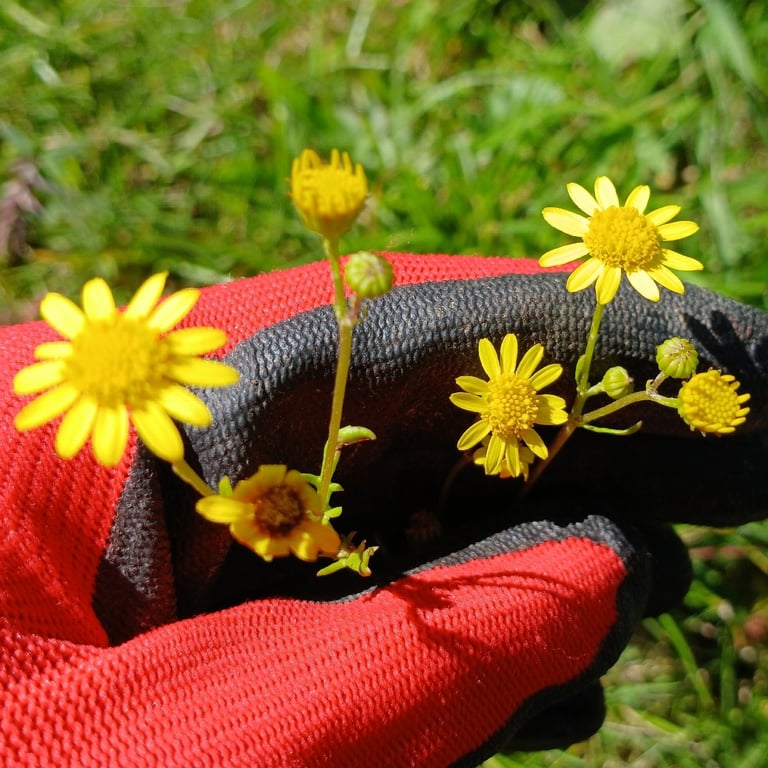
The plant reaches up to 80 cm in height, with tall, erect stems. Its lower leaves are broad, bearing two or three lateral lobes. The flowers are small, only about 4 mm across, and yellow in color.
The fruits are long, reaching up to 18 mm, and lack hairs when young, developing hairs as they mature. These pods sit tightly along racemes pressed close to the stem, a feature useful for confirming identification once flowering has finished.
Distribution and Habitat
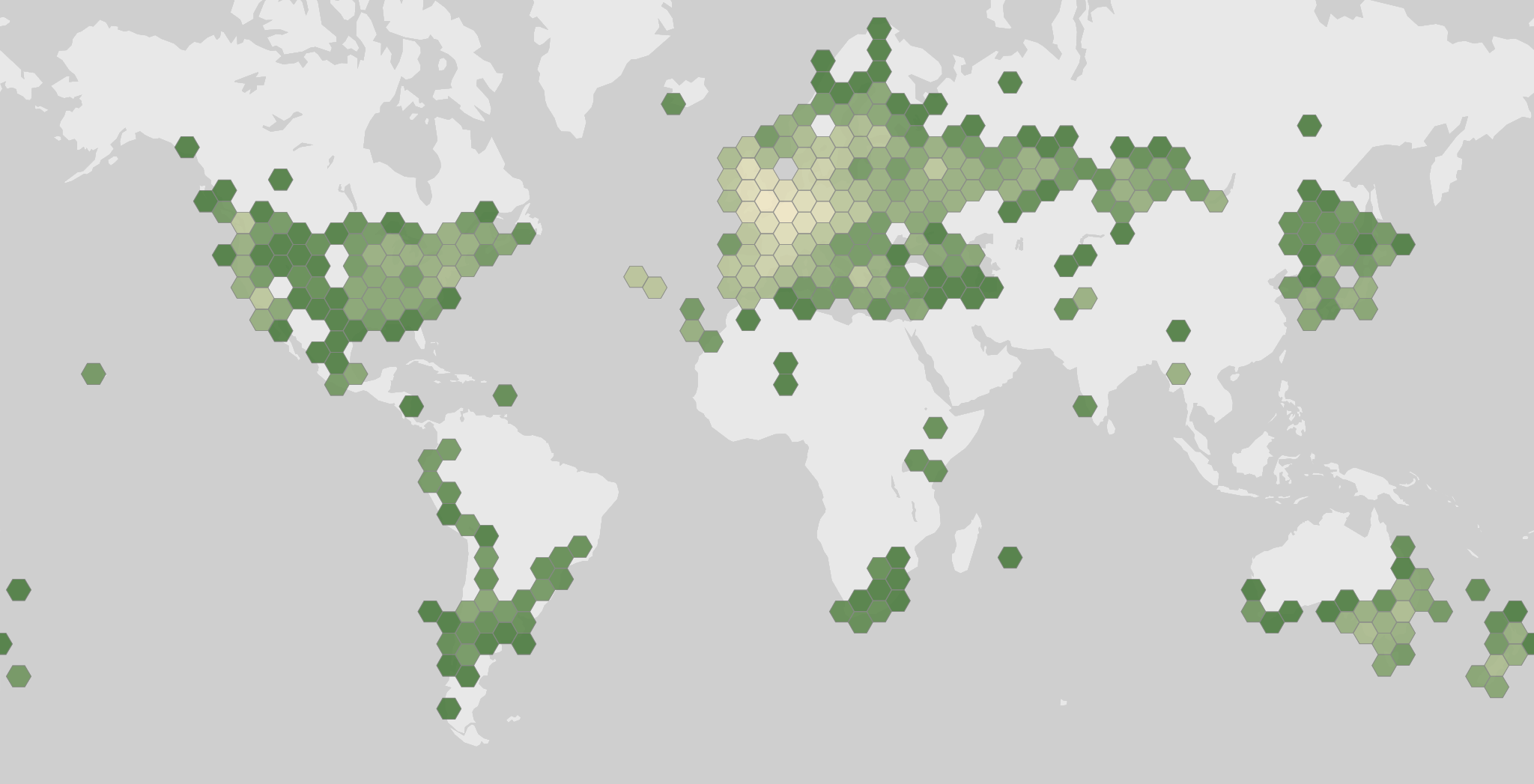
Hedge mustard occurs from near sea level up to 1,500 m, favoring roadsides, fields, pastures, waste ground, and even desert margins. It was originally native across a wide swath of Europe, North Africa, western Asia, and Macaronesia, including countries from Portugal and Morocco to Iran and Kazakhstan.
The species has since become established on every inhabited continent, introduced across North America, South America, southern Africa, Australia, New Zealand, and many islands, from Hawaii to the Falklands. It is now described as well-established throughout the world, thriving as a weed of arable land and disturbed ground.
Observation records through the year show the highest numbers in late spring and early summer, consistent with a plant that flowers and is most conspicuous during that season, though these records reflect where the plant has been noticed rather than its true abundance.
Growth and Form
Sisymbrium officinale grows as an annual or biennial herb, completing its life cycle within one or two years. It develops tall, erect stems that reach up to 80 cm in height.
Ecology and Relationships
Hedge mustard serves as a food source for a range of insects and birds within its weedy, disturbed habitats. Its foliage feeds the caterpillars of some Lepidoptera, including the small white butterfly, Pieris rapae, as well as the related Pieris napi. A weevil, Ceutorhynchus pyrrhorhynchus, and a sawfly, Athalia liberta, are also recorded feeding on it, alongside various finches and other birds such as the linnet, skylark, and mallard.
Its small yellow flowers attract a range of bees and flies. Bumblebees, particularly Bombus pascuorum and Bombus lucorum, along with the honeybee Apis mellifera and several mining bees of the genus Andrena, visit its flowers regularly, though a visit does not confirm that pollination occurs. Hoverflies such as Syritta pipiens and Sphaerophoria scripta are also drawn to the blooms.
Uses and Human Relationships
Hedge mustard carries a long history in folk and traditional medicine. The ancient Greeks believed it could serve as an antidote to all poisons, and its seeds were once held as a special remedy against poison and venom.
Its most enduring reputation concerns the voice: it was widely used to soothe sore throats, hoarseness, and weak lungs, giving rise to its French name, the singer's plant. The playwright Jean Racine reportedly recommended a syrup made from the plant to a fellow writer suffering from voicelessness. Herbalists have also used its juice and flowers for bronchitis and stomach ailments, and in Tibetan medicine it has been used to address symptoms of food poisoning.
Fun Facts
- Its genus name distinguishes it from the true mustards of Brassica, even though both belong to the same family.
- The plant's seed pods grow pressed flat against the stem instead of hanging freely, a trait that sets it apart from other Sisymbrium species.
- One of its French folk names, the herbe aux chantres, translates to the singer's plant, a nod to its reputation among vocalists.
Photos
Photographs from via iNaturalist, licensed under CC0 1.0., by guywallbanks via iNaturalist, licensed under CC BY 4.0., and by Alana Woolley via iNaturalist, licensed under CC BY 4.0., credited on each photo.
Ecology and classification
Growth habit
- Herb
Classification
- Phylum
- Tracheophyta
- Class
- Magnoliopsida
- Order
- Brassicales
- Family
- Brassicaceae
- Genus
- Sisymbrium
- Species
- Sisymbrium officinale
Sources
- GBIF Species names and classification
- iNaturalist Photos
- Wikidata Common names and conservation status
- Wikipedia Summary extract
- Encyclopedia of Life Habitat, diet and behavior traits
- Plants of the World Online Native range, life form and climate (WCVP)
- GloBI What it eats, what eats it, parasites and pollinators
- trophiCH
- DoPI
- Guzman et al. 2022
- EuPPollNet