Autumn lady's-tresses can take eight years underground before it produces its first above-ground leaves, and another three before it flowers — and even then, it may skip blooming for several years running.
This small grey-green orchid belongs to the family Orchidaceae and grows across Europe and into adjacent North Africa and Western Asia. It is legally protected in Belgium, the UK, the Netherlands and parts of France, and listed under CITES Appendix II as a species that could become threatened without safeguards. Its tightly spiraled, fragrant flower spikes and patient, often invisible life cycle make it one of the more understated but distinctive orchids of European grasslands.
Identification and Appearance
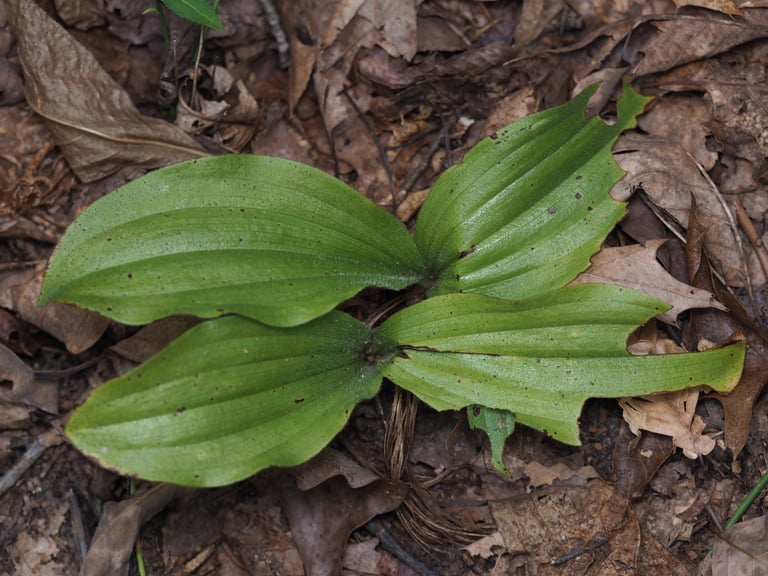
The clearest field mark is the tight spiral of small white flowers winding around the upper half of an unbranched flowering stem, usually 7 to 20 centimeters tall, occasionally reaching 40 centimeters in southern Europe. Below the flowers sit three to seven grayish-green, pointed leaves that sheathe the stem, while a separate rosette of four to five blue-green, glossy, oval leaves with pointed tips grows beside the stem, appearing at the same time as or after the flower spike.
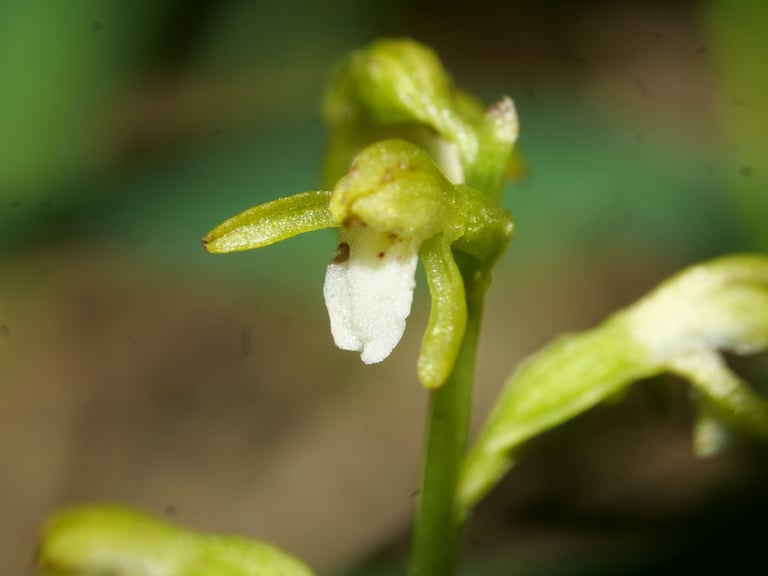
Each flower is only about 5 millimeters long, white, trumpet-shaped, and carries a pale green spot on its lower lip, which is edged with irregular, jagged, crystal-like white growths. The flowers give off a fragrance likened to lily of the valley, vanilla or almonds, and unlike many orchids they produce nectar rather than relying on deception. The spike typically holds ten to twenty-five flowers arranged in a single spiraling row, sometimes clockwise, sometimes counterclockwise, and occasionally all to one side.
Underground, the plant carries two to four hard, pale brown tubers, egg-shaped and smooth with fine transparent hairs, smelling earthy from their mycorrhizal association. There are no thick secondary roots as found in many other orchids. Plants from the Mediterranean tend to be noticeably more robust than those from Western and Central Europe.
Distribution and Habitat
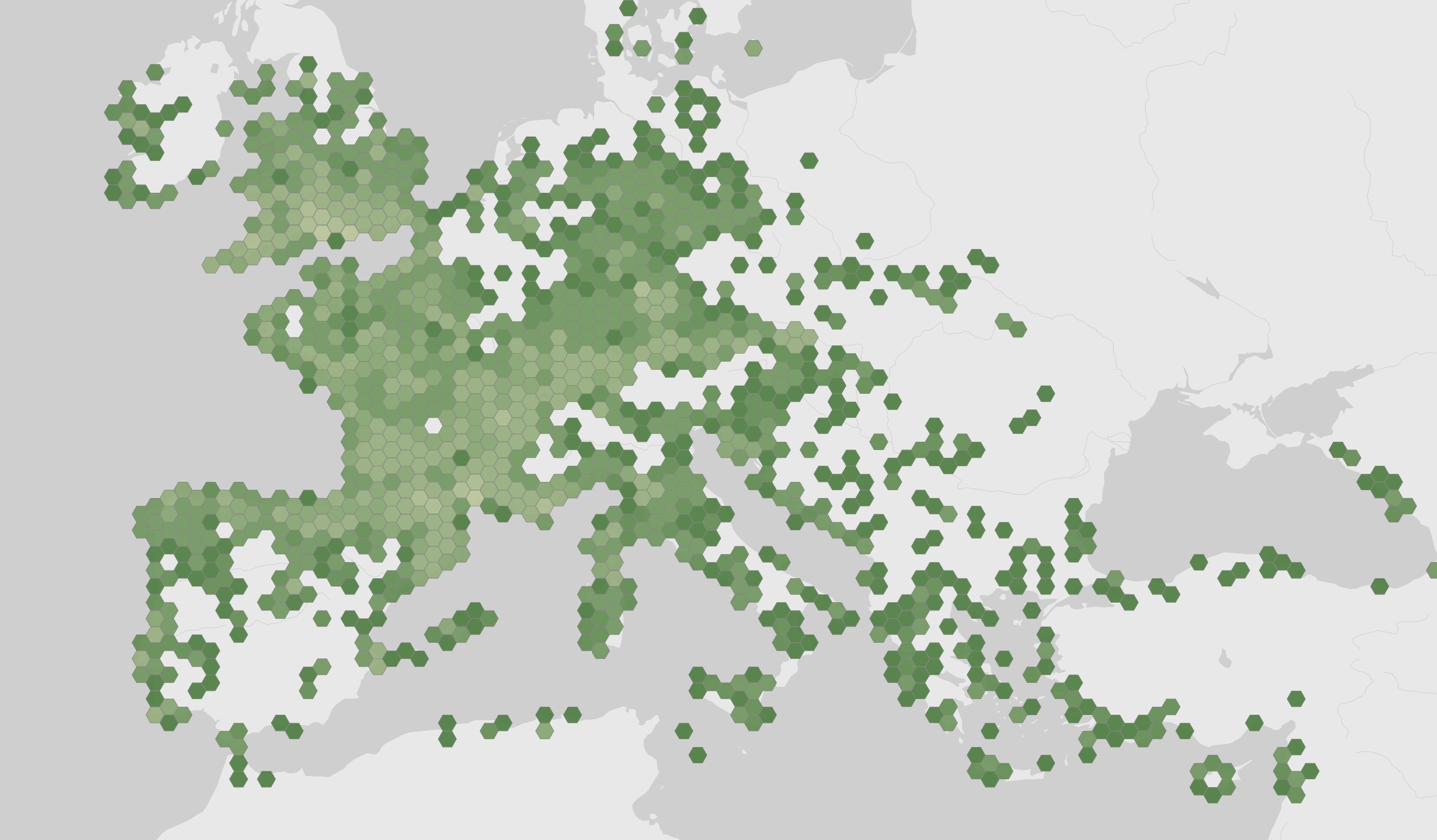
Autumn lady's-tresses ranges from Ireland and Portugal in the west across southern and central Europe to the Caucasus, northern Iran and the Western Himalayas, with a northern limit running through northern England, the Netherlands, Denmark and the southern Baltic to western Ukraine. It is regionally extinct in Denmark but has established after introduction on the Swedish island of Öland. In Britain and Ireland it reaches its northern limit on the Isle of Man and has never been recorded in Scotland; in Ireland its scattered southern range extends to County Sligo, with a single Northern Ireland colony found in County Down in 2023.
The species is considered endangered or near extinction in several German states, including Saxony-Anhalt, Thuringia and Lower Saxony, while remaining relatively common along the coasts of Brittany and Provence in France. Its original range was probably centered on the Mediterranean; it is thought to have spread north between 7000 and 4000 BC as people cleared forest for agriculture and grazing, creating the open grassland habitat it needs.
It grows in dry grassy places such as meadows, garigue, heaths and pine woodland, generally on calcareous soils. Observation records through the year show a pronounced peak in late summer, consistent with its flowering period in that season.
Growth and Form
This orchid is a perennial, tuberous geophyte that spends part of the year entirely underground. Around the end of August a new leaf rosette emerges, stays green through winter, and dies back by July at the latest; a flowering stalk then rises from the center of the dead rosette in the following weeks, with one or two new rosettes forming during flowering.
Growth is slow: a plant needs about eight years to produce its first above-ground parts and a further three years before it can flower. Even mature plants often flower only once every few years and may fail to appear above ground at all during difficult periods, apparently because producing seed demands considerable effort from the plant.
Reproduction and Life Cycle
Flowering runs from August to October, with white, fragrant flowers pollinated chiefly by bumblebees such as the common carder bee and red-tailed bumblebee, and in southern France by honeybees. The flower structure forces a visiting bee's tongue to tear a membrane covering the pollinia, which then stick fast; flowers open progressively so that pollen is released first and the stigma becomes receptive only as the flower matures further, a pattern known as protandry.
The direction of the floral spiral varies between plants — about 52 percent counterclockwise, 39 percent clockwise, and 9 percent flowers arranged to one side — and bumblebees show a strong preference for the counterclockwise form, which may help explain why the orchid offers different spiral types.
Less than half of flowers go on to produce seed capsules, and the resulting seeds are extremely fine and lightweight, dispersed by wind mostly within a few decimeters of the parent plant. The species also spreads to a limited extent vegetatively, forming side buds underground that develop their own tuber and rosette, which is why plants often occur in small dense clusters.
Ecology and Relationships
Like other orchids, autumn lady's-tresses depends entirely on mycorrhizal fungi to germinate, since its seeds carry no food reserves of their own; the seedling effectively lives off the fungus until it can photosynthesize. Mature plants continue to host fungal hyphae for most of the year, peaking in fall and winter, and can tolerate several fungal partners at once, including some genera, such as Fusarium and Bionectria, that are known to cause disease in other plants.
It favors short, species-rich grasslands kept open by grazing sheep or rabbits, growing on soils low in nitrogen and phosphorus that are neither too dry nor too wet, ranging from chalk and limestone to sandy dunes and slightly acidic heathland. It shares these grasslands with grasses like sheep's fescue and quaking-grass and dicots such as ribwort plantain and common bird's-foot trefoil.
Its seed heads and foliage are recorded as food for a range of birds, including finches, larks, partridges and pigeons, though no single species stands out strongly among them. Flower visitors recorded include bumblebees, small bees and hoverflies, though a visit does not by itself confirm pollination.
Uses and Human Relationships
Floral motifs resembling Spiranthes spiralis and related orchids have been identified in Roman architectural decoration, including cornices, ceilings and the external frieze of the Ara Pacis monument from the first century CE, suggesting the plant's spiraling form attracted decorative attention long before its scientific description.
The spiral shape itself carries broader symbolic associations in various traditions, linked at times to ideas of eternity and the divine feminine, though these associations concern the spiral motif generally rather than documented traditions specific to this orchid.
Conservation and Threats
Effective conservation of autumn lady's-tresses depends on getting the hydrology right: the soil must be neither too dry nor too wet, and kept low in nutrients to avoid eutrophication from nearby farmland, since the species competes poorly where vegetation grows too lush. Acidification is a particular threat on loamy soils, where it can be countered by slightly raising the water table or removing the acid humus layer; on sandy soils, maintaining small-scale relief helps keep moisture levels right in both dry and wet years.
Grazing or mowing outside the flowering period helps keep the surrounding turf short enough for the orchid to compete, but disturbance during flowering, or damage to the soil itself, can harm existing colonies.
Fun Facts
- Floral motifs resembling this orchid appear in Roman architectural carvings, including the first-century Ara Pacis monument, among the earliest known artistic depictions of orchids.
- The word spiralis comes from Medieval Latin, meaning 'winding around a fixed center, coiling.'
- Some fungi found living inside its tubers, including Fusarium oxysporum, are known to cause disease in other plants, yet the orchid appears able to keep them in check without harm.
Photos
Photographs from by Barry Stewart via iNaturalist, licensed under CC BY 4.0., via iNaturalist, licensed under CC0 1.0., by Denis Bastianelli via iNaturalist, licensed under CC BY 4.0., by Jack Alcorn via iNaturalist, licensed under CC BY 4.0., by Jake Dalzell via iNaturalist, licensed under CC BY 4.0., by Meister Bichler via iNaturalist, licensed under CC BY 4.0., by fmunoz via iNaturalist, licensed under CC BY 4.0., by petitcrabe via iNaturalist, licensed under CC BY 4.0., by Alain Le Magueresse via iNaturalist, licensed under CC BY 4.0., by kardelen via iNaturalist, licensed under CC BY 4.0., by Noé Fleury Frouart via iNaturalist, licensed under CC BY 4.0., by Tim Johnson via iNaturalist, licensed under CC BY 4.0., by Paolo Zucca via iNaturalist, licensed under CC BY 4.0., by Aubin NORMAND via iNaturalist, licensed under CC BY 4.0., by spoonbilling via iNaturalist, licensed under CC BY 4.0., and by Josh Hedley via iNaturalist, licensed under CC BY 4.0., credited on each photo.
Ecology and classification
Classification
- Phylum
- Tracheophyta
- Class
- Liliopsida
- Order
- Asparagales
- Family
- Orchidaceae
- Genus
- Spiranthes
- Species
- Spiranthes spiralis
Sources
- GBIF Species names and classification
- iNaturalist Photos
- Wikidata Common names and conservation status
- Wikipedia Summary extract
- Plants of the World Online Native range, life form and climate (WCVP)
- GloBI What it eats, what eats it, parasites and pollinators
- trophiCH
- EuPPollNet