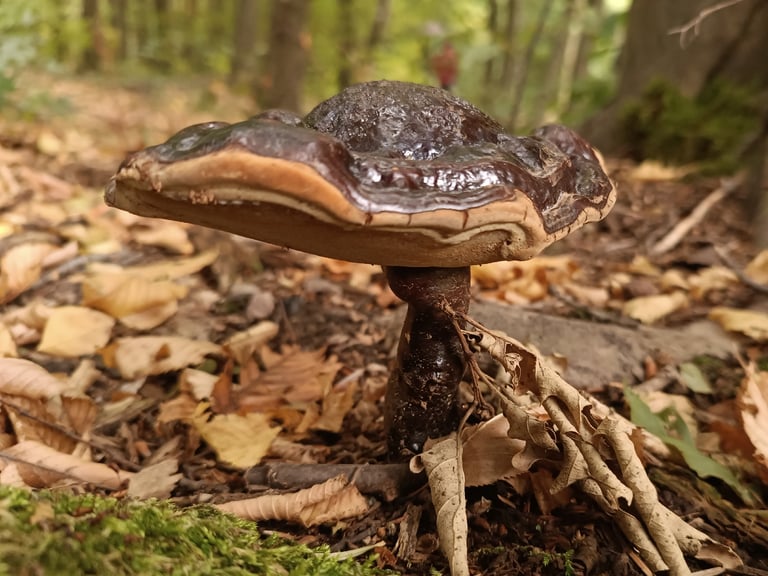
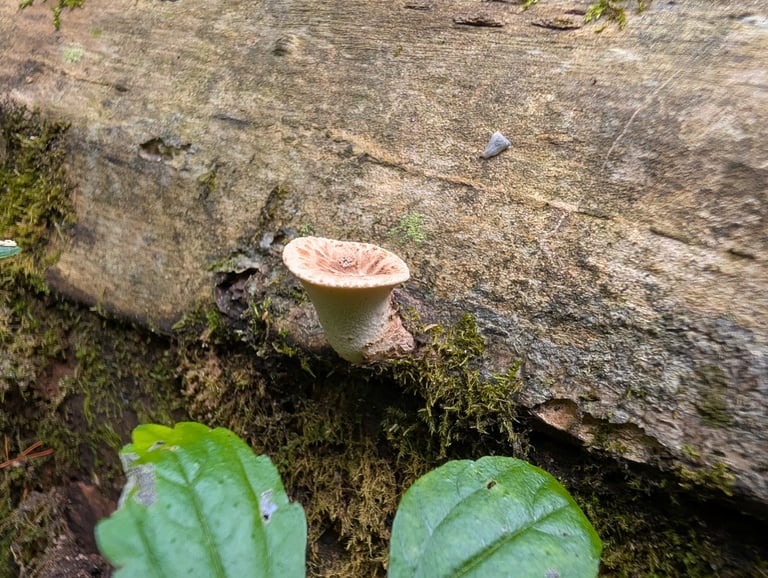
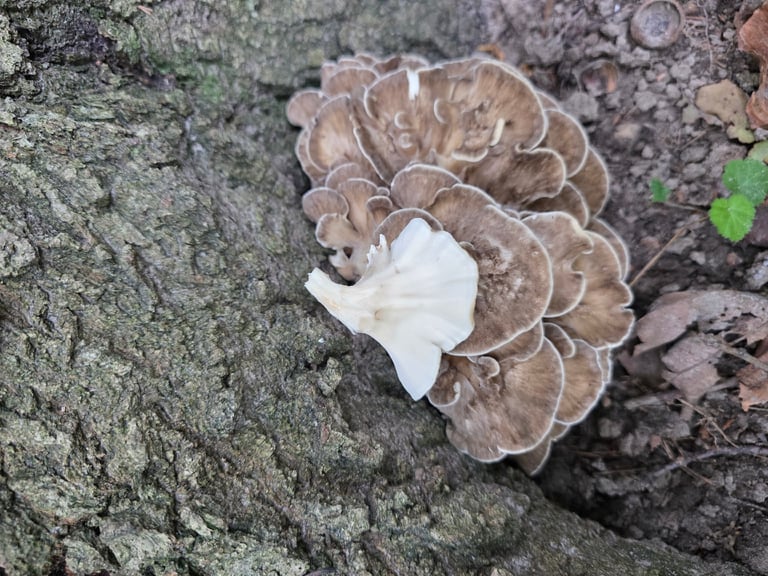
Its cap looks so much like the fanned tail of a wild turkey that the resemblance gave the species its common name. Trametes versicolor is one of the most widespread polypore mushrooms on Earth, found on decaying wood across nearly every continent where forests grow.
It belongs to the order Polyporales within the class Agaricomycetes, and it grows directly on wood rather than in soil. Beyond its familiar looks, the fungus has drawn attention for its long-standing place in traditional medicine and its efficient role in breaking down dead wood, making it a small but persistent presence in forests worldwide.
Fruiting Body and Identification
The most reliable way to recognize Trametes versicolor is its banded, fan-shaped cap, which gives the species its turkey-tail appearance. The fruiting body is tongue-shaped with no true stalk, and the tough flesh measures only 1 to 3 millimeters thick. Caps grow up to 10 centimeters across, often triangular or rounded, and are covered in fine hairs arranged in concentric zones of rust-brown, darker brown, and sometimes black.
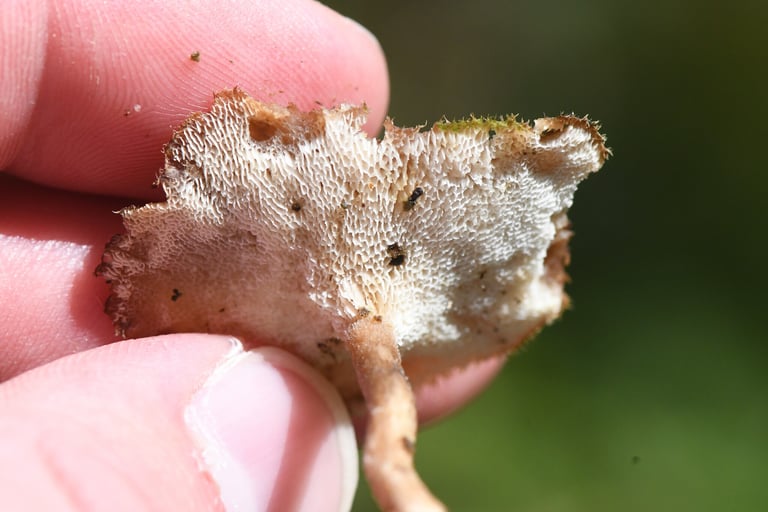
Beneath the hairy tomentum lies a thin black layer sitting atop whitish flesh. On older specimens, some of the color zones may host green algae, adding an extra tint to the banding. The underside of the cap shows the same concentric zonation as the top, with the outer margin always the lightest in color. Pores are small, 3 to 5 per millimeter, whitish to light brown, and round when young; with age they become twisted and labyrinthine.
Distribution and Habitat
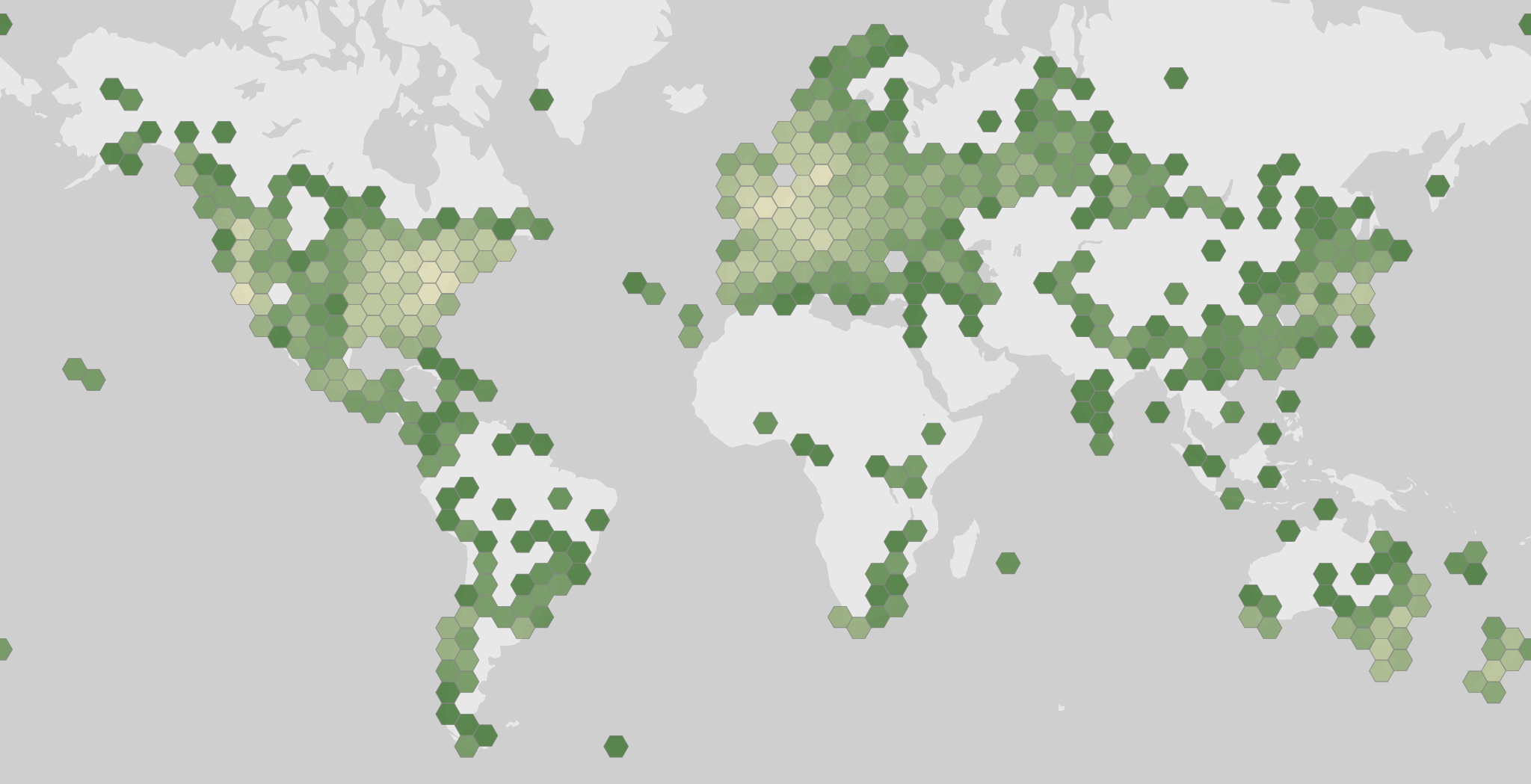
Trametes versicolor grows on decomposing wood, and its presence has been recorded across a wide range through occurrence data. The monthly observation counts suggest a strong seasonal pattern in when fruiting bodies are most often spotted, though these figures reflect presence records, not abundance or a complete picture of its native range.
Observations rise sharply after midsummer, climbing from a low near 6,500 in June to a peak of roughly 31,000 in October, before tapering off again by December. This pattern points to autumn as the season when fruiting bodies are most visible and most frequently recorded, likely tied to cooler, wetter conditions that favor fruiting on dead wood.
Because the species colonizes decaying logs and stumps rather than living trees, its distribution tracks the availability of dead deciduous wood rather than any single climate zone, which helps explain why it turns up on decomposing timber in forested regions around the world.
Ecology and Relationships
Trametes versicolor is a white rot fungus, meaning it breaks down lignin, the tough structural compound that gives wood its rigidity, within lignocellulosic material. It typically grows in tiled layers, clustered in groups or overlapping rows on the logs and stumps of deciduous trees, steadily converting dead wood into simpler organic matter.
This decomposing activity makes it an important recycler of nutrients locked up in fallen timber, returning them to the forest ecosystem over time. The fungus also supports a small community of wood-associated insects: caterpillars of the fungus moth Nemaxera betulinella, maggots of the fly Polyporivora picta, and the fungus gnat Mycetophila luctuosa all feed on or develop within its fruiting bodies.
These insect relationships tie the fungus into a broader web of decomposer life, where its tough, long-lasting brackets provide both food and habitat for organisms that specialize in fungal tissue.
Uses and Cultural History
People have used Trametes versicolor for thousands of years, most notably in China, where it is known as "Yunzhi" (云芝) and has featured in traditional medicine for over 2,000 years. Because the fruiting body is too tough to eat directly, it has instead been prepared as teas, decoctions, and powders, often to support respiratory health, treat infections, and promote general vitality according to traditional use.
In Japan, a polysaccharide extracted from the fungus, polysaccharide-K, has been approved as an adjuvant therapy in cancer treatment. In the United States, however, neither the extract nor the mushroom preparation carries approval for any clinical use, and the fungus is instead sold as a dietary supplement marketed for various health benefits.
That commercial supplement market comes with caveats: product quality varies due to inconsistent processing and labeling, and the scientific evidence for safety or effectiveness in supplement form remains insufficient by regulatory standards outside Japan.
Fun Facts
- In traditional Chinese medicine, Trametes versicolor was historically described as a tonic capable of restoring balance to qi, clearing toxins, and strengthening organs like the liver and lungs.
- Some Native American cultures brewed the fungus into invigorating infusions, and folk tradition regarded it as a magical species linked to protection and healing.
- The mushroom's growth is sensitive to changes in humidity and moisture, which has drawn attention to how climate shifts might affect its future populations.
- Concern over its ecological and cultural importance has led to efforts in some areas to designate protected habitats that support its growth.
Ecology
Habitat
- Forest