The Eurasian wren weighs barely 9 grams, yet its song carries with a power ten times greater, weight for weight, than a crowing rooster. This small, insectivorous bird is the only member of the wren family found outside the Americas, occurring across Eurasia and into North Africa.
Classified as Least Concern, the species remains common and widespread. Its combination of a huge range, an outsized voice, and an unusual polygynous breeding system makes it a bird worth a closer look, even though it is easily overlooked in the undergrowth.
Identification and Appearance
The most useful field mark is the short, stubby tail, which the bird habitually holds cocked upward over its back. Measuring just 9 to 10 centimeters long with a wingspan of 13 to 17 centimeters and a weight around 10 grams, it is among the smallest birds in its range.
It is a plump, round-winged bird, rufous brown above and paler, greyer below, with fine dark barring that extends even onto the wings and tail. A dark brown bill, pale brown legs, strong claws, and a large hind toe complete the picture. The sexes look alike, so plumage alone will not reveal a bird's gender.
Young birds show less distinct barring and mottled underparts rather than the crisp pattern of adults. Plumage varies considerably across its range, and isolated populations, such as those on islands, have developed their own fixed variations.
Distribution and Habitat
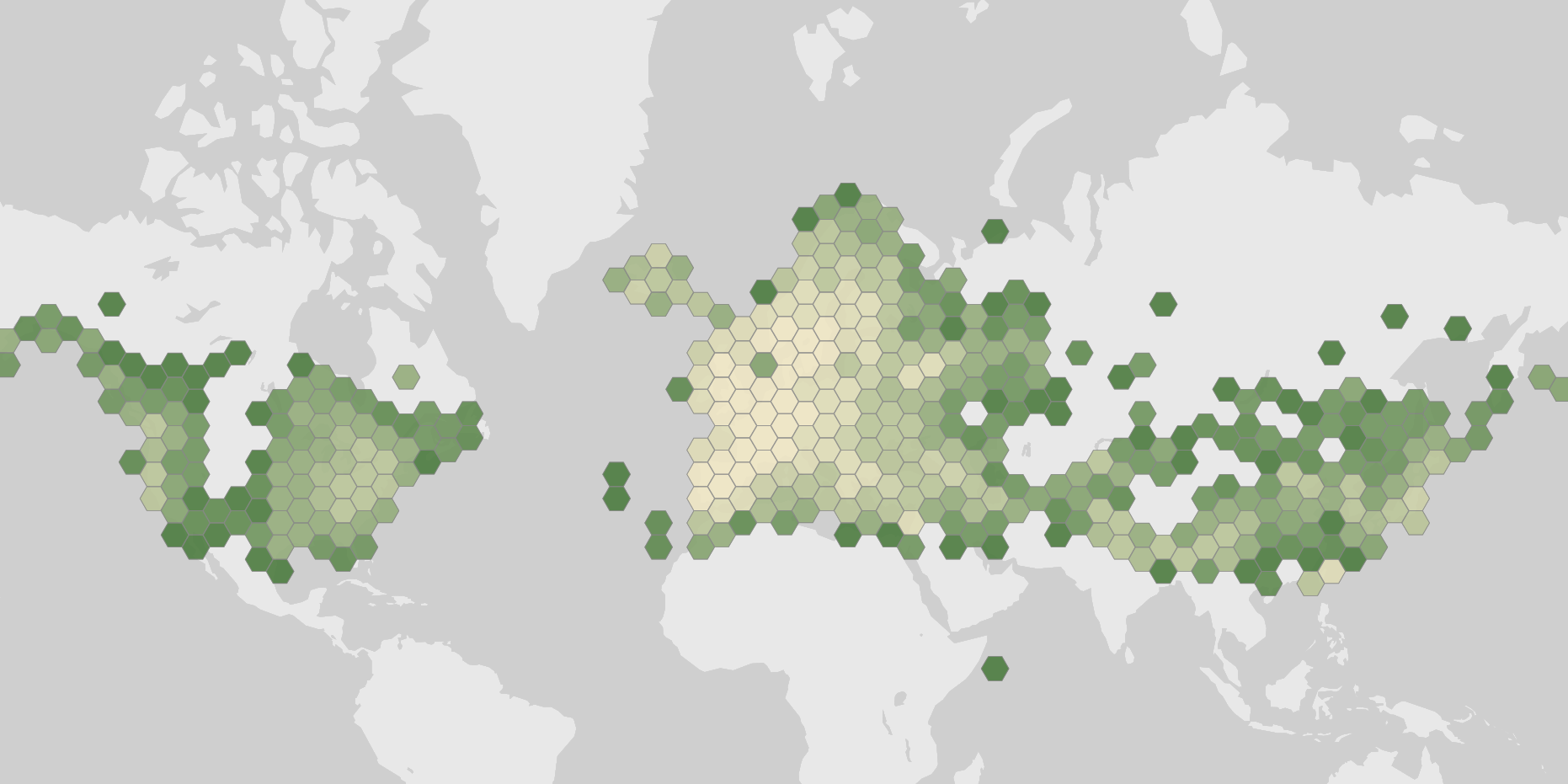
The Eurasian wren occupies an enormous range across the Palearctic, breeding as far north as 67°N in Norway and stretching south to northern Spain, Italy, and southern Russia, with populations extending east into Western Asia as far as Syria. Distinct subspecies replace the nominate form in Iceland, the Faroe Islands, the Hebrides, St Kilda, northwestern Africa, Iberia, and various Mediterranean islands, as well as in eastern Asia to Japan.
It thrives in a remarkable variety of habitats: deciduous forests, coniferous woodland, hedgerows, gardens, reed beds, moorland, rocky coasts, and sea cliffs. The common thread is dense, low vegetation close to the ground, where it can forage and shelter.
Some populations are sedentary, while others migrate short distances, arriving on wintering grounds in October and departing by March.
Behavior and Lifestyle
The Eurasian wren is in constant motion, darting through undergrowth with quick jerky hops as it probes crevices, old masonry, and fallen logs for insects. Its flight is fast and direct but rarely sustained for long, though migratory individuals are capable of crossing open water more than 500 kilometers wide, and one English-ringed bird was recovered 1,524 kilometers away in Kaliningrad, Russia.
Males hold territories year-round, even in sedentary populations, and must stay alert since rivals can attempt to usurp a territory at any time. Territories range from 4,000 to 28,000 square meters, averaging 8,000 to 12,000 square meters, though one exceptionally isolated male in Iceland defended a territory of 60 to 90 acres.
During harsh winter weather, wrens retreat to sheltered roosting sites, sometimes alone but often in groups; one nest in Washington held 31 birds at once. Birds that roost communally with good shelter tend to survive winter better than solitary roosters.
Communication
Male song is the primary tool for establishing and defending territory, a rapid, high-pitched burst delivered at 15 to 40 notes per second and lasting 5 to 10 seconds, averaging around 5,500 hertz. Males sing from perches 1 to 4 meters high to reduce signal degradation over distance, and they can judge from a degraded song how far away a rival is, reacting more aggressively to nearby intruders.
Beyond song, the wren uses a sharp repeated "tic-tic-tic" call, and an emphatic churr when agitated. Singing intensifies just before and after dawn, when territorial challenges are most likely, and males who have recently defended their ground sing more than those who have not, though cold nights suppress singing activity.
Females listen to male song contests and may seek extra-pair copulations with a male whose song impresses them, linking vocal performance directly to mating opportunities.
Diet and Nutrition
The Eurasian wren is an insectivore that hunts for invertebrate prey on the ground, probing into crevices, bark, and fallen logs rather than foraging in open flight. Its small size lets it exploit tight spaces that larger insectivorous birds cannot reach.
Its diet includes insects and their larvae, millipedes, and spiders, with aquatic invertebrates and crustaceans taken opportunistically in riparian habitats. Recorded prey spans a wide range of small invertebrates, with butterflies and moths such as Polyommatus icarus and Aglais species appearing repeatedly alongside various caddisflies and mayflies.
This broad invertebrate diet allows the species to persist even in cold, snowy climates by foraging along bark and fallen wood where insects remain active.
Nesting and Breeding
Breeding runs from mid-March to mid-August, and males are often polygynous, building as many as twelve nests, called cock nests, though six is typical. These domed structures with side entrances are built from moss, grass, twigs, and feathers, tucked into holes in walls, tree trunks, rock crevices, brambles, hedges, or abandoned nests of species like the house sparrow or swallow.
Courtship centers on the male giving a female a tour of his cock nests while singing and displaying, sometimes with wings half open or raised and lowered in quick succession. Females inspect multiple nests and preferentially choose males with more of them, then line the chosen nest with feathers and hair before laying.
A clutch of typically five to seven eggs, white with reddish-brown speckles, is incubated by the female alone for 14 to 18 days. Chicks hatch altricial, with some down, and fledge after about 15 to 18 days. The male rarely feeds nestlings but often helps once they fledge; most pairs raise two broods per season, and a single male has been recorded with four females breeding simultaneously on his territory.
Population and Ecological Role
An estimated 36 million individuals exist globally, with no sign of serious decline, and European breeding estimates range from 32.7 to 56.5 million pairs. Populations in Britain are increasing.
As a small insectivore, the wren serves as prey for a range of larger predators, including corvids such as carrion crows and jays, birds of prey like the long-eared owl, and mammals such as pine martens. It also falls victim to brood parasitism by the common cuckoo and carries feather mites from the genera Proctophyllodes and Monojoubertia.
Because it is especially sensitive to cold, with populations dropping after prolonged low temperatures, the species is sometimes used as an indicator of changing climate conditions.
Conservation and Threats
The Eurasian wren is classified as Least Concern by the IUCN, reflecting its extremely large range, substantial global population, and an increasing trend rather than any decline. It carries no special protective status under CITES or the US Federal List, though it is protected under the US Migratory Bird Act where relevant subspecies occur.
No major threats are identified beyond its natural sensitivity to cold winters, which can cause temporary population dips rather than sustained decline.
Cultural Significance
In European folklore the wren is called "king of the birds," a title traced to a fable attributed to Aesop by Plutarch, in which the wren outwitted the eagle by riding on its back and then flying higher once the eagle tired. Aristotle and Plutarch called it basileus, and its royal nickname persists in the German "Zaunkönig" (king of the fence) and Dutch "winterkoning" (winter king).
The bird held sacred status among the Druids as "king of all birds," and its song was used for divination. Its death is tied to the legend of Saint Stephen, supposedly betrayed by a wren's noise, a story commemorated in the Irish and British tradition of "Hunting the Wren" on Saint Stephen's Day, complete with a traditional wren song. Suetonius even recorded a wren's death as an omen before the assassination of Julius Caesar.
The wren's image has appeared on the British farthing coin from 1937 to 1960 and on postage stamps from numerous countries including Ireland, Germany, France, Iceland, and the United States, cementing its small but enduring cultural presence.
Fun Facts
- A male Eurasian wren may build as many as twelve separate nests in a single territory, yet never lines any of them himself; that task falls to the female once she chooses one.
- One winter roost in Washington held 31 wrens huddled together for warmth in a single nest.
- A wren ringed in England was later recovered 1,524 kilometers away near Kaliningrad, Russia, showing how far this tiny bird can travel on migration despite its short, whirring flight style.
- One extremely isolated male in Iceland defended a territory of 60 to 90 acres, far larger than the typical 2 to 3 acres held by most males.
Photos
Photographs from via iNaturalist, licensed under CC0 1.0., by Aurelijus Narbutas via iNaturalist, licensed under CC BY 4.0., by delilah88 via iNaturalist, licensed under CC BY 4.0., by Summer J. Smentek via iNaturalist, licensed under CC BY 4.0., by Константин Селивёрстов via iNaturalist, licensed under CC BY 4.0., by Dmitry Ivanov via iNaturalist, licensed under CC BY 4.0., by Ross McCallum via iNaturalist, licensed under CC BY 4.0., by Елена Смирнова via iNaturalist, licensed under CC BY 4.0., by Tilgate Zoo via iNaturalist, licensed under CC BY 4.0., by Sander Vollmer via iNaturalist, licensed under CC BY 4.0., by Ian Andrews via iNaturalist, licensed under CC BY 4.0., by ikelman via iNaturalist, licensed under CC BY 4.0., by Holly Hodges via iNaturalist, licensed under CC BY 4.0., by euqirneto via iNaturalist, licensed under CC BY 4.0., and by Teo Albert via iNaturalist, licensed under CC BY 4.0., credited on each photo.
Ecology and classification
Classification
- Phylum
- Chordata
- Class
- Aves
- Order
- Passeriformes
- Family
- Troglodytidae
- Genus
- Troglodytes
- Species
- Troglodytes troglodytes
Sources
- GBIF Species names and classification
- iNaturalist Photos
- Wikidata Common names and conservation status
- Wikipedia Summary extract
- Animal Diversity Web Animal habitat, behavior and diet
- AnAge Longevity
- AVONET Bird mass, habitat, migration, diet and range size
- GloBI What it eats, what eats it, parasites and pollinators
- trophiCH
- HWML Parasite Collection
- TETRA-EU