The red admiral is one of the few butterflies that will land directly on a person and stay put, often allowing observers to approach within inches before it flits away. This unusual calm has made Vanessa atalanta a favorite among casual observers and lepidopterists alike.
First described by Carl Linnaeus in 1758, this medium-sized member of the family Nymphalidae is found across temperate North Africa, North and Central America, Europe, Asia, Hawaii, and the Caribbean. It favors warmer regions but migrates north in spring and, in some years, south again in autumn. The IUCN lists it as Least Concern, reflecting a wide range and secure global population.
Beyond its tolerance of human company, the red admiral is notable for fierce territorial contests between males and a life history tightly bound to a single group of host plants, making it a useful window into how a common, adaptable insect organizes its entire existence around flight, sunlight, and a patch of ground.
Identification and Appearance
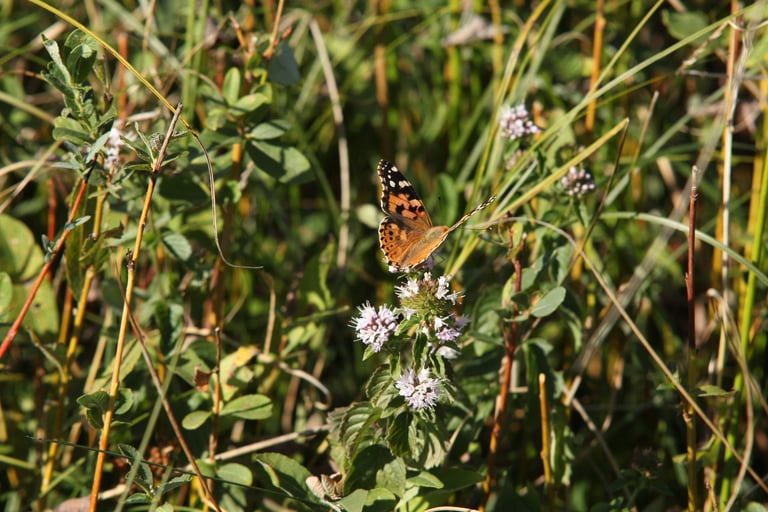
The clearest field mark is the oblique vermilion (orange-red) band that cuts diagonally across each black forewing, paired with a cluster of white spots near the wingtip. The hindwing carries its own broad red band along most of the outer margin, edged with a row of small black spots and, near the anal angle, an elongated blue spot. With a wingspan of about 5 centimeters (2 inches), it is a medium-sized butterfly, easy to size up in flight or at rest.
The underside differs sharply from the upper surface. The forewing below largely repeats the pattern seen above, but the hindwing is intricately mottled in blues, blacks, and pale tones, with markings in the wing cell that resemble numerals, sometimes read as "18" or "98" on one wing and "81" or "89" on the other. A pale patch sits at the middle of the costal (leading) edge, and a row of eye-like spots runs along the outer margin.
Sexes are broadly similar, though females sometimes show a small white spot in the middle of the forewing's red band, a mark rarely seen in males. There is no dramatic seasonal color change described for this species, and its bold pattern makes it hard to mistake for other butterflies within its range.
Distribution and Habitat
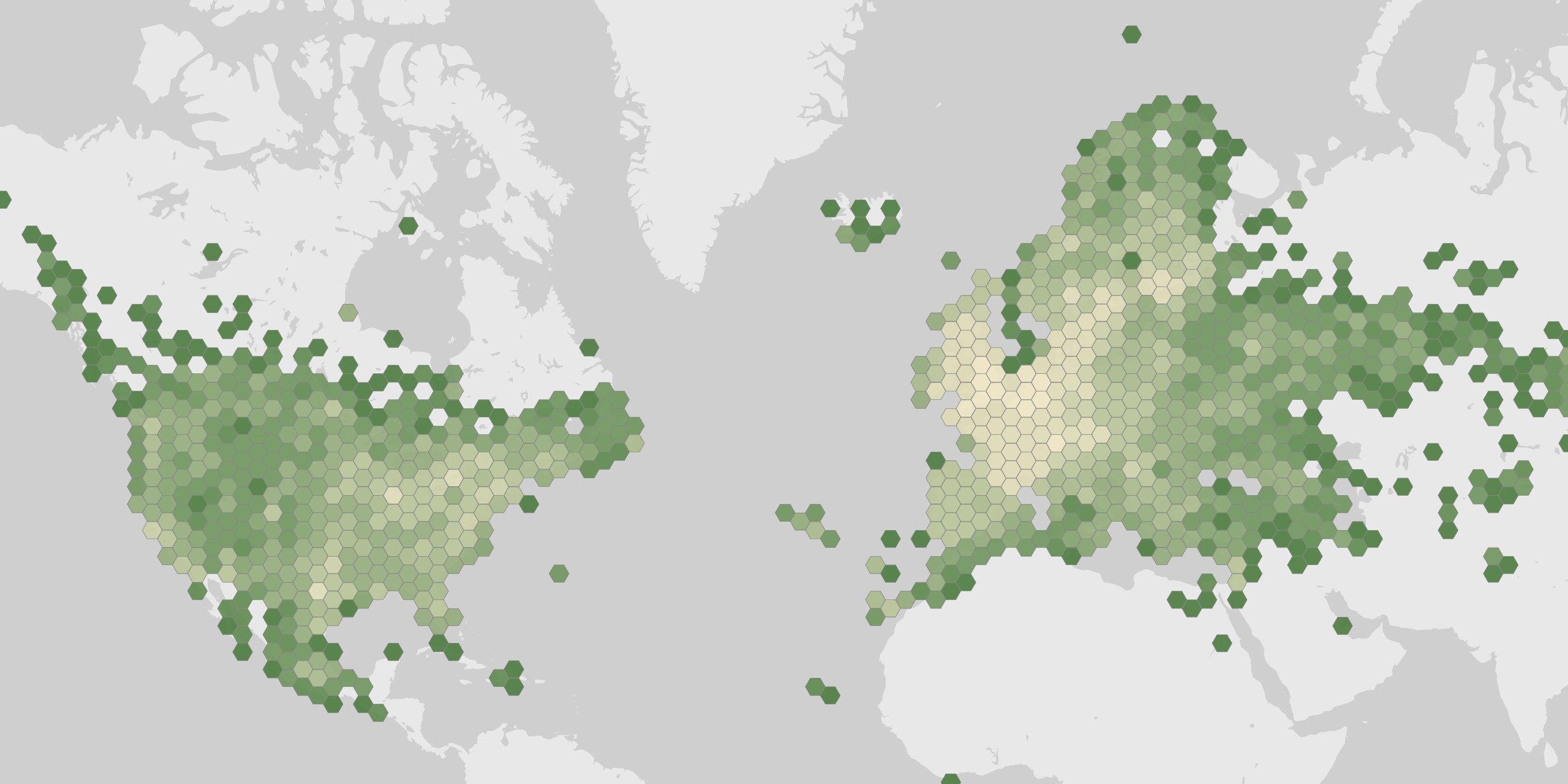
The red admiral occupies temperate regions across North Africa, North and Central America, Europe, Asia, Hawaii, and the Caribbean, one of the broadest ranges of any butterfly in this account. It cannot tolerate extreme winter cold, so populations in colder parts of this range shift south for winter and move back north again as temperatures rise in spring.
Within this range it favors moist environments: woodlands, marshes, fields, and well-watered gardens, along with cultivated and suburban land where its host plants and nectar sources grow. Wooded edges are especially productive, since caterpillars need nettle-family plants growing nearby while adults need open, sunlit patches to feed and patrol.
Monthly observation counts rise sharply from a low in December and January to a sharp peak around July, before falling off again into autumn. This pattern lines up with the species' spring migration and summer breeding activity, but as presence records rather than true abundance data, the counts show when and where the butterfly was seen, not how many individuals actually exist in a given month.
Behavior and Lifestyle
Adult red admirals are diurnal, flying from March through November across most of their range and spending the cold months in hibernation. Their flight is described as fidgety and swift, marked by rapid changes of direction rather than steady gliding, and activity peaks in spring and fall.
Males are strongly territorial, staking out elliptical patrol areas roughly 4 to 13 meters wide and 8 to 24 meters long. They patrol these boundaries as often as thirty times per hour, and when a rival male intrudes, the territory holder tries to drive it off by outflying and outmaneuvering the newcomer rather than through direct contact.
Despite this aggression toward other butterflies, red admirals are unusually tolerant of people, often approaching and perching on humans and allowing close observation before departing. Seasonal movement is also built into their behavior: many individuals migrate north in spring to expand into cooler regions and, in some years, drift south again in autumn ahead of winter.
Diet and Nutrition
Adult red admirals feed on fermenting fruit, sap oozing from trees, bird droppings, and nectar from composite flowers such as milkweed, aster, and alfalfa, as well as garden plants like Buddleja. This mix of sugary, protein-rich, and mineral sources supports the high energy demands of their fast, direction-changing flight and long migratory journeys.
Caterpillars have a much narrower diet, feeding almost entirely on plants in the nettle family: stinging nettle (Urtica), pellitory (Parietaria), and false nettle, with hops (Humulus) also used as a host. Each larva ties together the edges of a leaf on its host plant to build a small tent-like shelter, feeding and sheltering inside it as it grows.
This split diet, leaf tissue for larvae and liquid sugars for adults, reflects the very different jobs each life stage has to do: caterpillars concentrate on rapid growth on a single plant, while adults range widely across open, flower-rich habitat in search of energy for flight and mating.
Reproduction and Life Cycle
Courtship in the red admiral is built entirely around male territory. Males stake out sunlit patches, typically in the mid-afternoon, and wait there for passing females, patrolling the area seven to thirty times an hour to keep rivals out. Females are selective, mating only with males that successfully hold a territory, since only males with exceptional flying ability manage to chase off challengers and remain in place long enough to court a mate.
Courtship itself can last several hours before mating occurs. Once fertilized, females lay their eggs singly on the upper surface of host plant leaves, in the nettle family plants that will later feed the caterpillars.
The life cycle runs from egg to caterpillar, which builds a leaf shelter and eventually pupates in a chrysalis, before emerging as an adult that mates and begins the cycle again. Most red admirals produce two generations a year, but populations in Canada and the northern United States are single-brooded, while those in the southern United States can manage three generations annually.
Conservation and Threats
The red admiral is assessed as Least Concern by the IUCN, and while it can look scarce at the outer edges of its range, it is considered a secure species worldwide, with no special protections listed under US federal law, CITES, or state-level regulations reviewed for it.
Climate change is reshaping the species' timing and range rather than threatening its overall survival. In central England, spring temperatures rose 1.5°C and summer temperatures 1°C between 1976 and 1998; over that period the red admiral began appearing about six weeks earlier in the year and its flight period lengthened by nearly 40 days, the largest such change among 35 butterfly species studied there.
These shifts point toward a longer flight season, greater abundance, and a possible northward expansion of the species' range as warming continues. The same warming trend carries a risk, however: more frequent droughts linked to climate change could reduce egg survival and damage the host plants and habitat the caterpillars depend on.
Cultural Significance
In Chinese culture, the red admiral is linked to joy, love, and lasting happiness, often treated as a favorable sign for young couples and a symbol of marital harmony, with its graceful flight seen as bringing balance to relationships. Its genus name, Vanessa, was established by Linnaeus in 1758 with this species as the type, and traces back to Jonathan Swift's 1713 poem "Cadenus and Vanessa," in which "Vanessa" was a pseudonym for Esther Vanhomrigh. The species name atalanta draws on the Greek myth of Atalanta, a fast and independent female warrior.
The red admiral also has a literary presence. Vladimir Nabokov referred to it as the "butterfly of doom" and wrote it into several works, including Speak, Memory (1951), Pale Fire (1962), and King, Queen, Knave (1968), drawing on his own background in entomology. The species also appears in Patrick O'Brian's 1973 novel HMS Surprise.
Fun Facts
- In Chinese tradition, the red admiral is associated with joy, love, and marital happiness, and is considered a good omen for couples.
- Its genus name, Vanessa, comes from Jonathan Swift's 1713 poem "Cadenus and Vanessa," where the name was a pseudonym for Esther Vanhomrigh.
- The species name atalanta references the Greek myth of Atalanta, a swift and independent warrior.
- Vladimir Nabokov nicknamed it the "butterfly of doom" and featured it in several of his literary works.
- The butterfly also appears in Patrick O'Brian's 1973 novel HMS Surprise.
- The underside of its hindwing bears cell markings that resemble numerals, sometimes read as "18" or "98" on one wing and "81" or "89" on the other.
Photos
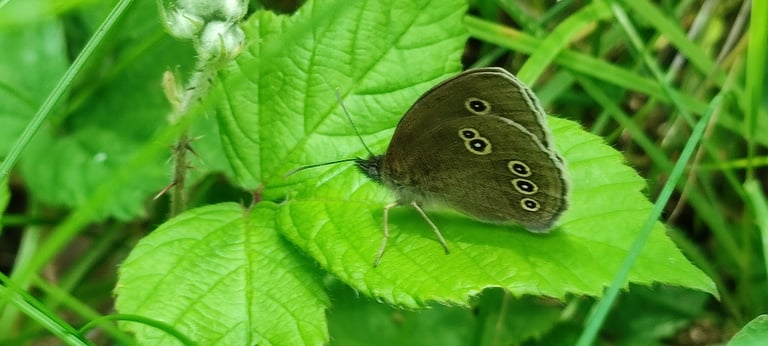
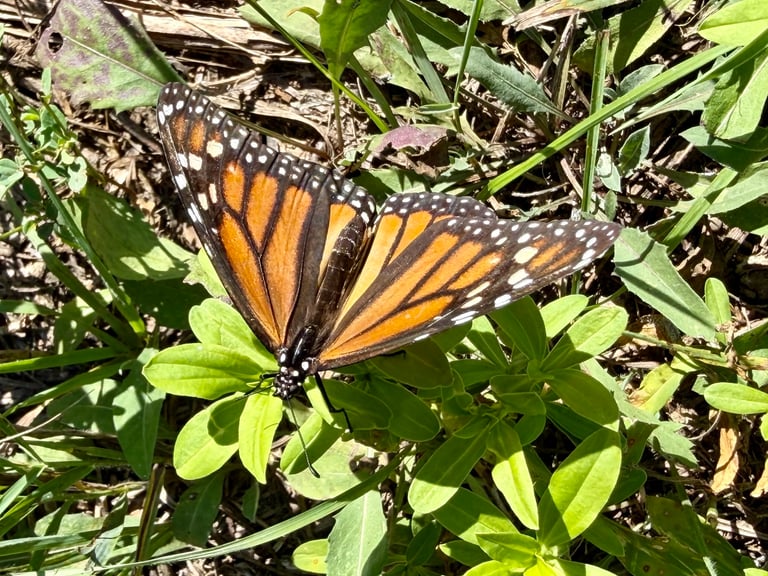
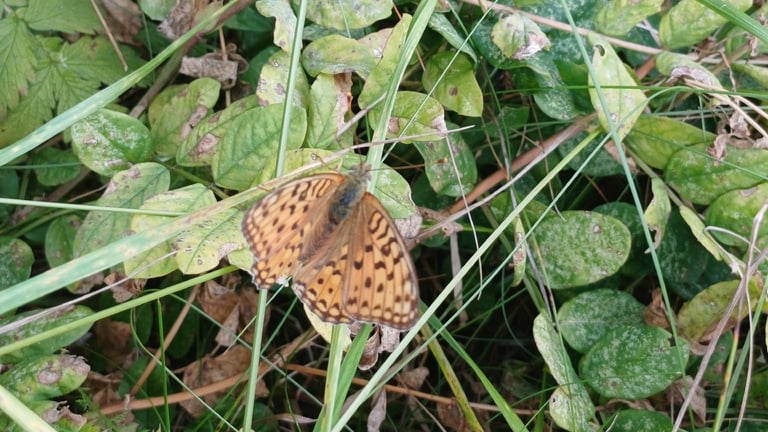
Photographs from via iNaturalist, licensed under CC0 1.0., by Joseph Aubert via iNaturalist, licensed under CC BY 4.0., and by M. Whitson via iNaturalist, licensed under CC BY 4.0., credited on each photo.
Ecology and classification
Classification
- Phylum
- Arthropoda
- Class
- Insecta
- Order
- Lepidoptera
- Family
- Nymphalidae
- Genus
- Vanessa
- Species
- Vanessa atalanta
Sources
- GBIF Species names and classification
- iNaturalist Photos
- Wikidata Common names and conservation status
- Wikipedia Summary extract
- Encyclopedia of Life Habitat, diet and behavior traits
- Animal Diversity Web Animal habitat, behavior and diet