
Perciformes
Atlantic Swordfish
Xiphias gladius
Also known as: Broadbill, Broadbill Swordfish
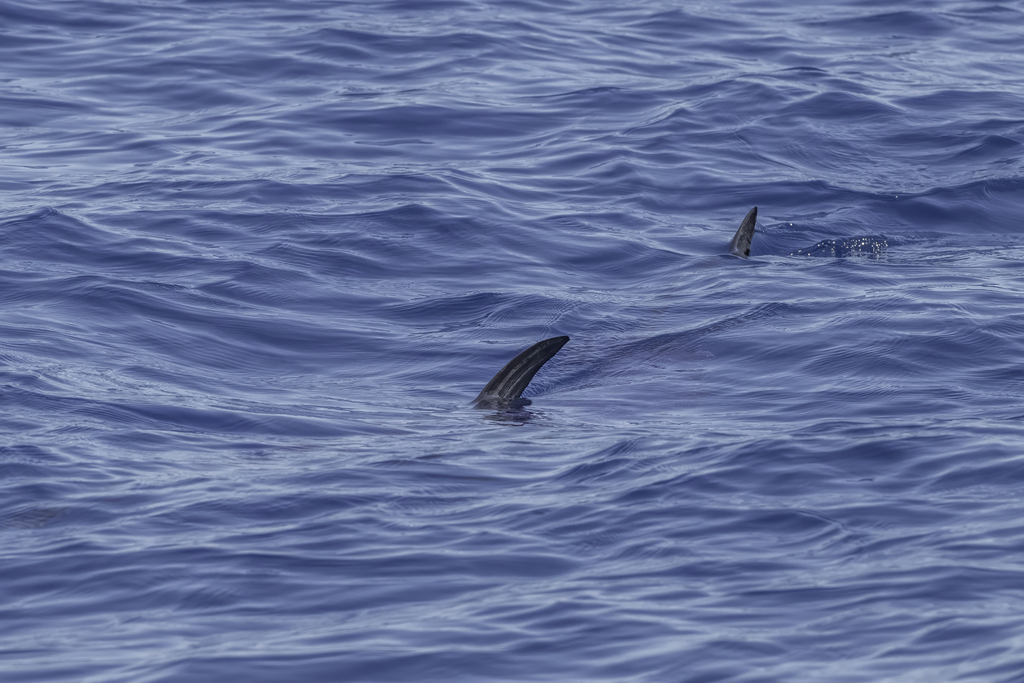
© Emily Turteltaub Nelson · iNaturalist · CC BY 4.0
Scientific Classification & Quick Facts
Classification
At a Glance
The Atlantic swordfish is one of the ocean’s most formidable predators, instantly recognizable by its elongated, flattened bill that resembles a sword. This distinctive weapon—which can extend up to one-third of the fish’s total body length—is used to slash through schools of prey with devastating speed and precision. Found across 19 countries spanning both sides of the Atlantic Ocean, Xiphias gladius inhabits some of the world’s most productive fishing grounds, making it both ecologically significant and economically valuable.
Currently listed as Near Threatened by the IUCN, Atlantic swordfish populations have rebounded from severe overfishing in previous decades, though they remain subject to intensive commercial harvest. Their recovery reflects both the species’ resilience and the effectiveness of international fishery management agreements. Understanding the biology and behaviour of this remarkable fish is essential for maintaining the balance between sustainable use and long-term conservation of this iconic Atlantic species.
Identification and Appearance
The Atlantic swordfish is a large, streamlined predator instantly recognizable by its elongated flattened bill, which resembles a sword and gives the species its common name. These fish commonly reach 3 metres in length, with the maximum recorded specimen measuring 4.55 metres and weighing 682 kilograms. The body is robust and tapered, designed for powerful movement through open water. The coloration is dark blue or black on the dorsal surface, transitioning to silvery or white on the belly, providing effective camouflage in the water column.
Sexual Dimorphism
Females are notably larger than males and grow to greater overall sizes. This size difference becomes pronounced in mature individuals, with females continuing to add mass well into their adult lives. Males reach maturity at 4–5 years of age, and females follow a similar timeline, though they achieve larger final dimensions.
Beyond the sword-like bill, the swordfish possesses a single large dorsal fin, a keeled tail, and a body almost entirely devoid of scales in adults. The gill covers and lateral line are prominent anatomical features. These adaptations—the smooth body, powerful musculature, and hydrodynamic profile—equip the swordfish for sustained swimming and hunting in open ocean environments across the Atlantic.
Distribution and Habitat
Xiphias gladius, the Atlantic Swordfish, is widely distributed across the Atlantic Ocean and adjacent waters, with records from 19 countries spanning multiple continents. Canada dominates observation records with 239 documented occurrences, reflecting strong populations in the northwestern Atlantic. The United States follows with 18 records, while Mediterranean and eastern Atlantic nations including Italy, Turkey, Algeria, and Portugal show consistent presence, with 3–7 records each. Records from the Indian Ocean region—Sri Lanka and India—indicate that Atlantic Swordfish occasionally venture beyond traditional Atlantic boundaries into tropical and subtropical waters.
The species occupies pelagic and epipelagic marine environments across a wide latitudinal range. Atlantic Swordfish are highly migratory, moving through open ocean waters and approaching continental shelves seasonally. As an oceanic species, they are not constrained by elevation or depth-zone classifications applicable to terrestrial or shallow freshwater organisms; instead, they inhabit variable water columns from surface waters to mesopelagic depths depending on prey availability and water temperature.
Seasonal patterns are pronounced, with a dramatic peak in July (216 observations) marking the height of the species’ presence in northern Atlantic waters. April through October comprises the primary activity season, with sightings declining sharply after October. November and December show no recorded observations in the dataset, suggesting migration southward or reduced detection during winter months. This strong seasonality reflects temperature-driven movements and spawning or feeding migrations characteristic of Atlantic Swordfish populations.
Biology
Behavior
Atlantic swordfish are solitary hunters that rely on exceptional speed and agility to pursue prey through open water. The common depiction of swordfish impaling fish on their elongated bill oversimplifies their actual feeding strategy. Evidence suggests they use their bill primarily to slash at prey, inflicting wounds that weaken targets before consumption. The bill may also serve a defensive function against sharks and other large predators, though this hypothesis remains under active investigation.
These fish are highly migratory, undertaking long-distance movements across ocean basins in response to temperature changes and prey availability. Swordfish exhibit diel vertical migration, moving between deeper waters during the day and shallower layers at night to feed. They are among the fastest fish in the ocean, though published speed estimates of 60 mph (97 km/h) lack reliable scientific foundation and should be treated with caution.
Diet
Atlantic swordfish are carnivorous predators that feed on a diverse range of fish and cephalopods. Mackerel, tuna, lanternfish, and squid comprise the bulk of their diet. They are opportunistic hunters that exploit whatever prey is abundant in their current location, adjusting their feeding grounds seasonally to follow migrating fish stocks.
Reproduction
Swordfish are gonochoristic, with separate males and females. They reach sexual maturity at approximately 4 to 5 years of age. Spawning occurs in warm waters during spring and early summer, typically in areas where water temperature exceeds 24°C (75°F). Females are highly fecund, releasing millions of eggs during a single breeding season.
Development is oviparous with external fertilization. Eggs are pelagic and drift in ocean currents with no parental care. Larvae are planktonic and vulnerable to predation during their early stages. Young swordfish gradually transition to epipelagic and mesopelagic zones as they grow, eventually joining adult populations in deeper offshore waters.
Conservation and Threats
Xiphias gladius, the Atlantic swordfish, is listed as Near Threatened on the IUCN Red List. This status reflects ongoing concern about fishing pressure across multiple ocean basins, though recent management efforts have allowed the Atlantic population to recover. The species’ population trend is currently increasing, a positive indicator that regulatory measures are having measurable effect.
Threats
Overfishing remains the primary threat to swordfish populations globally. In the Indian Ocean, overfishing is likely occurring, and in the Mediterranean Sea, fishing mortality exceeds the maximum sustainable level set by fisheries managers, making these stocks a high conservation priority. Commercial longline fishing, which targets swordfish along with tuna and billfish, continues to remove significant numbers of individuals from wild populations.
The severity of these threats was underscored in 2010 when Greenpeace International added swordfish to its seafood red list, signalling concern about the sustainability of certain swordfish fisheries and the need for consumers to exercise caution when purchasing swordfish products from vulnerable regions.
Conservation Efforts
The Atlantic swordfish population demonstrates the potential for recovery under strict management. International fisheries bodies, particularly regional fisheries management organisations, have implemented catch limits and fishing restrictions that have allowed Atlantic stocks to rebuild from historical depletion. These regulatory frameworks continue to evolve as new stock assessments emerge, though enforcement and compliance remain challenges in some regions.
Cultural Significance
The Atlantic swordfish has captured human imagination across centuries, appearing in classical mythology, folklore, and modern popular culture. In Greek mythology, the swordfish was associated with Poseidon, god of the sea, who was believed to command these formidable creatures as instruments of his oceanic dominion. Ancient seafarers viewed swordfish as symbols of strength and prowess, their powerful forms inspiring both awe and respect among those who encountered them on the water.
Regional fishing traditions, particularly around the Strait of Messina and in Sicilian folklore, cast the swordfish as a seasonal rival—a creature armed with a blade that tests the courage and skill of fishers. This adversarial yet respected role reflects the species’ status as a worthy opponent, worthy of both cultural recognition and cautious reverence.
In astronomy, the swordfish lent its name to the constellation Dorado, extending its cultural reach beyond the seas into the night sky. The species also achieved unexpected prominence in popular entertainment: “swordfish” became a famous password in the 1932 Marx Brothers film Horse Feathers, a reference that has since become a cultural trope, appearing repeatedly as a password across films, television series, books, and video games—a testament to how deeply this fish has embedded itself in collective storytelling.
Fun Facts
The Atlantic swordfish is one of the ocean’s most remarkable predators, equipped with a elongated bill that can reach up to one-third of its body length. Beyond its iconic weapon, this species harbors surprising behaviors and adaptations that have fascinated marine biologists for decades.
- The swordfish’s bill is not a solid bone but a flattened, tooth-studded extension of the upper jaw that it uses to slash through schools of fish—sometimes even injuring large prey much bigger than itself.
- Swordfish can dive to depths exceeding 2,000 metres in search of food, making them one of the deepest-diving fish in the Atlantic Ocean.
- Adult Atlantic swordfish are nearly solitary hunters and do not form schools; they are only seen in groups during the spawning season.
- Despite their fearsome appearance, swordfish are known to breach—launching themselves completely out of the water—for reasons that remain poorly understood by marine scientists.
- The eyes of a swordfish grow dramatically larger relative to body size as it ages, suggesting that vision becomes increasingly important for hunting as the fish matures.
- Swordfish are sequential hermaphrodites in some populations, meaning individuals may change sex during their lifetime depending on social and environmental factors.
- A swordfish can accelerate to speeds of 97 kilometres per hour, making it one of the fastest fish in the ocean and a formidable threat to its prey.
Photo Gallery
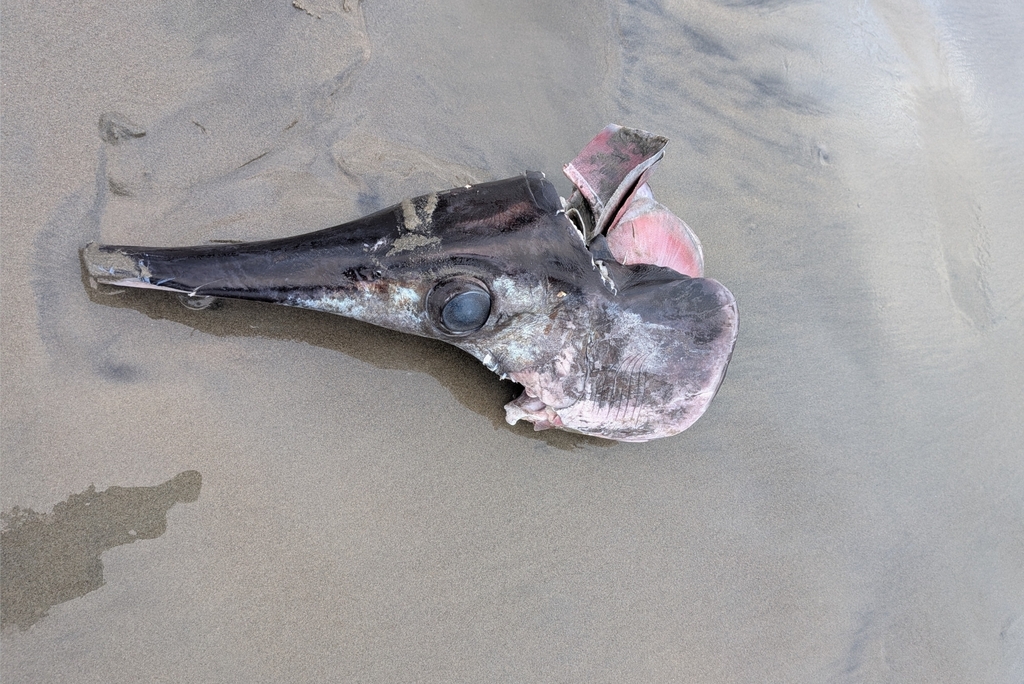
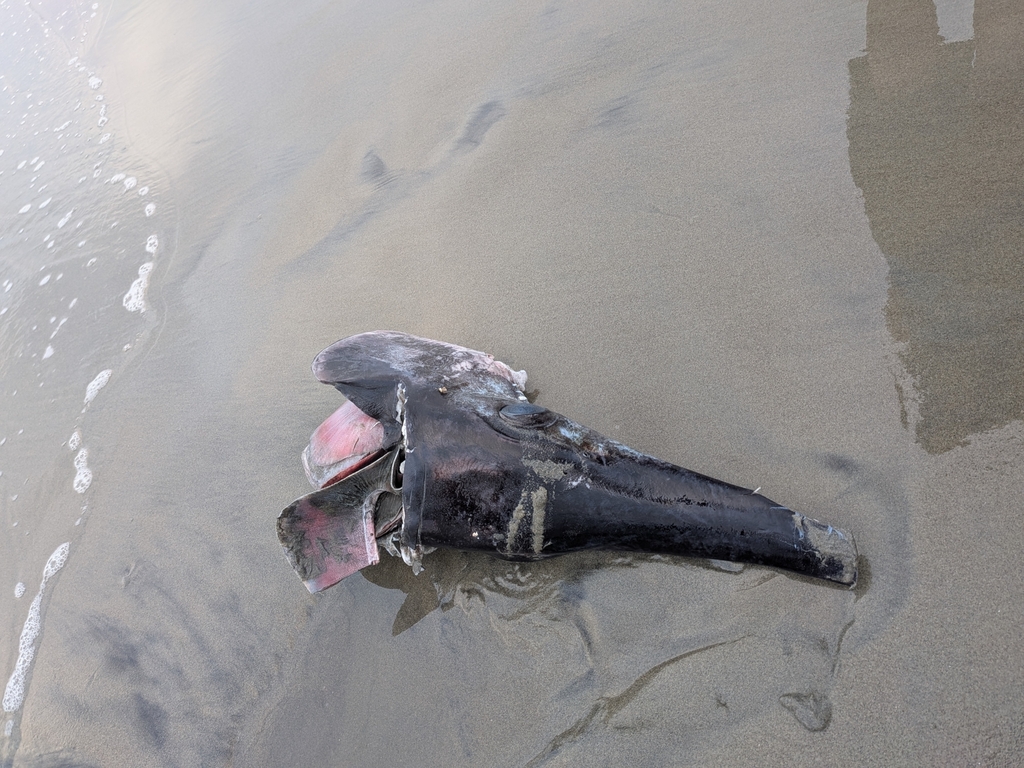
Emily Turteltaub Nelson · CC BY 4.0
Related Species

Was this profile helpful?