
Polypodiopsida · Polypodiales
Common Polypody
Polypodium vulgare
Also known as: Adder's Fern, Common Polyploidy, Golden-maidenhair
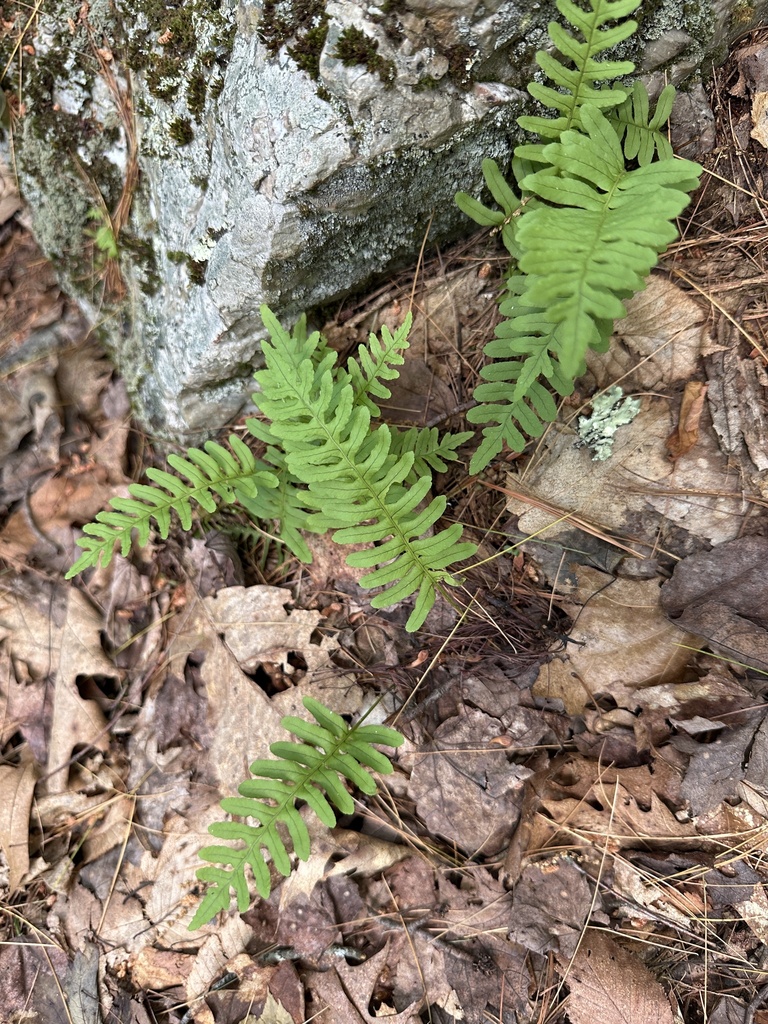
© Jaime McGuigan · iNaturalist · CC BY 4.0
Scientific Classification & Quick Facts
Classification
Known For
Detailed measurements for this species are still being verified.
Polypodium vulgare, the Common Polypody, is a small but tenacious fern that adorns rocks, tree bark, and mossy banks across temperate regions of the Northern Hemisphere. Unlike the lush, sprawling ferns of tropical rainforests, this delicate epiphyte thrives in the crevices and margins where most plants struggle—clinging to stone walls, ancient oaks, and cliff faces with remarkable persistence. Found across 24 countries, it represents one of Europe’s most widespread and resilient ferns, yet its modest stature and cryptic lifestyle have made it easy to overlook.
The species occupies a unique ecological niche, often appearing in ancient woodlands, limestone outcrops, and damp shaded walls where humidity remains high year-round. Its evergreen fronds, which unfurl in delicate pinnate patterns, remain photosynthetically active even through mild winters, giving it a competitive edge in temperate climates. Though its conservation status remains undocumented, Common Polypody’s wide distribution and adaptability suggest a species well-equipped for survival—yet its dependence on undisturbed habitats and humid microclimates makes it a valuable indicator of woodland health and old-growth forest quality.
Identification and Appearance
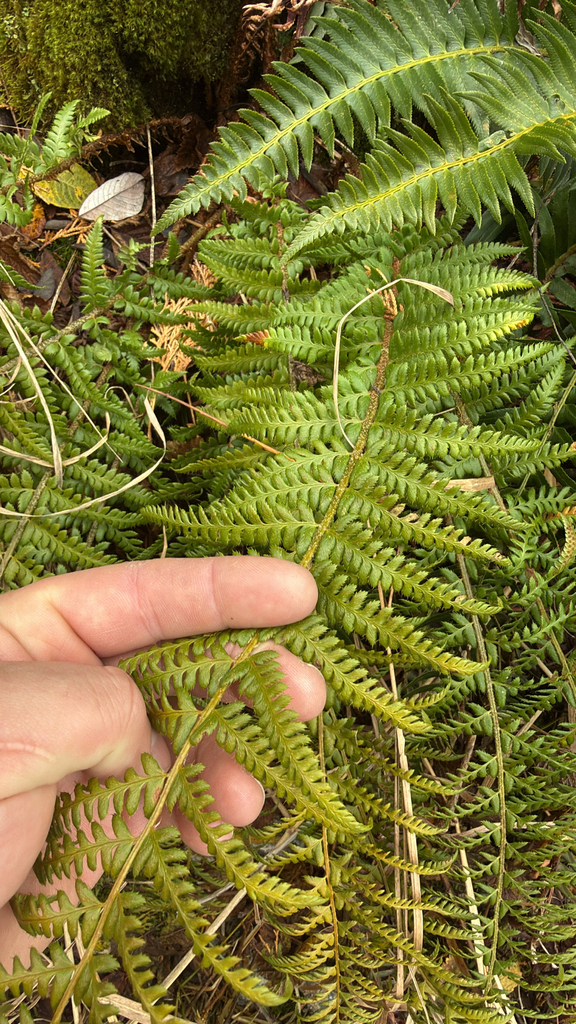
Polypodium vulgare, the common polypody, is a small evergreen fern that grows from a horizontal rhizome, producing fronds that emerge individually rather than in clustered crowns. The fronds measure 10 to 50 centimetres in length and are distinctly triangular in outline, giving the plant a characteristic compact appearance well-suited to its epiphytic or rock-dwelling habitats.
Frond Structure and Leaflets
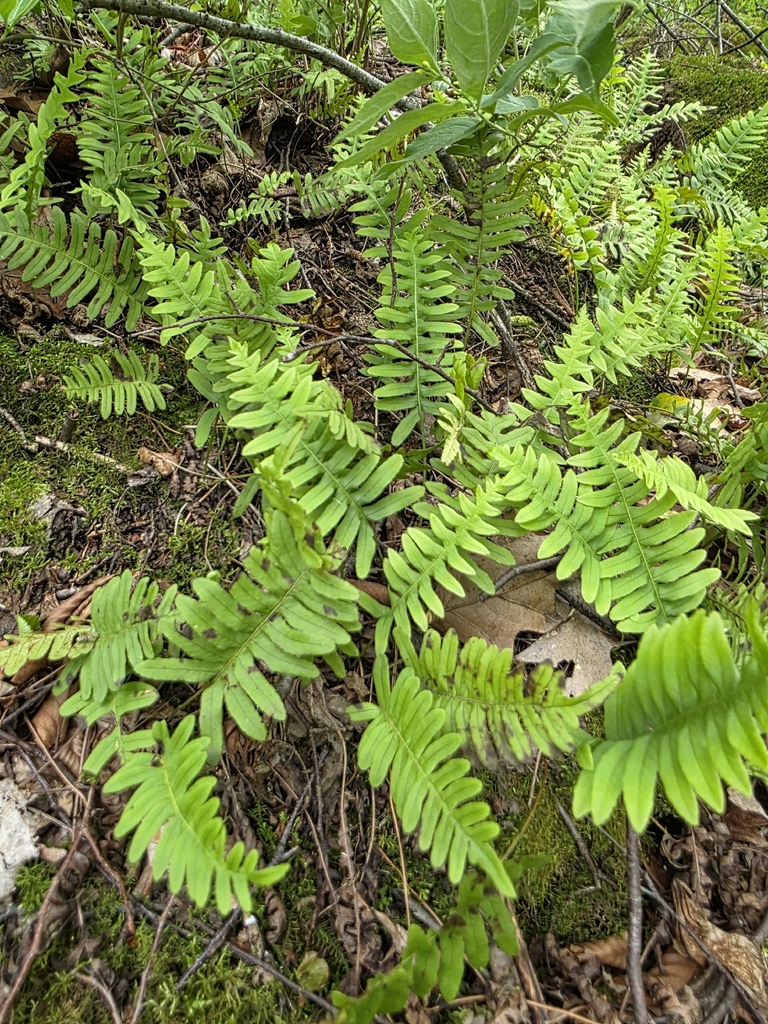
Each frond is deeply divided all the way back to the central stem, with 10 to 18 pairs of leaflets (or segments) arranged alternately along the rachis. Individual leaflets are substantial, measuring 10–20 centimetres long and 5–7 centimetres wide, and are broader at their base where they attach to the stem. The leaflets gradually become much shorter towards the tip of the frond, creating a tapering silhouette. Their margins are generally entire, though they may show faint teeth or denticulations, and the upper surface displays a characteristic mid-green colour.
Reproductive Features
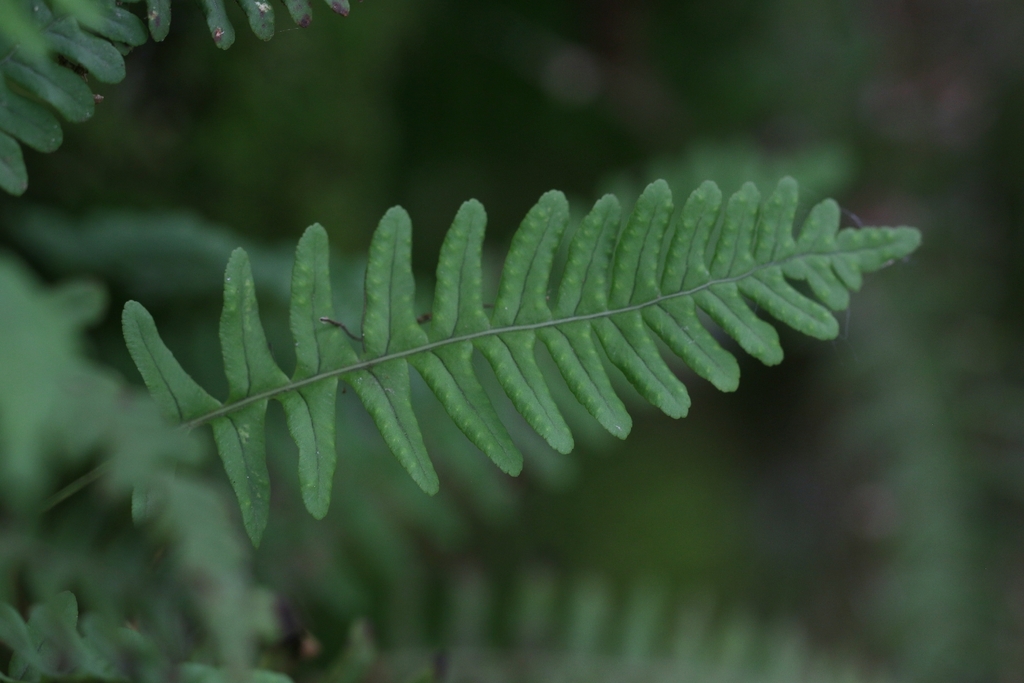
The undersides of mature leaflets bear golden-yellow or russet-coloured sori—the spore-bearing structures that distinguish ferns from flowering plants. These round sori lack the protective covering (indusium) found in many other fern species, making them readily visible without magnification. The fronds remain green and photosynthetically active year-round, with older fronds persisting alongside newly emerging growth, so the plant maintains a continuous carpet of foliage.
Distribution and Habitat
Polypodium vulgare occurs across 24 countries, with a pronounced concentration in central and northern Europe. Austria leads in recorded occurrences (50), followed by the Netherlands and Norway (40 and 39 respectively), and Sweden (39). The species also inhabits parts of Great Britain (32), Germany (20), Denmark (14), Italy (11), Russia (7), and France (7), indicating a broad but uneven distribution across the continent.
Elevation data for this species shows consistent records around 500.5 metres, suggesting it occupies a relatively narrow vertical range within its geographic domain. The fern’s presence is heavily skewed toward the winter months, with peak activity in January (205 occurrences) and a secondary presence in February (95 occurrences). Thereafter, observations drop dramatically, with no recorded data from March through December, indicating either true seasonal dormancy or a pronounced bias in observation timing during the colder months when the fern may be more visible or actively sought by naturalists.
Common Polypody thrives in moist, sheltered environments throughout its range. It grows frequently as an epiphyte on tree bark, particularly on older oaks, beeches, and other hardwoods with thick, established bark. The fern also colonises rocks, boulders, and damp stone walls, especially in woodlands and along woodland edges where humidity remains high and direct exposure to wind and drought is limited.
Growth and Cultivation
Growth
Polypodium vulgare, the common polypody, is a small evergreen fern that grows as a creeping, mat-forming perennial. The plant produces rhizomes—underground stems that spread horizontally across the substrate—from which upright fronds emerge at intervals. Mature plants typically reach 15 to 30 centimetres in height, with deeply lobed pinnate fronds that remain green throughout the year, even in temperate winters.
The fronds are leathery and somewhat stiff, growing in loose rosettes above the branching rhizomes. Growth rate data for this species is not currently documented, though the plant is known to be relatively slow-growing and long-lived, establishing stable populations in suitable microhabitats over many years.
Flowering and Reproduction
As a fern, Polypodium vulgare does not flower or produce seeds in the conventional sense. Instead, it reproduces via spores, which are produced in rounded clusters called sori on the undersides of the fronds. These sori are arranged in two rows between the midrib and the frond margins and become visible as brown or orange patches when spores mature. The sori lack an indusium—the membranous covering present in many other fern species—making them easily recognizable to keen-eyed observers.
Spore release typically occurs from midsummer onwards, with peak sporulation in late summer and autumn. Under appropriate moisture conditions, spores germinate to produce tiny heart-shaped gametophytes, which then develop into new sporophytes through sexual fusion.
Cultivation
Polypodium vulgare thrives in cool, shaded to semi-shaded positions with consistently moist but well-drained substrate. The plant performs best on humus-rich soil or growing medium and tolerates a wide range of soil conditions, though slightly acidic soils are typically preferred. Gardeners and horticulturists can cultivate this species in containers, raised beds, or woodland gardens where air humidity remains moderate to high.
Water requirements are moderate; the soil should never dry out completely, particularly during the growing season. The plant is hardy in temperate climates and performs well as an indoor houseplant when provided with indirect light and adequate ventilation. Propagation is straightforward: spores can be collected, stored, and sown on sterile peat or fine bark medium, or established rhizomes can be divided and transplanted directly into prepared substrate.
Conservation and Threats
Polypodium vulgare, the Common Polypody, has not been formally assessed by the IUCN Red List. However, its population trend is currently increasing across much of its range, suggesting that the species is thriving in suitable habitats. This positive trajectory reflects its widespread distribution and ability to establish on trees, rocks, and walls throughout temperate Europe and beyond.
Threats
No major specific threats to Common Polypody have been formally documented. The species’ resilience and adaptability to diverse microhabitats—from ancient woodland to urban stonework—mean it is less vulnerable to the habitat loss pressures that affect many ferns. Its ability to colonise epiphytically (growing on other plants) and lithophytically (on rock) gives it considerable ecological flexibility.
The primary challenge to populations remains the loss of old-growth woodland and the removal of dead wood and decaying trees, which provide ideal microsites for establishment. Excessive tree management that eliminates lichen- and moss-covered bark also reduces suitable substrate. In some regions, air pollution historically suppressed epiphytic fern populations by degrading lichen communities, though this pressure has eased in areas with improved air quality.
Conservation Efforts
Common Polypody benefits from general woodland conservation practices and the legal protection of ancient forests across much of Europe. Many protected areas include populations within their boundaries, and the species’ increasing population trend suggests that existing conservation measures are effective. No targeted species-specific conservation programme is currently necessary, though monitoring remains useful to track long-term population dynamics.
Cultural Significance
The cultural significance of Polypodium vulgare in human societies remains limited compared to flowering plants or charismatic animals. As a modest fern with a wide distribution across temperate regions, it has largely escaped the mythological and symbolic weight carried by more visually striking species. No major folklore traditions, religious symbolism, or artistic movements have centered on this plant in recorded history.
Within traditional herbalism and folk medicine, common polypody appears in historical European pharmacopeias as a minor remedy, though its use has declined considerably in modern practice. The rhizomes were occasionally employed in old remedies, but documentation of these applications is sparse and fragmentary. Today, the species holds significance primarily in ecological and botanical education—its hardy nature and common occurrence make it a useful subject for teaching fern identification and forest ecology rather than as a culturally embedded plant in the human imagination.
Fun Facts
- Unlike most ferns, Polypodium vulgare is evergreen, retaining its fronds year-round rather than dying back in winter. This adaptation allows it to photosynthesize during mild spells and take advantage of light before deciduous trees leaf out in spring.
- Its scientific name is a direct translation from ancient Greek: ‘poly-‘ means many, and ‘pous, podos’ means foot, giving it the literal meaning “many-footed.” This refers to the branching rhizomes that resemble numerous small feet creeping across rocks and logs.
- The rhizomes of common polypody have a distinctly sweet taste and aroma, making them a traditional culinary ingredient in some European cuisines. They have been used to flavor dishes and beverages for centuries.
- Historically and in traditional herbal medicine, this fern was valued as a purgative to treat constipation and as a vermifuge to expel intestinal parasites. Medieval herbalists regularly prescribed it as a remedy for worm infestations.
- Common polypody is remarkably adaptable and expansive, thriving in a wide range of environments from woodland floors to rocky outcrops and even urban walls. This flexibility has made it one of the most widespread ferns across temperate regions.
- The fern’s fronds can live for over a year, a relatively long lifespan for fern foliage, which contributes to its evergreen persistence and efficient year-round nutrient cycling.
Photo Gallery
Jaime McGuigan · CC BY 4.0
Related Species
Was this profile helpful?