
Polypodiopsida · Polypodiales
Staghorn Fern
Platycerium bifurcatum
Also known as: Elkhorn Fern, common staghorn fern, elkhorn fern
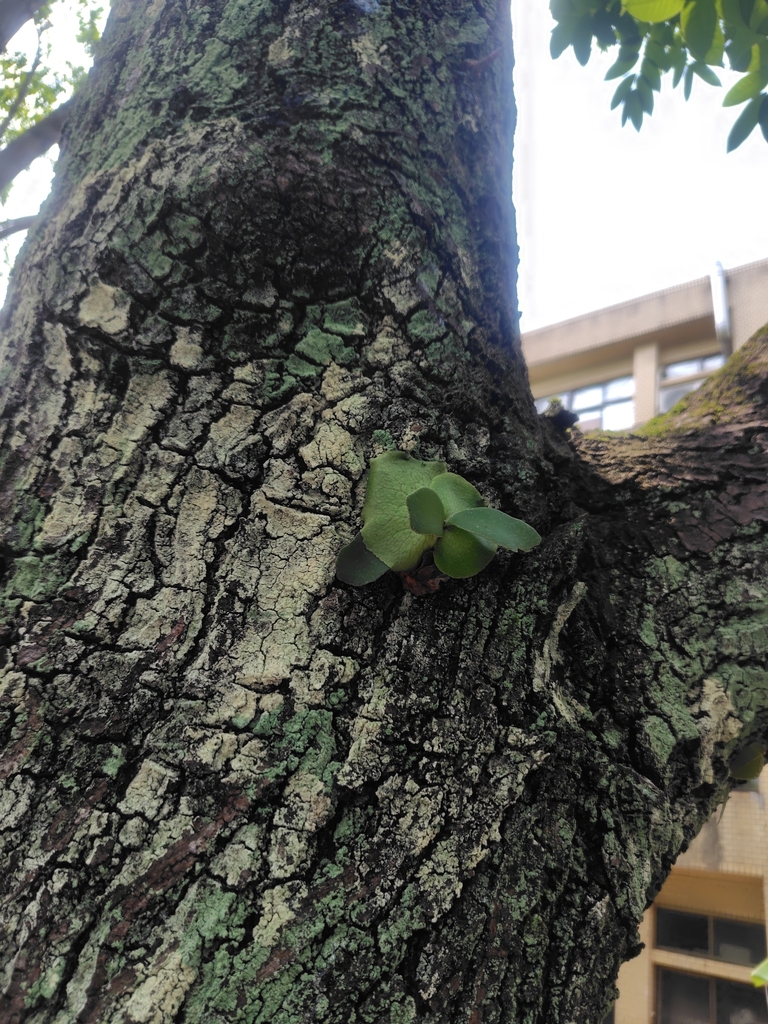
© chiuluan · iNaturalist · CC BY 4.0
Scientific Classification & Quick Facts
Classification
Known For
Detailed measurements for this species are still being verified.
The staghorn fern is one of nature’s most visually arresting plants, with fronds that split into two dramatically antlered lobes, resembling the branching antlers of a stag. Native to rainforests across Southeast Asia and Australia, Platycerium bifurcatum has become a prized ornamental worldwide, gracing botanical gardens, nurseries, and indoor plant collections on every inhabited continent. Found naturally across 14 countries, this fern thrives as an epiphyte—growing attached to trees in its native habitat rather than rooting in soil—a strategy that has allowed it to flourish in the humid, shaded canopy layers of tropical forests.
Its conservation status remains unknown to the International Union for Conservation of Nature, reflecting both its widespread cultivation and the scarcity of systematic field surveys in its native range. What makes the staghorn fern particularly compelling is its dual role as both a wild tropical epiphyte and one of horticulture’s most accessible exotic plants—a living bridge between rainforest ecology and the indoor gardens of collectors everywhere.
Identification and Appearance
Platycerium bifurcatum, the Staghorn Fern, is a distinctive bracket epiphyte that grows as an attachment to trees in rainforest environments. The plant reaches approximately 90 centimetres tall and 80 centimetres broad, making it a substantial but manageable addition to indoor or outdoor displays.
Frond Structure
The Staghorn Fern exhibits marked frond dimorphism—two distinct types of leaves serving different functions. The sterile fronds are heart-shaped and relatively compact, ranging from 12 to 45 centimetres in length. These fronds clasp against the support structure and collect organic matter and moisture, functioning like a collecting pouch for the plant’s nutrition. The fertile fronds are the more striking feature: they arch gracefully, branch into a characteristic fork shape, and grow substantially longer, reaching up to 90 centimetres. Their strap-like form and grey-green colouration give the plant its common name, resembling the antlers of a stag.
The fertile fronds are the reproductive organs, bearing spore-producing structures (sporangia) on their undersides. This two-frond system—sterile for support and nutrient capture, fertile for reproduction—is a defining characteristic of the genus Platycerium and makes the Staghorn Fern instantly recognisable among fern species.
Distribution and Habitat
Platycerium bifurcatum, the staghorn fern, is widely cultivated and naturalized across temperate and subtropical regions globally. Australia dominates observation records with 201 documented occurrences, reflecting both the species’ native range and its popularity in Australian horticulture. Significant populations also appear in the United States (37 records), New Zealand (13), South Africa (9), and Brazil (9). Smaller but established populations exist in Taiwan, Indonesia, Puerto Rico, Colombia, and Singapore, indicating successful cultivation across diverse climates in 14 countries total.
The species shows a pronounced seasonal pattern in observation activity, with peak records occurring in January (90 observations). This concentration suggests heightened visibility during summer months in the Southern Hemisphere, where Australia and New Zealand concentrate their records. Activity drops sharply from June onward, with no observations recorded between July and December across the dataset. This pattern likely reflects both genuine phenological changes—such as increased growth or reproduction during warmer months—and observer activity cycles in horticultural settings.
Elevation data are not available for this species in current records, reflecting its primary occurrence as a cultivated epiphytic fern in gardens, botanical collections, and naturalized populations rather than in wild native habitats. The species thrives in humid, tropical to subtropical conditions where it can be mounted on trees or in shaded indoor environments, making it less dependent on specific elevation zones than wild-occurring species.
Growth and Cultivation
Growth
Platycerium bifurcatum, the staghorn fern, is an epiphytic fern native to tropical rainforests of Australia, Indonesia, and the Philippines. In its natural habitat, it grows on tree trunks and branches, anchoring itself with specialized basal fronds that clasp the supporting structure. The plant develops two distinct frond types: sterile shield fronds that form a flat, protective rosette at the base, and fertile fronds that branch into antler-like lobes, giving the species its common name.
Mature staghorn ferns develop impressive dimensions, with fertile fronds extending 0.6 to 1.2 metres in length. Growth is moderate and steady under suitable conditions, forming gradually larger clumps over several years. The plant’s distinctive morphology remains consistent throughout its life, with the shield fronds continuously expanding to create a dense basal platform.
Flowering and Reproduction
As a fern, Platycerium bifurcatum does not produce flowers or seeds. Instead, it reproduces via spores produced in specialized structures called sporangia, which develop on the undersides of the fertile fronds. These spore-bearing fronds typically mature within the growing season, releasing minute spores that disperse on air currents. Spore production occurs naturally in established specimens without intervention.
Cultivation
Staghorn ferns thrive in bright, indirect light and prefer humid conditions that mimic their tropical forest origins. They require well-draining growing media—often mounted on cork bark, wooden plaques, or grown in loose, bark-based potting mixes rather than traditional soil. Water requirements are moderate; the medium should remain consistently moist but not waterlogged. In cultivation, many growers mount staghorn ferns on vertical surfaces with sphagnum moss, allowing water to run through while maintaining adequate moisture around the root zone.
These ferns are best suited to warm climates and indoor cultivation in temperate regions, where they benefit from temperatures between 15–25°C. High humidity supports vigorous growth and spore production; regular misting or placement in humid environments such as bathrooms accelerates development. While specific soil pH requirements are not critical, a slightly acidic to neutral medium (pH 6–7) supports healthy growth. Staghorn ferns tolerate low-light conditions better than many houseplants but produce larger, more robust fronds under bright, filtered light.
Conservation and Threats
Platycerium bifurcatum, the staghorn fern, has not been formally assessed by the IUCN Red List, meaning its conservation status remains officially unclassified. However, the species shows an increasing population trend in the wild, a positive indicator of its current resilience. This epiphytic fern, native to rainforests of Australia and Southeast Asia, has benefited from both natural range stability and successful cultivation in horticulture worldwide, which has reduced pressure on wild populations.
Threats
Although no major threats have been formally documented for this species, potential risks exist in its native range. Habitat loss through deforestation and clearing of tropical rainforests remains the primary concern for wild populations, as staghorn ferns depend on mature trees as host plants for growth. Collection for the ornamental plant trade could theoretically impact localized populations, though the widespread cultivation of P. bifurcatum in nurseries globally has largely shifted demand away from wild-harvested specimens. Illegal or unsustainable collection from protected forests remains a localized concern in some regions.
Conservation Efforts
Formal legal protections for staghorn ferns are limited, as the species lacks IUCN Red List classification and faces no immediate extinction risk. However, in its native range, protection occurs indirectly through rainforest reserves and national parks that safeguard its epiphytic habitat. The horticultural trade, paradoxically, has become a conservation ally: widespread cultivation has created a global reservoir of genetic diversity and eliminated much incentive for wild collection. Many botanical gardens and collections maintain specimens as backup populations.
Fun Facts
- The staghorn fern grows naturally on tree trunks and branches in its native Australasian forests—Java, Bali, New Guinea, and Australia—rather than on the ground. This epiphytic lifestyle means the fern absorbs moisture and nutrients from the air and decaying matter that accumulates around its roots, a strategy that allows it to thrive high in the forest canopy.
- Its distinctive forked fronds resemble the branching antlers of a stag or elk, which explains both of its common names. The plant can produce two types of fronds: long, dramatic fertile fronds that bear spores, and flattened, shield-like sterile fronds that wrap around the host tree and collect falling debris to create a nutrient-rich pocket.
- The sterile fronds are designed to trap water and organic matter, effectively creating a self-made soil reservoir. Over time, this accumulation nourishes the fern and provides habitat for insects and other small organisms, making the staghorn fern a living microhabitat within the forest.
- Staghorn ferns reproduce via microscopic spores rather than seeds, releasing these spores from specialized structures on the undersides of their fertile fronds. A single mature fern can produce thousands of spores, which drift on air currents and can establish new plants on suitable host trees.
- The fern requires high humidity and good air circulation to thrive, preferring bright, indirect light—conditions that mimic the dappled forest understory where it naturally grows. In cultivation, it is often mounted on wooden blocks or in hanging baskets to replicate its epiphytic lifestyle.
- Unlike many ferns, the staghorn fern is remarkably long-lived in cultivation and can remain healthy for decades with proper care. Its slow growth rate and unique structure make it prized by plant collectors and botanical gardens worldwide.
Ecology
Growing Conditions
Photo Gallery
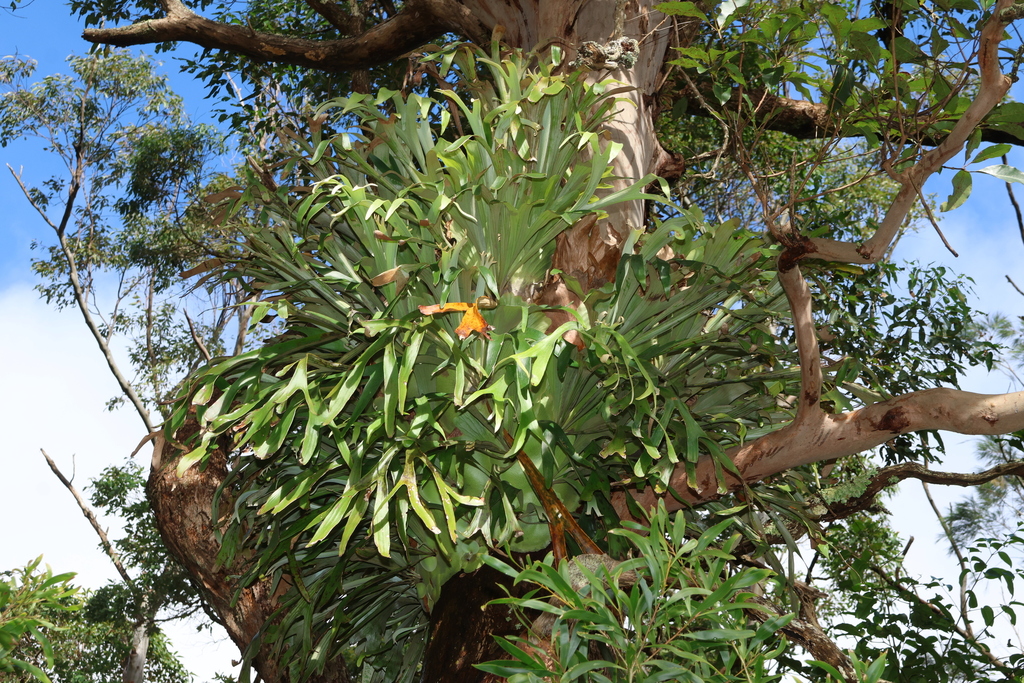
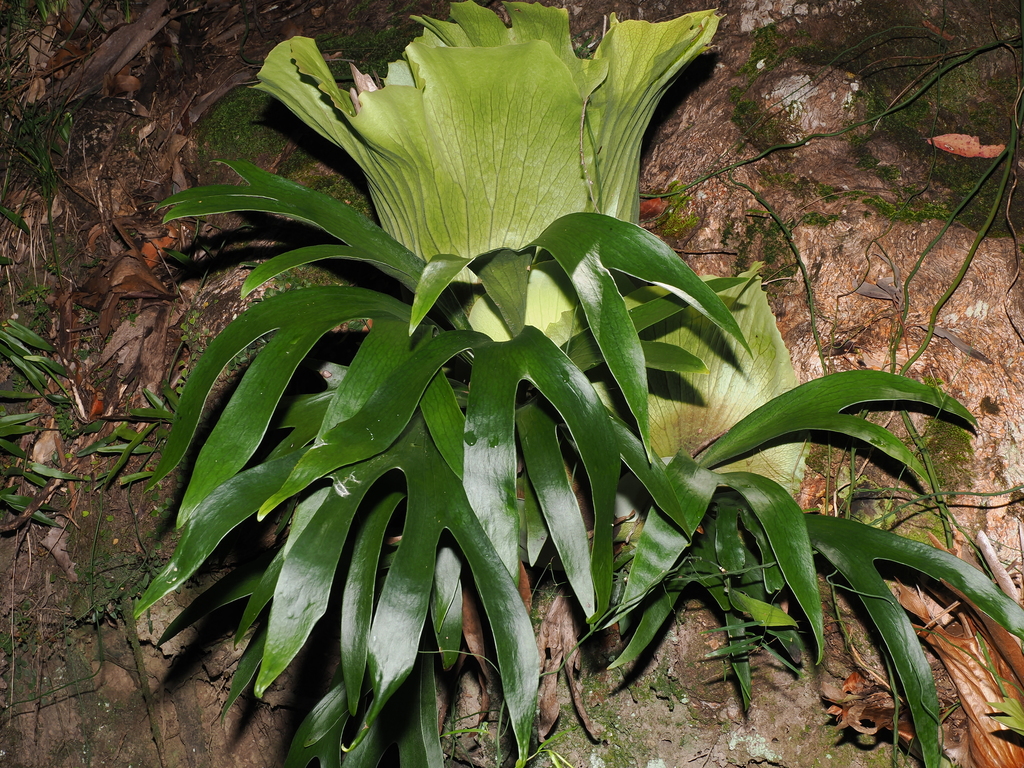
chiuluan · CC BY 4.0
Related Species
Was this profile helpful?