
Polypodiopsida · Polypodiales
Southern Maidenhair Fern
Adiantum capillus-veneris
Least ConcernAlso known as: Black Maidenhair, Maidenhair Fern, Southern Maidenhair, Venus Maidenhair, Venus maidenhair fern
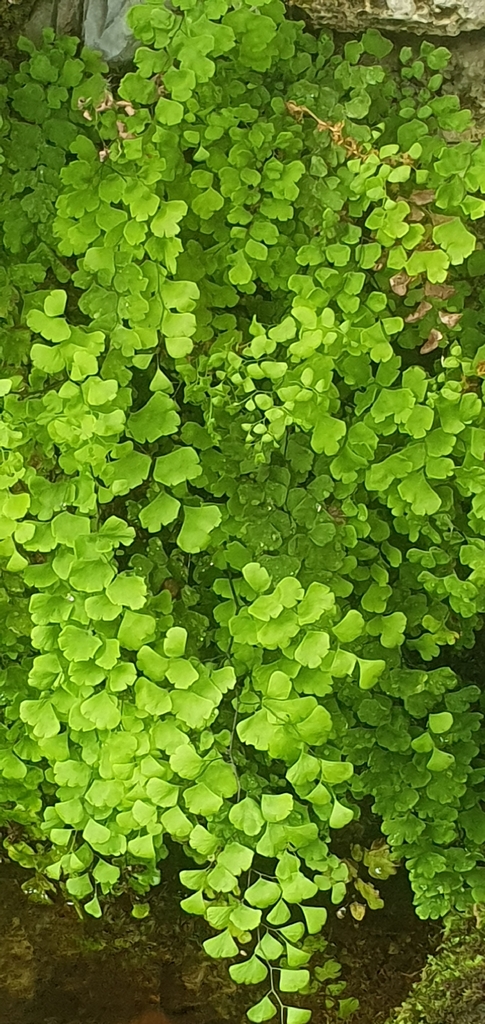
© Francesco · iNaturalist · CC BY 4.0
Scientific Classification & Quick Facts
Classification
Known For
Detailed measurements for this species are still being verified.
The Southern Maidenhair Fern, Adiantum capillus-veneris, is a delicate yet resilient fern with thread-like black stems and fan-shaped leaflets that seem to float on the gentlest air currents. Found across 33 countries, this species has colonised warm and temperate regions worldwide, thriving in moist, sheltered habitats from ravines to cave mouths. Listed as Least Concern on the IUCN Red List, the Southern Maidenhair Fern remains widespread and stable despite its preference for highly specific microclimates.
What makes this fern truly exceptional is the contrast between its gossamer appearance and its ecological toughness. Its wiry stems, which inspired the common name “maidenhair,” are surprisingly strong and can persist in rocky crevices and near waterfalls for decades. In cultivation and in the wild, Adiantum capillus-veneris remains a living testament to the diversity and adaptability of fern biology.
Identification and Appearance
Adiantum capillus-veneris is a delicate herbaceous fern that rarely exceeds 15 to 30 centimetres in height. Its fronds emerge in tight clusters from creeping rhizomes that can extend 20 to 70 centimetres along the soil or rock surface. The overall effect is compact and graceful, making it a popular choice for shaded gardens and indoor cultivation.
Frond Structure and Colour
The fronds are exceptionally fine and subdivided, with light green leaflets (pinnae) measuring only 5 to 10 millimetres in length and width. This finely dissected foliage gives the plant an airy, almost lacy appearance. A striking feature is the black, wiry rachis—the central stem supporting each frond—which provides strong visual contrast against the delicate pale green pinnae and creates the distinctive aesthetic for which maidenhair ferns are prized.
The combination of minute leaflets, thin wiry stems, and light colouration makes Adiantum capillus-veneris immediately recognisable. The fern produces no flowers or seeds; instead it reproduces via spores borne on the undersides of the fronds, a characteristic feature of all true ferns.
Distribution and Habitat
Adiantum capillus-veneris occurs across 33 countries, with a strong concentration in North America and the Mediterranean region. GBIF records show the United States dominates observations with 106 records, followed by Spain (42), Italy (29), and Taiwan (22). Additional populations are documented in France, Portugal, Israel, the United Arab Emirates, Mexico, and Turkey, reflecting a primarily temperate and subtropical distribution.
The species is found at elevations between 367.5 and 491 metres, with an average of 429.3 metres. This relatively narrow elevation band suggests preference for low-lying or foothill habitats rather than montane environments. The fern appears strongly associated with moist microclimates in these zones, though specific habitat classifications are not formally designated for this species.
Seasonal patterns show pronounced winter activity: January accounts for 192 recorded observations, with February showing 108 further sightings. From March onwards, observations drop to zero across the available dataset. This pattern reflects either peak reproductive and growth activity during winter months in its native Mediterranean and subtropical range, or heightened visibility and collection effort during the cooler season. The fern’s phenology may differ significantly between regions depending on local climate and moisture availability.
Growth and Cultivation
Growth
Adiantum capillus-veneris, the Southern Maidenhair Fern, is a delicate herbaceous perennial that forms low, spreading clumps. The fronds are finely divided and feathery, with characteristically thin, wiry, dark stems (called stipes) that give the plant its graceful appearance. Mature plants typically reach 15–30 centimetres in height, making them ideal for small spaces, terrariums, and container cultivation. The fronds are deciduous or semi-evergreen depending on growing conditions and climate.
Growth occurs year-round in warm climates, with most vigorous development during spring and summer months. The fern spreads gradually through rhizome extension, creating dense mats over time. In ideal conditions with consistent moisture and humidity, new fronds emerge continuously, maintaining a lush appearance throughout the growing season.
Flowering
Like all ferns, Adiantum capillus-veneris does not produce flowers or seeds. Instead, reproduction occurs through spores, which develop on the undersides of mature fronds in structures called sori. These spore-bearing patches are protected by kidney-shaped membranes (indusia) and become visible as the frond matures. Spore release typically peaks during the warmer months, particularly late spring and summer.
Cultivation
This fern thrives in partial shade to dappled light conditions and is sensitive to direct, intense sunlight, which can scorch the delicate foliage. It requires consistently moist (but not waterlogged) soil with excellent drainage. Humidity is essential—ideally 60 percent or higher—making it well-suited to bathrooms, kitchens, or situations where a pebble tray or regular misting can be maintained. Allow soil surface to dry slightly between waterings, but never allow the root zone to dry completely.
Well-draining potting soil enriched with organic matter supports healthy growth. The fern prefers mild to warm temperatures between 13–24°C and dislikes cold draughts or temperature fluctuations. Feed during the growing season with dilute, balanced liquid fertiliser every 4–6 weeks. Repot in spring every 2–3 years or when roots become congested. Outdoors, it grows best in protected locations in temperate and subtropical regions, thriving near water features or in shaded, humid microclimates where frost is rare or brief.
Conservation and Threats
Adiantum capillus-veneris, the Southern Maidenhair Fern, holds a conservation status of Least Concern on the IUCN Red List. This designation reflects the species’ broad geographic distribution and stable to increasing populations across much of its range. The fern is not currently at risk of extinction, though like many plant species, it remains subject to local habitat pressures and human land use changes.
Encouragingly, population trends for the Southern Maidenhair Fern show an increasing trajectory in many regions. This positive trend suggests that existing populations are expanding and that the species maintains adequate reproductive success in suitable habitats. The fern’s ability to persist and grow in numbers indicates resilience to current environmental conditions across its range.
Threats and Conservation Efforts
While no major, species-wide threats have been formally documented, the Southern Maidenhair Fern faces localized pressures typical of delicate ferns. Habitat loss through wetland drainage, spring modification, and urban development can eliminate populations in specific areas. Water pollution and altered hydrology in riparian zones where the species naturally occurs also pose risks to localized colonies. Additionally, overcollection for the ornamental plant trade has historically impacted wild populations in some regions, though legal protections in certain areas have reduced this pressure.
Conservation efforts for this species are largely passive, relying on the protection of native habitats and enforcement of trade regulations in jurisdictions where they apply. The species benefits from general wetland and stream protection policies in many countries. In cultivation, the Southern Maidenhair Fern is widely grown by fern enthusiasts and in commercial horticulture, which reduces pressure on wild populations by providing a legal, sustainable source for those interested in the species.
Cultural Significance
Adiantum capillus-veneris holds a significant place in traditional medicine systems across multiple cultures. In Iranian Traditional Medicine, the plant is known as “Pare-siavashan” and appears in classical pharmacopeias as a therapeutic herb. Ancient Persian practitioners prescribed the fronds—either alone or combined with other plants in multi-herbal formulations—to address respiratory complaints and emotional imbalances, with historical records documenting its use for soothing cough and what traditional texts termed “melancholic imbalances,” an older expression often associated with mood-related conditions.
The maidenhair fern’s ethnopharmacological applications extend across Arabic and broader Mediterranean medical traditions. Historical texts, including those by Ibn Rushd, reference the plant for treating alopecia, nephrolithiasis, chest and lung complaints, and scrofula. In Arabic medical nomenclature, the species is called Barshawshan or Kuzburat-el bir. Contemporary phytotherapy research has renewed attention to these traditional claims, with modern studies examining the fronds as candidates for clinical applications and validating various effects documented in ancient practice.
Fun Facts
Adiantum capillus-veneris, the southern maidenhair fern, is one of the most widely distributed ferns on Earth, thriving across five continents and numerous islands. Its delicate appearance and ease of cultivation have made it a beloved houseplant and garden specimen for centuries.
- The southern maidenhair fern has achieved a subcosmopolitan distribution, meaning it grows naturally across diverse regions worldwide from tropical to temperate zones, a rarity among ferns.
- Its distinctive black or dark brown stems (called rachises) are unusually wiry and glossy, providing striking visual contrast against the pale green leaflets and making the plant instantly recognizable.
- Unlike flowering plants, this fern reproduces entirely through microscopic spores produced on the undersides of its fronds—a reproductive strategy unchanged for over 300 million years.
- The fern’s fronds are naturally hydrophobic, meaning water beads up and rolls off rather than being absorbed, allowing it to thrive in humid environments without waterlogged foliage.
- Southern maidenhair fern is highly adaptable to indoor cultivation and has become one of the most popular houseplants globally, valued for both its ornamental appeal and air-purifying properties in living spaces.
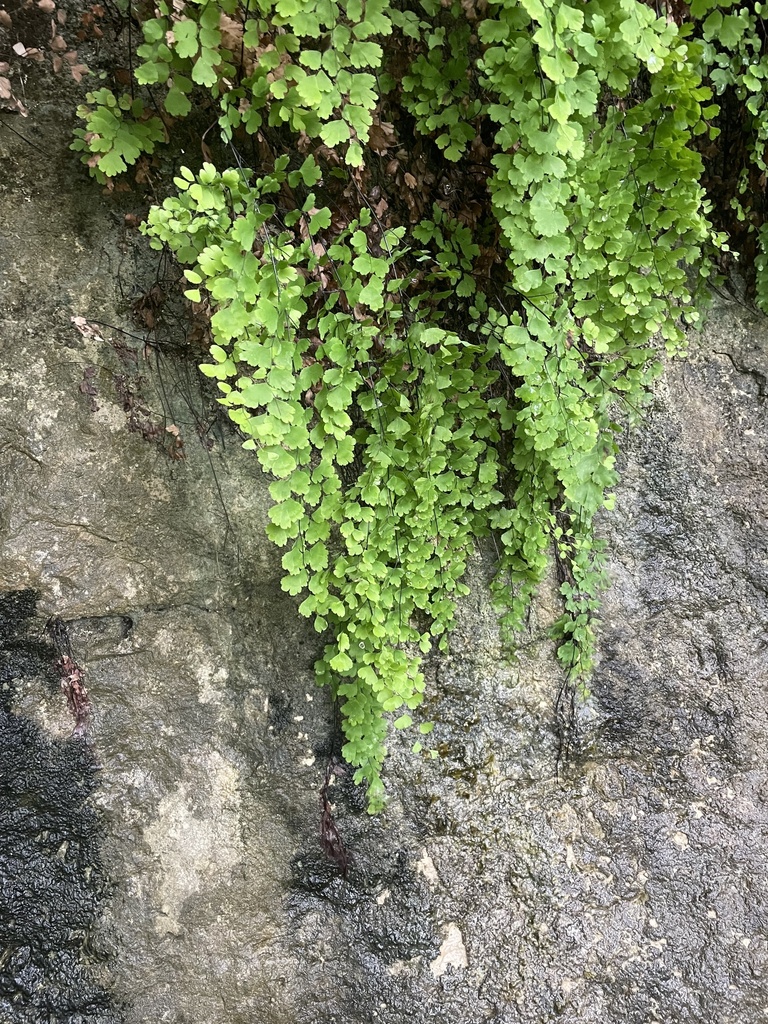
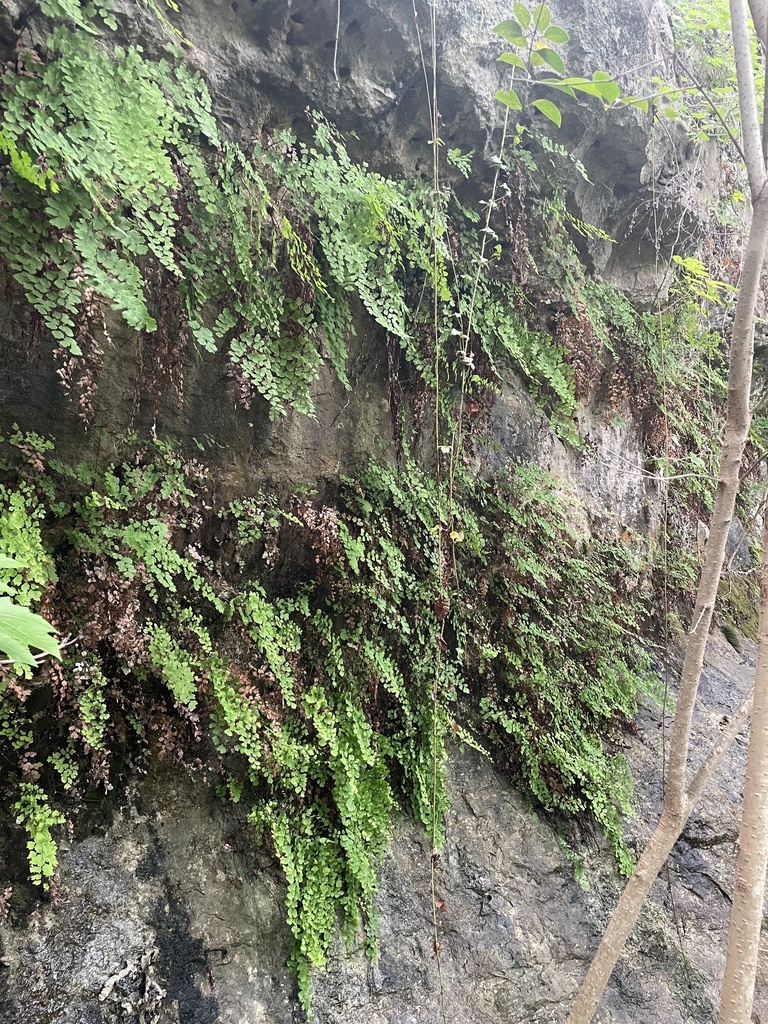
- In its natural habitat, this fern often grows near seepage areas, spray zones of waterfalls, and moist rock faces, where its preference for high humidity and filtered light is perfectly matched to the environment.
- The fronds of Adiantum capillus-veneris are notably frost-tender, and in temperate regions the above-ground portions typically die back in winter, though the rhizome survives underground to regrow in spring.
Ecology
Growing Conditions
Conservation Status
LC (Least Concern) · NT · VU · EN · CR · EW · EX
Photo Gallery
Francesco · CC BY 4.0
Related Species
Was this profile helpful?