
Lecanoromycetes · Teloschistales
Maritime Sunburst Lichen
Xanthoria parietina
Also known as: Common Orange Lichen, Common Sunburst Lichen
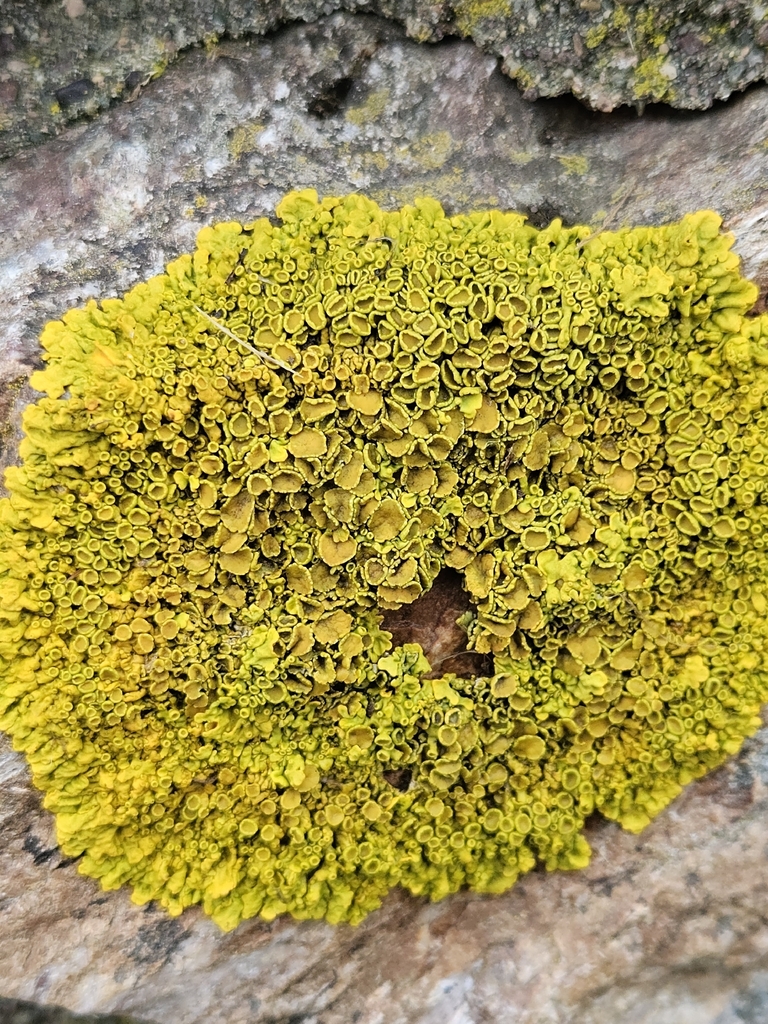
© Steven McGrath · iNaturalist · CC BY-NC 4.0
Scientific Classification & Quick Facts
Classification
Known For
Detailed measurements for this species are still being verified.
Xanthoria parietina, the Maritime Sunburst Lichen, is a striking golden-orange organism found clinging to rocks, walls, and tree bark across much of the temperate world. Despite its vibrant colouration and widespread presence, this composite life form—a symbiotic partnership between fungus and algae—remains overlooked by most naturalists. Its brilliant hue and hardy resilience make it one of the most recognisable lichens in human-dominated landscapes, yet it holds secrets about environmental health and the surprising chemistry of survival.
The species occurs across 28 countries and thrives in coastal regions and urban environments, often appearing as brilliant golden discs on sun-exposed surfaces. Its conservation status remains unknown, partly because its abundance and adaptability have kept it off formal monitoring lists. What makes Xanthoria parietina particularly compelling is its sensitivity to air pollution—it vanishes from cities with poor air quality but flourishes where the atmosphere is clean, making it an accidental indicator of environmental conditions and a living barometer of habitat health.
Identification and Appearance
Xanthoria parietina is a foliose (leafy) lichen with a distinctive branching thallus that typically measures less than 8 centimetres across. The lobes that form the vegetative body are notably small, ranging from 1–4 millimetres in diameter in most populations, though they occasionally reach up to 7 millimetres. African populations tend to have smaller lobes, usually between 0.5–2.0 millimetres wide, compared to those in temperate regions.
Colour and Surface Features
The upper surface displays a striking range of yellow, orange, or greenish-yellow colouration, the exact shade depending heavily on environmental conditions. In shaded habitats, the thallus becomes almost green, whereas sunlit specimens develop deeper orange and yellow tones. The lobes are flattened in appearance, creating a neat, somewhat geometric pattern across the surface.
The lower surface is white and includes a cortex (outer layer), with sparse, pale rhizines—the hair-like structures that anchor the lichen to its substrate. These features distinguish Xanthoria parietina from related foliose lichens and make it readily identifiable in the field once its characteristic colour and small lobe structure are recognised.
Distribution and Habitat
Xanthoria parietina, the Maritime Sunburst Lichen, has a widespread distribution across Europe, recorded in 28 countries with the strongest presence in northern and central regions. GBIF records show that Sweden leads with 64 observations, followed closely by Germany with 63 records. The British Isles and Denmark also demonstrate significant populations, with 37 and 24 observations respectively. Additional populations extend eastward into Russia (15 records) and southward through France, Poland, Austria, Switzerland, and the Czech Republic, indicating a broad continental range adapted to temperate and boreal climates.
The lichen thrives across diverse substrate types in its preferred maritime and coastal environments, though it colonizes rocky outcrops, stone walls, and bark throughout its range. The species shows remarkable tolerance for coastal spray and pollution, which may explain its prevalence in heavily settled European regions. Seasonal observation patterns reveal a notable concentration in January, with 300 recorded observations in that month, though the reason for this peak—whether reflecting breeding cycles, visibility during winter conditions, or observer activity patterns—remains unclear from current data.
Ecology and Lifecycle
Lifecycle
Xanthoria parietina is a composite organism comprising a fungal partner (mycobiont) and algal partner (photobiont) that reproduce and persist through distinct phases. The fungal component produces fruiting bodies called apothecia—disc-shaped reproductive structures that develop on the thallus surface. These apothecia release ascospores, microscopic spores produced within asci (specialized sac-like cells), which disperse via air currents to colonize new substrates. Once a spore settles on a suitable surface—typically rock, bark, or masonry—it germinates and the fungal filaments (hyphae) grow outward, eventually contacting compatible algal cells to establish the symbiotic thallus.
The lichen’s vegetative growth occurs through thallus expansion rather than traditional fungal fruiting. In response to environmental conditions, the thallus exhibits phenotypic plasticity: forms in moist stream beds develop semi-erect, orange-yellow morphologies, while those in drier, sun-exposed sites become more compact and darker orange. This morphological flexibility allows the organism to optimize resource capture and water retention without genetic change. Reproduction may also occur asexually through fragmentation, where pieces of the thallus detach and establish new colonies on nearby surfaces, particularly in sheltered microclimates.
Ecological Role
Xanthoria parietina functions as a pioneer colonizer and bioaccumulator in urban and coastal ecosystems. The lichen thrives in nitrogen-rich environments, particularly on substrates enriched by bird droppings, making it a reliable indicator of areas with high bird activity. Its presence on rooftops, cliffs, and exposed masonry accelerates the chemical weathering of mineral surfaces through the production of organic acids, contributing to rock breakdown and soil formation over long timescales. By colonizing bare substrates, the lichen stabilizes surfaces and creates microhabitats for other organisms, facilitating ecological succession.
The photobiont within the lichen—typically a green alga—provides carbohydrates through photosynthesis, while the fungal partner absorbs mineral nutrients directly from the substrate and water vapor from the air. This mutualistic relationship allows the lichen to survive in habitats inhospitable to most vascular plants. Populations in drier, exposed regions synthesize longer-chain hydrocarbons (alkanes) on their surface to reduce water loss, mirroring adaptations found in desert vascular plants. In humid, cooler regions, shorter-chain alkanes predominate, reflecting the reduced desiccation risk.
Uses
Historically, X. parietina has limited direct human use compared to other lichen species. The thallus contains yellow-orange pigments belonging to the anthraquinone family, which have been investigated for potential antimicrobial and antioxidant properties, though no major commercial applications have emerged. Unlike some edible or medicinal lichens, X. parietina is not cultivated for food or traditional medicine, and its palatability is poor due to bitter compounds and slow digestion.
The species is primarily valued as an ecological indicator organism. Its abundance and distribution reflect air quality, nitrogen deposition, and historical bird populations, making it useful for biomonitoring programs across Europe and beyond. In urban ecology studies, researchers track lichen cover to assess the effectiveness of pollution control measures and to map changes in ecosystem health over decades.
Conservation and Threats
Xanthoria parietina, the Maritime Sunburst Lichen, has not been formally assessed by the IUCN Red List. This absence of a conservation status designation reflects the species’ broad geographic range and apparent lack of immediate extinction risk. Many lichen species remain unassessed due to the practical challenges of monitoring cryptic organisms across their full distributions and the historical priority given to vertebrate and plant assessments.
The population of X. parietina is currently increasing across much of its range. This positive trend suggests the species is responding well to environmental conditions in many regions and does not face the acute pressures affecting more vulnerable lichen taxa. The expansion is particularly evident in urban and coastal areas where suitable substrate remains abundant.
Threats and Conservation Efforts
No specific major threats have been documented for X. parietina at the global scale. Unlike some lichen species sensitive to particular pollutants or habitat loss, the Maritime Sunburst Lichen is notably resilient. Its tolerance of urban environments, pollution, and diverse substrate types—including concrete, brick, and weathered rock—buffers it against many localized disturbances. The species’ ability to colonize man-made structures has in fact enabled it to thrive in human-dominated landscapes where specialized lichens have declined.
The lack of formal legal protections reflects the species’ conservation stability. However, regional monitoring remains valuable to detect any future declines. Researchers and naturalists can contribute by documenting lichen diversity through citizen science platforms, which help track long-term population trends and detect shifts in range or abundance.
Fun Facts
Xanthoria parietina, the Maritime Sunburst Lichen, is one of the most recognizable and scientifically valuable lichens on Earth. Named for its brilliant sunburst appearance, this hardy species reveals surprising truths about survival in a polluted world and has shaped our understanding of lichen biology itself.
- It thrives where other lichens fail. Unlike most lichens that retreat when air pollution rises, Xanthoria parietina flourishes in areas with high pollution and excess nitrogen, making it a pioneer colonist of urban and industrial landscapes.
- Its color changes with its mood—or rather, with sunlight. In bright, sun-exposed locations, the lichen glows brilliant orange; in shaded spots, it shifts to greenish-yellow, a transformation caused by protective pigments that respond to light intensity.
- Carl Linnaeus described it in 1753. Xanthoria parietina was among the earliest lichens formally named by the father of modern taxonomy, giving it a place in the foundations of scientific classification.
- It is the laboratory mouse of lichenology. No other lichen has been studied as intensively; decades of research on Xanthoria parietina have unlocked fundamental secrets of how lichens photosynthesize, reproduce, and resist environmental stress.
- It inhabits almost every hard surface you can imagine. From spray-soaked coastal rocks and ancient gravestones to the walls of city buildings and the bark of trees, Xanthoria parietina colonizes a wider variety of substrates than most lichen species.
- Its orange pigment is a chemical defense. The bright xanthone compounds that give this lichen its distinctive color also protect it from excessive ultraviolet radiation and help it tolerate heavy metal pollution.
Photo Gallery
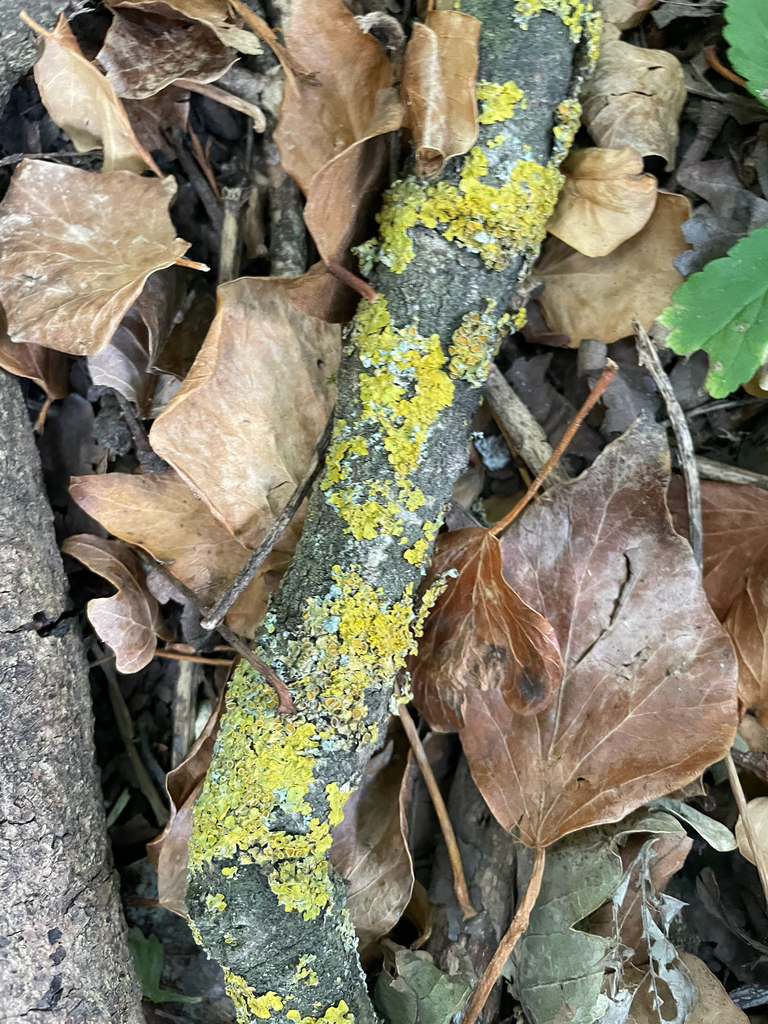
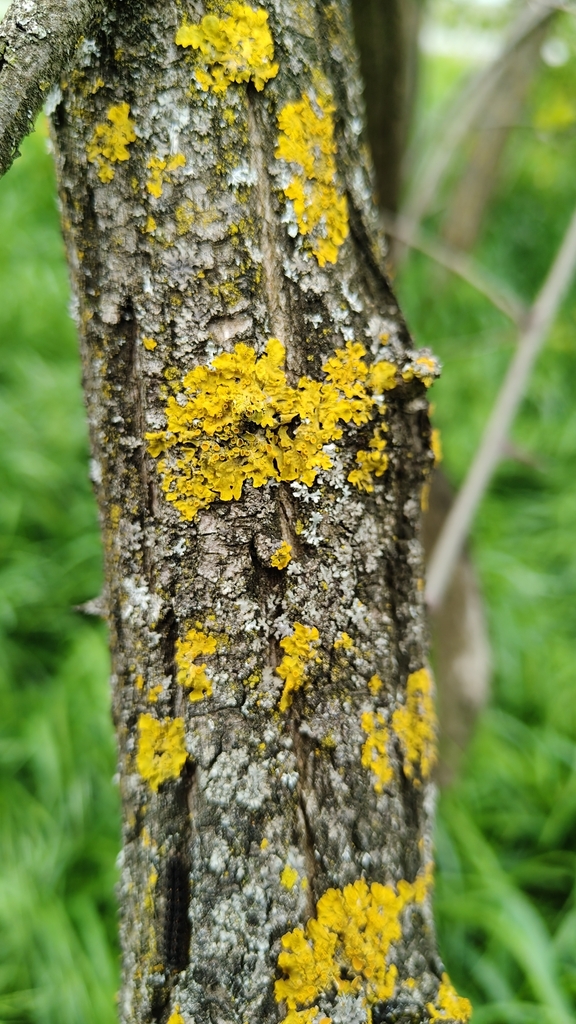
Steven McGrath · CC BY-NC 4.0
Related Species
Was this profile helpful?