
Lecanoromycetes · Lecanorales
Wolf Lichen
Letharia vulpina
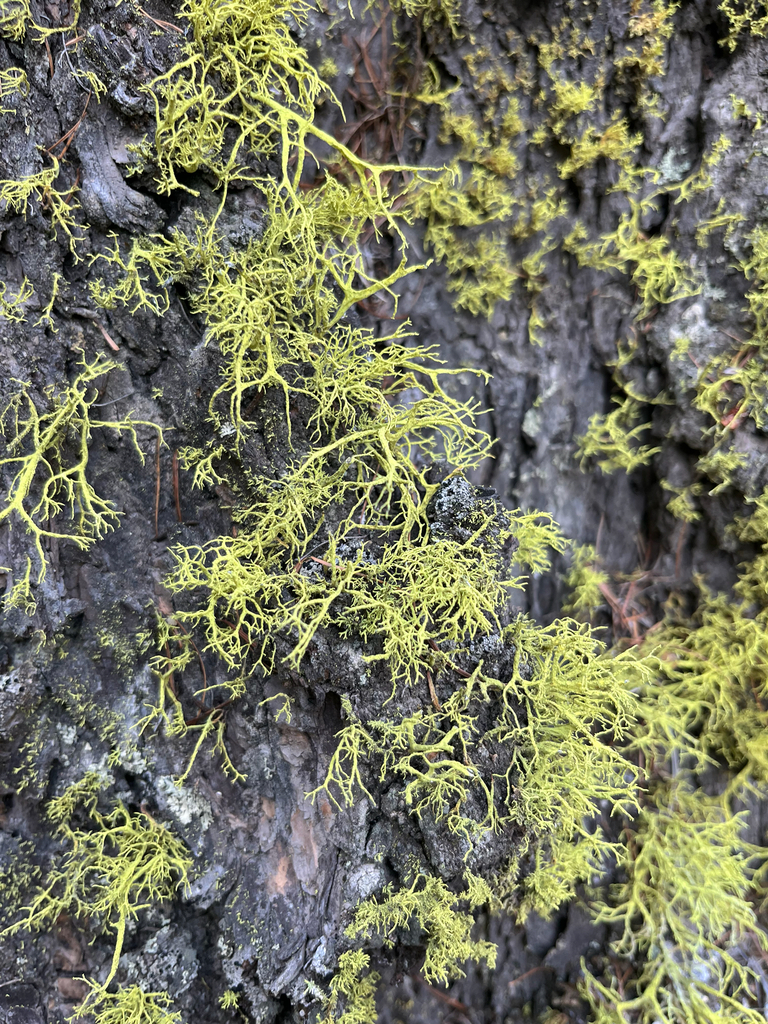
© no rights reserved · iNaturalist · CC0 1.0
Scientific Classification & Quick Facts
Classification
Known For
Full profile in progress — check back soon.
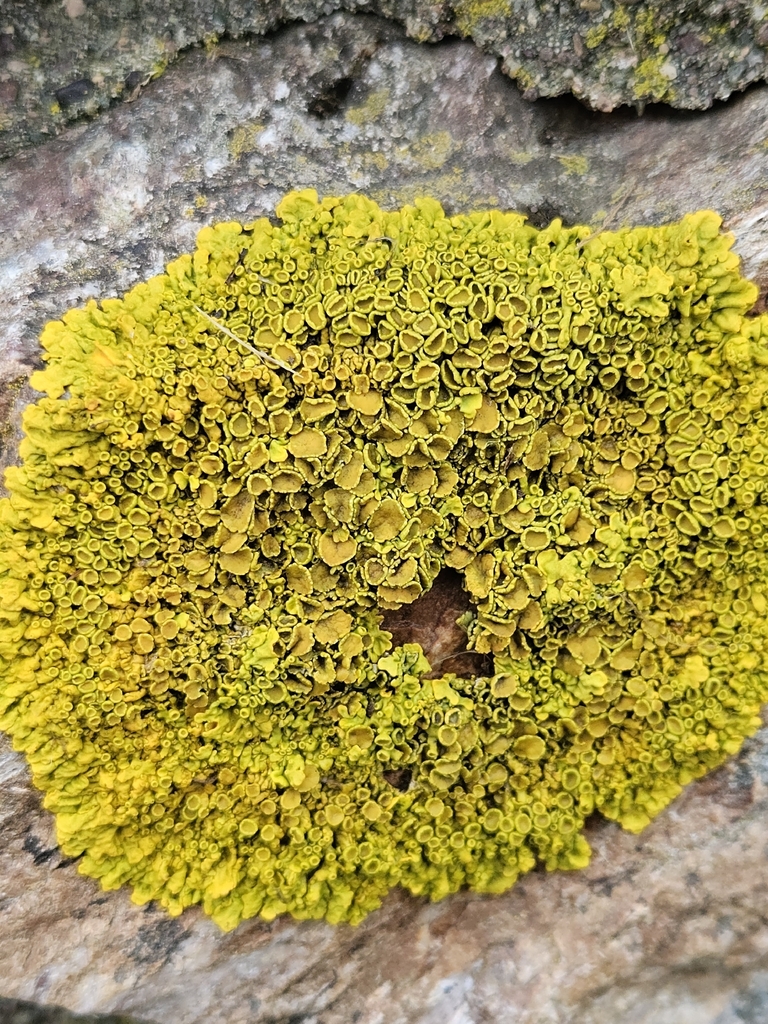
Letharia vulpina, known as Wolf Lichen, is a striking yellow-green lichen that adorns the bark and branches of conifers across the Northern Hemisphere. Its vibrant colour makes it instantly recognizable in temperate forests, where it grows with a delicate, branching structure that can catch the eye from considerable distances. The species belongs to the family Parmeliaceae within the phylum Ascomycota, placing it among the fungi—though lichens themselves represent a remarkable partnership between fungi and photosynthetic algae or cyanobacteria.
The species occurs across approximately nine countries, primarily throughout temperate and boreal regions where suitable substrate and humidity conditions exist. Its conservation status remains unknown to the International Union for Conservation of Nature, suggesting that while it is widespread enough to warrant no immediate alarm, its population dynamics and long-term trends deserve closer attention. Wolf Lichen exemplifies the hidden diversity of lichens—organisms often overlooked despite their ecological importance and chemical sophistication.
Identification and Appearance
Letharia vulpina is instantly recognizable by its vibrant yellow to yellow-green colouration, which can range toward chartreuse in fresh specimens. The thallus—the lichen’s vegetative body—displays a fruticose growth form, meaning it grows as a densely branched, shrubby structure rather than a flat crust or leafy sheet. Typical specimens measure 2 to 7 centimetres in diameter, creating a compact, tufted appearance on rocks and tree bark.
The surface of the thallus is densely covered with vegetative reproductive structures called soredia and isidia, which give the lichen a distinctly granular or bumpy texture. These structures are often so abundant that they obscure the underlying branching pattern. The bright yellow pigmentation is particularly striking in moist, healthy specimens; however, the colour fades noticeably in drier conditions, becoming duller and less vibrant over time. This colour variation can make aged or water-stressed colonies appear quite different from freshly moistened ones, an important consideration when identifying specimens in the field.
Distribution and Habitat
Letharia vulpina, commonly known as wolf lichen, is predominantly distributed across northern Europe and North America. Sweden dominates the recorded occurrences with 210 documented observations, making it the species’ stronghold. The United States follows with 44 records, while Norway and Canada contribute 28 and 7 observations respectively. Smaller populations occur in Switzerland, Italy, Austria, Czechia, and France, indicating a scattered but established presence across the Alpine and boreal regions of Europe.
The species shows a strong preference for cooler climates and appears restricted to higher latitudes and mountainous terrain. While specific elevation data is not quantified in current records, the concentration of observations in Scandinavia and the Alps suggests an association with cold-climate zones where conifer forests and exposed rocky substrates dominate. The lichen’s distribution pattern—sparse in southern Europe and virtually absent from lowland temperate regions—reflects its dependence on climatic conditions typical of subalpine and boreal environments.
Seasonal observation patterns reveal a pronounced peak in February, with 97 records concentrated in the winter months. January, March, and April collectively account for 203 of the 400 documented sightings, while no observations were recorded between May and December. This temporal clustering likely reflects increased field survey activity during winter in northern regions rather than genuine dormancy, as lichens remain metabolically active year-round in cold climates. The winter peak may also correspond to better visibility of the lichen on bare or snow-covered ground when deciduous vegetation dies back.
Biology
Lifecycle
Letharia vulpina is not a fungus alone but a symbiotic organism comprising both fungal and algal partners. The fungal component initiates growth when spores land on suitable substrates—typically coniferous bark—and germinate to form mycelium. This threadlike network colonizes the substrate, gradually establishing the characteristic bright yellow-green thallus visible to the naked eye. The association with photosynthetic algae allows the lichen to produce its own carbohydrates, distinguishing it from purely heterotrophic fungi.
Reproduction occurs through two primary mechanisms. Asexual propagation happens via soredia—tiny clusters of fungal filaments and algal cells that break off from the parent thallus and disperse by wind. This method is rapid and efficient for rapid colonization. Sexual reproduction, though less common in Letharia vulpina, involves the formation of apothecia (fruiting bodies) that produce ascospores. These spores are released into the air and, if they land on compatible algae and suitable substrate, can establish new lichen colonies. Growth is extremely slow, typically advancing only a few millimeters per year.
Ecological Role
Letharia vulpina occupies a specialized niche as a pioneer lichen on coniferous bark, particularly on mature and old-growth conifers in western North America. As a photosynthetic organism, it fixes atmospheric nitrogen through its algal component, enriching the substrate and facilitating colonization by other organisms. The thallus itself provides habitat and food for invertebrates, insects, and mites that shelter within its branches.
The lichen also plays a role in weathering and substrate preparation. Its acids slowly break down bark and wood, contributing to nutrient cycling and creating microsites for mosses and other lichens to establish. In forest ecosystems, accumulations of Letharia vulpina indicate relatively undisturbed conditions and clean air, making it an indicator of old-growth forest quality and atmospheric pollution levels.
Uses
Letharia vulpina has a long history of use across cultures, though primarily in non-edible applications. Indigenous peoples and early settlers used the lichen as a source of bright yellow dye for textiles and wood. The vibrant coloration comes from secondary metabolites called vulpinic acid and related compounds, which are stable and produce rich, long-lasting hues. This dyeing tradition continues in artisanal and historical textile work.
In traditional medicine, the lichen was sometimes applied externally for minor skin conditions, though such uses lack scientific validation. Modern interest in Letharia vulpina is largely academic and conservation-focused, with researchers studying its growth rates, sensitivity to air pollution, and role in old-growth forest ecosystems. Its presence or absence on trees has become a bioindicator of forest health and air quality in western regions.
Conservation and Threats
Letharia vulpina, commonly known as Wolf Lichen, has not been formally assessed by the International Union for Conservation of Nature (IUCN) and therefore lacks an official Red List status. This absence does not indicate the species is thriving; rather, it reflects the historical underrepresentation of lichens in global conservation evaluation. Without a formal assessment, the true conservation needs of this striking yellow lichen remain poorly quantified at the international level.
Threats and Conservation Challenges
Wolf Lichen faces pressure from habitat loss and air pollution, both of which directly affect its survival. As an epiphytic lichen that grows on tree bark—particularly conifers in western North America—it depends on healthy, mature forest ecosystems. Logging, urban development, and forest fragmentation reduce available substrate and suitable microclimates. Air pollution, especially sulfur dioxide and heavy metal deposition, degrades the lichen’s sensitive thallus and can accumulate to toxic levels within its tissues.
Climate change presents an emerging but significant threat. Shifts in precipitation patterns, increased drought frequency, and altered temperature regimes in mountain and high-elevation forests disrupt the moisture conditions that Wolf Lichen requires. Changes in host tree composition and forest structure compound these effects. Illegal collection for ornamental or dye purposes, though localized, removes individuals from wild populations in some regions.
Conservation Efforts and Legal Status
No dedicated conservation programmes specifically targeting Wolf Lichen exist at present. The species is not protected by U.S. federal legislation, though some state and local regulations may apply in specific jurisdictions. Broader forest conservation initiatives—including old-growth forest preservation and air quality standards—indirectly benefit Wolf Lichen populations. Regional lichen monitoring programmes in western North America provide baseline data, but long-term population trends remain poorly documented.
Cultural Significance
Letharia vulpina has held practical and symbolic significance for Indigenous peoples of western North America. The Klamath Indians of California extracted a chartreuse dye from the lichen and used it to color porcupine quills, which were then woven into basket patterns. This application demonstrates the species’ value as a natural pigment source in traditional craftsmanship, transforming the lichen’s vibrant hue into decorative and culturally meaningful textiles.
The lichen also appears in the mythological traditions of the Okanogan-Colville peoples of northeast Washington, where black tree lichen is said to have originated from Coyote’s hair—a narrative origin that connects the lichen to trickster folklore and natural creation stories common across Pacific Northwest Indigenous cultures. Beyond its traditional uses, the species has entered modern ecological consciousness as a symbol of air quality; its sensitivity to atmospheric pollutants makes it an important bioindicator for monitoring environmental health.
Fun Facts
- Letharia vulpina contains vulpinic acid, a bright yellow compound that was historically used to poison wolves and other predators in medieval Europe. The lichen’s toxicity to mammals made it a practical weapon for herders protecting livestock.
- This lichen glows bright yellow-green under ultraviolet light due to its high concentration of secondary metabolites. The vivid pigmentation serves as a visual warning to potential herbivores of its toxic nature.
- Wolf Lichen grows extremely slowly, expanding at roughly 0.5 to 2 millimetres per year in optimal conditions. A single fruticose thallus may take decades or centuries to reach full maturity.
- The fruticose (branching, shrub-like) growth form allows Letharia vulpina to maximize surface area for photosynthesis while minimizing water loss in arid and semi-arid climates. Its pendulous branches can hang several centimetres from rock faces and tree bark.
- Wolf Lichen is a symbiosis between two or more organisms—typically a fungus and algae or cyanobacteria working together. Neither partner could survive alone in harsh environments; the fungus provides structure and water retention while the photosynthetic partner produces carbohydrates.
- This species prefers well-lit, open habitats on rock outcrops and conifer bark across western North America, from the Pacific Northwest to the Rocky Mountains. Its presence indicates good air quality, as lichens are sensitive biomonitors of atmospheric pollution.
- Letharia vulpina can remain metabolically dormant during drought, reviving within hours of moisture exposure. This desiccation tolerance allows it to endure months of dry conditions without damage to its cellular structures.
Photo Gallery
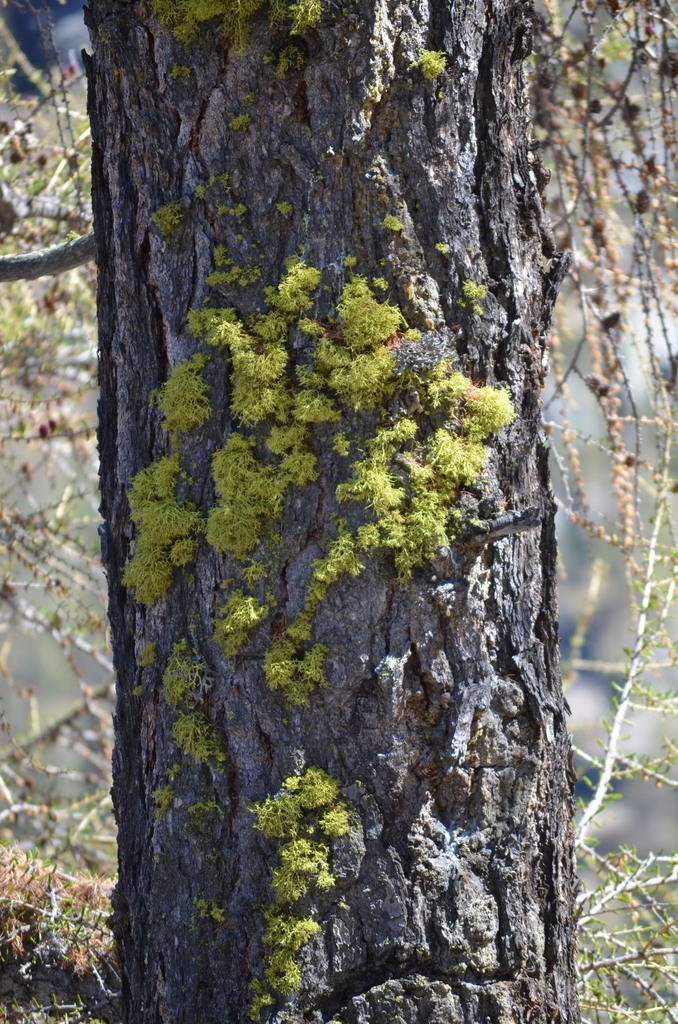
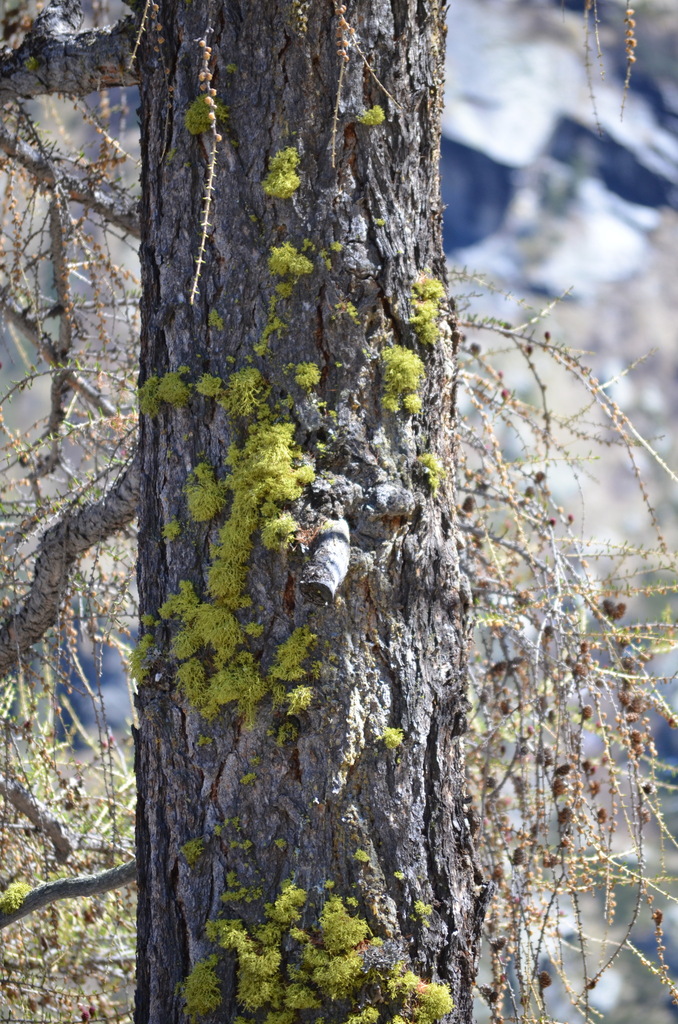
no rights reserved · CC0 1.0
Related Species
Was this profile helpful?