
Mammalia · Carnivora
Snow Leopard
Panthera uncia
VulnerableAlso known as: Ounce
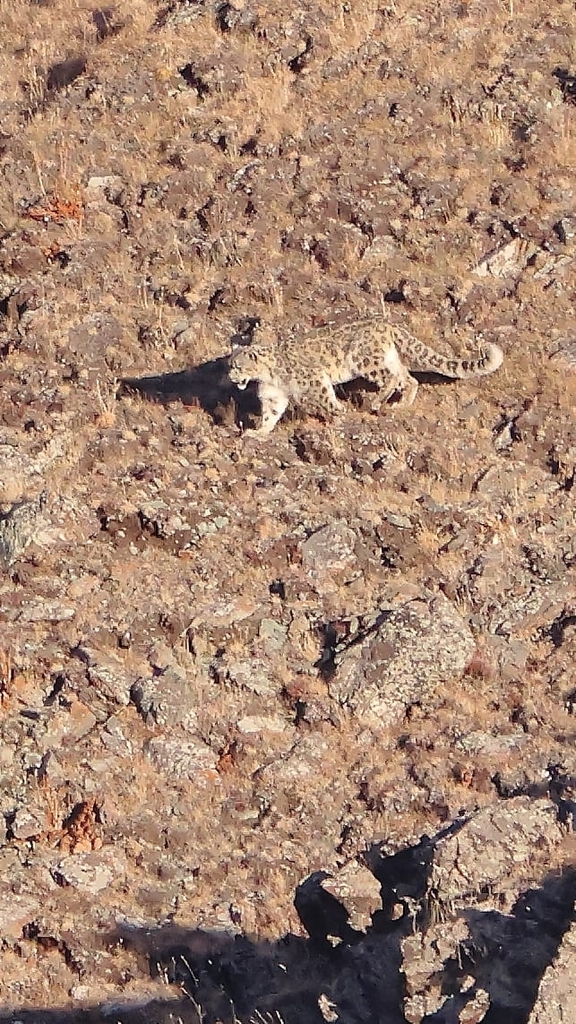
© Sandra Stewart · iNaturalist · CC BY 4.0
The snow leopard is a solitary hunter that stalks the highest mountains of Central Asia, where few other predators venture. Built for terrain that would defeat most large carnivores, this cat moves across windswept plateaus and rocky scree at elevations where oxygen grows thin and temperatures plummet. Its thick fur, oversized paws that act like snowshoes, and a tail nearly as long as its body make it a masterwork of high-altitude adaptation. Found across 12 countries, the snow leopard remains one of the world’s most elusive big cats.
Despite its legendary status in wildlife circles, the snow leopard occupies a scientific grey zone. Researchers struggle to assess its true population size and population trends across the sprawling, mountainous regions of the Himalayas, Hindu Kush, and Central Asian ranges. This uncertainty shapes every conservation effort aimed at protecting the species, making direct observation and long-term monitoring both challenging and essential for understanding the big cat’s future in a rapidly changing landscape.
Identification and Appearance
Panthera uncia is a large, powerfully built cat with a stocky frame adapted for life in extreme alpine environments. The species typically weighs between 27 and 55 kilograms, with males generally heavier than females. Its body length ranges from 75 to 130 centimetres, excluding the tail, which adds another 80 to 100 centimetres of length. This exceptionally long tail—nearly as long as the body itself—serves multiple purposes: balance on steep, rocky terrain and warmth, as the animal wraps it around itself during rest.
Coat and Coloration
The snow leopard’s most distinctive feature is its thick, luxurious fur, which provides insulation in temperatures well below freezing at elevations averaging 2,847 metres. The coat is pale grey or off-white on the belly and flanks, while the upper body and head display a smoky grey or brownish-grey coloration. Large, dark rosettes—ring-shaped markings—pattern the head, neck, and body, becoming more densely packed on the back and sides. Unlike the rosettes of other big cats, snow leopard rosettes typically lack a central dot and are larger and more scattered, giving the animal effective camouflage against rocky, snow-covered slopes.
Head and Facial Features
The snow leopard has a relatively small, rounded head with short, rounded ears that sit high on the crown. The ears are covered in fine fur and rimmed with white, reducing heat loss in frigid conditions. Whiskers and facial markings are prominent and white, contrasting sharply with the darker facial fur. The eyes are pale green to pale grey, reflecting adaptations to bright alpine light conditions. Large, widely spaced paws with hair between the toe pads provide insulation and traction on ice and snow, functioning like natural snowshoes. The limbs are relatively short and stocky compared to other large cats, giving the species a compact, muscular profile ideal for navigating steep mountain terrain.
Distribution and Habitat
Panthera uncia inhabits the high mountain ranges of Central and South Asia, with its range spanning at least 12 countries across the region. The species occurs across a vast but discontinuous distribution, with populations concentrated in specific alpine zones where rocky terrain and sparse vegetation provide suitable hunting grounds for this elusive predator.
Observation records show the highest concentration of snow leopard presence in India, which accounts for 94 documented occurrences, followed by the United States (68 records, likely from zoos and captive populations), China (51), and Mongolia (37). The species also inhabits Kyrgyzstan, Nepal, Russia, Kazakhstan, Pakistan, and Tajikistan, with smaller populations in the latter countries. This distribution reflects the snow leopard’s dependence on the Pamir, Hindu Kush, Tian Shan, and other major mountain chains of Central Asia.
Snow leopards occupy extreme elevations, ranging from 1,634 to 4,250 metres, with an average elevation of approximately 2,847 metres. They favor alpine meadows, rocky plateaus, and high-altitude grasslands where ungulate prey—particularly blue sheep and ibex—are available. The species is primarily active during winter months, with March recording peak sightings (50 observations), suggesting intensified movement or visibility as snow melts and animals venture into accessible terrain. Activity remains relatively consistent from January through August before declining sharply in autumn and early winter.
Biology and Behavior
Behavior
Snow leopards are solitary animals, spending most of their lives alone except during mating season. They are primarily active at dawn, early morning, and again in afternoons and early evenings, resting near cliffs and ridges that provide both shade and panoramic vantage points over their territory. Radio-collared research in Nepal’s Shey Phoksundo National Park revealed that five adult snow leopards maintained home ranges between 12 and 39 square kilometres, with ranges frequently overlapping despite the animals rarely encountering one another.
Movement patterns vary significantly by sex. Males travel between 0.5 and 5.45 kilometres per day in straight-line measurements, while females cover 0.2 to 2.25 kilometres, but these figures underestimate actual distance traveled. The precipitous mountainous terrain forces snow leopards to zigzag constantly, sometimes covering up to 7 kilometres in a single night to navigate steep slopes and ridges. This combination of solitary habits and vast, rugged home ranges makes snow leopards highly elusive and difficult to observe in the wild.
Diet
Snow leopards are carnivores that hunt a variety of prey species across their high-altitude range. They pursue ungulates including wild sheep, bharal (blue sheep), and goats, as well as smaller mammals such as pikas, hares, and ground-dwelling birds. Their hunting strategy relies on stealth and the terrain itself—they use rocky outcrops, steep cliffs, and snow-covered slopes to approach prey undetected before delivering a powerful pounce.
Reproduction
Snow leopards reach sexual maturity in their second or third year of life. Mating occurs in winter, typically between January and March, triggered by falling temperatures and shortened daylight hours. Females signal receptivity through scent marking and vocalizations, and successful copulation is usually followed by a gestation period of approximately 90 to 100 days.
Litters typically consist of two to three cubs, born in spring (April to June) in den sites sheltered by rock overhangs or caves. Cubs remain dependent on their mother for extended parental care, nursing for about two months and remaining with her for up to two years to learn hunting techniques and territory navigation. The long dependency period and small litter size contribute to slow population growth, making snow leopard populations particularly vulnerable to hunting pressure and habitat loss.
Conservation and Threats
The snow leopard occupies a precarious position in the wild. Its population is currently increasing, a sign that conservation efforts are producing measurable results, yet the species remains classified as Vulnerable on the IUCN Red List. This status reflects decades of decline and the ongoing pressures that threaten its survival across the high mountains of Central and South Asia.
Threats
Poaching and illegal trade in skins and body parts represent the most direct threat to snow leopards. The economic incentive to hunt these elusive cats—driven by demand for their pelts and traditional medicine—continues to fuel illegal killing across their range. Equally destructive is the loss of natural prey due to overgrazing by domestic livestock. Snow leopards rely on wild ungulates such as blue sheep and ibex; when herds dwindle from overexploitation, the cats turn to livestock for food, triggering human–wildlife conflict. Herders then kill snow leopards in retaliation or defense of their animals, creating a cycle that perpetuates population pressure.
Climate change poses an emerging threat through habitat degradation. Warming temperatures shift treelines and alter the alpine meadows and grasslands that support the wild prey base. Reduced habitat quality compounds the stress from poaching and prey depletion, threatening the long-term viability of isolated populations.
Conservation Efforts
Legal protection exists across much of the snow leopard’s range. In Nepal, the species has been legally protected since 1973, with severe penalties—5 to 15 years imprisonment and substantial fines—for poaching and trade. Similar legislation applies in other range countries, though enforcement remains inconsistent due to the remote terrain and limited resources in many regions.
International cooperation through the Snow Leopard Network and bilateral agreements between range countries has strengthened anti-poaching efforts and habitat monitoring. Community-based conservation programs work with local herders to reduce livestock losses through improved husbandry and compensation schemes, reducing the incentive for retaliation killings.
Cultural Significance
The snow leopard holds profound symbolic weight across the mountainous regions of Central and South Asia where it inhabits high alpine terrain. In the cultures of the Himalayas and surrounding ranges, the species appears in local narratives and spiritual traditions as a creature of mystery and power, embodying the untamed wilderness of the high peaks. Its elusiveness and rare appearance in human settlements have made it a subject of reverence rather than fear, setting it apart from larger predators in regional folklore.
Contemporary cultural significance centres on the snow leopard as an ambassador for high-altitude conservation. The species has become a flagship symbol for environmental protection across its range, appearing on national emblems, conservation stamps, and educational campaigns throughout countries including Mongolia, Kyrgyzstan, Pakistan, and Nepal. Its status as a threatened species has elevated it to iconic standing in global wildlife discourse, inspiring international cooperation and funding initiatives that extend beyond the species itself to protect entire mountain ecosystems.
Fun Facts
- Snow leopards belong to the genus Panthera, which contains only five species—lions, tigers, jaguars, leopards, and snow leopards. This makes them one of the most exclusive big cat lineages on Earth.
- They inhabit some of the planet’s most extreme terrain, living at elevations between 3,000 and 4,500 metres in the alpine and subalpine zones of Central and South Asia. In the northern reaches of their range, however, they descend to considerably lower elevations, defying the stereotype that they are exclusively mountain-top dwellers.
- Their range spans an enormous geographic area stretching from eastern Afghanistan through the Himalayas to southern Siberia, Mongolia, and Western China, encompassing the Tibetan Plateau and dozens of interconnected mountain systems across two continents.
- Snow leopards have evolved exceptionally thick fur and a long, bushy tail that acts as both an insulating blanket and a balance tool when navigating treacherous cliff faces and steep slopes.
- Unlike most big cats, snow leopards cannot roar; instead, they communicate through meows, chuffs, and other vocalizations similar to those of smaller felids.
- Their enormous paws are covered in dense fur that acts like snowshoes, distributing their weight across snow and providing traction on ice—adaptations that would be impossible for a typical large cat living at sea level.
- Snow leopards are so elusive and remote in their habitat that camera trap surveys continue to discover populations in areas where they were thought to be absent or extinct, revealing how little is still known about their true distribution.
Ecology
Diet
Behavior
Conservation Status
LC · NT · VU (Vulnerable) · EN · CR · EW · EX
Photo Gallery
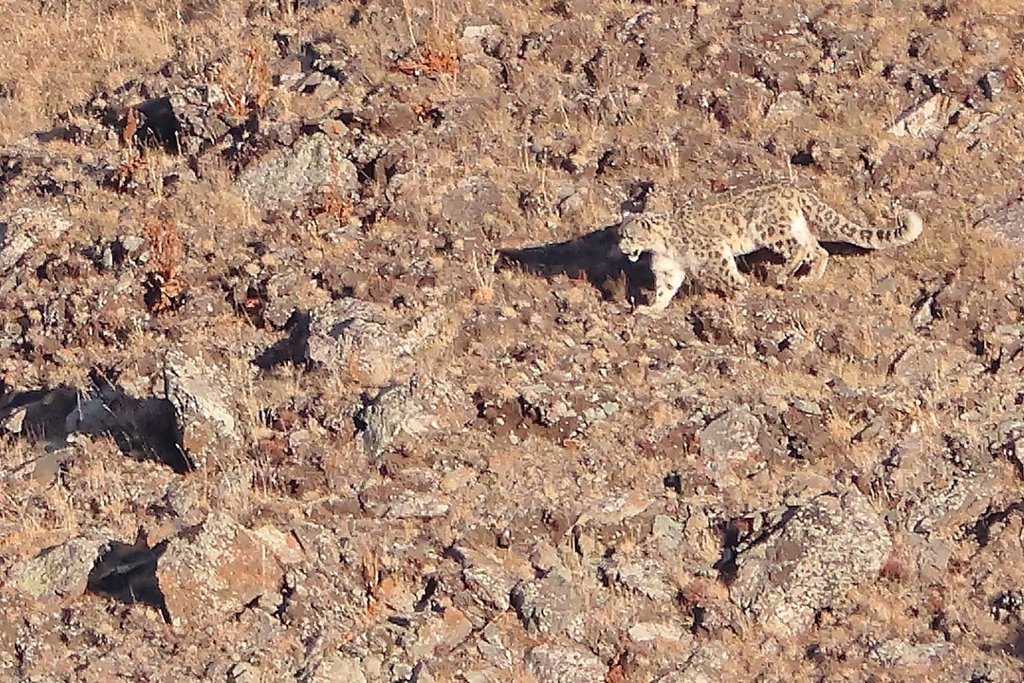
Sandra Stewart · CC BY 4.0
Related Species

Was this profile helpful?