
Mammalia · Carnivora
Cheetah
Acinonyx jubatus
VulnerableAlso known as: Hunting Leopard
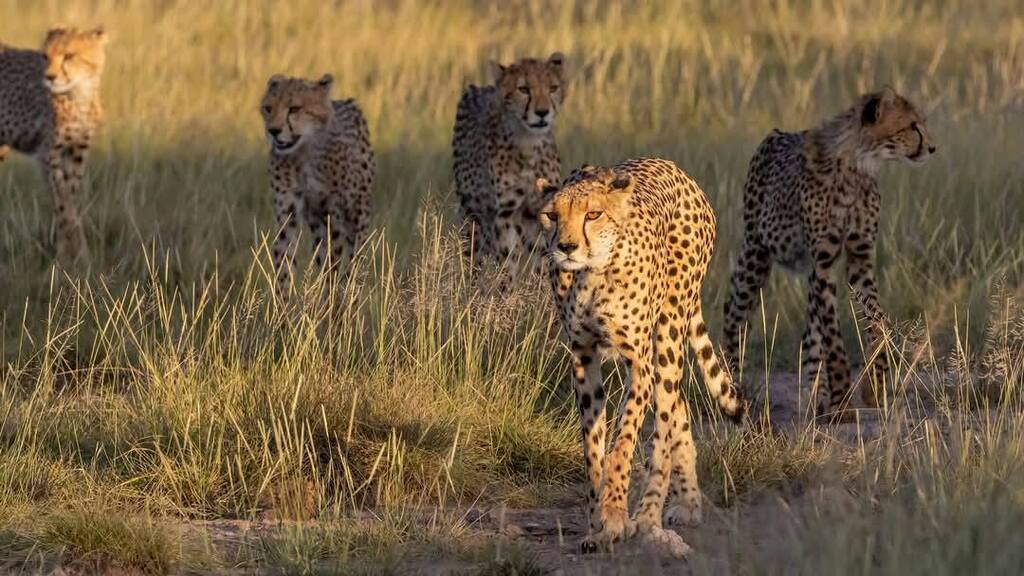
© sandrastewart · iNaturalist · CC BY 4.0
The cheetah is built for one purpose above all others: speed. This sleek African carnivore has sacrificed the raw power and climbing ability of its larger feline cousins in exchange for an unmatched capacity to accelerate and sprint across open ground. From the savannas of East Africa to the arid scrublands of southern Africa and isolated populations in Iran, the cheetah remains one of nature’s most specialized hunters—a living embodiment of evolutionary adaptation to a single ecological niche.
Today, the cheetah inhabits parts of Africa and a critically small population in Iran, distributed across roughly eight countries. Listed as Vulnerable by the IUCN, the species faces mounting pressure from habitat loss, prey depletion, and human-wildlife conflict. Despite its reputation as Africa’s premier predator, the cheetah’s extreme specialization—its dependence on particular body forms, hunting strategies, and open habitats—leaves it far more fragile than the adaptable lions and leopards that share its range. Understanding this paradox between prowess and precarity is central to understanding modern cheetah conservation.
Identification and Appearance
The cheetah is a lean, lightweight felid with a distinctive body built for speed. Adults typically weigh between 21 and 38.4 kilograms, making them considerably lighter than other large African carnivores. The animal’s frame is stretched and elongated, with long slender legs, a deep chest, and a relatively small head relative to body size—anatomical features that reflect its specialization for rapid acceleration and high-speed chase across open terrain.
Coat colour ranges from pale buff to golden-yellow, with a distinctive pattern of solid black spots distributed uniformly across the head, body, and limbs. Each spot measures roughly 2–3 centimetres in diameter. The tail is long and banded with darker rings, and terminates in a white tuft. A characteristic feature unique to cheetahs is the presence of dark “tear marks” running from the inner corner of each eye down to the mouth—these markings are thought to reduce glare from bright sunlight during high-speed pursuits. The underparts are lighter, often cream or white.
Sexual dimorphism
Males are marginally larger than females and typically weigh 1–2 kilograms more on average. Male cheetahs often display more pronounced facial markings and occasionally develop a slight mane or ruff of longer fur around the neck and shoulders, though this is less dramatic than in lions or some other felids. Females tend to have a more streamlined profile with a narrower chest, an adaptation that may reflect their need for agility when hunting to support cubs.
Individual variation in coat pattern is pronounced; no two cheetahs have identical spot arrangements, making photographic identification possible for research and conservation monitoring. Lifespan in the wild averages around 20.5 years, though this figure may reflect survivorship in protected reserves rather than open savanna populations.
Distribution and Habitat
The cheetah is found across eight countries, with its stronghold in East and Southern Africa. Kenya and South Africa harbour the largest populations, followed by Tanzania, Botswana, Malawi, Namibia, Zimbabwe, and the United States (where a small captive population exists). The species has disappeared from much of its former range in North Africa and the Middle East, leaving it almost entirely restricted to the African continent.
GBIF records confirm heavy concentration in East Africa, with Kenya recording 99 observations and Tanzania 80, reflecting the importance of protected areas like the Serengeti and Masai Mara to wild cheetah survival. Southern African populations, particularly in South Africa (91 records) and Botswana (15 records), represent a secondary stronghold where both wild and reintroduced populations persist. Observations from Namibia, Malawi, and Zimbabwe indicate smaller but significant populations across the broader region.
Cheetahs show strong seasonal variation in observational records, with a pronounced peak in February (110 records) and activity concentrated between January and April. This pattern reflects both genuine seasonal movement linked to prey availability and predator behaviour, as well as increased observer activity during the dry season when wildlife congregates around water sources and becomes more visible. Record counts drop dramatically from May onwards, suggesting either genuine seasonal absence from some regions or reduced detection effort during the wetter months.
Biology
Behavior
Cheetahs are primarily diurnal, hunting and moving about during daylight hours. This activity pattern is a direct adaptation to avoid larger carnivores such as lions and spotted hyenas, which are active mainly at night and will kill cheetahs or steal their kills. In areas where cheetahs are the dominant predator—such as farmlands in Botswana and Namibia—they shift to increased nocturnal activity. Similarly, in extremely hot regions like the Sahara, where daytime temperatures can exceed 43°C (109°F), cheetahs become more active at night to escape the heat. The lunar cycle also affects their routine; activity often increases on moonlit nights when prey visibility is high, though this comes with heightened risk of encountering larger predators.
Hunting dominates the cheetah’s daily schedule, with the most intense activity occurring at dawn and dusk. Cheetahs are solitary hunters or hunt in small family groups, using their exceptional speed and agility to pursue prey across open terrain. They rely on a sprint-and-capture strategy rather than prolonged chases, making quick kills to minimize the time their prey is visible to scavengers. After a successful hunt, cheetahs consume their meal rapidly and may abandon carcasses to larger predators if they sense a threat.
Diet
Cheetahs are strict carnivores that prey primarily on small to medium-sized ungulates and other mammals. Their typical prey includes gazelles, impalas, and other hoofed animals in the 20–60 kilogram range. They also hunt smaller prey such as hyraxes, hares, and birds when larger prey is unavailable. Unlike many other big cats, cheetahs cannot sustain themselves on carrion and must make fresh kills, driving their relentless hunting activity throughout daylight hours.
Reproduction
Female cheetahs reach sexual maturity and begin breeding in their second or third year of life. Mating occurs throughout the year with no strict breeding season, though peaks may occur during periods of prey abundance. After a gestation period of approximately 90–95 days, a female gives birth to a litter of 3–5 cubs in a sheltered den or thicket. Cubs are born blind and entirely dependent on their mother for protection and nourishment.
Maternal care is intensive and prolonged. Mothers nurse cubs for up to six months and actively teach them hunting skills through live prey demonstrations over several additional months. Cubs remain with their mother for approximately 18–20 months before becoming independent, at which point young males typically form coalitions with littermates or other males, while females become solitary hunters. The average lifespan in the wild is around 20.5 years, though this varies with environmental pressures and predation risk.
Conservation and Threats
Acinonyx jubatus is classified as Vulnerable on the IUCN Red List, indicating that the species faces a high risk of extinction in the wild. This status reflects ongoing population declines and mounting environmental pressures across the cheetah’s range in Africa and Asia.
The global cheetah population is decreasing, driven by accelerating habitat loss and fragmentation. As human land use intensifies across Africa, cheetahs lose access to the open grasslands and savannas they depend on for hunting.
Threats
Habitat loss stands as the primary threat to cheetahs. Commercial agriculture and industrial development fragment and destroy vast tracts of suitable habitat, isolating populations and reducing available hunting grounds. This fragmentation prevents cheetahs from moving freely between regions, disrupting gene flow and creating smaller, vulnerable subpopulations.
Reduced genetic diversity compounds these challenges. The cheetah population has historically low genetic variability, which increases susceptibility to disease. However, the actual impact of infectious disease outbreaks remains limited because cheetahs maintain naturally low population densities and lead solitary or small-group lifestyles, reducing transmission rates.
Additional pressures include competition with larger predators for prey, conflict with livestock farmers who view cheetahs as threats, and illegal wildlife trade in some regions.
Conservation Efforts
Several international and regional initiatives work to protect cheetahs. Protected areas across Africa provide legal refuge, though enforcement varies. Conservation programmes focus on habitat corridor creation to reconnect fragmented populations, reducing the isolation that threatens genetic diversity.
Community-based conservation in pastoral regions aims to reduce conflict between cheetahs and livestock herders through compensation schemes and alternative livelihood support. Research into cheetah behaviour and ecology informs adaptive management strategies.
Cultural Significance
The cheetah has featured prominently in European art, particularly during the Renaissance. In Titian’s 16th-century oil painting Bacchus and Ariadne, the chariot of the Greek god Dionysus is drawn by two cheetahs, though these animals were historically misidentified as leopards. This work demonstrates how the cheetah, exotic and visually striking, captured the imagination of Old Masters and became a symbol of divine power and luxury in classical allegory.
The species also held significance in royal courts and aristocratic collections. In 1764, English painter George Stubbs commemorated the gifting of a cheetah to King George III—presented by Sir George Pigot, the English Governor of Madras—in his painting Cheetah with Two Indian Attendants and a Stag. The work depicts the animal hooded and collared by two Indian servants, alongside a stag intended as prey, capturing the cheetah’s role as both a prized exotic possession and a hunting companion in elite households. Such commissions underline the cheetah’s status as a marker of power, wealth, and access to distant lands during the age of European expansion.
Fun Facts
- Cheetahs cannot roar like other big cats; instead, they purr, chirp, and meow to communicate with one another. Their vocal anatomy lacks the specialized larynx that allows lions and leopards to produce deep roars.
- A cheetah’s claws do not fully retract like those of other cats, giving them permanent traction similar to running shoes. This adaptation, combined with their lightweight build and long tail for balance, enables bursts up to 120 kilometres per hour over short distances.
- Cheetahs have distinctive black “tear marks” running from their eyes to their mouths, which may reduce glare from the sun during high-speed pursuits across open ground. These markings are unique to each individual, much like human fingerprints.
- Unlike most solitary cats, male cheetahs often form lasting coalitions with their brothers or unrelated males, hunting and defending territory together for life. Female cheetahs, by contrast, typically remain solitary except when raising cubs.
- Cheetahs hunt almost exclusively during daylight hours to avoid competition with larger nocturnal predators like lions and hyenas. This diurnal lifestyle is unusual among African carnivores and reflects their reliance on speed rather than strength.
- A cheetah’s non-retractable claws wear down rapidly from constant use, similar to how a runner’s shoes deteriorate, requiring them to hunt frequently to survive. Injured or aging cheetahs with worn claws struggle to catch prey and face declining survival rates.
- Female cheetahs give birth to litters of three to five cubs after a gestation period of about 90 days, with cubs staying with their mother for roughly 18 months to learn hunting techniques. Mortality rates for young cheetahs are high, with only about 5 percent of cubs surviving to adulthood in the wild.
Ecology
Habitats
Diet
Behavior
Conservation Status
LC · NT · VU (Vulnerable) · EN · CR · EW · EX
Photo Gallery
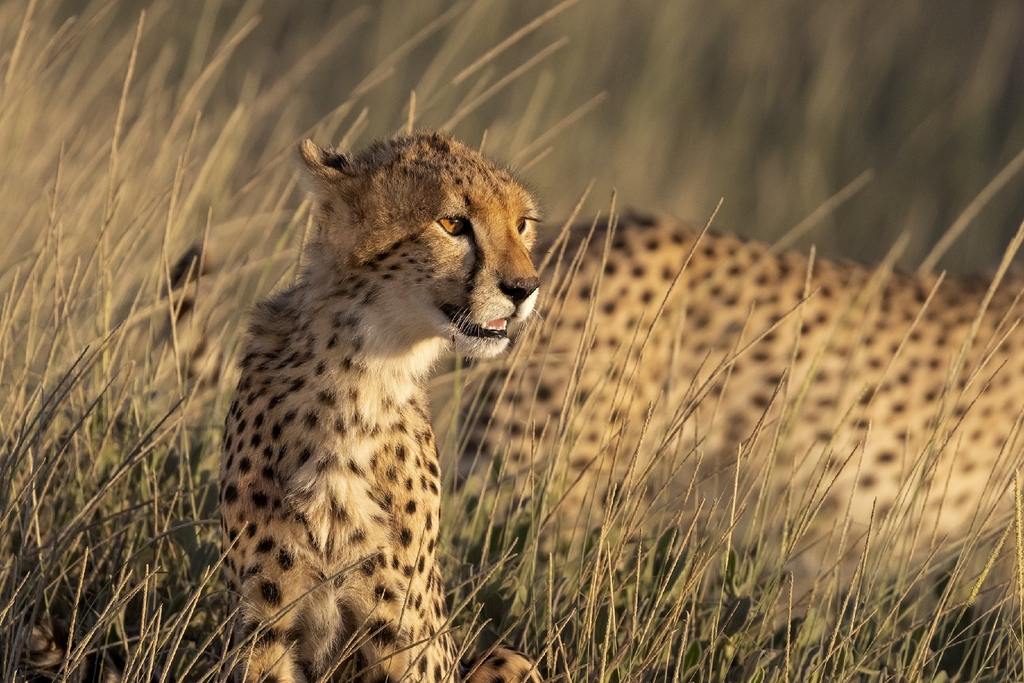
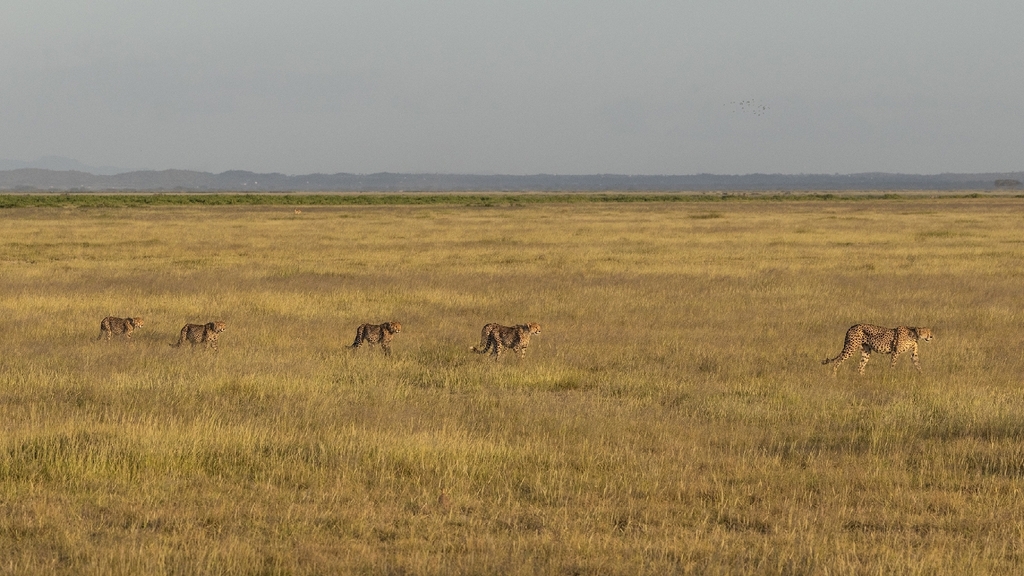
sandrastewart · CC BY 4.0
Related Species
Was this profile helpful?