
Mammalia · Carnivora
Tiger
Panthera tigris
EndangeredAlso known as: Bagh, Harimau, Sher
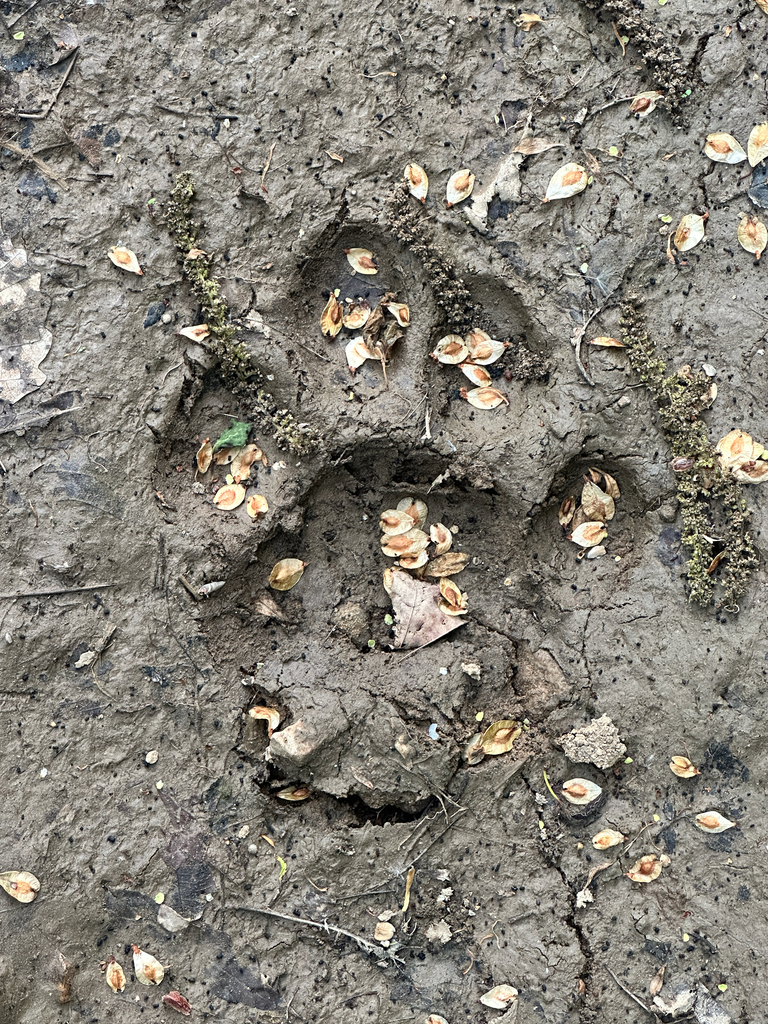
© Tatyana Petrenko · iNaturalist · CC BY 4.0
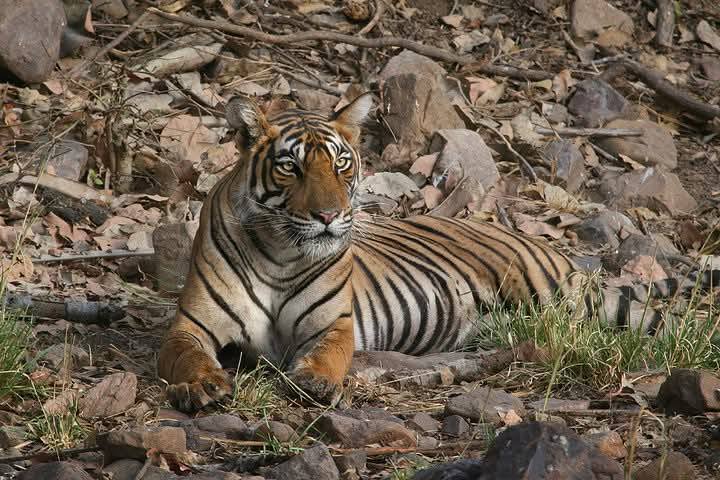
The tiger is the largest living cat on Earth—a solitary apex predator prowling across fragmented landscapes from the Russian Far East to the Indian subcontinent. Its iconic orange coat blazoned with black stripes is instantly recognizable, yet this camouflage renders it nearly invisible in tall grass and dappled forest light. Panthera tigris occupies a place of profound cultural significance across Asia, revered in art, mythology, and spiritual traditions for millennia.
Listed as Endangered by the IUCN, the tiger now persists in isolated populations across just seven nations, a stark contraction from its former dominion across much of Asia. Habitat fragmentation, retaliatory killings by livestock herders, and the illegal wildlife trade have squeezed this magnificent carnivore into an increasingly precarious existence. Understanding tiger biology, behavior, and conservation needs has never been more urgent—what we learn and do in the coming years will determine whether this species survives as more than a memory.
Identification and Appearance
The tiger is the largest living cat, built with the muscular frame and powerful proportions characteristic of the felid family. Adults weigh between 780 grams and 137.9 kilograms, though the heaviest specimens are typically males from temperate populations. The body is compact and robust, with shortened, heavily muscled legs that provide explosive power for hunting. Its tail measures roughly half the length of the rest of its body and serves as a critical balance organ during rapid turns and climbing.
The tiger’s most distinctive feature is its bold orange-red coat marked with dark transverse stripes, a pattern unique to each individual much like a human fingerprint. The underside of the body, throat, and muzzle are characteristically white or cream-coloured. The head is large and imposing, with rounded ears set low on the skull and forward-facing round pupils that provide excellent night vision. The snout terminates in a triangular, pink tip dotted with small black spots that increase in number with age—a subtle but reliable marker of maturity.
Claws and digits
The front feet bear five digits including a dewclaw, while the hind feet have four. All digits are equipped with retractile claws that are compact, curved, and exceptionally sharp, reaching up to 10 centimetres in length. These claws remain concealed within protective sheaths when at rest, extending only when needed for hunting, climbing, or combat, and are never dulled by contact with the ground.
Distribution and Habitat
Tigers are found across a fragmented range spanning seven countries in Asia, with populations concentrated in South and Southeast Asia. India dominates the global distribution, accounting for the vast majority of recorded sightings (262 observations), reflecting both the country’s large tiger population and its extensive protected reserve network. Smaller but significant populations persist in Russia, Nepal, Indonesia, China, Thailand, and Bangladesh, each representing isolated or semi-isolated subpopulations that are critical for species survival.
The distribution reflects tiger habitat preferences: dense forests, mangrove swamps, and grasslands with sufficient prey and water sources. GBIF records indicate a pronounced seasonal pattern in sighting data, with peak observations occurring in February (90 records) during the dry season when tigers are more active and visible. The near-complete absence of records from June through November suggests either seasonal migration to wetter refugia, reduced human survey effort during monsoon months, or both. This cyclical pattern underscores the species’ dependence on seasonal prey availability and landscape moisture.
Biology and Behavior
Behavior
Tigers are solitary, territorial hunters that avoid humans in areas where people are present. Camera trap data from Chitwan National Park show that tigers actively select locations away from human activity and shift their movement patterns to nocturnal hours when human presence peaks during the day. In contrast, tigers in mangrove forests of Sundarbans National Park exhibit a dawn-centric activity pattern, with peak movement occurring around 7:00 in the morning. This behavioral flexibility reflects their adaptation to local human pressure and habitat structure.
Each tiger maintains a large home range that varies by habitat quality and prey availability. Males occupy territories that often overlap with multiple female ranges, though they defend these areas aggressively against rival males. Tigers are typically silent hunters, relying on stealth and surprise to close the distance to prey before delivering a fatal bite to the neck or throat. They are powerful swimmers and readily enter water to hunt, cool down, or cross obstacles—behavior that distinguishes them from most other large cats.
Diet
Tigers are obligate carnivores that hunt large ungulates as their primary food source. Deer species—including sambar, chital, and sika deer—comprise the bulk of their diet in most habitats. They also prey on wild boar, water buffalo, and occasionally monkeys and smaller mammals. A tiger consumes between 3 to 25 kilograms of meat per kill, depending on prey size and the tiger’s own hunger level. They may go several days between kills, especially after consuming a large carcass.
Reproduction
Female tigers reach sexual maturity between 3 and 4 years of age and breed year-round, though peak breeding typically occurs during winter months in temperate regions. The estrous cycle lasts roughly 3 to 9 days, during which females signal receptivity through scent marking and vocalizations. Mating is brief and occurs multiple times over a 24- to 48-hour period when a female is in estrus.
The gestation period lasts approximately 3.5 months, after which females give birth to litters of 1 to 6 cubs, with 2 to 3 being most common. Cubs remain dependent on their mother for nearly 3 years, learning hunting skills through observation and practice on live prey she brings to them. Female tigers are highly protective mothers and will aggressively defend their young against intruders. Males play no role in parental care. Tigers can live up to 26 years in the wild, though most individuals do not reach this age due to predation, disease, or human-caused mortality.
Conservation and Threats
Panthera tigris is classified as Endangered on the IUCN Red List. This designation reflects a species that faces a high risk of extinction in the wild across much of its global range. Despite the severity of this classification, the population trend is currently stable in several regions, a modest achievement attributable to intensive conservation efforts in key strongholds. However, tigers remain absent from most of their historical range, and local populations across Asia remain fragmented and vulnerable.
Threats
Habitat destruction and fragmentation pose the most pervasive threat to tigers across all range countries. Deforestation, large-scale land acquisition, and mining activities have reduced suitable tiger habitat to isolated pockets, preventing genetic exchange between populations and increasing vulnerability to local extinction. In the Tanintharyi Region of southern Myanmar, deforestation combined with mining and hunting pressure directly endangers the tiger population. Similarly, in Cambodia, large-scale land acquisition threatens tiger landscapes, while in the Changbai Mountains along the China–Russia border, habitat destruction compounds the effects of inbreeding depression and insufficient prey resources.
Poaching remains the second major threat, driven by demand for tiger skins and body parts used in traditional medicine and illegal wildlife trade. In Sumatra’s Kerinci Seblat landscape, anti-poaching units removed 362 tiger snare traps and seized 91 tiger skins during 2005–2016, with annual poaching rates increasing alongside rising skin prices. Far eastern Russia faces similar pressures, where logging roads provide poachers direct access to tiger habitat and reduce availability of winter prey species. In India, poaching rates are rising despite legal protections. Additional threats include insufficient prey resources due to overhunting of wild game, disease outbreaks such as canine distemper in isolated populations, and human encroachment that fragments remaining habitat.
Conservation Efforts
Legal protections have strengthened across tiger range states. Thailand enacted the Wildlife Preservation and Protection Act in 2019 specifically to combat poaching and trafficking of tiger body parts. International cooperation through the Global Tiger Initiative and regional tiger conservation landscapes aims to secure habitat corridors and coordinate anti-poaching efforts. China’s early 20th-century persecution of tigers through systematic ‘anti-pest’ campaigns has given way to habitat protection and reforestation programmes, though legacy fragmentation remains. Protected areas such as those in India, Russia, and Southeast Asia form the backbone of tiger conservation, supported by ranger patrols and community engagement initiatives.
Cultural Significance
Tigers hold profound symbolic and cultural significance across Asian societies, though their role in human affairs today is dominated by conflict and conservation crisis. The species appears extensively in mythology, folklore, and art traditions throughout India, Southeast Asia, and East Asia, where it represents power, danger, and majesty. However, the tiger’s cultural presence now intersects critically with illegal wildlife trade, habitat loss, and human–wildlife conflict that threaten its survival across all range countries.
In contemporary human societies, tigers face mounting pressures that complicate their cultural status. Human–wildlife conflict arises when tigers attack and prey on livestock in areas where natural prey is scarce, creating resentment among rural and pastoral communities. This conflict intensifies as habitat destruction forces tigers into smaller, fragmented reserves where they cannot find sufficient wild game. A new study links human trafficking to Malayan tiger poaching, revealing how indebted Vietnamese migrant workers in Malaysia are drawn into the illegal wildlife trade, with network managers and fishing boat captains smuggling tiger parts to Vietnam by boat. The scale of poaching is driven partly by the geographic vulnerability of scattered tiger populations: fewer tigers can survive in small, scattered islands of habitat, which leads to a higher risk of inbreeding and makes tigers more vulnerable to poaching as they venture beyond protected areas to establish their territories.
Despite legal protection across all range countries, habitat destruction, poaching and human tiger conflict are pushing these incredible animals closer to extinction. The tiger’s cultural identity as a symbol of wilderness and strength persists, yet is increasingly overshadowed by its status as one of the world’s most critically endangered large carnivores, with some subspecies—such as the South China Tiger—not observed in the wild for many years.
Fun Facts
Tigers are among the world’s most formidable carnivores and hold a unique place within the big cat family. Here are some remarkable facts about these powerful hunters.
- Tigers belong to the genus Panthera, making them close relatives of lions, leopards, and jaguars—the only four cat species capable of roaring.
- Unlike other big cats, tigers are found exclusively in Asia and have never naturally occurred in Africa, Europe, or the Americas, restricting their range to a continent-wide distribution.
- Each tiger’s stripe pattern is entirely unique, like a fingerprint; no two tigers share identical markings, allowing researchers and conservationists to identify individuals by sight alone.
- Tigers traditionally recognized as nine distinct subspecies are now questioned by some taxonomists who propose only two major groups: mainland Asian tigers and the island tigers of the Sunda Islands, reflecting ongoing debates about subspecific classification.
- A tiger’s roar can be heard from up to 3 kilometres away and serves multiple purposes—establishing territory, calling mates, and coordinating with cubs across dense forest landscapes.
- Male tigers are highly territorial and solitary, patrolling home ranges that can exceed 100 square kilometres, while females typically maintain smaller territories that may overlap with their offspring.
- Tigers are one of the few big cats that genuinely enjoy water and are excellent swimmers; they regularly cross rivers and will spend time cooling off in water during hot weather, unlike most cats that avoid wet environments.
Ecology
Diet
Behavior
Conservation Status
LC · NT · VU · EN (Endangered) · CR · EW · EX
Photo Gallery
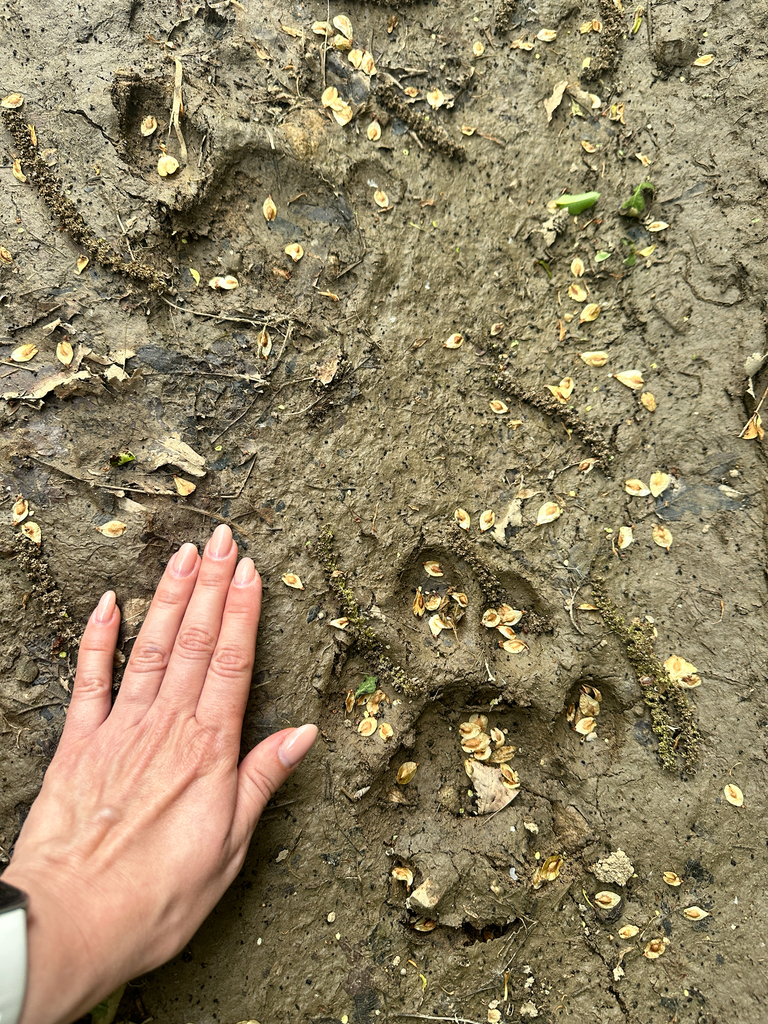
Tatyana Petrenko · CC BY 4.0
Related Species

Was this profile helpful?