
Eurotatoria · Ploima
Lepadella Riedeli
Lepadella riedeli

Scientific Classification & Quick Facts
Classification
Known For
Full profile in progress — check back soon.
Lepadella riedeli is a microscopic rotifer belonging to the family Lepadellidae, a group of aquatic invertebrates so small they exist in a world invisible to the naked eye. Like all rotifers, this species inhabits freshwater environments where it plays a subtle but significant role in aquatic food webs and nutrient cycling. Despite its diminutive size, Lepadella riedeli represents a fascinating branch of animal diversity that has evolved extraordinary adaptations for survival in the microscopic realm.
The conservation status of Lepadella riedeli remains unknown, reflecting the broader challenge of documenting microfauna across the globe. Many rotifer species have never been formally assessed for threats, partly because their small size and cryptic aquatic habitats make systematic surveys extraordinarily difficult. What makes Lepadella riedeli particularly interesting is its potential as an indicator organism: rotifers respond rapidly to changes in water quality and environmental conditions, making them valuable sentinels for freshwater ecosystem health in regions where they occur.
Identification and Appearance
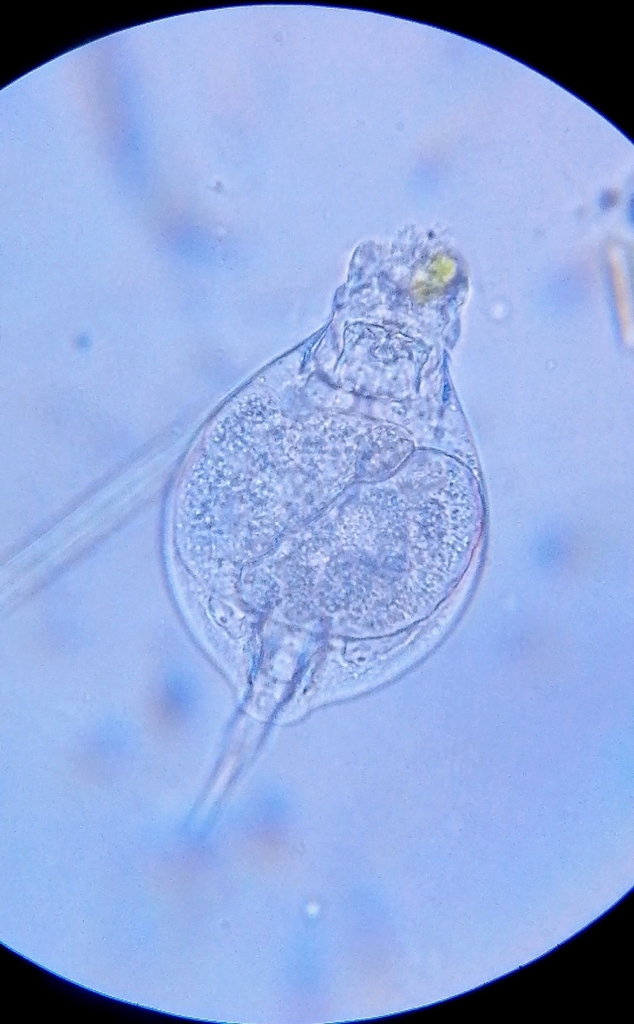
Lepadella riedeli is a microscopic rotifer belonging to the family Lepadellidae, a group of aquatic invertebrates typically found in freshwater environments. Like all rotifers, this species is so small that detailed morphological information requires specialized microscopic examination and systematic taxonomic study.
As a member of the genus Lepadella, this rotifer possesses the characteristic body plan of its relatives: a compact, often somewhat flattened body with a distinct corona (the ciliated feeding apparatus at the anterior end) and a posterior foot region. The specific morphological details that distinguish L. riedeli from congeners—including the exact dimensions of its body, the structure of its corona, and any distinctive features of its foot or appendages—require direct observation under high magnification microscopy for accurate identification.
Rotifers of this genus are typically translucent or semi-transparent, allowing internal structures to be visible. Sexual dimorphism, if present in this species, would involve differences between males and females in body size or reproductive organs, though such distinctions are often subtle in these minute organisms. Precise species-level identification of Lepadella riedeli depends on comparative morphological analysis with type specimens and established taxonomic descriptions in peer-reviewed literature.
Distribution and Habitat
Lepadella riedeli is a rotifer species with limited documented occurrence records in scientific databases. Current geographic distribution data for this microscopic organism remains sparse, and no confirmed country-level records are available in the primary biodiversity repositories.
As a member of the genus Lepadella, this species likely inhabits freshwater microhabitats typical of its relatives—including small water bodies, moss-associated water films, and sediment layers in lakes and ponds. However, specific habitat preferences and elevation ranges for L. riedeli have not been clearly delineated in available literature. The absence of robust occurrence data suggests that either the species has a genuinely restricted range, or it remains under-documented in global monitoring networks.
Without seasonal occurrence data or multiple confirmed sightings across geographic regions, any detailed account of its distribution pattern would be speculative. Future systematic surveys targeting rotifer communities in undersampled freshwater ecosystems may reveal the true range and habitat associations of this species.
Biology and Behavior
Behavior
Lepadella riedeli is a microscopic rotifer that inhabits freshwater and brackish environments. Like other members of the genus Lepadella, this species exhibits the characteristic swimming and feeding behaviors typical of rotifers, moving through water columns using its corona—a ring of cilia that generates currents for both locomotion and food capture. The species is largely sessile or slow-moving, often remaining in localized areas of suitable habitat where food is abundant.
Rotifers of this type are generally solitary organisms, though they may occur in high densities in productive waters. Their activity patterns are driven by environmental conditions such as light, temperature, and food availability. L. riedeli likely exhibits diel vertical migration or microhabitat selection common to many planktonic rotifers, positioning itself in water layers that optimize feeding and survival.
Diet
Lepadella riedeli is a filter-feeder and detritivore, consuming microscopic food particles suspended in water. Like other rotifers, it feeds on bacteria, algae, and organic detritus, drawing particles into its mouth through the ciliary currents generated by its corona. The species processes food through a muscular pharynx and grinding stomach, allowing it to extract nutrition from a wide range of particulate matter available in freshwater ecosystems.
Reproduction
Reproduction in Lepadella riedeli follows the pattern characteristic of many rotifer species, involving both asexual and sexual reproduction. Under favorable conditions with abundant food and stable environmental parameters, the species reproduces asexually through parthenogenesis, producing clones of the parent female. This allows rapid population growth when resources are plentiful.
Sexual reproduction occurs when environmental stress triggers the production of males and the laying of resting eggs (diapauses). These thick-walled eggs can withstand harsh conditions including desiccation and freezing, allowing populations to survive seasonal fluctuations and geographic dispersal. The life cycle of L. riedeli typically spans days to weeks depending on temperature and food availability, enabling multiple generations per season in productive habitats.
Conservation and Threats
Lepadella riedeli is a rotifer with no formal assessment on the IUCN Red List. Like many microscopic aquatic organisms, this species lacks the conservation attention and monitoring infrastructure that larger, more visible fauna receive. The absence of a conservation status does not indicate safety—rather, it reflects the broader challenge of assessing the threat level for species that are difficult to census and study in their natural habitats.
Population trends and current abundance for Lepadella riedeli remain unknown. No global population surveys or systematic monitoring programmes have documented whether numbers are stable, increasing, or declining. This knowledge gap is typical for rotifers and other microinvertebrates, which are rarely tracked by conservation organizations or government agencies.
Threats and Conservation Efforts
The specific threats facing Lepadella riedeli have not been formally documented. However, as a freshwater rotifer, the species is likely vulnerable to general pressures affecting aquatic ecosystems: habitat degradation through wetland drainage or pollution, water quality decline from industrial and agricultural runoff, and climate-driven changes to freshwater systems. Rotifers depend on suitable moisture and water chemistry, making them sensitive to environmental alteration.
No dedicated conservation programmes or legal protections currently exist for Lepadella riedeli. The species benefits indirectly from broader freshwater ecosystem protection efforts, such as wetland designation and water quality regulations, but these are not tailored to rotifer conservation. Recording sightings and environmental data through citizen science networks can gradually improve our understanding of this species’ distribution and ecology.
Cultural Significance
Lepadella riedeli is a rotifer of limited direct cultural significance to human societies. As a microscopic freshwater organism, it does not feature in mythology, folklore, cuisine, medicine, or traditional symbolism across any known cultures. Its recognition in human awareness remains confined to scientific and naturalist communities.
The species gained scientific attention through taxonomic surveys of freshwater ecosystems. Research published in Hydrobiologia documented L. riedeli alongside other rotifer species from freshwater habitats, including studies of the upper floodplain of the River Niger and coastal lake systems near Rio de Janeiro, Brazil. These investigations contributed to our understanding of rotifer biodiversity and distribution in regional freshwater systems, advancing knowledge relevant to aquatic ecology and conservation biology rather than human cultural practice.
Like other rotifers, L. riedeli holds indirect cultural value through its role in aquatic food webs and ecosystem health monitoring. Freshwater ecosystems themselves have deep cultural roots for human communities that depend on them for water, food, and livelihoods. Understanding the full diversity of rotifer communities—including species like L. riedeli—supports the scientific foundations necessary for protecting these ecosystems and the human cultures intertwined with them.
Fun Facts
Lepadella riedeli is a rotifer—a microscopic animal so small it inhabits the spaces between water droplets in moss and soil. Despite their minuscule size, these creatures display remarkable complexity in structure and behaviour.
- Rotifers like L. riedeli possess a corona, a wheel-like ring of cilia around their mouth that they use to draw in food and water. This feeding apparatus gives the group its name: “rotifer” means “wheel-bearer” in Latin.
- At just 0.1 to 0.5 millimetres in length, Lepadella riedeli is invisible to the naked eye, yet it has a complete digestive system, nervous system, and reproductive organs packed into its transparent body.
- Many rotifer species, including members of the genus Lepadella, can reproduce asexually through parthenogenesis—females produce clones of themselves without needing males. This allows rapid population growth when conditions are favourable.
- Rotifers are extremophiles capable of surviving desiccation for years in a state called cryptobiosis. When their habitat dries out, L. riedeli can enter suspended animation and revive within hours of rehydration.
- The lorica—a transparent, often ornamented outer casing—varies in shape and sculpture across Lepadella species and serves as the primary character for identification and classification, making each species distinctive under a microscope.
- Rotifers occupy critical roles in freshwater and soil ecosystems as both predators of bacteria and algae and prey for larger zooplankton, making them essential links in aquatic food webs despite their invisibility to casual observation.
Related Species
Was this profile helpful?