
Insecta · Hymenoptera
Rusty Patched Bumble Bee
Bombus affinis
Critically EndangeredAlso known as: Rusty-patched Bumble Bee, Rusty-patched bumble bee
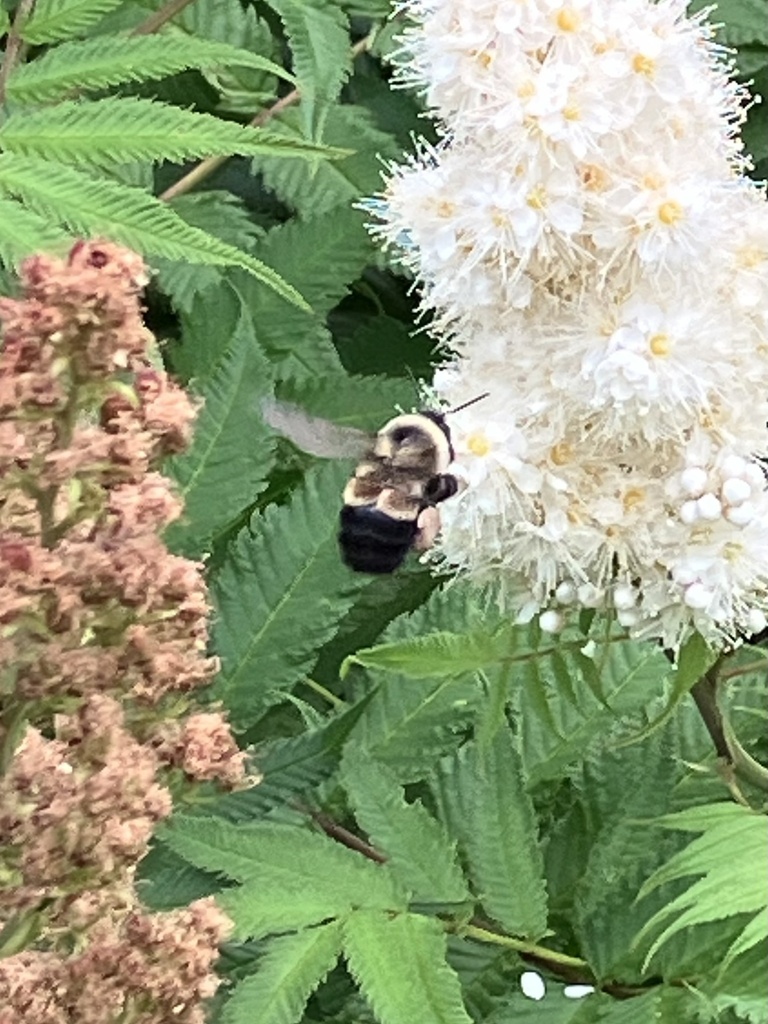
© Rose Zappa · iNaturalist · CC BY 4.0
Scientific Classification & Quick Facts
Classification
At a Glance
The rusty patched bumble bee, Bombus affinis, is a fuzzy pollinator with a distinctive reddish patch on its abdomen—a marking that has become increasingly rare to witness in the wild. Once widespread across North America, this species has experienced a catastrophic decline over the past two decades, earning it a Critically Endangered status on the IUCN Red List. Today, the bee persists in only one country, confined to fragmented populations in parts of the United States, making it one of the continent’s most imperiled native pollinators.
Like other bumble bees, Bombus affinis is a social insect that forms small colonies and plays a vital role as a pollinator of wildflowers, crops, and native plants. Its decline has profound consequences for the ecosystems and agricultural systems that depend on its pollination services. Understanding what drove this species to the brink of extinction—and identifying pathways for its recovery—is now a critical conservation challenge.
Identification and Appearance
Size and Sexual Dimorphism
Bombus affinis displays marked size variation between castes. Queens are substantially larger, measuring 20–22 mm in length and 9–11 mm in width. Workers are noticeably smaller, typically ranging from 10–16 mm in length and 6–9 mm in width. Males have not been described with specific measurements in available sources. This size hierarchy is typical of bumble bee colonies, where the queen must produce and provision offspring while workers perform foraging and nest maintenance tasks.
Coloration and Distinctive Markings
Both queens and workers share a predominantly black body, with dense black hair covering the head, most of the legs, and the underside of the abdomen. The defining characteristic is the rusty-colored patch of hair on the basal (front) half of the second abdominal segment—the feature from which the common name derives. Workers additionally display a striking yellow and black hair mixture near the base of the wings, arranged in a clear “V” shape. This combination of black, rust, and yellow patches makes B. affinis readily distinguishable from sympatric bumble bee species in the field.
Distribution and Habitat
Bombus affinis, the Rusty Patched Bumble Bee, is found exclusively in the United States. GBIF records indicate 300 documented occurrences within U.S. borders, making this species endemic to North America. Once widespread across the eastern and midwestern regions, its range has contracted dramatically over recent decades, with populations now restricted to scattered remnant areas.
Seasonal Activity
The species shows a distinct seasonal pattern, with peak activity occurring in July. GBIF records document a marked surge in observations during the summer months—April through July—with July representing the height of the flight season (229 records). Spring sightings begin in April (33 records) and build through May and June, then drop sharply by August, indicating a relatively compressed active period compared to many other bumble bee species.
Elevation data are not available for this species, and specific habitat preferences have not been formally documented in accessible records. However, historical distribution suggests the species was found in grasslands, prairies, and mixed woodland edges typical of eastern and midwestern temperate regions, though current habitat availability remains limited across its former range.
Biology and Behavior
Behavior
Bombus affinis is a social bee that lives in colonies with a clear hierarchical structure. Colonies typically contain a single queen, a variable number of workers, and males that emerge only in late summer or autumn. Workers perform coordinated foraging flights during warm daylight hours, communicating through vibrations and chemical signals to share information about food sources within their colony nestmates.
Nests are established underground in abandoned rodent burrows or other cavities, where the queen lays eggs on constructed wax cells provisioned with pollen and nectar. Workers maintain the nest, regulate temperature through muscle vibrations, and care for developing brood. Colonies are annual; at the end of the season, males and new queens mate, and only the fertilized queens survive winter by entering a dormancy state underground.
Diet
Bombus affinis is an obligate pollinator and pollen feeder. Workers and the queen consume nectar for energy and collect pollen as protein-rich food for the developing larvae. The species forages on a wide range of flowering plants, playing an important role as a generalist pollinator across grasslands, gardens, and open meadows where it has historically occurred.
Reproduction
The breeding season occurs in spring and summer. A mated queen establishes a new colony by laying her first batch of eggs in early spring. She incubates these eggs by sitting on the cells and generating heat through muscle vibrations. The first workers emerge after approximately three to four weeks, then take over foraging and brood care duties.
As the colony grows through summer, the queen continues laying eggs, and worker numbers increase. In late summer and autumn, the queen switches to producing male eggs and new reproductive females (gynes). These males and gynes leave the colony, mate with individuals from other colonies, and the cycle resets when fertilized queens seek shelter for winter dormancy.
Conservation and Threats
Bombus affinis, the Rusty Patched Bumble Bee, holds the distinction of being the first bumble bee species listed as Endangered under the U.S. Endangered Species Act (2017). Its classification as Critically Endangered on the IUCN Red List reflects a catastrophic decline in population across its former range in North America. This native pollinator has vanished from large portions of the eastern and midwestern United States where it was once common.
Threats
The decline of Bombus affinis stems from multiple converging pressures. Habitat loss remains a primary driver, as native grasslands, wildflower meadows, and prairie ecosystems have been converted to agriculture, urban development, and monoculture crops. The widespread use of pesticides and herbicides eliminates food plants and directly poisons bumble bee populations. Parasites and pathogens, particularly those spillover from commercial bumble bee colonies used in agriculture, have devastated wild populations with little natural immunity. Climate change compounds these threats by altering flowering phenology and reducing the temporal overlap between bumble bees and their floral resources.
Conservation Efforts
Legal protections under the U.S. Endangered Species Act prohibit the take, possession, and trade of Bombus affinis and require federal agencies to consult on projects that may affect critical habitat. Several states have designated recovery areas, and conservation organizations are working to restore native plant communities and create corridors of suitable habitat. Research programs are documenting remaining populations and testing habitat restoration methods to support population recovery.
Cultural Significance
Importance in agriculture
Bombus affinis plays a critical role in food production across North America. This species pollinates up to 65 different genera of plants and serves as the primary pollinator for key food crops including cranberries, plums, apples, onions, and alfalfa. These crops are fundamental to human diet and nutrition, providing essential produce consumed daily in households and markets.
Beyond direct human consumption, the plants pollinated by rusty patched bumble bees sustain broader ecosystems. The fruits and seeds they help produce feed birds and mammals that depend on these resources for survival. The loss of this species therefore threatens not only agricultural yields but also the food webs that support wildlife populations across regions where it historically ranged.
Fun Facts
- The rusty patched bumble bee became the first bee species added to the U.S. endangered species list in the continental United States on January 10, 2017, marking a watershed moment in bee conservation.
- This species has vanished from 87% of its historical range, a dramatic collapse that unfolded within just a few decades across North America.
- The rusty patch was once common across Ontario and Quebec in Canada, the eastern United States, and the upper Midwest extending west to the Dakotas—a vast territory that has now contracted to scattered populations.
- In Canada, Bombus affinis was formally assessed as Endangered in April 2010 through the pioneering work of researcher Sheila Colla and colleagues, who documented the species’ steep decline before it received continental protection.
- Despite its ominous status, the species remains unknown to most people, overshadowed by the honeybee crisis while quietly disappearing from meadows and gardens where it once thrived.
- Unlike some bees that forage in narrow seasonal windows, bumble bees like Bombus affinis have long flight seasons and can work in cooler temperatures, making them irreplaceable pollinators for early spring and late autumn wildflowers.
- The distinctive rusty patch of hair on the bee’s abdomen gives the species its common name, but this identifying feature offers no protection against the habitat loss, pesticides, and disease that drive its decline.
Conservation Status
LC · NT · VU · EN · CR (Critically Endangered) · EW · EX
Photo Gallery
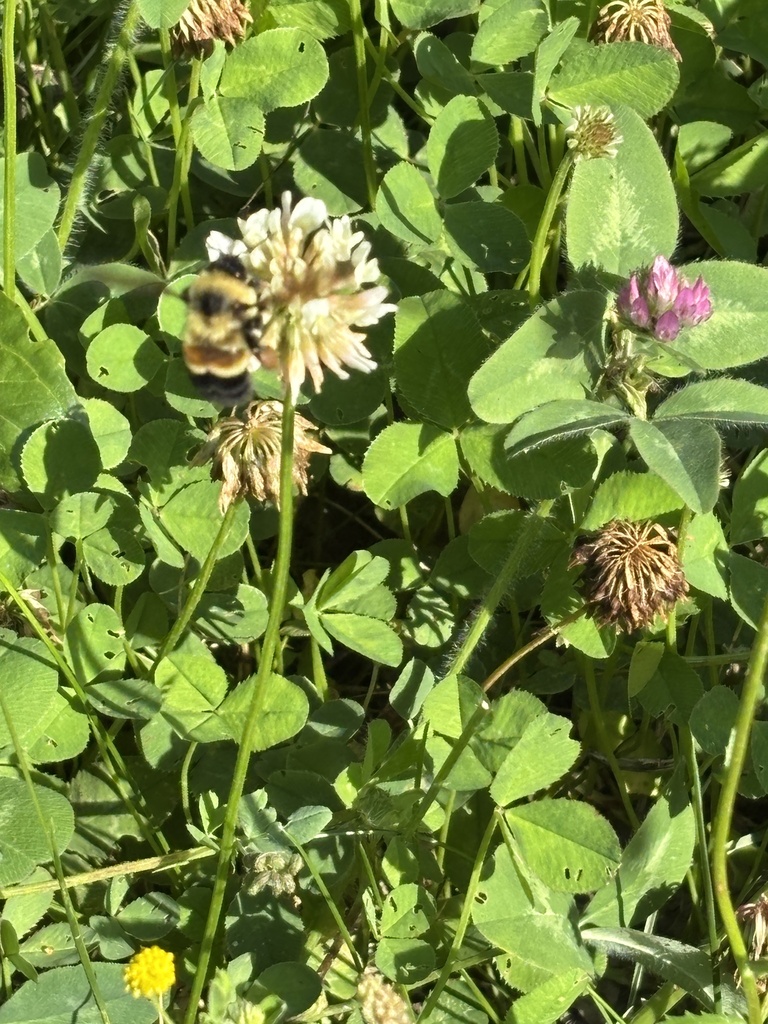
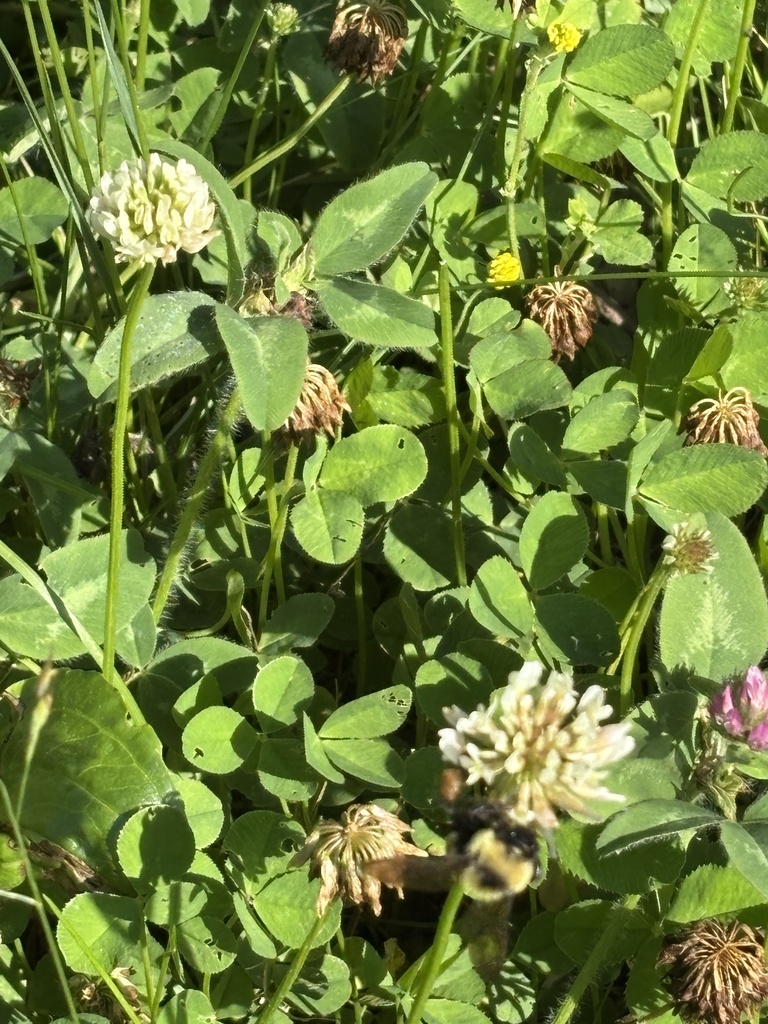
Rose Zappa · CC BY 4.0
Related Species
Was this profile helpful?