
Pinopsida · Pinales
Caucasian Fir
Abies nordmanniana
Least ConcernAlso known as: Kazazdagi Fir, Nordmann Christmastree, Nordmann Fir
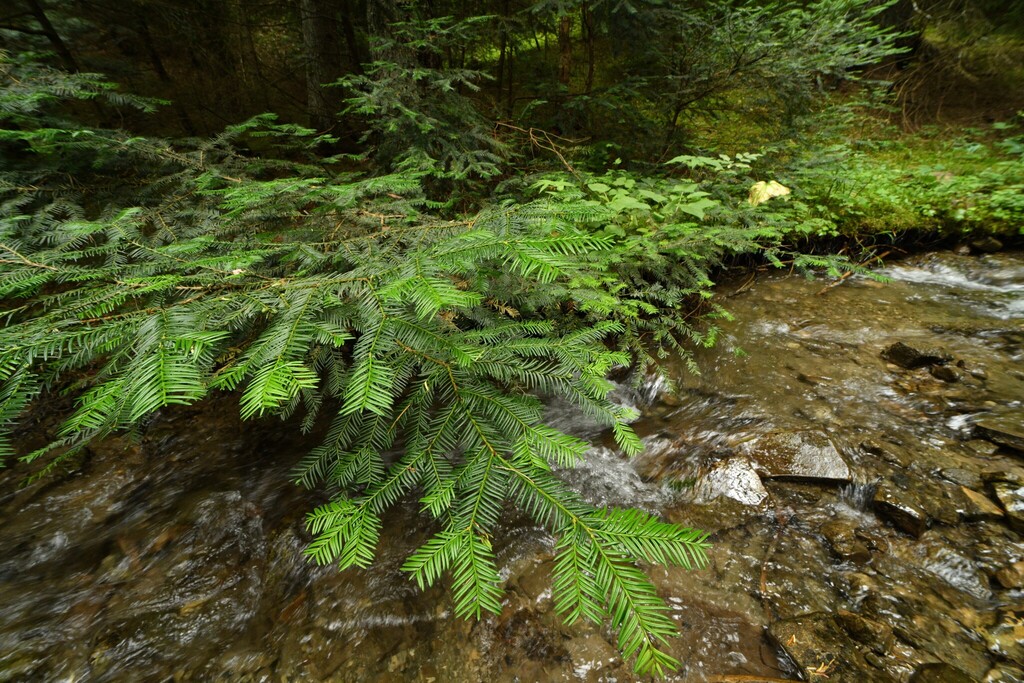
© Dmitry Ivanov · iNaturalist · CC BY 4.0
The Caucasian Fir is a tall, pyramidal evergreen conifer native to the mountains of the South Caucasus, where it thrives in cool, moist climates and rocky terrain. With its dense, dark-green foliage and elegant form, Abies nordmanniana has earned a place in ornamental forestry and horticulture across Europe and beyond. Listed as Least Concern by the IUCN, this species occurs naturally or has been introduced across approximately 20 countries, making it one of the more geographically distributed firs outside its native range.
What makes Abies nordmanniana particularly noteworthy is its dual significance: both as a keystone component of ancient mountain forest ecosystems and as a commercially important species in the global ornamental trade. Its ability to adapt to cultivation while maintaining ecological value in protected native forests demonstrates the complex relationship between conservation and human use in temperate forestry.
Identification and Appearance
Abies nordmanniana, the Caucasian Fir, is a large evergreen coniferous tree that reaches heights of 55–61 metres under typical growing conditions. In the Western Caucasus Reserve, exceptional specimens have been documented at 78 metres and even 85 metres tall, making them among the tallest trees in the Caucasus, Anatolia, the Russian Federation, and continental Europe. The trunk is robust, with a diameter reaching up to 2 metres at maturity.
Foliage and Needles
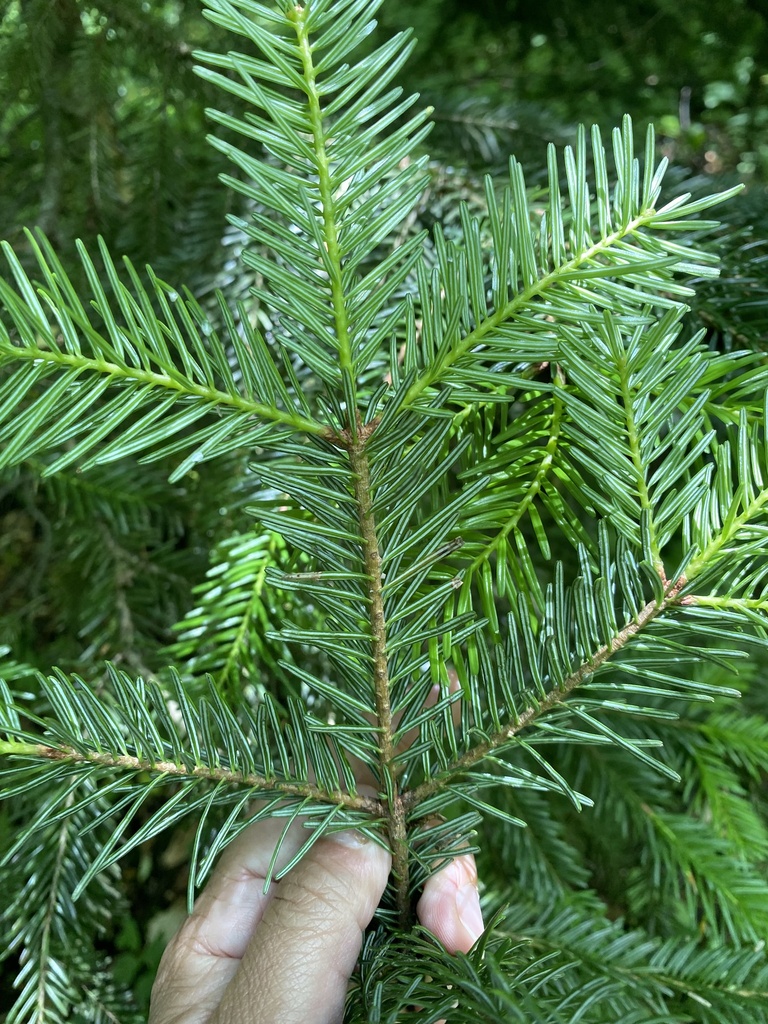
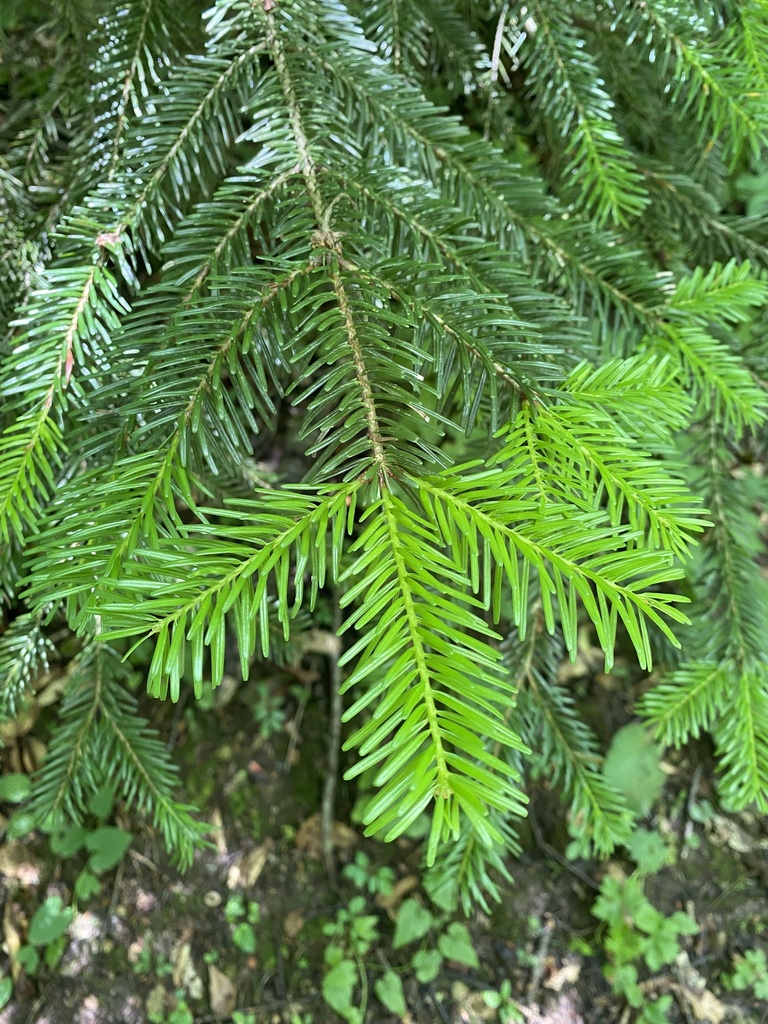
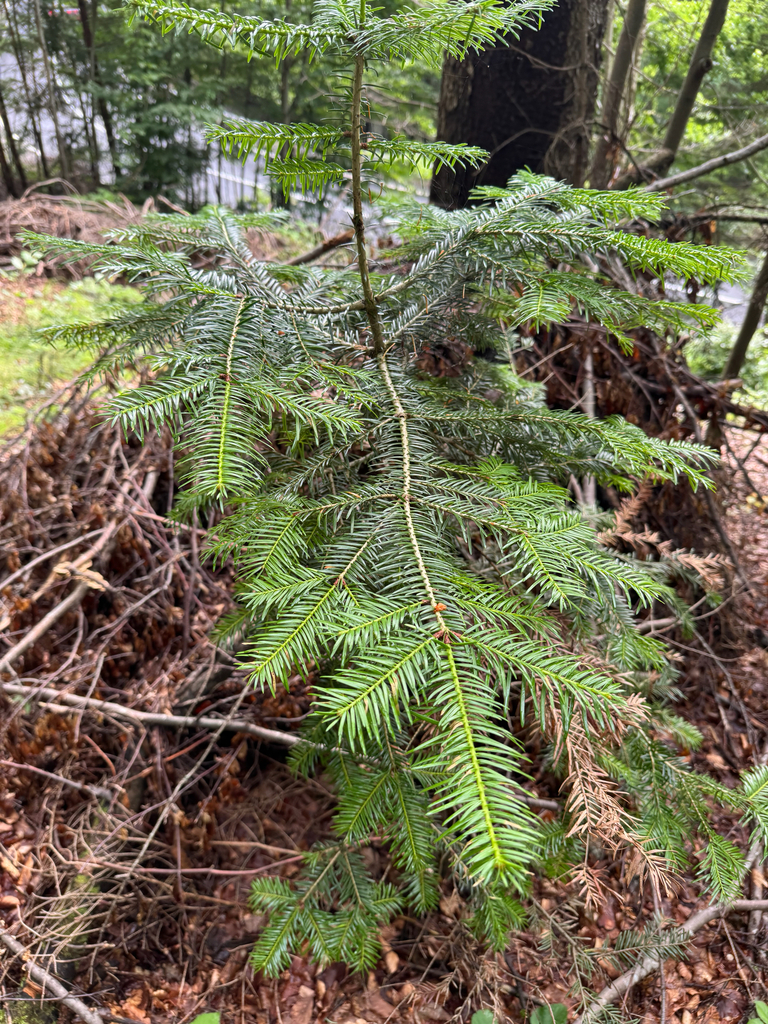
The needles are characteristically flattened and needle-like, measuring 1.8–3.5 centimetres long and 2 millimetres wide by 0.5 millimetres thick. The upper surface is a glossy dark green, while the undersides bear two distinctive blue-white bands of stomata, creating a striking bicoloured appearance when viewed from below. This combination of needle morphology and colouration provides reliable visual identification in the field.
The species maintains its dense, evergreen foliage year-round, retaining needles across all seasons. No sexual dimorphism is apparent in overall morphology, though cones and reproductive structures differ between male and female individuals in typical conifer fashion.
Distribution and Habitat
Abies nordmanniana, the Caucasian Fir, is native to the Caucasus region and has been widely introduced across Europe. The species occurs in 20 countries, with the strongest presence in Russia (91 records), followed by Sweden (48), the Netherlands (35), Belgium (32), and Georgia (24). Smaller populations are established in Switzerland, Denmark, the United Kingdom, Norway, and Germany, reflecting its adoption in cultivated landscapes and botanical collections across the continent.
The species grows across a substantial elevation range, from 348 metres to 1,418 metres, with records averaging 648 metres. This vertical distribution suggests adaptation to cool temperate and montane conditions, allowing it to thrive in both lowland parks and upland forests where winter temperatures favour its growth. The species shows a pronounced seasonal pattern of observation, peaking in March with 65 records, likely reflecting phenological activity such as pollen dispersal or early growth stages. February and July also show notable observation frequencies (27 and 57 records respectively), while autumn and early winter months (September through December) yield no records in the dataset.
Growth and Cultivation
Growth
Abies nordmanniana, commonly known as Caucasian Fir, is a large evergreen conifer that develops a dense, pyramidal form. The tree typically reaches 40–60 metres in height in its native range, with a trunk diameter of 1–2 metres at maturity. Young trees grow with a symmetrical branching pattern that extends nearly to ground level, creating a solid silhouette. The bark is dark grey and smooth when young, becoming thick and furrowed with age.
The foliage consists of flat, needle-like leaves arranged in two rows along the stems. These needles are dark green and glossy above, with two whitish stomatal bands below, creating a distinctive appearance when viewed from underneath. The dense branching and fine foliage texture make Caucasian Fir valued in ornamental plantings throughout temperate regions.
Flowering and Fruiting
Like other firs, Abies nordmanniana produces separate male and female reproductive structures on the same tree. Male cones are small and inconspicuous, releasing pollen during spring. Female cones develop upright on the upper branches and mature over two years into cylindrical structures 12–20 centimetres long. These cones have overlapping scales with protruding bracts and contain winged seeds that disperse by wind when the cones disintegrate at maturity.
Cultivation
Caucasian Fir thrives in cool temperate climates with reliable moisture. The species prefers well-drained soils and benefits from protection against strong, drying winds that can cause winter damage to foliage. In cultivation, it performs well in full sun to partial shade, though maximum density develops in open sunlight. The tree tolerates a wide range of soil types, including slightly acidic and neutral substrates common in European gardens.
Established trees are relatively hardy and long-lived, often exceeding 200 years in optimal conditions. They require consistent watering during the first few years after planting to develop deep, stable root systems. Mature specimens are generally low-maintenance and need minimal pruning beyond removal of dead or damaged branches. In regions with harsh winters or exposed sites, young trees benefit from windbreak protection to prevent foliage desiccation during dormancy.
Conservation and Threats
Abies nordmanniana, the Caucasian Fir, holds a Least Concern status on the IUCN Red List, indicating that the species does not currently face an imminent risk of extinction across its global range. This classification reflects a stable to improving situation for the species, with populations showing an increasing trend in recent decades.
Threats
Despite its favourable conservation status, the Caucasian Fir remains vulnerable to several pressures across its native range in the Caucasus Mountains. Habitat loss through forestry operations, particularly in areas where the species occurs in mixed conifer stands, continues to reduce available growing space. Climate change poses an emerging challenge, as shifting temperature and precipitation patterns may alter conditions within the species’ elevation-dependent habitat, particularly at lower altitudinal margins where populations are already stressed.
Overexploitation for timber and ornamental use has historically affected wild populations in some regions, though regulated forestry now manages much of this pressure. The species is also valued in horticulture—particularly as a Christmas tree—which has led to extensive cultivation outside its native range and occasional collection pressure on wild specimens.
Conservation Efforts
The increasing population trend reflects successful management and protection efforts across much of the Caucasian Fir’s range. The species benefits from its inclusion in protected forest reserves throughout the Caucasus region, where it is often a keystone component of native conifer ecosystems. Legal protections in several countries, combined with habitat management and sustainable forestry practices, have allowed populations to recover and expand in suitable areas.
Fun Facts
- The Caucasian Fir exists nowhere in the wild outside a tiny region hugging the Black Sea—found only in the mountains of Turkey, Georgia, and the Russian Caucasus. This extreme geographic restriction makes it one of Europe’s most narrowly distributed conifers.
- The species occupies an exceptionally tight elevation band of just 900–2,200 metres, far narrower than most fir species. This steep vertical preference reflects its evolution in mountainous terrain with highly specific climate conditions.
- Abies nordmanniana demands over 1,000 mm of annual precipitation to survive, meaning it can only grow in some of Europe’s wettest mountain zones. The species cannot tolerate drier climates, making it a specialist of moisture-laden slopes rather than a generalist conifer.
- The mountains south and east of the Black Sea where this fir thrives rank among Europe’s rainiest regions, creating ideal conditions for dense, healthy forests. These wet Caucasian slopes receive precipitation levels that would be extreme in most temperate mountain ranges.
- Its narrow ecological niche—combining precise elevation, high rainfall, and specific mountain geology—means Abies nordmanniana cannot easily colonize new areas even when transported by humans to similar latitudes. The species remains tied to its ancestral Black Sea homeland by the exact combination of conditions that shaped its evolution.
- Despite its restricted native range, the Caucasian Fir has become popular in European and North American ornamental forestry and Christmas tree cultivation, spreading far beyond its natural mountains. Paradoxically, this planted tree is now more familiar to urban gardeners than to most people living near its wild Caucasian refugia.
- The species’ dependence on consistently wet conditions means climate change poses a particular threat to its survival; even modest reductions in mountain precipitation could shrink its already tiny range further. Its inability to adapt to drier environments makes it one of Europe’s most climate-vulnerable conifers.
Ecology
Growing Conditions
Conservation Status
LC (Least Concern) · NT · VU · EN · CR · EW · EX
Photo Gallery
Dmitry Ivanov · CC BY 4.0
Related Species
Was this profile helpful?