Agaricomycetes · Agaricales
Honey Fungus
Armillaria mellea
Also known as: Honey Mushroom
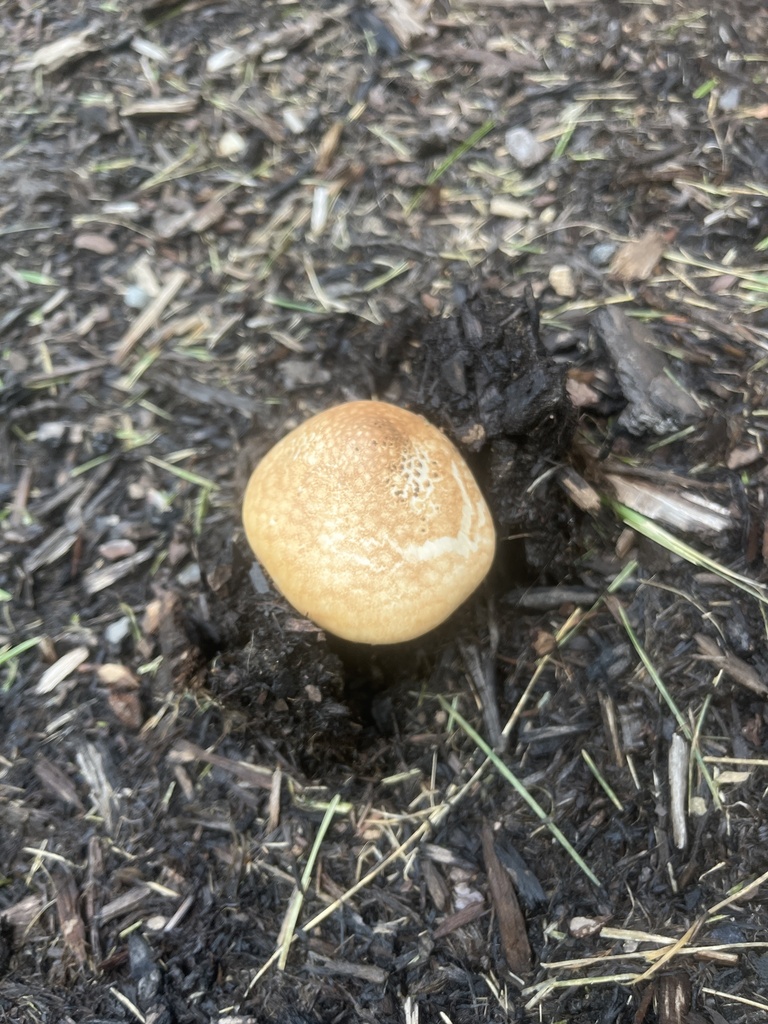
© Elliot Greiner · iNaturalist · CC BY 4.0
Scientific Classification & Quick Facts
Classification
Known For
Detailed measurements for this species are still being verified.
Armillaria mellea, the honey fungus, is one of the most widespread and economically significant fungi in temperate regions worldwide. This golden-capped mushroom appears in autumn across woodlands, gardens, and orchards, often fruiting in dense clusters at the base of trees or from buried wood. Present in at least 16 countries across multiple continents, it occupies a paradoxical ecological role: prized by foragers for its culinary value, yet feared by land managers and arborists as a destructive pathogen capable of killing both living trees and woody plants.
Classified in the family Physalacriaceae within the order Agaricales, honey fungus survives as both a saprotroph decomposing dead wood and an aggressive pathogen attacking living hosts through enzymatic degradation of plant tissues. Its capacity to persist in soil and wood substrates, combined with its prolific fruiting and rapid spread via spores and vegetative growth, makes it a formidable force in forest ecology and a persistent management challenge. Understanding this species is essential for both those seeking to harvest its culinary treasures and those working to protect vulnerable trees and plant communities.
Identification and Appearance
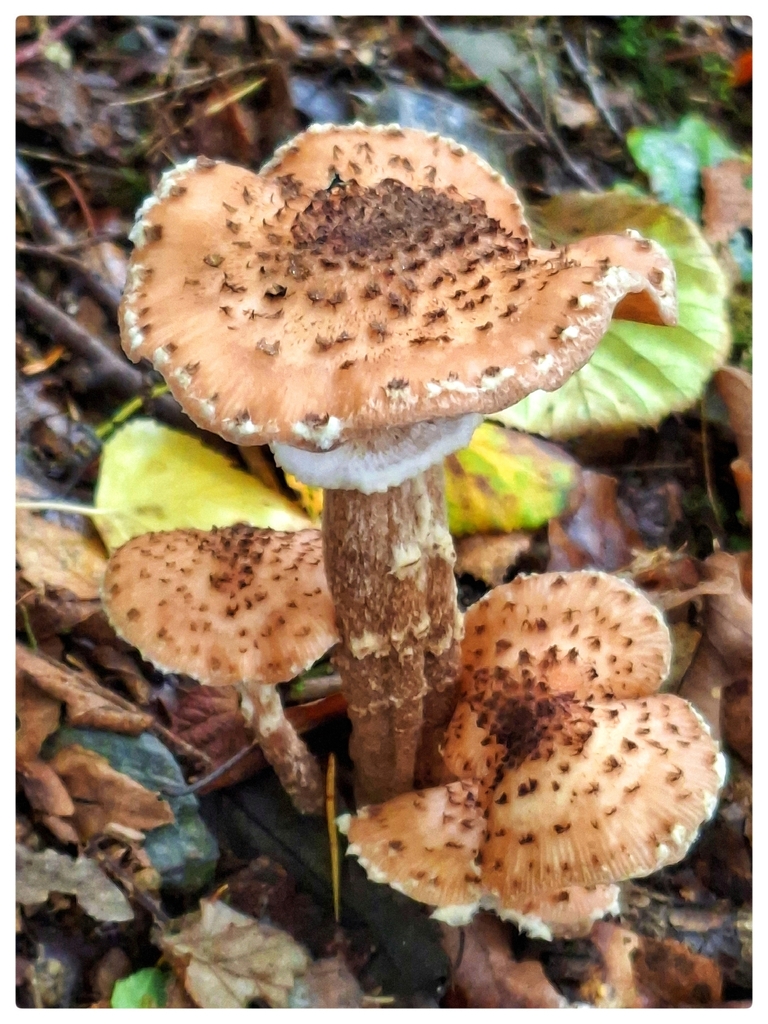
Armillaria mellea, commonly called Honey Fungus, produces distinctive basidiocarps (fruiting bodies) with a characteristic smooth cap measuring 3 to 15 centimetres in diameter. The cap is convex when young, gradually flattening with age and often developing a central raised umbo. Coloration ranges from pale golden-yellow to honey-brown, which gives the species its common name, though caps may darken or become stained with age or when wet.
The gills are typically pale cream to white, running down the stalk and becoming decurrent (running down the stem). A distinctive ring or annulus is usually present on the stalk, though it may be fragile and prone to shedding. The stalk itself is similar in colour to the cap but often darker toward the base, with a firm or slightly fibrous texture.
Honey Fungus is particularly recognizable by its vegetative growth form: dense, dark-coloured rhizomorphs that resemble bootlaces or dark cords. These structures emerge from colonized wood and spread through soil to infect new hosts, making them a key identifying feature for this species both above and below ground. The rhizomorphs may reach considerable lengths as the fungus extends its network through woodland substrates.
Distribution and Habitat
Armillaria mellea has a cosmopolitan distribution across the Northern Hemisphere and beyond, with recorded observations spanning at least 16 countries. GBIF records show the species is most abundant in the United States, where 269 observations have been documented, followed by the United Kingdom with 8 records. Additional populations occur in Spain, Canada, Italy, Russia, Chile, Japan, Poland, and Ukraine, reflecting its ability to colonize diverse temperate and subtropical regions.
The species occurs across a broad elevation range, from 148 metres to 1,750 metres above sea level, with an average elevation of 606 metres. This vertical distribution suggests A. mellea thrives in both lowland woodlands and montane forests, adapting to varied microclimates across its range.
Seasonal presence patterns show a pronounced peak in January, with 199 observations recorded during this month. Activity continues through spring and summer, with secondary peaks in June (35 observations) and August (30 observations), before declining sharply through autumn. This pattern aligns with the species’ fruiting phenology in temperate regions, where cooler, moist conditions during winter and early spring favour fungal fruiting bodies, while summer moisture can trigger secondary flushes.
Ecology and Lifecycle
Lifecycle
Armillaria mellea begins its lifecycle as thread-like mycelium that spreads through soil and decomposing wood. The fungus grows as an extensive network of filaments, often forming characteristic shoestring-like rhizomorphs—dense mycelial cords—that can travel substantial distances through the soil to locate new host plants. These rhizomorphs allow the fungus to penetrate root systems and establish infections even when separated from the initial infection site.
Fruiting bodies emerge under favorable conditions, typically in autumn when soil moisture is adequate and temperatures remain cool. The characteristic honey-coloured mushrooms form in clusters at the base of infected trees or on nearby wood debris. Once mature, the gills beneath the caps release millions of spores that disperse via wind and water, allowing the fungus to colonize new hosts. The mycelium persists indefinitely in the wood, capable of surviving extreme conditions including forest fires due to protection provided by the soil layer.
Ecological Role
Armillaria mellea occupies a dual ecological niche as both decomposer and parasite. As a decomposer, it breaks down dead wood and organic matter, recycling nutrients back into forest ecosystems. However, the fungus is also an aggressive plant pathogen, infecting the roots of living hardwood trees and conifers across diverse landscapes—orchards, vineyards, planted forests, and natural woodlands. This parasitic phase causes root rot disease, weakening or killing host plants by colonizing their vascular systems.
The fungus preferentially establishes itself in moist soil at cooler temperatures; growth is inhibited when soil temperatures exceed 26 °C (79 °F). This temperature sensitivity influences its distribution and seasonal activity, making it particularly problematic in cool, damp climates. Its ability to form extensive mycelial networks and persist in wood means it can remain active in ecosystems for decades, continuously producing new fruiting bodies and spores.
Uses
Armillaria mellea fruiting bodies are edible and are harvested and consumed in various culinary traditions, particularly in European and Asian cuisines. The mushrooms have a mild, slightly sweet flavour and are prized for soups, stews, and sautéed preparations. In some regions, they are commercially cultivated or foraged from wild populations, making them economically significant for local food systems.
Conservation and Threats
Armillaria mellea, the honey fungus, has not been formally assessed by the International Union for Conservation of Nature (IUCN) and therefore lacks a Red List classification. This absence of formal status reflects the species’ widespread distribution and the practical challenges of monitoring fungal populations globally. The lack of conservation designation does not indicate abundance or stability—it simply means the species has not triggered the criteria for formal assessment by conservation authorities.
Population trends for honey fungus suggest an increasing trajectory in many regions where it has been documented. The species’ ability to persist across diverse forest ecosystems, adapt to different host trees, and survive in fragmented habitats contributes to its resilience. Unlike many fungi threatened by habitat loss, A. mellea exploits both living and dead wood, giving it considerable ecological flexibility.
Threats and Conservation Considerations
While no major threats have been formally documented for this species, honey fungus can pose challenges to forestry and horticulture when it colonizes economically valuable timber stands or ornamental plantings. Forest management practices that remove deadwood—intended to reduce fire risk or improve timber yield—may indirectly affect fungal populations by eliminating substrate. Conversely, the species is sometimes viewed as invasive in managed ecosystems where it competes with native decomposers or causes tree mortality in plantations.
Honey fungus requires no specific legal protections in most jurisdictions, and no dedicated conservation programmes exist for the species. Its ecological role as a wood decomposer and nutrient recycler in forest systems means its continued presence supports broader forest health. The species’ capacity to fruit prolifically and disperse spores widely through air and water suggests it is unlikely to face regional extinction under current conditions.
Fun Facts
- Honey fungus is bioluminescent, making it one of the few fungal species capable of producing its own light. This glowing ability remains one of nature’s more enigmatic features, with the adaptive purpose still not fully understood.
- Armillaria mellea belongs to a cryptic species complex, meaning what we call “honey fungus” is actually a group of closely related species that look nearly identical under the microscope. Distinguishing between individual species requires molecular genetic analysis rather than visual inspection alone.
- The fungus attacks trees at their base but hides its damage well—infected trees show discoloured foliage and dying branches in their crown, far from where the actual infection is occurring. This delayed visual feedback means trees can be severely compromised before the problem becomes obvious to observers.
- Honey fungus concentrates all its fruiting bodies (the edible mushrooms) directly around the base of infected trees, clustering them precisely where the pathogenic activity is happening. This strategic placement ensures spores are released right where they can spread to new hosts.
- Despite being one of the most destructive plant pathogens in forestry and horticulture—capable of killing mature trees—honey fungus is classified as an edible basidiomycete and is commercially harvested for food. The same organism that devastates orchards is prized in kitchens across Europe and Asia.
- Armillaria species are among the longest-living organisms on Earth; a single clone of Armillaria ostoyae in Oregon spans 2,400 acres and is estimated to be thousands of years old. A. mellea, though typically smaller, shares this remarkable capacity for longevity and massive vegetative spread.
- The fungus spreads through soil via dark, root-like structures called rhizomorphs that can travel considerable distances underground to find and infect new trees. These “fungal highways” can persist in soil for years, allowing infection to occur long after the original host has died.
Photo Gallery
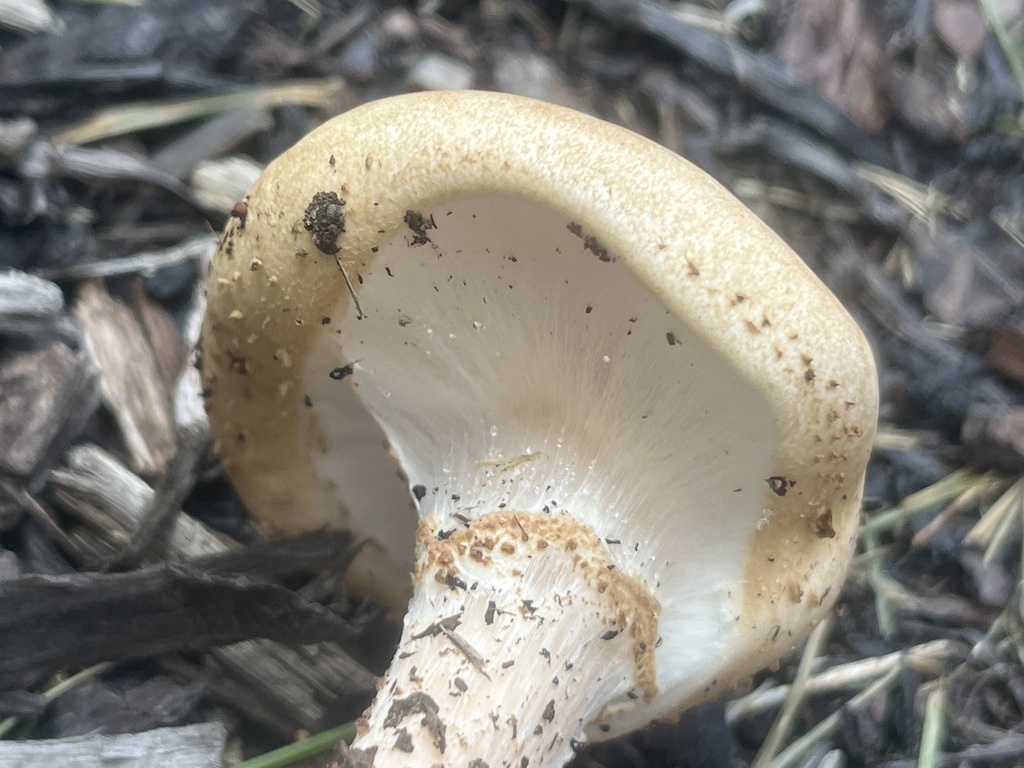
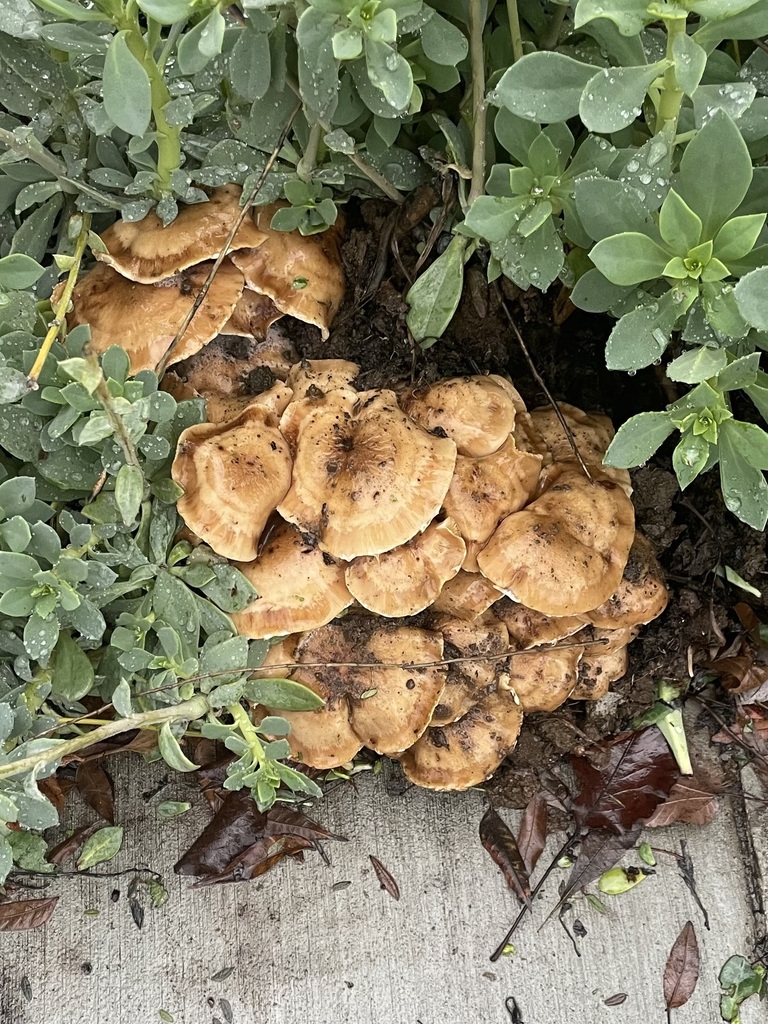
Elliot Greiner · CC BY 4.0
Related Species
Was this profile helpful?