
Agaricomycetes · Agaricales
St. George’s Mushroom
Calocybe gambosa
Least ConcernAlso known as: St George's Mushroom
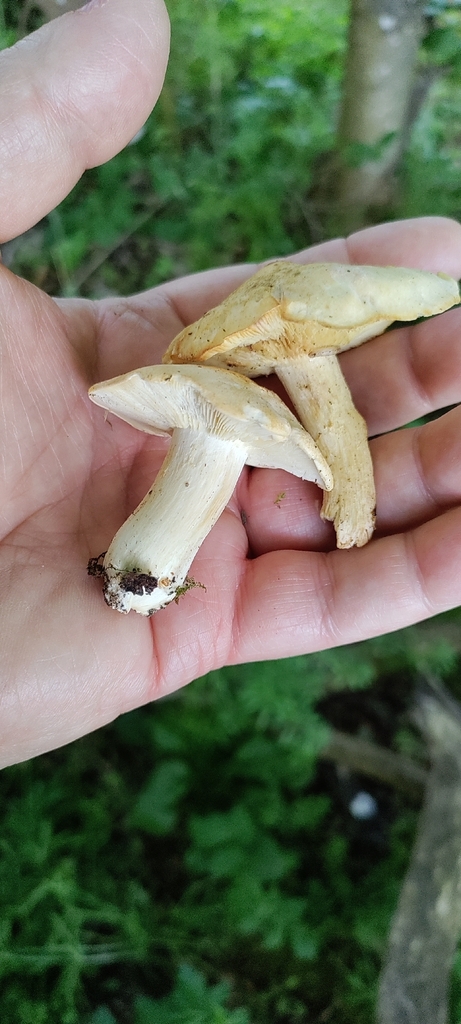
© ksaro1 · iNaturalist · CC BY 4.0
Scientific Classification & Quick Facts
Classification
Known For
Detailed measurements for this species are still being verified.
Calocybe gambosa, known as St. George’s Mushroom, is a spring-fruiting fungus prized by foragers across the Northern Hemisphere for its delicate flavour and reliable appearance. Unlike many wild mushrooms that fruit unpredictably, this species emerges with clockwork regularity in April and May—traditionally around the feast day of Saint George—making it one of the earliest and most dependable edible fungi of the year. Found in at least 17 countries across temperate regions, it thrives in grasslands, meadows, and woodland edges where it forms dense fairy rings that mark the forest floor like nature’s own signposts.
The species is classified as Least Concern on the IUCN Red List, reflecting its stable populations and wide distribution. Its combination of predictable fruiting behaviour, distinctive appearance, and culinary merit has made it a cornerstone of European mushroom-hunting culture for centuries. Understanding this fungus reveals much about woodland ecology, seasonal phenology, and the intricate relationship between fungi and grassland ecosystems.
Identification and Appearance
Calocybe gambosa, commonly known as St. George’s Mushroom, is a distinctive fungus with a compact, robust form. The cap measures 5–15 cm in diameter and displays a smooth texture with subtle ridging. The colour ranges from white to creamy throughout the entire fruiting body—cap, stem, and flesh—giving the mushroom a uniform, pale appearance. The gills are sinuate (slightly wavy), white, and densely crowded, while the stubby stipe is notably bulky at the base, creating a characteristic club-like or barrel-shaped stem.
The flesh is dense and soft, with a distinctive mealy texture and a mild fragrance reminiscent of cucumber or fresh plant matter. The spore print is white, which is a useful diagnostic feature. When handled or cut, the mushroom does not bruise or discolour, remaining pale throughout storage.
Distinguishing from toxic look-alikes
Several poisonous species share similar habitats and can cause confusion in the field. The highly toxic Inosperma erubescens (formerly Amanita erubescens) resembles St. George’s Mushroom but has a more pungent, fruity odour and characteristically bruises red when damaged—a critical distinguishing feature. Another dangerous species, Entoloma sinuatum, produces a rancid smell that readily separates it from the cucumber-scented C. gambosa. Careful attention to smell, bruising response, and cap texture are essential for safe field identification.
Distribution and Habitat
Calocybe gambosa, commonly known as St. George’s Mushroom, has a well-established presence across northern and central Europe. GBIF records show concentrations in the United Kingdom (98 records) and Germany (93 records), with significant occurrences in the Netherlands (65 records). The species is also documented in France, Spain, Switzerland, Belgium, Italy, Denmark, and Ireland, with a total distribution spanning 17 countries. This pattern reflects a preference for temperate European regions, particularly those with maritime and continental climates.
The species exhibits a highly distinctive seasonal phenology, with overwhelming fungal fruiting concentrated in spring. GBIF data show 258 records in April alone, representing the peak fruiting month, while March and May account for 19 and 23 records respectively. Outside this narrow window (March through May), the fungus is essentially absent from observation records, indicating that Calocybe gambosa is a strictly spring-fruiting species. This predictable timing has earned it the common name reflecting its appearance around St. George’s Day (23 April) in many regions.
Specific elevation data are not available in current occurrence records, limiting detail on altitude preferences. However, the species’ presence across varied terrain in the United Kingdom, Germany, and the Low Countries suggests adaptation to a broad elevational range typical of lowland to moderate upland habitats across these regions. Further documentation of elevation parameters would refine understanding of this fungus’s ecological niche.
Ecology and Lifecycle
Lifecycle
Calocybe gambosa begins its lifecycle as threadlike mycelium spreading through soil and organic matter, particularly in grasslands and meadows. This vegetative stage can persist for months or years, gradually colonizing substrate rich in decaying plant material. When soil moisture and temperature conditions align—typically in spring, around late April through May in temperate regions—the mycelium concentrates its energy into fruiting body production.
The fruiting stage is brief and synchronized with spring weather. White to cream-colored mushrooms emerge rapidly, their caps expanding to reveal pale pink gills underneath. Once mature, the gills release enormous quantities of white spores into the air, relying on wind currents for dispersal across the landscape. This seasonal fruiting strategy exploits the competitive advantage of emerging when few other fungi fruit, reducing competition for space and animal dispersal vectors.
Ecological Role
Calocybe gambosa functions as a saprotroph, breaking down dead plant material and contributing to nutrient cycling in grassland ecosystems. The fungus secretes enzymes that decompose cellulose and other resistant organic compounds, converting them into forms accessible to soil bacteria and plants. Its presence enriches the soil food web, supporting invertebrate populations that feed on the mycelium and sporocarps.
The mushroom’s spring fruiting coincides with the emergence of herbivores and omnivores after winter dormancy, making it an important food source for slugs, beetles, and small mammals. These animals inadvertently aid spore dispersal through ingestion and movement through the landscape. Beyond direct consumption, the fungus also contributes to soil structure and water retention through extensive mycelial networks.
Uses
St. George’s Mushroom holds significant culinary value across Europe, particularly in Britain, France, and Mediterranean regions. It is prized for its delicate, pleasant flavor and firm texture, remaining popular in wild mushroom foraging traditions. The mushroom is prepared by sautéing, stewing, or incorporating into soups and sauces; its flavor complements butter, garlic, and herbs well. Commercial availability is limited due to its short seasonal window and difficulty in cultivation, making wild-harvested specimens highly sought after by chefs and foragers.
No significant medicinal applications have been established, and the species is neither toxic nor known to cause adverse effects when properly identified and cooked. Its reliability and palatability have made it a staple of sustainable foraging in regions where it fruits abundantly. Proper identification is essential, as confusion with toxic look-alikes—particularly some Amanita species—remains a foraging hazard; knowledgeable harvest and careful verification of key features such as the pale pink gills and spring fruiting period are necessary precautions.
Conservation and Threats
Calocybe gambosa, the St. George’s Mushroom, holds a conservation status of Least Concern (LC) on the IUCN Red List. This designation reflects that the species faces no immediate large-scale threats to its survival and maintains stable populations across its range. The mushroom’s abundance in suitable habitats and its wide distribution across Europe and beyond support this favourable assessment.
Threats and Population Pressures
No specific documented threats currently pose a significant risk to C. gambosa populations. However, the species’ ecology makes it vulnerable to indirect pressures. Habitat loss through urban development and agricultural intensification can reduce suitable woodland and grassland areas where the fungus fruits. Changes in land management practices—particularly the decline of traditional pasturing and the removal of deadwood from forests—may alter the microhabitats this species requires. Climate variability also influences fruiting patterns, as the mushroom’s spring emergence is closely tied to soil temperature and moisture conditions.
The edibility and culinary popularity of St. George’s Mushroom have led to intensive foraging in some regions, yet this does not appear to threaten wild populations significantly. The fungus remains abundant enough in suitable locations to tolerate moderate harvesting pressure without population decline.
Conservation Efforts and Legal Protections
No formal international conservation programmes specifically target C. gambosa, reflecting its Least Concern status. However, several countries and regions provide indirect protection through general woodland and grassland conservation initiatives. In parts of Europe, the species benefits from protected area designations and sustainable forestry practices that maintain habitat integrity. Some regions classify wild mushroom harvesting under foraging regulations, which can help manage collection intensity.
Cultural Significance
Calocybe gambosa holds a distinctive place in European spring culture, where it is affectionately known as the St. George’s Mushroom. The species is steeped in seasonal folklore: it is famously said to make its first appearance on St. George’s Day (April 23rd), marking the end of winter’s foraging drought and signaling the arrival of spring. This association with the calendar and renewal has made the mushroom a culturally significant herald across the continent.
In culinary tradition, particularly across southern and central Europe, Calocybe gambosa is a well-established edible mushroom. In southwestern European regions, it was historically grouped and marketed alongside other grassland species—including Marasmius oreades, Entoloma sepium, and others—under the collective name mousserons, valued for their varying degrees of flavor and culinary merit. The species’ status as a nutrient-rich ingredient with biologically active compounds has sustained its reputation both as a table delicacy and as a subject of ethnobotanical interest.
Fun Facts
Calocybe gambosa is a spring fruiting mushroom with deep cultural and botanical significance in the United Kingdom and across Europe. Its name and phenology have made it a celebrated harbinger of the mushroom season for centuries.
- Named after a saint’s feast day: The common name derives from Saint George’s Day (23 April), as the mushroom typically fruits around this date in the United Kingdom, making it a reliable seasonal marker.
- Recently reclassified: Calocybe gambosa was previously classified within the large genus Tricholoma before being moved to its own genus, reflecting advances in fungal taxonomy and DNA analysis.
- Predictable spring fruiting: Unlike many mushrooms that vary widely in fruiting timing, this species shows remarkable consistency in appearing around April in temperate regions, making it easier for foragers to anticipate its arrival.
- Grows in dense fairy rings: The mushroom often forms characteristic circular fruiting patterns in grasslands and meadows, creating the iconic “fairy rings” that can persist for years in the same location.
- Peppery odour when young: Young specimens emit a distinctive peppery or radish-like smell that fades as the mushroom matures, helping foragers identify it in the field.
- Culinary tradition in Europe: Beyond the UK, Calocybe gambosa is prized across continental Europe and is called by regional names reflecting its spring appearance, such as Maipilz (May mushroom) in German-speaking regions.
Conservation Status
LC (Least Concern) · NT · VU · EN · CR · EW · EX
Photo Gallery
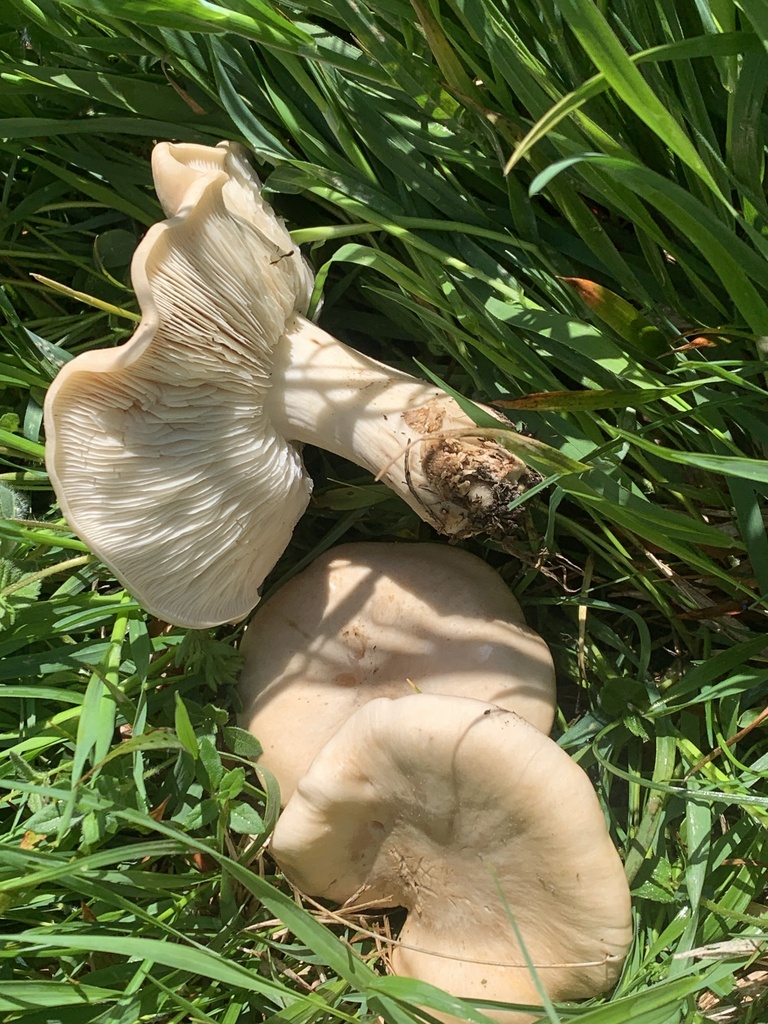
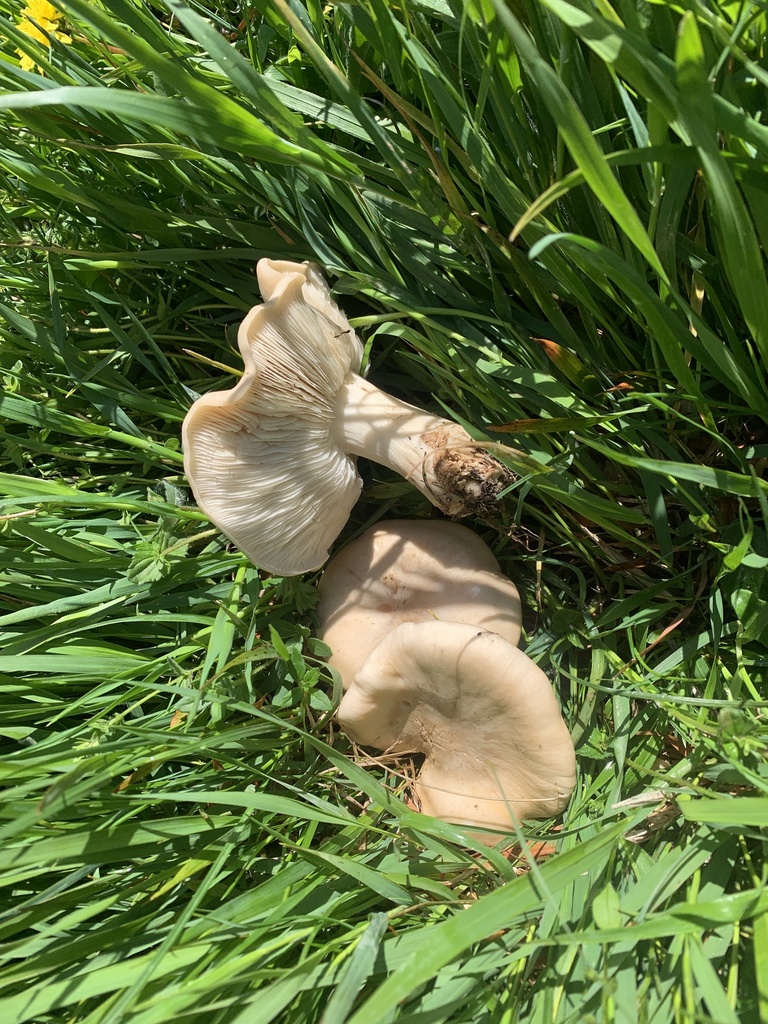
ksaro1 · CC BY 4.0
Related Species
Was this profile helpful?