
Magnoliopsida · Malpighiales
Castor Bean Plant
Ricinus communis
Also known as: Castor, Castor Oil, Castor Oil Plant, Castor Oil Tree, Castor Plant
© Raja Sekhar Chimirala · iNaturalist · CC BY 4.0
Scientific Classification & Quick Facts
Classification
Known For
Detailed measurements for this species are still being verified.
Ricinus communis, the castor bean plant, is a fast-growing tropical shrub that has become one of the world’s most economically important oil-producing crops. Native to East Africa, this distinctive species now thrives across at least 39 countries spanning tropical, subtropical, and temperate zones worldwide. Its rapid growth, striking palmate leaves, and clusters of spiky seed pods make it instantly recognizable in cultivation and as a naturalised invasive in many regions.
The castor bean plant belongs to the spurge family Euphorbiaceae and has been cultivated for thousands of years for its oil-rich seeds. Beyond its role as a commercial crop, R. communis presents a striking paradox: while the seeds themselves are extremely toxic, the processed castor oil has legitimate therapeutic uses. The plant’s ability to tolerate poor soils, drought, and a range of climatic conditions has enabled its spread across diverse ecosystems, making it both an agricultural asset and an ecological concern in regions where it has escaped cultivation.
Identification and Appearance
Ricinus communis is a fast-growing suckering shrub that can reach around 12 metres in height, occasionally attaining the size of a small tree, though it is not cold hardy. The plant exhibits considerable variability in growth habit and appearance, with breeders having selected numerous cultivars that differ in leaf colour, flower colour, and oil production capacity.
Leaves and Foliage
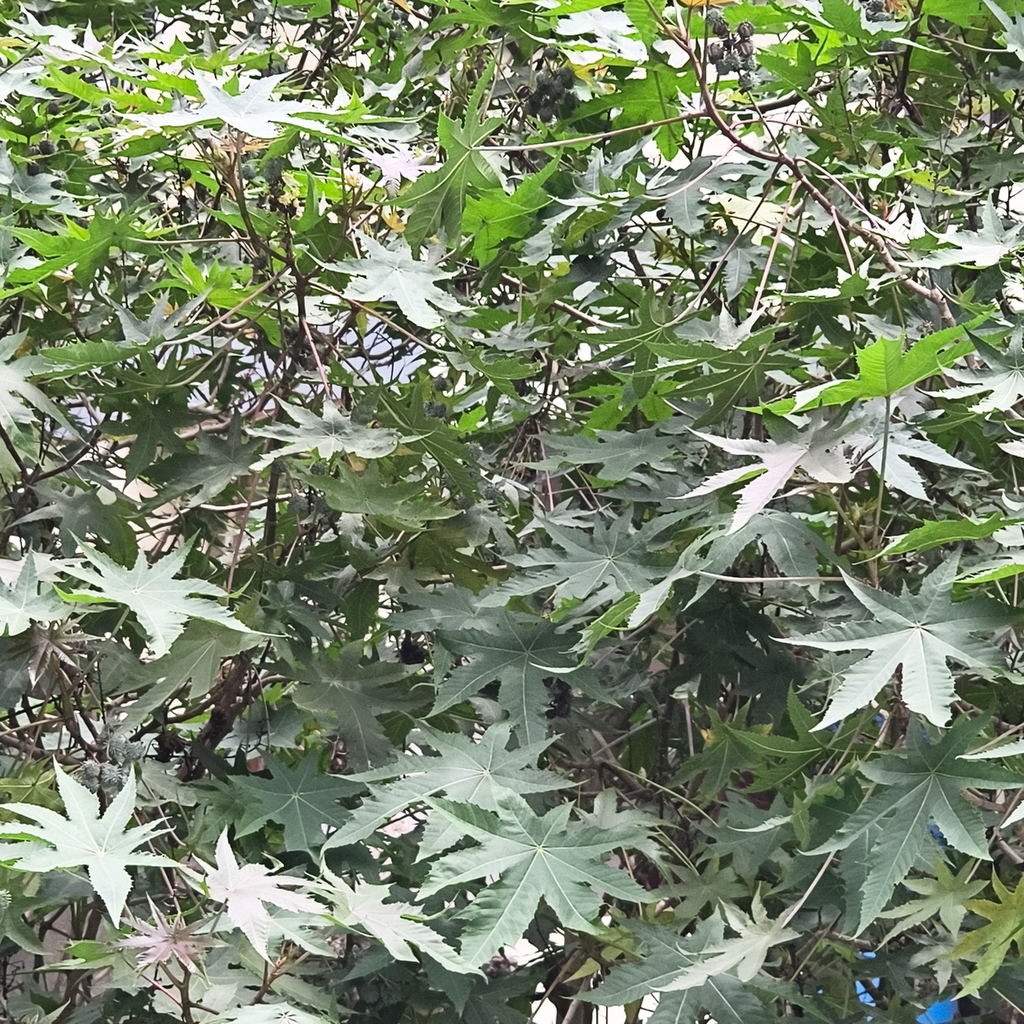
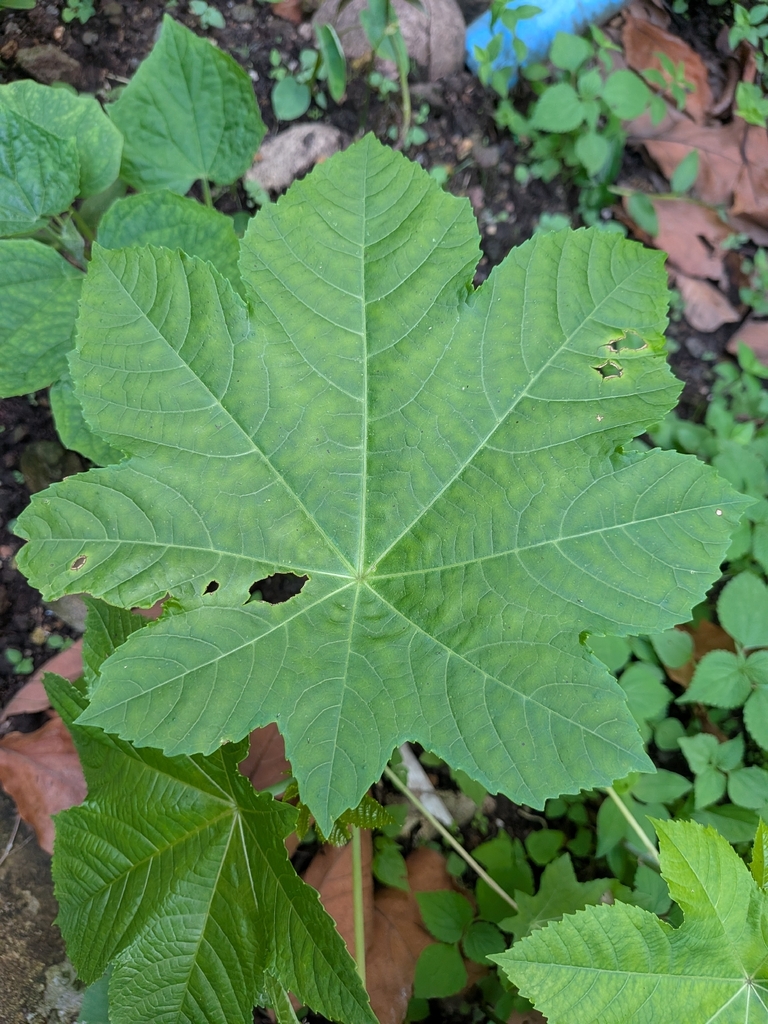
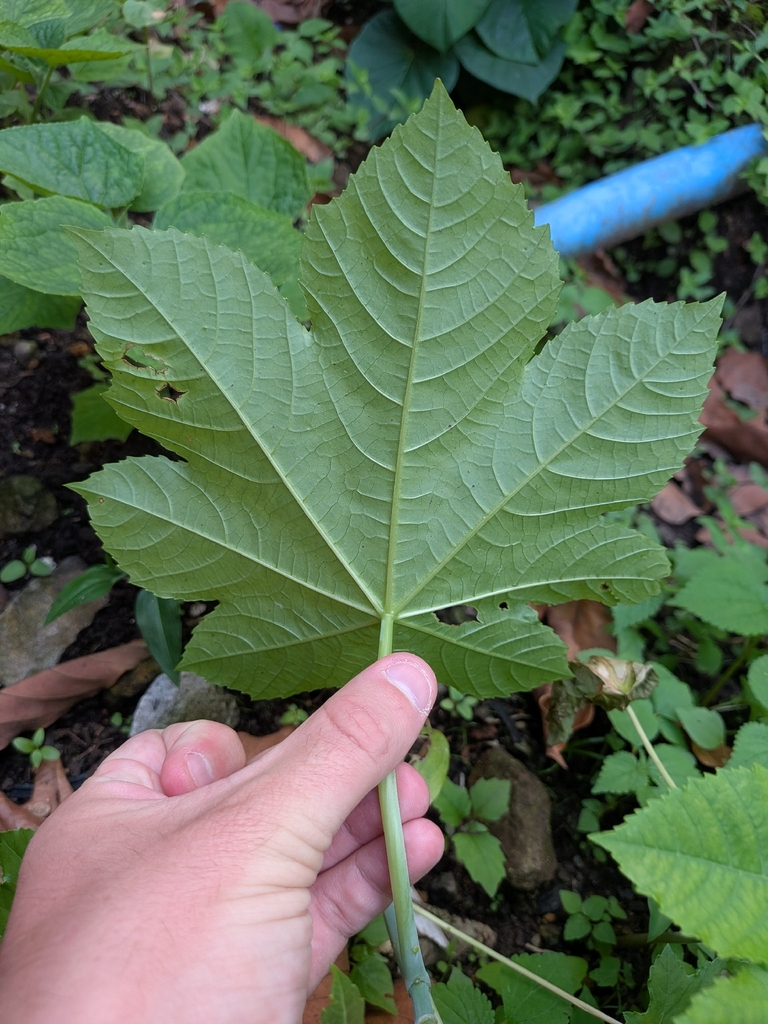
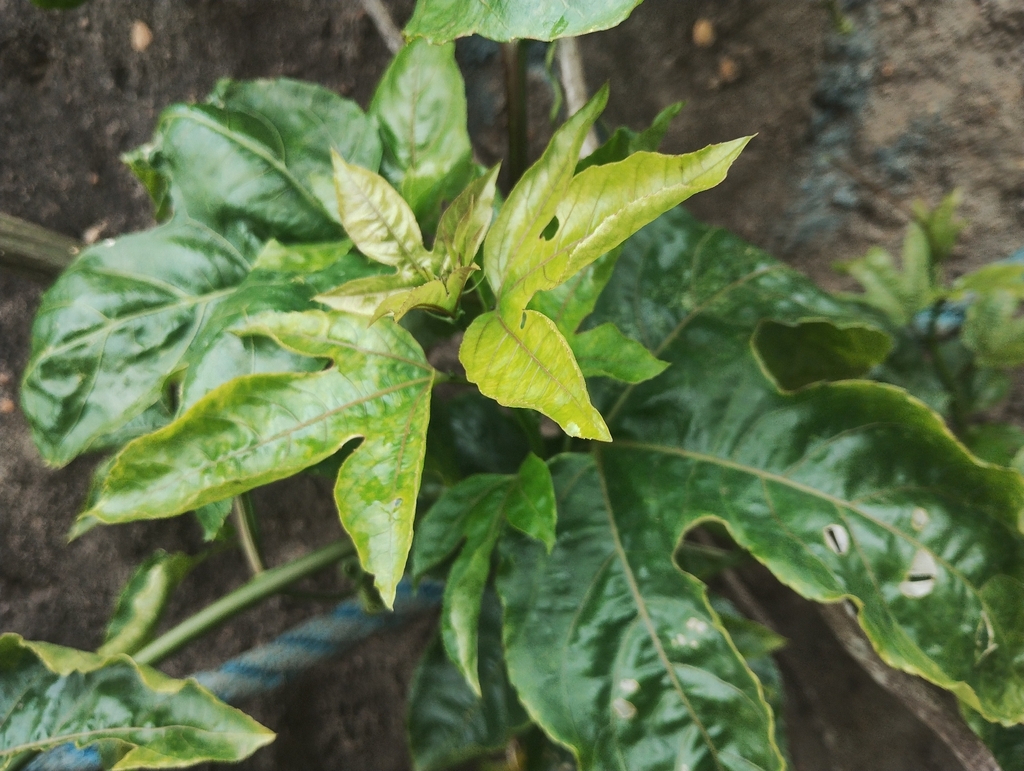
The glossy leaves are the most distinctive feature of the castor bean plant. They are long-stalked, alternate, and deeply palmate with five to twelve lobes featuring coarsely toothed segments, measuring 15–45 centimetres in length. Leaf colour varies dramatically between varieties and even within individual plants at different growth stages. Many varieties display dark reddish-purple or bronze colouration when young, gradually transitioning to dark green as they mature, sometimes retaining a reddish tinge. Other cultivars produce leaves that remain green from emergence. This striking colour variation, combined with the plants’ rapid growth and dramatic foliage, makes them popular ornamental specimens in gardens and landscapes where frost does not occur.
The combination of large palmate leaves, variable pigmentation, and substantial overall plant size makes Ricinus communis easily recognisable among tropical and subtropical plant communities. Individual plants can differ markedly in appearance depending on their cultivar selection and growing conditions, but the characteristic leaf shape remains consistent across all varieties.
Distribution and Habitat
Ricinus communis, the castor bean plant, occurs across 39 countries worldwide, with the strongest documented presence in the Americas and scattered populations in Europe, Africa, Asia, and Oceania. GBIF records show the United States leads with 101 observations, followed by Mexico (53), Australia (19), Spain (17), and South Africa (15). The species also appears regularly in India, Argentina, Israel, Portugal, and Ecuador, indicating a capacity to establish in both tropical and temperate climates.
The plant demonstrates remarkable adaptability across diverse environments. It thrives in disturbed sites, cultivation zones, and anthropogenic landscapes where it often occurs as a volunteer or feral population. Although specific elevation data are unavailable, its broad geographic spread—from sea-level ports to inland agricultural regions—suggests tolerance across a wide altitudinal spectrum. The concentration of records in January points to a seasonal pattern of observation or activity, though the mechanism behind this peak remains unclear from occurrence data alone.
Castor bean’s global footprint reflects both its horticultural value and its weedy tendencies. In the Americas, particularly the United States and Mexico, it is encountered frequently in warm, dry regions. Mediterranean climates in Spain and Portugal support established populations, while records from South Africa and Australia highlight its success in arid and semi-arid environments. The species’ presence across such varied regions underscores its ecological flexibility and resilience to different soil and moisture conditions.
Growth and Cultivation
Growth
Ricinus communis is a fast-growing herbaceous shrub that can reach 2–4 metres in height, though in tropical climates it occasionally develops into a small tree exceeding 6 metres. The plant has a thick, hollow stem with a distinctive waxy bloom and prominent branches radiating from the main trunk. Large, deeply lobed leaves—often 30–60 centimetres across—are palmate with serrated margins and emerge alternately along the stem, creating a dramatic foliage display.
Growth is vigorous in warm conditions, and mature plants develop a substantial woody base. The plant produces new leaves continuously throughout its growing season in suitable climates, maintaining a leafy canopy that provides dense shade beneath.
Flowering and Fruiting
Flowers appear in terminal racemes—long spikes of small, red or brownish blooms clustered without petals but with prominent pistils and stamens. Male flowers occupy the lower portion of the spike and shed pollen, while female flowers sit higher and mature into the distinctive fruiting structures. Flowering occurs over an extended period in warm regions, with plants capable of producing fruit continuously.
Fruits develop as spiky capsules 1–2 centimetres long, covered in soft spines that harden as they mature. Each capsule contains three seeds—the castor beans—which are mottled brown and resemble ticks or insects. Seeds disperse when the capsule splits explosively upon ripening, scattering them several metres away.
Cultivation
Castor bean plants thrive in full sun and well-drained soil of moderate fertility. They tolerate a wide pH range and perform best in warm-season growing conditions with protection from frost. In subtropical and temperate zones, plants are grown as annuals from seed sown after the last frost date. Direct sowing in warm soil produces rapid germination and establishment.
Water moderately during growth, allowing soil to dry slightly between waterings. Once established, plants show good drought tolerance and require minimal supplemental watering except during extended dry periods. Fertilizer is unnecessary in average soil; excess nitrogen promotes excessive leaf growth at the expense of flowering. In tropical regions, plants persist as perennials and can be pruned to maintain size and shape.
Conservation and Threats
Ricinus communis, the castor bean plant, does not currently appear on the IUCN Red List, indicating that it is not formally assessed as threatened at a global scale. The species has a wide distribution across tropical and subtropical regions worldwide, and its population trend is increasing. This expansion reflects both natural range extension and deliberate cultivation for commercial purposes, particularly for the production of castor oil.
Threats
No major threats to the global population of Ricinus communis have been formally documented. The species is highly adaptable, tolerating a range of soil conditions and climates, which reduces its vulnerability to habitat loss. In agricultural regions, the plant may occasionally be viewed as a weed in crop systems, leading to localized removal efforts, but this does not significantly impact its overall status.
In some regions, invasive populations of the castor bean plant can compete with native vegetation, particularly in disturbed habitats and arid environments. However, this ecological concern operates at a local or regional scale rather than threatening the survival of the species itself.
Conservation Efforts
Formal conservation programmes specifically targeting Ricinus communis are not widely reported, as the species does not require protection from extinction. Instead, the plant is actively cultivated and managed by agricultural interests in many countries, ensuring its continued availability for commercial use. Legal protections vary by region: some areas treat it as a controlled or restricted species due to the toxic nature of its seeds (ricin), while others permit unrestricted cultivation for oil production.
The increasing population trend reflects the plant’s economic importance and resilience. Castor oil production continues to drive cultivation in Africa, India, China, and Brazil, among other regions, maintaining the species’ presence across suitable habitats.
Cultural Significance
The castor bean plant has a long history of human use spanning thousands of years, though its cultural significance varies dramatically across regions and time periods. In ancient Egypt, castor oil was extracted and used in religious ceremonies, embalming practices, and as a lamp fuel—a practical application that secured the plant’s place in Mediterranean and Middle Eastern societies. The plant appears in classical texts and traditional medicine systems across Africa, Asia, and the Caribbean, where it has been employed for therapeutic purposes and integrated into folk remedies.
In many agricultural communities, particularly in tropical and subtropical regions, Ricinus communis holds economic and social importance as a source of castor oil, which has industrial, cosmetic, and medicinal applications. The plant features in traditional Ayurvedic medicine in India and in African ethnobotany, where it is valued for its perceived healing properties. However, the cultural narrative surrounding the castor bean plant is complicated by the presence of ricin, a highly toxic protein in its seeds—a fact that has shaped both its medicinal reputation and safety concerns in contemporary societies.
Fun Facts
- The castor bean plant is the sole living member of its genus—no other species shares the genus Ricinus, making it a monotypic genus with no close living relatives at that taxonomic rank.
- It stands alone at the subtribe level too—Ricinus communis is the only member of the subtribe Ricininae, giving it extraordinary taxonomic isolation even within the spurge family (Euphorbiaceae).
- Despite belonging to a family dominated by annuals, the castor bean plant is a perennial, allowing individual plants to flower and produce seeds year after year rather than completing their life cycle in a single season.
- The plant produces one of nature’s most potent toxins in its seeds—castor beans contain ricin, a protein so toxic that just a few seeds can poison a human, yet the oil extracted from the seeds is used safely in cosmetics and lubricants after proper processing.
- Castor oil was used as a laxative for centuries, appearing in medical texts from ancient Egypt through Victorian times, though modern medicine has largely replaced it with safer alternatives.
- The plant grows to impressive sizes rapidly—under favorable conditions, a single castor bean plant can reach 3–4 metres in height within a single growing season, creating a small tree-like structure from seed to maturity in months.
Ecology
Growing Conditions
Edibility
Photo Gallery
Raja Sekhar Chimirala · CC BY 4.0
Related Species
Was this profile helpful?