
Pezizomycetes · Pezizales
Conical Morel
Morchella conica
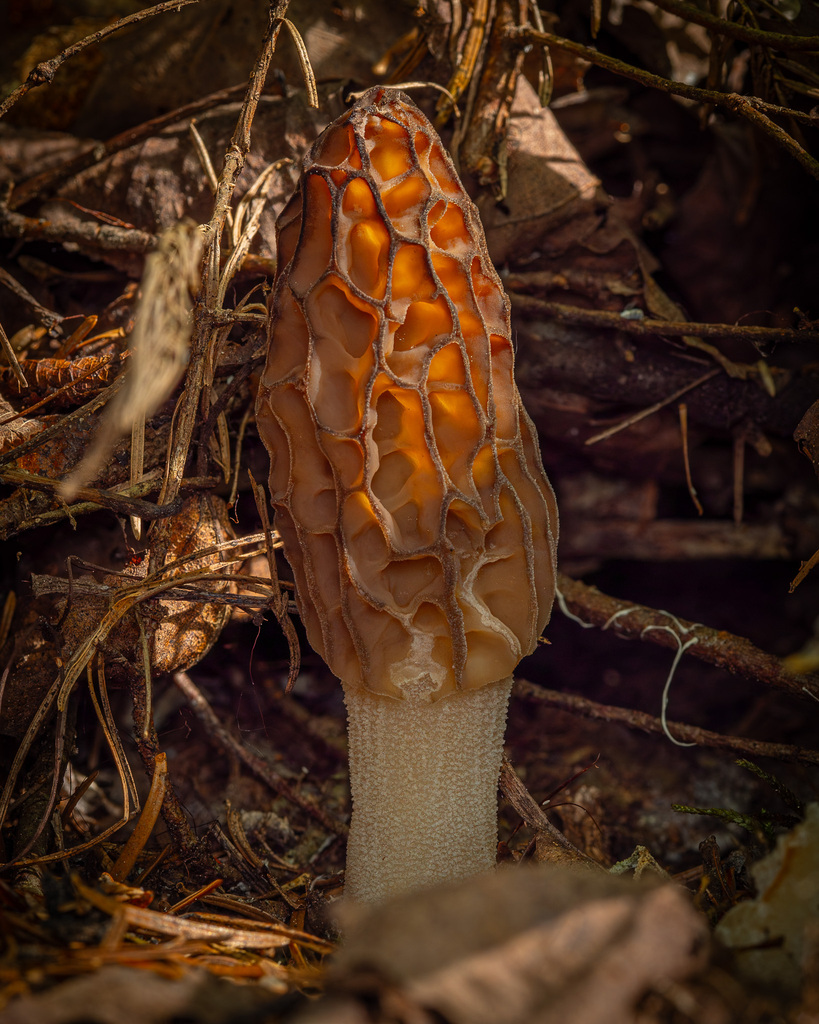
© Jacob Fauvelle · iNaturalist · CC BY 4.0
Scientific Classification & Quick Facts
Classification
Known For
Full profile in progress — check back soon.
Morchella conica, the Conical Morel, is a fungus prized by foragers and mycologists alike for its distinctive honeycomb-textured fruiting body and elusive nature. Unlike the common button mushroom found in supermarkets worldwide, morels fruit unpredictably and demand specific environmental conditions—making each discovery in the wild a small triumph. This species belongs to the family Morchellaceae within the phylum Ascomycota, a vast group of fungi that includes some of Earth’s most economically and ecologically important organisms.
The Conical Morel occurs across at least 17 countries, reflecting its wide but fragmented distribution in temperate and boreal regions. Its conservation status remains unknown, neither formally assessed by the IUCN nor systematically monitored across its range. Yet its culinary reputation and the intense human interest in wild-harvesting populations mean that local abundance and sustainability vary significantly by region, making regional knowledge and careful stewardship essential for its continued availability.
Identification and Appearance
Morchella conica, the Conical Morel, is instantly recognizable by its distinctive honeycomb-like cap structure. The fruiting body features a convoluted head composed of a network of ridges and pits that create a honeycomb pattern characteristic of the genus. The cap is typically conical in shape, which gives the species its common name, and varies in overall morphology depending on growing conditions and habitat.
The fruiting body’s appearance is defined by the intricate relief of ridges and depressions that cover the cap surface. These structural features are not merely ornamental—they form the functional spore-bearing surface of the fungus. The coloration and exact size vary among individual fruiting bodies, though specimens tend to be compact and well-defined with the characteristic pointed or rounded apex typical of Morchella conica.
Morels in this species are highly variable in shape and habitat preference, making field identification dependent on careful observation of the cap’s overall conical form and the pattern of the honeycomb pitting. Unlike some other morel species, the differences between specimens reflect ecological conditions rather than consistent morphological variation within the species.
Distribution and Habitat
Morchella conica occurs across northern and central Europe, with GBIF records documenting its presence in 17 countries. The species shows a pronounced geographic concentration in Scandinavia and Eastern Europe. Norway dominates the distribution with 92 records, followed by Poland with 66 records, Estonia with 29 records, and Germany with 26 records. Additional populations are found in Denmark, Austria, France, Sweden, and Uzbekistan, with smaller numbers of records from Greenland.
Elevation and Seasonal Occurrence
The species tolerates a broad elevation range, occurring from 21 metres to 3,400 metres above sea level, with an average elevation of 961.5 metres. This vertical distribution reflects its ability to fruit across diverse boreal and temperate landscapes. Morchella conica exhibits a strongly seasonal fruiting pattern concentrated in spring. Peak abundance occurs in May with 136 records, preceded by a rapid increase in April (121 records). March shows the beginning of the season with 9 records, while June marks a sharp decline to 29 records. Fruiting is minimal from July through February, with only scattered records outside the April–May window. This seasonal window aligns with spring snowmelt and warming soil temperatures across its northern range.
Ecology and Lifecycle
Lifecycle
Morchella conica begins its lifecycle as microscopic mycelium—thread-like filaments that spread through soil and leaf litter. This vegetative stage can persist for years, slowly colonizing organic matter and building the fungal network necessary for reproduction. When conditions align—typically cool temperatures, adequate moisture, and soil disturbance—the mycelium concentrates energy into fruiting body formation.
The visible conical morel fruiting body emerges in spring, its honeycomb-like cap filled with asci (spore-bearing structures). Once mature, the asci release millions of spores into the air, dispersing them widely on wind currents or via water splash. These spores settle into suitable microhabitats where germination may occur if conditions permit, completing the cycle. The fruiting body itself persists for only a brief window—typically a few weeks—before decomposing and returning nutrients to the soil.
Ecological Role
The precise ecological role of Morchella conica remains incompletely understood, but evidence suggests a flexible lifestyle. The fungus likely forms symbiotic or endophytic relationships with certain trees, deriving nutrients from living plant hosts while potentially offering benefits in return. Simultaneously, morels act as saprotrophs, breaking down dead wood, leaf litter, and other decaying organic matter—a role that recycles nutrients back into forest ecosystems.
Tree associations vary by geography and species. In European and Mediterranean regions, M. conica appears near firs, pines, poplars, elms, oaks, and chestnuts. Across western North America, coniferous forests dominated by pines, firs, larches, and Douglas-firs provide common fruiting habitat, as do riparian poplar forests. This ecological flexibility allows the species to occupy diverse forest types while maintaining its cryptic underground existence between fruiting seasons.
Uses
Conical morels hold significant culinary value across Europe and North America. Chefs prize their distinctive honeycomb texture and earthy, nutty flavor. They are foraged and sold fresh in markets, dried for extended storage, or used to infuse oils and sauces. Their scarcity and brief fruiting window make them a luxury ingredient commanding high prices.
Beyond culinary interest, morels have entered traditional medicine and modern herbal practice, though rigorous scientific validation of medicinal claims remains limited. Some preparations are marketed for immune support and general wellness, but dosage and efficacy lack standardized clinical evidence. Foragers should note that M. conica is best collected in spring and must be properly identified, as false morels—which differ structurally but superficially resemble true morels—can cause gastrointestinal upset if consumed.
Conservation and Threats
Morchella conica, the Conical Morel, does not currently hold an official IUCN Red List classification. This absence of formal status reflects the limited systematic monitoring of wild fungal populations globally. Population trend data indicates the species is increasing, suggesting stable or improving conditions across its range, though dedicated population surveys remain sparse.
Threats
No major documented threats have been formally identified for the Conical Morel at present. However, like many wild mushroom species, this morel remains vulnerable to habitat degradation, particularly loss of suitable woodland ecosystems where it fruits. Climate variability—including altered precipitation patterns and temperature fluctuations—may affect fruiting cycles and spore dispersal, though specific impacts on M. conica are not yet well characterised.
Overharvesting for commercial and recreational purposes poses a potential risk in regions where the species is regularly foraged. Intensive collection without sustainable management could reduce local populations, especially if harvest pressure exceeds natural regeneration rates. Additionally, fungal species sensitive to soil disturbance or chemical pollution may decline in heavily managed or contaminated landscapes.
Conservation Efforts
Formal legal protections and dedicated conservation programmes for Morchella conica are not widely documented. The lack of IUCN status and specific management plans reflects both the general understudying of non-timber fungal biodiversity and the species’ current stable population trend. Conservation of this species benefits from broader woodland and forest protection initiatives that preserve the mixed deciduous and coniferous habitats where morels fruit.
Cultural Significance
Foraging tradition and festivals
Morel hunting has become a cornerstone of North American springtime culture, drawing hundreds of enthusiasts to regional festivals and competitions each year. The National Morel Mushroom Festival in Boyne City, Michigan, a century-old gathering, attracts morel hunters who have been compared to pilgrims on a modern quest—one observer noted it resembles a contemporary North American version of Geoffrey Chaucer’s Canterbury Tales. Beyond Michigan, competitions and festivals dedicated to morel hunting include the Illinois State Morel Mushroom Hunting Championship, the Ottawa Midwest Morel Fest, and the Mesick Michigan Mushroom Festival, reflecting the deep cultural roots of this seasonal activity across the continent.
Vernacular names and local lore
Morchella species carry a rich array of regional and colorful names that reveal how deeply they are embedded in local traditions. The name “dryland fish” arises from their appearance when sliced lengthwise, breaded, and fried—their shape mimics a fish. In Kentucky, they are called “hickory chickens,” while in West Virginia they go by “molly moochers,” “muggins,” or “muggles.” The names “merkels” or “miracles” derive from folklore about a mountain family saved from starvation by eating morels. Collectors often use mesh bags to harvest these mushrooms, allowing spores to scatter during transport and aid regeneration. The resemblance of morels to sponges and waffles has also earned them the names “sponge mushroom” and “waffle mushroom.”
Popular culture
Morels have entered contemporary popular culture in unexpected ways. Country musician Tyler Childers references “fried morels and fine hotels” in his 2019 song “All Your’n,” connecting the mushroom to culinary tradition and hospitality. In the farming simulation video game Stardew Valley, morels are foraging items that can be found in the Secret Woods during spring, or cultivated in the Farm Cave with an 8.1% daily spawn chance, introducing the species to younger audiences through interactive gameplay.
Fun Facts
- The honeycomb-like pits covering the cap of Morchella conica are not random dimples—they form a precise network of ridges and valleys that is unique among fungi. This distinctive architecture helps the morel maximize surface area for spore dispersal.
- Morchella conica reproduces through asci, sac-like structures that release spores into the air, rather than using gills as many other fungi do. This reproductive method places it among the sac fungi, a group more evolutionarily sophisticated than the cup fungi in the order Pezizales.
- The conical shape of the cap gives this morel its common name and serves a functional purpose: it naturally funnels moisture and debris away from the fruiting body, protecting the spore-producing tissue within.
- Morels are notoriously difficult to cultivate in laboratories and gardens, which is why wild morels command high prices in farmers’ markets—sometimes exceeding $20 per kilogram. The species has resisted commercial farming for decades.
- The hollow interior of Morchella conica is not an accident of growth but a feature that develops as the mushroom matures, creating a cavity perfectly suited for protecting developing spores from harsh environmental conditions.
- Morel fruiting is highly ephemeral; the entire fruiting season may last only 2–4 weeks in spring, making timing critical for foragers and researchers who study this fungus in the field.
Photo Gallery
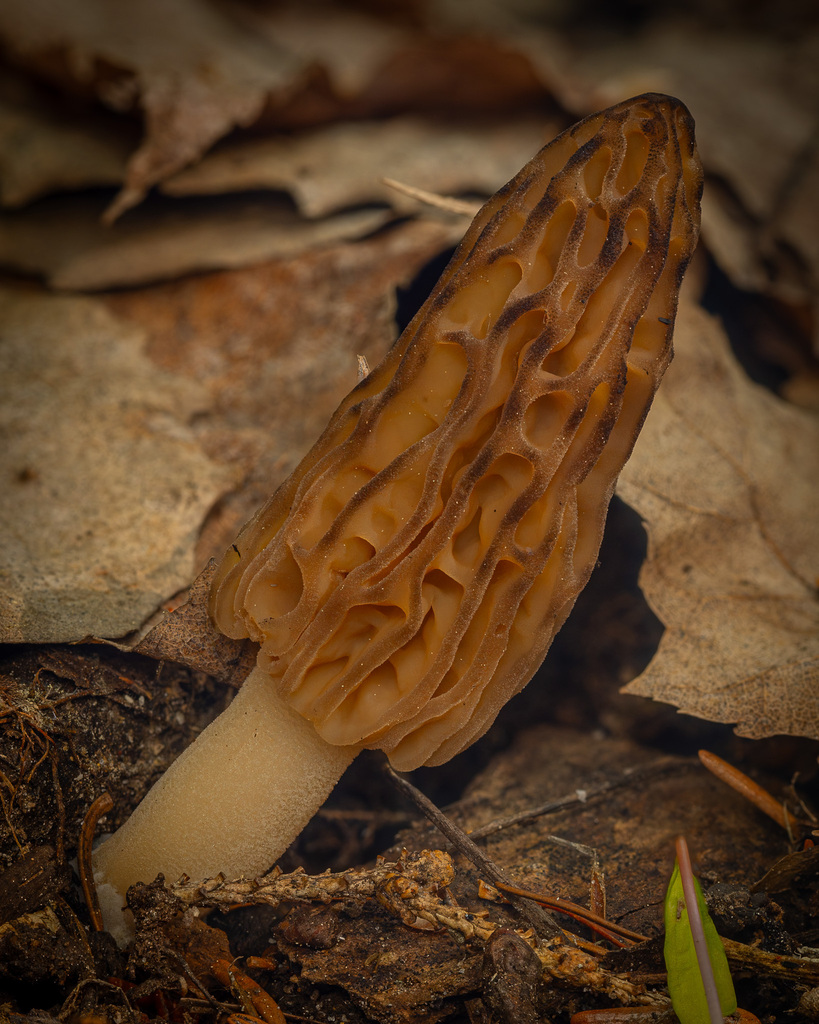
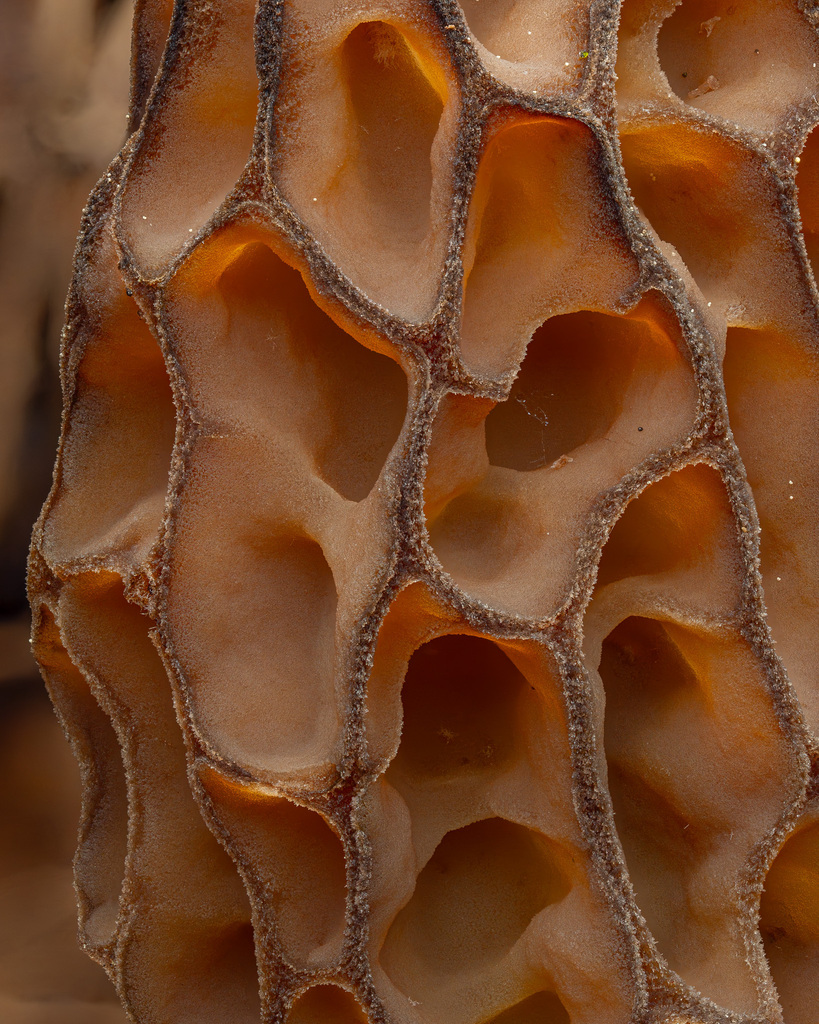
Jacob Fauvelle · CC BY 4.0
Related Species
Was this profile helpful?