
Aves · Pelecaniformes
Gohe
Ardea goliath
Least ConcernAlso known as: Goliath Heron
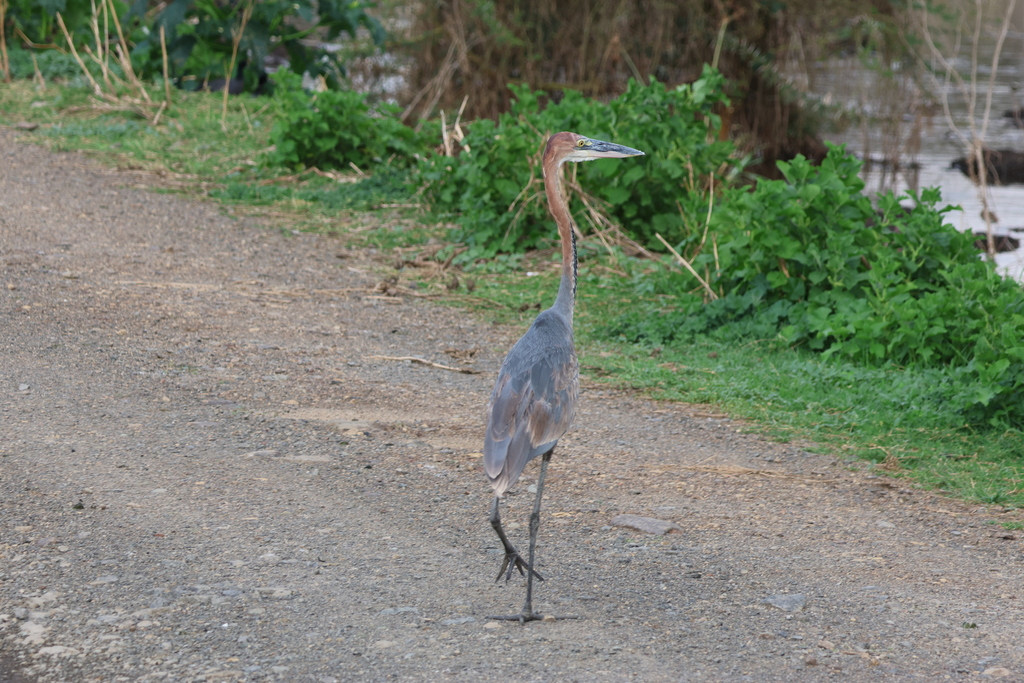
© emeadows · iNaturalist · CC BY-NC 4.0
The Gohe, or Ardea goliath, stands among Africa’s most imposing wading birds, a giant heron built for solitary hunting in remote wetlands and river systems. Its name reflects its sheer scale—a name earned through decades of observation across the continent’s largest marshes and floodplains. With a presence documented across 11 countries, primarily in sub-Saharan Africa, this species remains relatively secure in its current conservation status as Least Concern, though its dependence on vast, undisturbed wetland habitats makes it sensitive to environmental change.
What makes the Gohe particularly compelling is not merely its size, but its ecology—a specialist adapted to hunt in the deepest, most inaccessible waters where smaller herons cannot venture. Its behaviour, habitat preferences, and hunting strategy reveal a bird that has evolved to exploit a niche few other waders can access, making it a keystone species for understanding African wetland dynamics and an indicator of ecosystem health in the regions it inhabits.
Identification and Appearance
Ardea goliath, the Gohe or Goliath heron, is the world’s largest living heron. It stands 120–152 cm (3.9–5 feet) tall, with a wingspan reaching 185–230 cm (6–7.5 feet). The bird weighs 4–5 kg (8.8–11 pounds), making it a truly massive wading bird that dominates freshwater and wetland environments across Africa.
Plumage and Coloration
The Goliath heron displays slate-grey upperparts that contrast with a deep chestnut-brown head, neck, and underparts. This rich coloration, combined with its massive frame, makes it unmistakable in the field. The bird’s plumage is heavy and dense, suited to its aquatic lifestyle and enabling it to remain waterproof in prolonged wet conditions. During breeding season, the bird may develop additional plumage ornaments and deepened coloring on the neck and breast.
Distinctive Features
Several features aid identification. The Goliath heron possesses a heavy, long bill adapted for spearing large prey. Its long, thick neck supports the enormous head, and its legs are proportionately long and sturdy, enabling it to wade through deep water. The overall silhouette is distinctly larger and heavier than other African heron species, making distant identification possible even without clear color detail.
Distribution and Habitat
Ardea goliath, the Gohe, is found across sub-Saharan Africa with a strongly localized distribution. GBIF records document the species in 11 countries, with overwhelming concentration in southern and eastern Africa. South Africa accounts for the vast majority of observations (227 records), followed at considerable distance by Senegal (23 records), Kenya (15 records), and Gambia (11 records). The species also occurs in Uganda, Botswana, Zimbabwe, Namibia, Ethiopia, and Tanzania, though with very low observation counts in the latter five nations.
The species shows a striking seasonal pattern, with virtually all records clustered in January (263 observations) and February (37 observations). This pronounced peak suggests either a concentrated breeding season, a temporary influx during specific environmental conditions, or seasonal movement within its range. No observations are recorded across the remaining ten months of the year in the current dataset, indicating either true absence or incomplete survey coverage during other seasons.
Elevation data are not currently available for this species. The Gohe inhabits wetland and riverine environments typical of large heron species—freshwater and brackish water bodies where it hunts fish, amphibians, and aquatic invertebrates. Its preference for permanent or semi-permanent water systems across the African continent reflects its dependence on shallow margins and dense vegetation for foraging and nesting habitat.
Biology
Behavior
Ardea goliath, the Gohe or Goliath heron, is a solitary and highly territorial bird. It typically hunts alone rather than in groups, maintaining large individual ranges across wetland habitats. The species is largely nocturnal or crepuscular, becoming most active during dawn, dusk, and nighttime hours when it stalks prey in shallow waters. This nocturnal habit makes it less frequently observed than many other heron species despite its massive size.
When resting during daylight, the Gohe perches motionless in tall trees or reed beds, remaining hidden and inconspicuous. During feeding, it moves with the characteristic slow, deliberate gait of large herons, wading through water with minimal disturbance. The bird is known for its patience—it will stand frozen for extended periods, waiting for prey to come within striking range before launching a rapid, precise attack with its powerful bill.
Diet
The Gohe is a strict carnivore, feeding primarily on large fish species. It hunts in shallow freshwater and brackish wetlands, including swamps, floodplain lakes, and river systems. The bird’s massive bill and considerable reach allow it to capture and manipulate larger prey than most heron species can handle. Occasionally, it also takes amphibians, reptiles, and other wetland vertebrates, though fish dominate its diet.
Reproduction
The Gohe breeds during the rainy season when water levels rise and prey availability peaks. It nests solitarily or in small, loose colonies, constructing large stick nests high in trees above water. Clutch size typically consists of 2–3 eggs, which are incubated for approximately 25–30 days. Both parents share incubation and brooding duties, though precise breeding cycles vary depending on local rainfall patterns and water availability across its African and Asian range.
Chicks remain in the nest for 6–7 weeks before fledging, during which both parents provision them with regurgitated fish. Parental care is intensive, with adults defending nest sites vigorously against intruders. The extended breeding cycle and low reproductive rate typical of large herons mean that populations recover slowly from disturbance or habitat loss.
Conservation and Threats
Ardea goliath, the Gohe, is listed as Least Concern on the IUCN Red List. This classification reflects that the species does not currently face immediate risk of extinction and maintains stable populations across much of its range. However, this status does not mean the species is free from pressures—it indicates that current threats have not yet reduced populations to levels requiring urgent intervention.
Threats
While comprehensive threat data for this species is limited, wetland degradation and habitat loss remain the primary concerns for large herons throughout Africa and Asia. The Gohe depends on freshwater and brackish wetlands, floodplain lakes, and river systems for feeding and breeding. Drainage of wetlands for agriculture, dam construction, and water extraction can fragment populations and reduce prey availability. Pollution of waterways and pesticide use may also affect fish populations that form the bulk of the species’ diet.
Additional pressures include persecution in some regions where the species is perceived as a competitor with human fisheries, and disturbance to breeding colonies. Climate change poses an emerging threat, as alterations to rainfall patterns and water availability could disrupt the seasonal flooding cycles that many herons depend on for successful breeding.
Conservation Efforts
The Gohe benefits from protection under national wildlife laws in many African countries and from international agreements governing migratory birds. Protected wetland areas and Ramsar-designated sites provide refuge for breeding populations. However, enforcement of these protections and expansion of protected areas remain inconsistent across the species’ range.
Cultural Significance
The genus Ardea derives its name from classical mythology. In Roman tradition, Ardea was a city in Lazio near the early settlement of Rome, serving as the capital of the Rutuli people. According to ancient accounts, the city was destroyed and razed to ashes by Aeneas, embedding the name within the mythological narratives of Italy’s founding.
Herons hold deep symbolic significance in ancient Egyptian culture, where they were associated with the mythological Bennu bird. The Bennu represented immortality and divine endurance, functioning as a ba form that the deceased could assume to achieve eternal life. The bird was frequently invoked on heart scarabs to ensure favorable judgment by Osiris in the afterlife. Beyond the afterlife, the Bennu held ecological and cosmological meaning: it was depicted standing on high ground amid the annual Nile floods, serving as a herald of fertility and renewal. This symbolism paralleled the river’s life-giving overflow, which itself mirrored the cycle of cosmic regeneration. The extinct Bennu heron (Ardea bennuides derives its name directly from this mythological connection, though whether actual sightings of the species or cultural exchanges along ancient trade routes influenced the myth remains speculative.
Fun Facts
The Goliath Heron is one of Africa’s most imposing wading birds, and its sheer size makes it a subject of wonder among ornithologists and birdwatchers alike. Here are some striking facts about this remarkable giant of the wetlands.
- The Goliath Heron stands up to 1.5 metres tall with a wingspan exceeding 2 metres, making it the world’s largest heron species and rivalling some eagles in overall size.
- Unlike many heron species that hunt in flocks, the Goliath Heron is predominantly solitary and highly territorial, aggressively defending its hunting grounds from rivals of the same species.
- This species hunts primarily under cover of darkness, using its exceptional eyesight to locate prey in low-light conditions and reducing competition with other large wading birds.
- The Goliath Heron’s diet consists of large fish, frogs, reptiles, and occasionally small mammals—it can swallow prey items that would be impossible for smaller heron species to manage.
- Its deep, booming call is one of the loudest vocalizations of any African bird, audible for up to 1 kilometre across open wetlands and used to establish territory.
- Goliath Herons are vulnerable to wetland drainage and habitat fragmentation, as they require vast, undisturbed freshwater systems to maintain viable populations across their range.
- The species exhibits remarkable patience while hunting, often standing motionless for extended periods before striking with explosive speed and precision at passing prey.
Ecology
Habitats
Diet
Behavior
Conservation Status
LC (Least Concern) · NT · VU · EN · CR · EW · EX
Photo Gallery
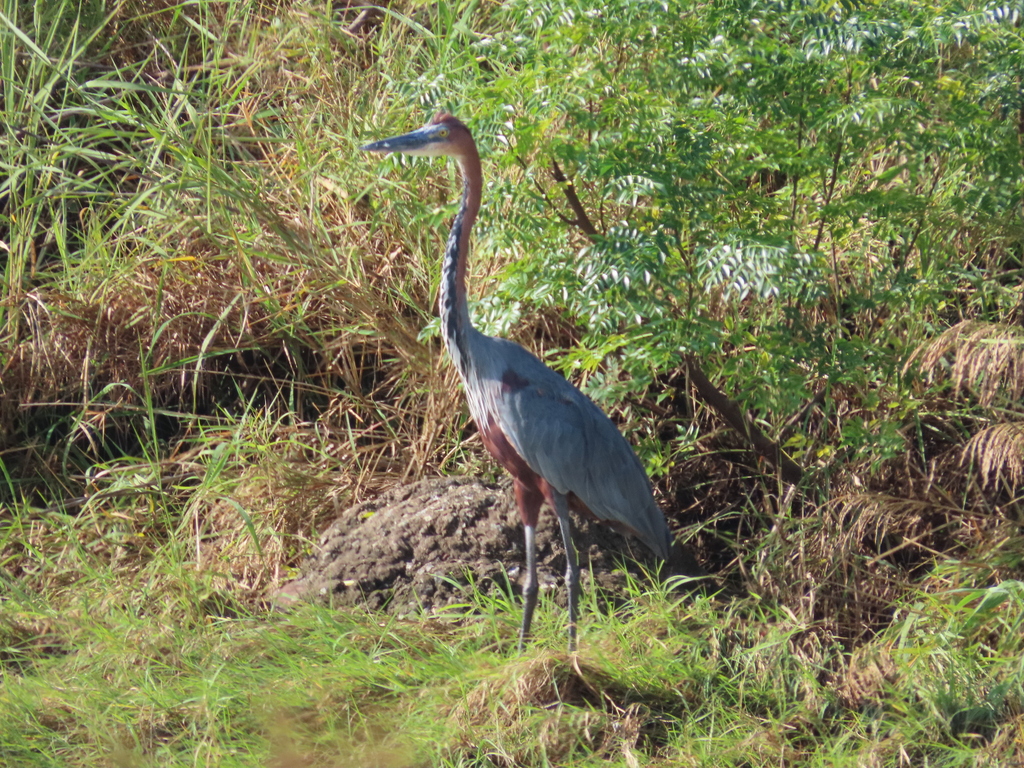
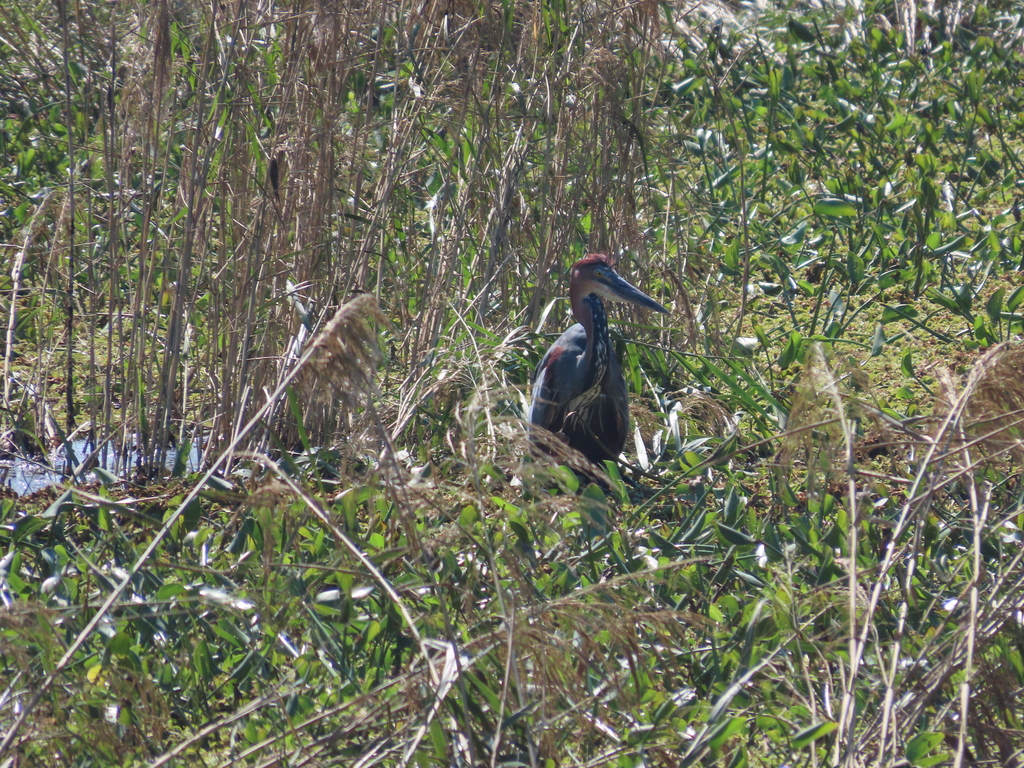
emeadows · CC BY-NC 4.0
Related Species
Was this profile helpful?