Native only to the high mountains south and east of the Black Sea, the Nordmann fir thrives at elevations between 900 and 2,200 meters, where annual rainfall exceeds 1,000 millimeters. This narrow band of cool, wet, high-altitude terrain in Turkey, Georgia, and the Russian Caucasus is the only place the species grows in the wild.
Abies nordmanniana, known as the Nordmann fir or Caucasian fir, is a coniferous tree in the family Pinaceae. It is currently assessed as Least Concern by the IUCN, reflecting a secure status in its native mountain habitat.
Despite its remote origins, this fir has become one of the most familiar trees in the world each winter, and the sections below explore both its striking form and its remarkable spread far beyond the Caucasus.
Identification and Appearance
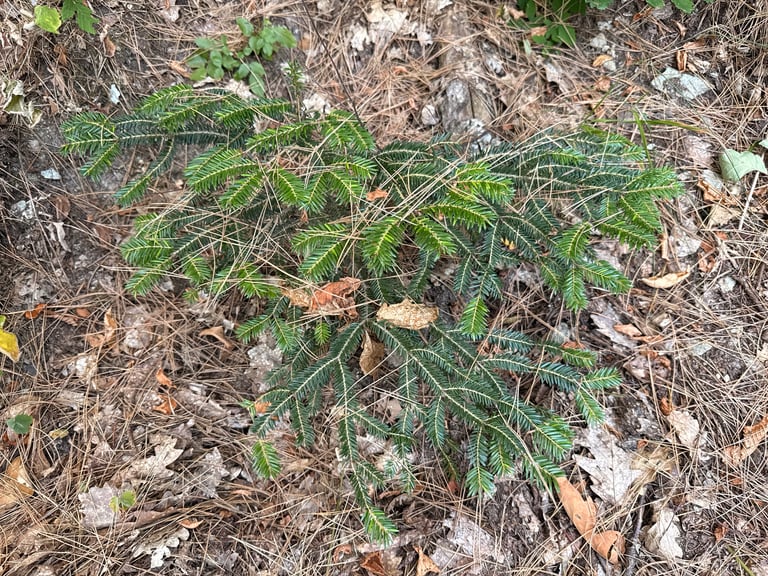
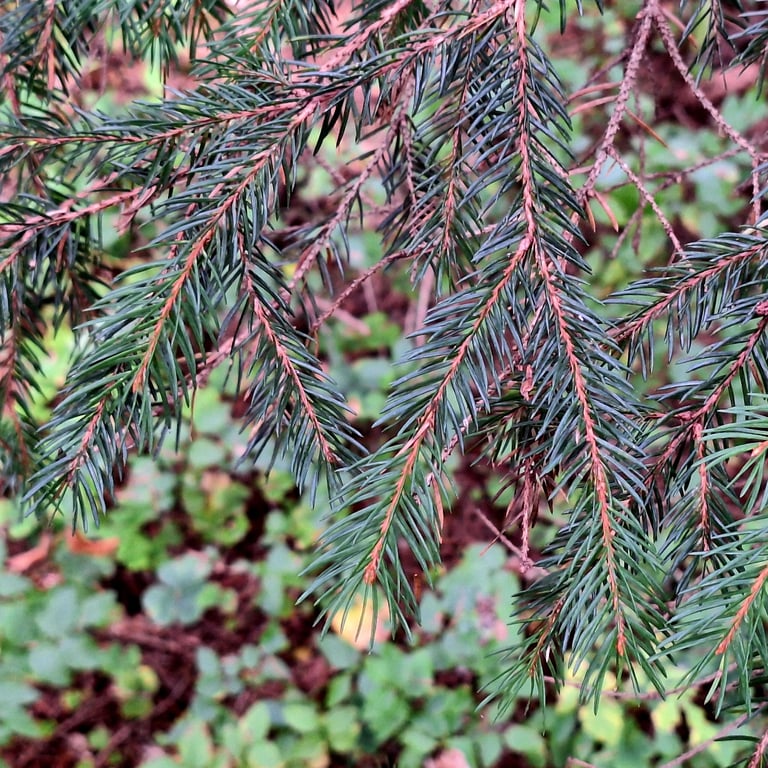
The single most useful clue to identifying the Nordmann fir is its needle: flattened, 1.8 to 3.5 centimeters long, glossy dark green above, and marked underneath with two distinct blue-white bands of stomata. The needle tip is usually blunt and often slightly notched, though pointed tips can appear on vigorous shoots of young trees.
This is a large evergreen conifer, typically reaching 55 to 61 meters in height with a trunk diameter of up to 2 meters. Exceptional individuals in the Western Caucasus Reserve have been measured at 78 meters, and even 85 meters in one case, making them the tallest trees recorded in the Caucasus, Anatolia, the Russian Federation, and continental Europe.
The cones are equally distinctive: 10 to 20 centimeters long and 4 to 5 centimeters broad, built from roughly 150 to 200 scales. Each scale carries an exserted bract and two winged seeds, and the entire cone disintegrates on the tree once mature, scattering its seeds rather than falling intact.
Distribution and Habitat
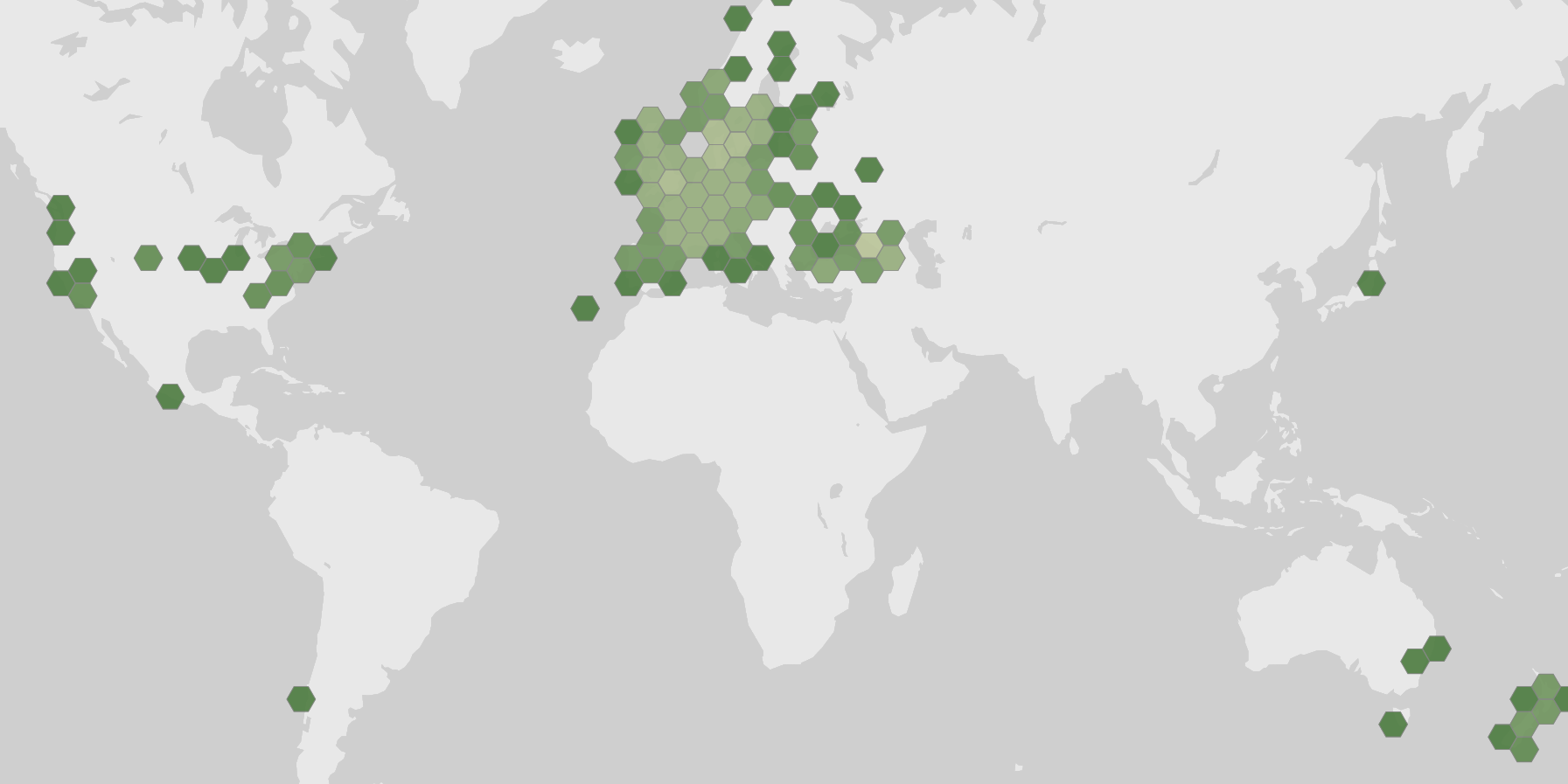
Observation records for the Nordmann fir show a strong seasonal pattern, rising from a low of 170 sightings in December to a peak of 583 in July before tapering off again through the autumn. This midsummer peak, spanning roughly May through September, likely reflects when the tree's steep, high-elevation Caucasus habitat is most accessible to observers and botanists rather than any change in the tree's own abundance.
These figures come from GBIF occurrence data, which record presence rather than true abundance, population size, or the species' complete native range. The sharp drop in observations during the winter months is consistent with reduced access to mountain terrain rather than the tree disappearing from its habitat.
Uses and Human Relationships
The Nordmann fir is one of the most widely grown Christmas tree species in the world, chosen for its attractive, glossy foliage and needles that are neither sharp to the touch nor prone to dropping as the tree dries out over the holiday season.
It is also planted as an ornamental tree in parks and large gardens; the cultivar 'Golden Spreader' has received the Royal Horticultural Society's Award of Garden Merit. In parts of Europe, the species has been used in reforestation projects aimed at buffering forests against expected decline linked to climate change.
The wood itself is soft and white, and is used in general construction and in papermaking.
Fun Facts
- A subspecies known as the Turkish fir, Abies nordmanniana subsp. equi-trojani, grows in the western Pontic Mountains of northwestern Turkey, including Uludağ, and is sometimes treated as its own species, Abies bornmuelleriana.
- Beyond its ornamental and commercial popularity, the Nordmann fir holds cultural significance within its native Caucasus range, independent of its global role as a Christmas tree.
Conservation status
- LC
- NT
- VU
- EN
- CR
Least Concern
Ecology
Habitat
- Mountain
Growth habit
- Tree