A clone of Norway spruce named Old Tjikko, growing in the Fulufjället mountains of Sweden, has a root system carbon-dated at 9,550 years old, making it one of the oldest living trees known.
Picea abies, commonly called the Norway spruce or European spruce, is a large evergreen conifer in the pine family (Pinaceae), native to Northern, Central and Eastern Europe. The IUCN lists the species as Least Concern, reflecting its wide native range and extensive cultivation.
Beyond its longevity, the tree's economic and cultural reach — from Christmas trees to violin soundboards — makes it one of Europe's most consequential conifers.
Identification and Appearance
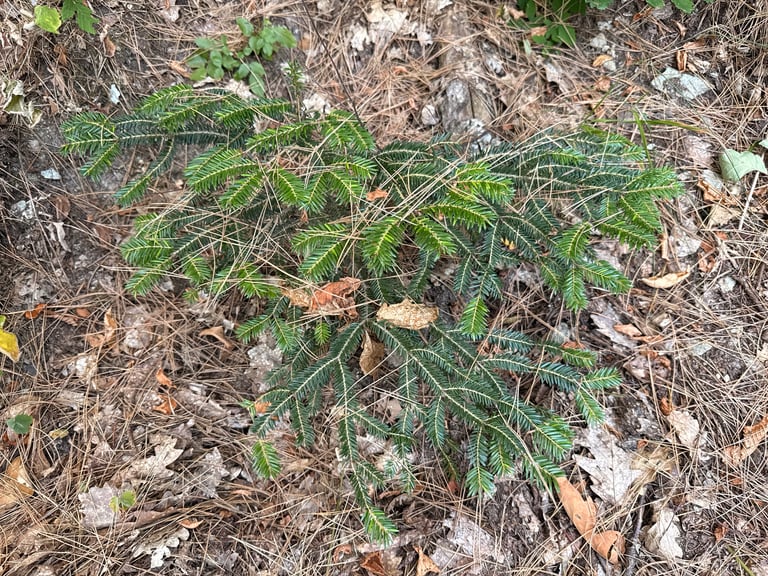
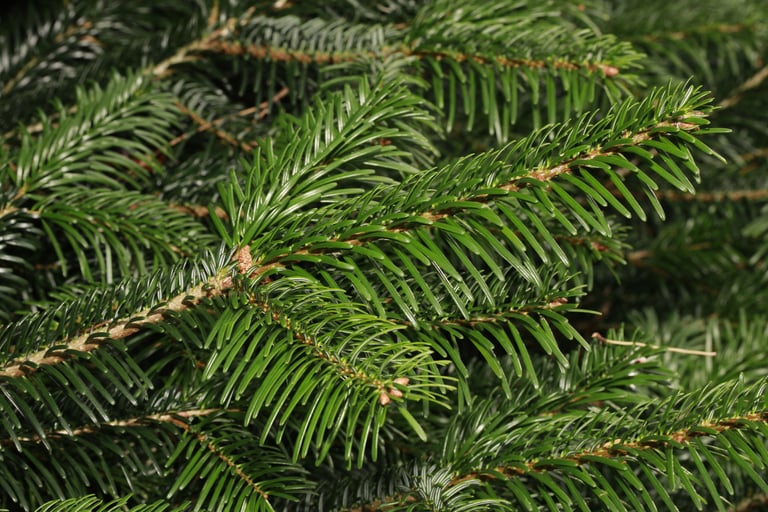
The most reliable field mark is the needle: short, blunt-tipped, quadrangular in cross-section, 12–14 mm long and dark green on all four sides, without the pale stomatal stripes seen on many other spruces.
Norway spruce is a large tree, reaching 35–55 m (115–180 ft) in height with a trunk diameter of 1 to 1.5 m. It grows quickly while young, adding up to 1 m of height per year for its first 25 years, then slows once it passes 20 m. The tallest measured individual, standing 62.26 m (204.3 ft), grows near Ribnica na Pohorju in Slovenia.
Shoots are orange-brown and hairless (glabrous). The seed cones are the longest of any spruce, 9–17 cm, green or reddish when young and ripening brown 5 to 7 months after pollination; their scales taper to bluntly or sharply triangular points. Seeds are black, 4–5 mm long, each carried on a pale brown wing about 15 mm.
Where its range meets the Siberian spruce (Picea obovata) in Russia, the two hybridize; the hybrid, known as Picea × fennica, can be told apart by hairy shoots and cones with smoothly rounded, rather than pointed, scales.
Distribution and Habitat
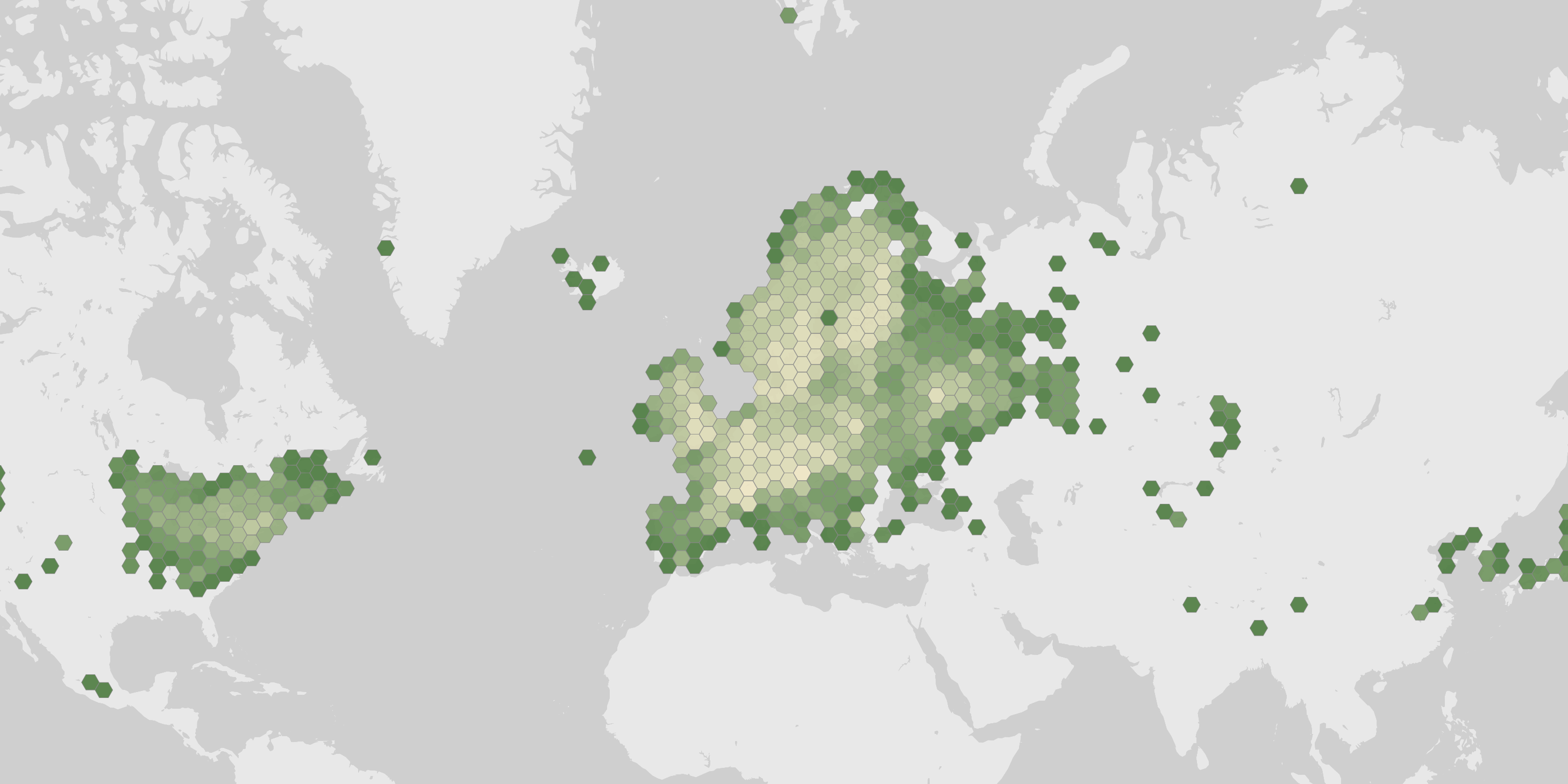
Norway spruce ranges across most of Europe, from Norway in the northwest — reaching just north of 70° N, within the Arctic — east through Poland and the Baltic states, and south through the mountains of central Europe to the western Alps and the Carpathians and Balkans, reaching the northern tip of Greece. Its eastern limit in Russia is blurred by extensive hybridization with Siberian spruce and is usually placed at the Ural Mountains, though Siberian-influenced trees appear as far west as northern Finland.
It thrives in cool, humid climates on rich, well-drained sandy loams but tolerates almost any soil short of permanent waterlogging, including podzols and even bogs. Elevation limits vary by region: up to 2,000 m in the Bavarian Alps, 1,500 m in the Black Forest and 1,051 m in the Fichtel Mountains. In Switzerland it dominates the cool, humid 'subalpine spruce' belt up to about 1,670 m, often alongside European silver fir.
In its native range the species grows in pure stands or mixed with Scots pine, European beech and silver fir, with scattered aspen and hairy birch in early successional stands. Groundlayer plants such as bilberry, lingonberry, heather and woodsorrel mark good spruce sites, while mature stands typically carry little understory vegetation at all.
GBIF observation records peak sharply from June through August, with July alone accounting for over 210,000 logged sightings — a pattern that reflects when people are out observing trees rather than the tree's actual abundance. The species has also been cultivated well outside its native range, including plantings in parts of China such as Beijing and Shandong.
Growth and Form
Norway spruce can achieve extraordinary age through clonal growth rather than a single trunk's survival. A specimen called Old Tjikko in Sweden has renewed its trunk repeatedly from the same root system for millennia, with that root system carbon-dated to 9,550 years — making the clone one of the oldest living organisms known, though its visible trunk is far younger.
Among individually tree-ring-dated specimens, the oldest confirmed Norway spruce, found in a nature reserve in Buskerud County, Norway, in 2012, was 532 years old. That figure is still dwarfed by clonal life spans: Pando, a single quaking aspen stand of 47,000 genetically identical stems, is estimated at 14,000 to one million years old, illustrating the difference between the oldest single, non-cloned tree — a Great Basin bristlecone pine over 5,000 years old — and the oldest clone.
Uses and Human Relationships
Norway spruce is one of Europe's most economically important conifers, grown for softwood timber and paper pulp, and it is the classic Christmas tree of Northern Europe. Each year Oslo gifts a Norway spruce to London's Trafalgar Square, to Edinburgh, and to Washington, D.C., in continued gratitude for Allied support during the Second World War.
Instrument makers prize its wood as a tonewood, especially for violin soundboards; a slow-grown Alpine form called Haselfichte (hazel-spruce), recognized by UNESCO as intangible cultural heritage, was the wood Stradivari used for his instruments. The Norwegian company Borregaard also processes spruce wood into vanillin, a substitute for natural vanilla flavoring. Dozens of dwarf and ornamental cultivars, from the towering 'Inversa' to the low, spreading 'Little Gem', are grown in parks and gardens.
In Central and Northern European folklore the tree stands for endurance, resilience and steadfastness, qualities drawn from its ability to survive cold, mountainous forests, and in Scandinavian tradition it carries associations with protection. In ancient Greek mythology the spruce was sacred to Artemis, goddess of the hunt and the moon. Its resin was also used in Nordic folk medicine to treat wounds and skin disorders.
Fun Facts
- In Central and Northern European folklore, the Norway spruce symbolizes endurance and steadfastness, traits linked to its survival in harsh mountain forests.
- Ancient Greek mythology placed the spruce under the protection of Artemis, goddess of the hunt and the moon.
- Beyond its mythological ties, the tree has long carried broader symbolic weight in European culture, standing for growth, death and rebirth alike.
Conservation status
- LC
- NT
- VU
- EN
- CR
Least Concern
Ecology
Habitat
- Wetland
- Forest
- Mountain
Growth habit
- Tree