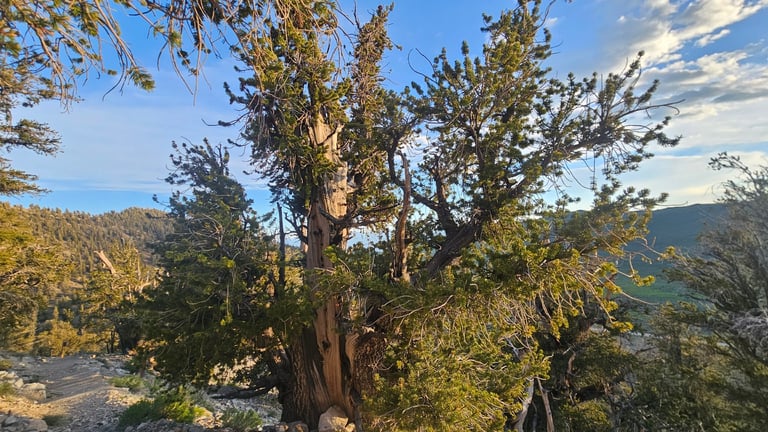
Some individual European larches confirmed to be nearly 1,000 years old, with trees possibly reaching 2,000 years, making Larix decidua one of the longest-lived trees in Europe.
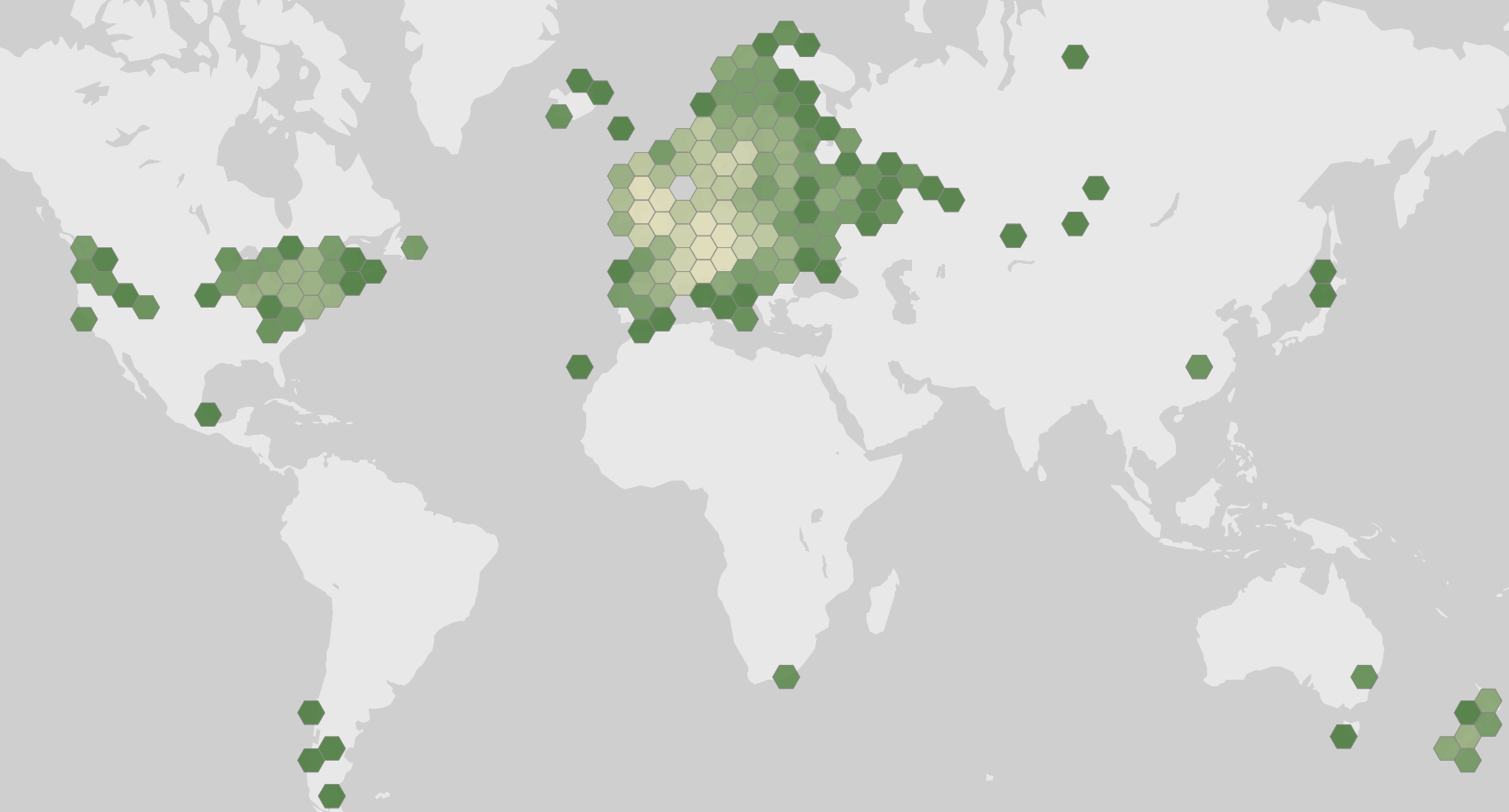
The European larch is native to the mountains of central Europe, growing across the Alps and the Carpathian Mountains, with a few isolated lowland populations surviving in northern Poland. The IUCN lists it as Least Concern, reflecting a species that remains widespread and secure across its montane range.
Beyond its unusual habit of losing its needles, the tree's extreme cold tolerance and long life make it a striking presence at the tree line, where few other conifers can survive.
Identification and Appearance
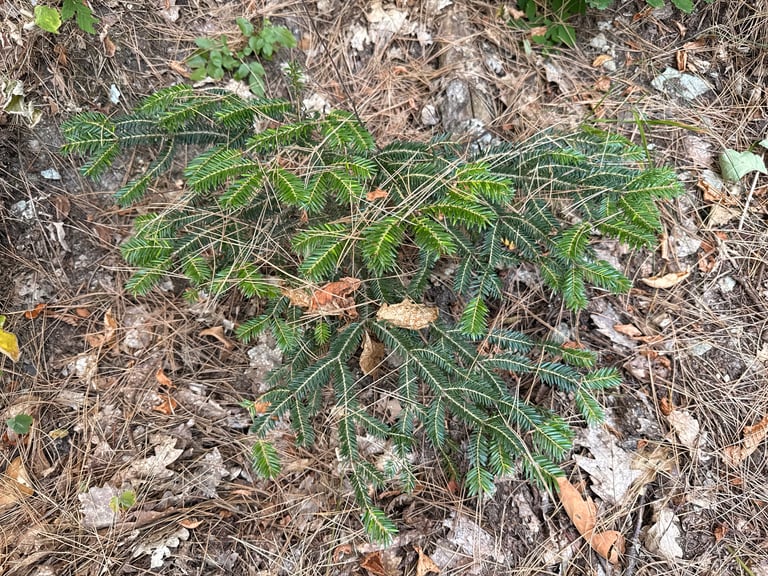
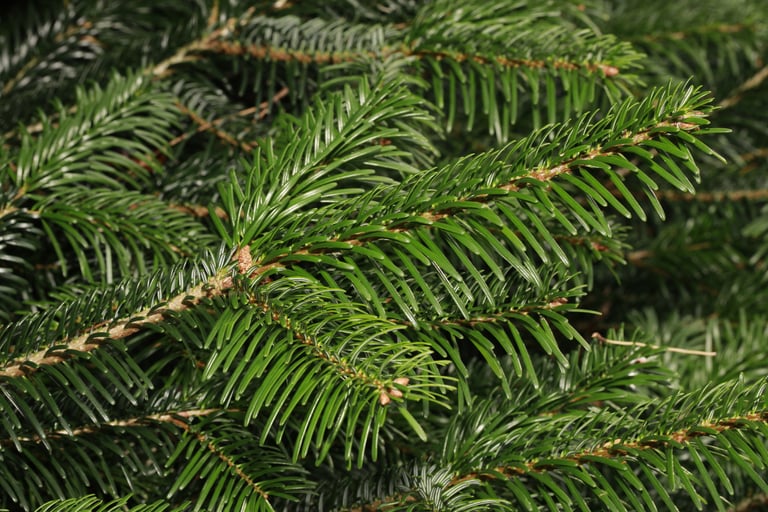
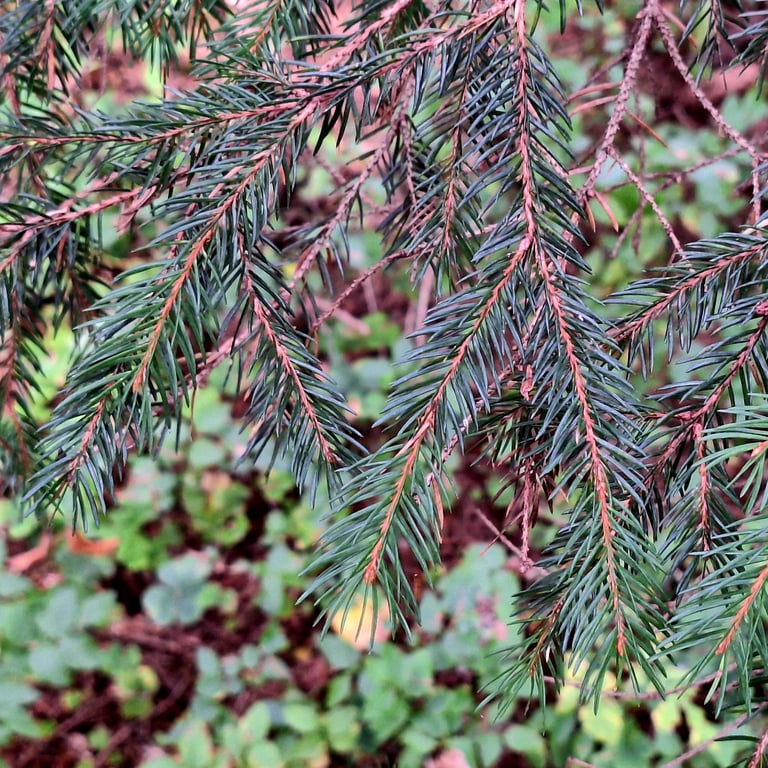
The clearest way to recognize Larix decidua is by its light green, needle-like leaves, 2 to 4 centimeters long, which turn bright yellow in autumn before dropping and leaving the shoots bare until spring — a trait unusual among conifers. The tree itself is medium to large, typically reaching 25 to 45 meters tall with a trunk up to 1.5 meters in diameter, though exceptional old specimens have grown far larger.
The crown starts out conic in young trees and becomes broad and often irregular with age. Branches are level to upswept, while the side branches frequently droop. A distinctive feature is the dimorphic shoot structure: long shoots 10 to 50 centimeters long carry several buds, while short shoots only 1 to 2 millimeters long bear a single bud, giving the foliage its characteristic tufted look.
Cones are erect and ovoid-conic, 2 to 6 centimeters long, made up of 10 to 90 seed scales that stay upright or only slightly curve inward rather than reflexing outward. They appear bright pinkish-red at pollination, shift to green flushed with red or purple as they mature, then turn brown and open to release seeds 4 to 6 months later. Old cones often persist on the branches for years, fading to a dull grey-black.
Larix decidua closely resembles the Siberian larch, Larix sibirica, but the two can be told apart by their cone scales: Siberian larch has densely hairy (pubescent) scales, while European larch's scales are hairless or only thinly pubescent.
Distribution and Habitat
European larch is a subalpine and montane species, centered on the Alps and the Carpathian Mountains, with small disjunct lowland populations in northern Poland. In the central Alps it grows from as low as 1,400 feet (427 m) up to 6,500–8,000 feet (1,981–2,438 m), reaching among the highest tree-line elevations of any Alpine conifer at up to 2,400 meters, though it is most abundant between 1,000 and 2,000 meters.
It often grows alongside Swiss stone pine and mountain pine at high elevations, sometimes forming pure stands. At mid-elevations it mixes with Norway spruce and European silver fir, and at the lowest elevations it can be found growing with European beech.
The species needs uniformly moist, deep, fertile soil and performs poorly on pure sand or waterlogged ground. It tolerates a fairly wide soil pH range, from as low as 4.0 up to 7.8, but avoids poorly drained or very wet sites; plantations established at lower, moister elevations are more prone to larch canker.
Monthly observation counts show a strong seasonal pattern, rising sharply from a low in December and January to a pronounced peak in July, before declining again through autumn. This pattern likely reflects when the tree's foliage is most visible and identifiable rather than any change in actual population, since these figures record presence observations only, not abundance or a complete range.
Ecology and Relationships
European larch seeds are an important food source for several bird species, notably siskin, redpoll, and citril finch, while capercaillie feed on its buds and immature cones. This makes the tree a seasonal food resource within its subalpine forest communities.
Its needles are the sole known food for caterpillars of the case-bearer moth Coleophora sibiricella, and the caterpillars of the tortrix moth Cydia illutana feed on its cone scales, linking the tree closely to these specialist insects.
The species is also susceptible to larch canker, caused by the fungus Lachnellula willkommii, a disease that becomes more damaging when trees are planted on wetter, lower-elevation sites outside their preferred well-drained mountain soils.
Uses and Human Relationships
In Siberian and Lapp mythology, the larch was recognized as the 'world tree,' a role tied to shamanic traditions in which practitioners were believed to connect with spirits through ritual. European folklore held that the larch carried protective powers against evil spirits, a force said to be released when the wood was burned or worn on the body.
The tree has a long history of use as an ornamental and forestry species. It was first cultivated in Britain around 1629, and John Evelyn later promoted its wider planting; three successive Dukes of Atholl planted it extensively in Scotland, with the fourth Duke publishing "Observations on Larch" in 1807. Some trees planted by the second Duke at Dunkeld in 1737, and even older specimens from 1725 at Kailzie near Peebles, still stand today. It is now naturalized across northern Europe and cultivated widely in southern Canada and the northeastern United States, where it is also used to reforest surface mines in the northern Appalachians.
The wood is tough, durable, and flexible when cut into thin strips, making it prized for yacht building as knot-free "boatskin larch" from old, carefully pruned trees; small poles are also widely used for rustic fencing. Because of its fast juvenile growth and pioneering character, it is used in forestry as a preparatory or nurse species on abandoned or disturbed land, and it readily hybridizes with Japanese larch to produce the faster-growing, canker-resistant Dunkeld larch. The species is also popular in bonsai cultivation, though in New Zealand, where it was once planted for erosion control, it has become classified as an invasive wilding conifer.
Fun Facts
- The Roman architect Vitruvius was the first to mention European larch as a building material, describing its use alongside Lebanon cedar in ancient construction.
- In Siberian and Lapp mythology, the larch was revered as the 'world tree,' a spiritual axis connecting the human and spirit realms through shamanic ritual.
- Individual trees have been confirmed to live close to 1,000 years, with ages approaching 2,000 years considered likely, placing this species among Europe's longest-lived conifers.
Photos
Photographs from via iNaturalist, licensed under CC0 1.0., by Cyndy Sims (Parr) via iNaturalist, licensed under CC BY 4.0., by Ondřej Křivan via iNaturalist, licensed under CC BY 4.0., by Codrin Bucur via iNaturalist, licensed under CC BY 4.0., by Mattis via iNaturalist, licensed under CC BY 4.0., by James Cunningham via iNaturalist, licensed under CC BY 4.0., by Elias Freyhof via iNaturalist, licensed under CC BY 4.0., by Viktor Strenada via iNaturalist, licensed under CC BY 4.0., by Deepali Semwal via iNaturalist, licensed under CC BY 4.0., by Jeff Hansen via iNaturalist, licensed under CC BY 4.0., by guywallbanks via iNaturalist, licensed under CC BY 4.0., by Hilary Rose Dawson via iNaturalist, licensed under CC BY 4.0., by Tony KM via iNaturalist, licensed under CC BY 4.0., by Wendy Herniman via iNaturalist, licensed under CC BY 4.0., and by Katrin Simon via iNaturalist, licensed under CC BY 4.0., credited on each photo.
Ecology and classification
Classification
- Phylum
- Tracheophyta
- Class
- Pinopsida
- Order
- Pinales
- Family
- Pinaceae
- Genus
- Larix
- Species
- Larix decidua
Sources
- GBIF Species names and classification
- iNaturalist Photos
- Wikidata Common names and conservation status
- Wikipedia Summary extract
- Encyclopedia of Life Habitat, diet and behavior traits