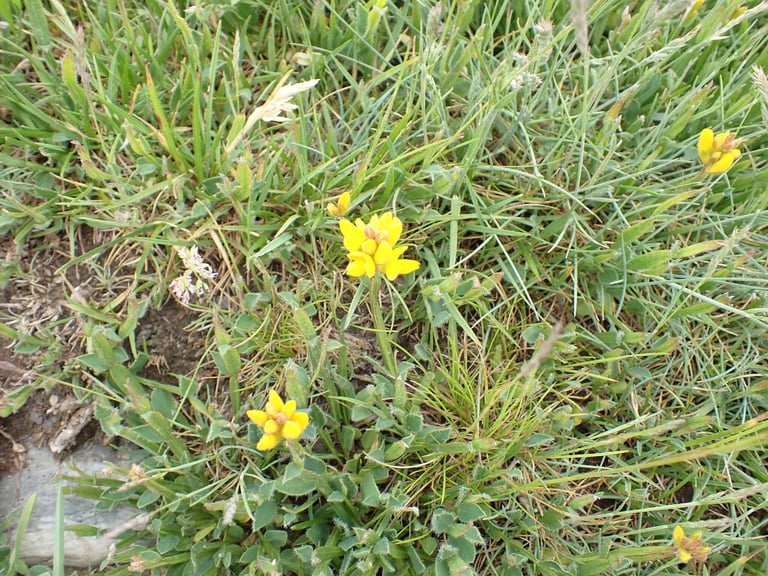
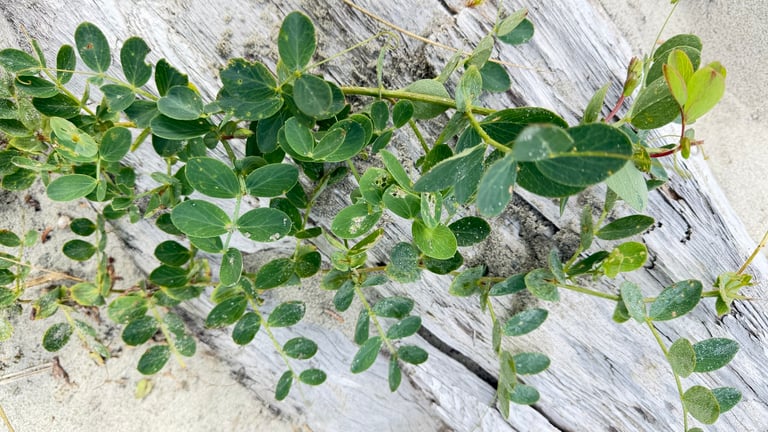
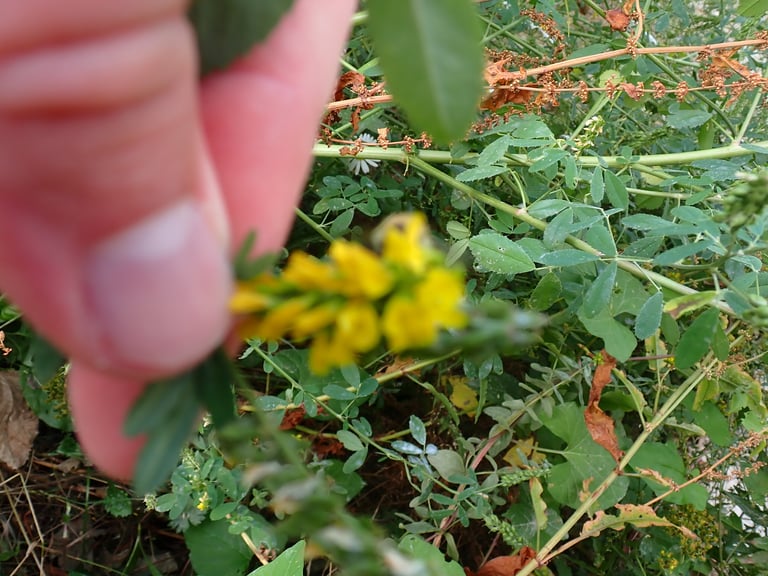
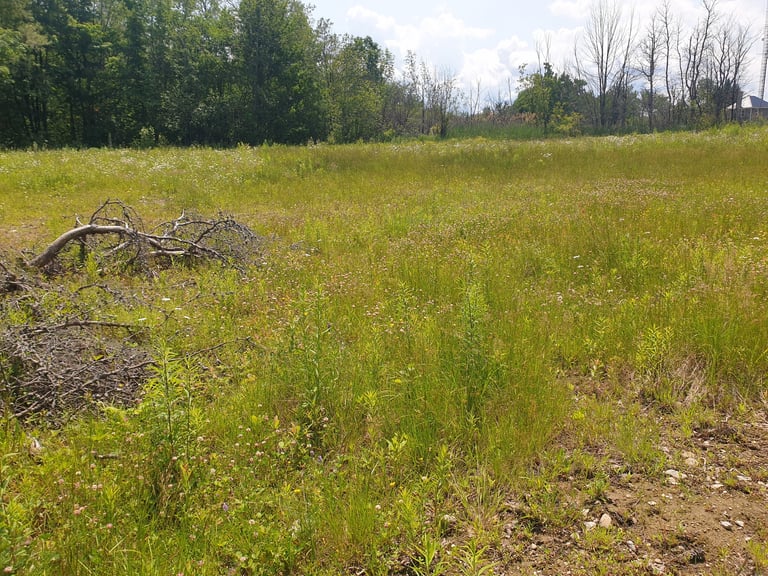
Sydney golden wattle is considered invasive in several parts of the world, yet it is a native of southeastern Australia. It belongs to the legume family Fabaceae and is classed as Least Concern by the IUCN.
This species grows as a shrub or erect, spreading tree. Its leathery pods often look like a string of beads, and its spikes of golden yellow flowers make it easy to recognize in the wild and in gardens.
The plant is worth reading about because it shows how a native coastal species can spread far beyond its home range. It has been planted for dune stabilization and screening, and it has escaped into the wild on several continents.
Identification and Appearance
The narrow, flattened phyllodes are the most useful field mark. They are straight or slightly curved, usually 4 to 25 cm long and 1 to 3.5 cm wide, with two to four prominent veins and a gland 3 to 8 mm above the base.
The branchlets are smooth, and the bark is grey and smooth or finely fissured. The plant typically grows 1 to 10 meters tall.
The flowers are golden yellow, sometimes paler, and grow in one or two mostly stalkless spikes 2 to 5 cm long in the leaf axils. The pods are mostly cylindrical, straight to strongly twisted, 5 to 15 cm long and 3 to 6 mm wide, with a thin, leathery or papery texture that turns brittle when dry.
The seeds are elliptic, 4 to 6 mm long and shiny, with a large, skirt-like aril.
Distribution and Habitat
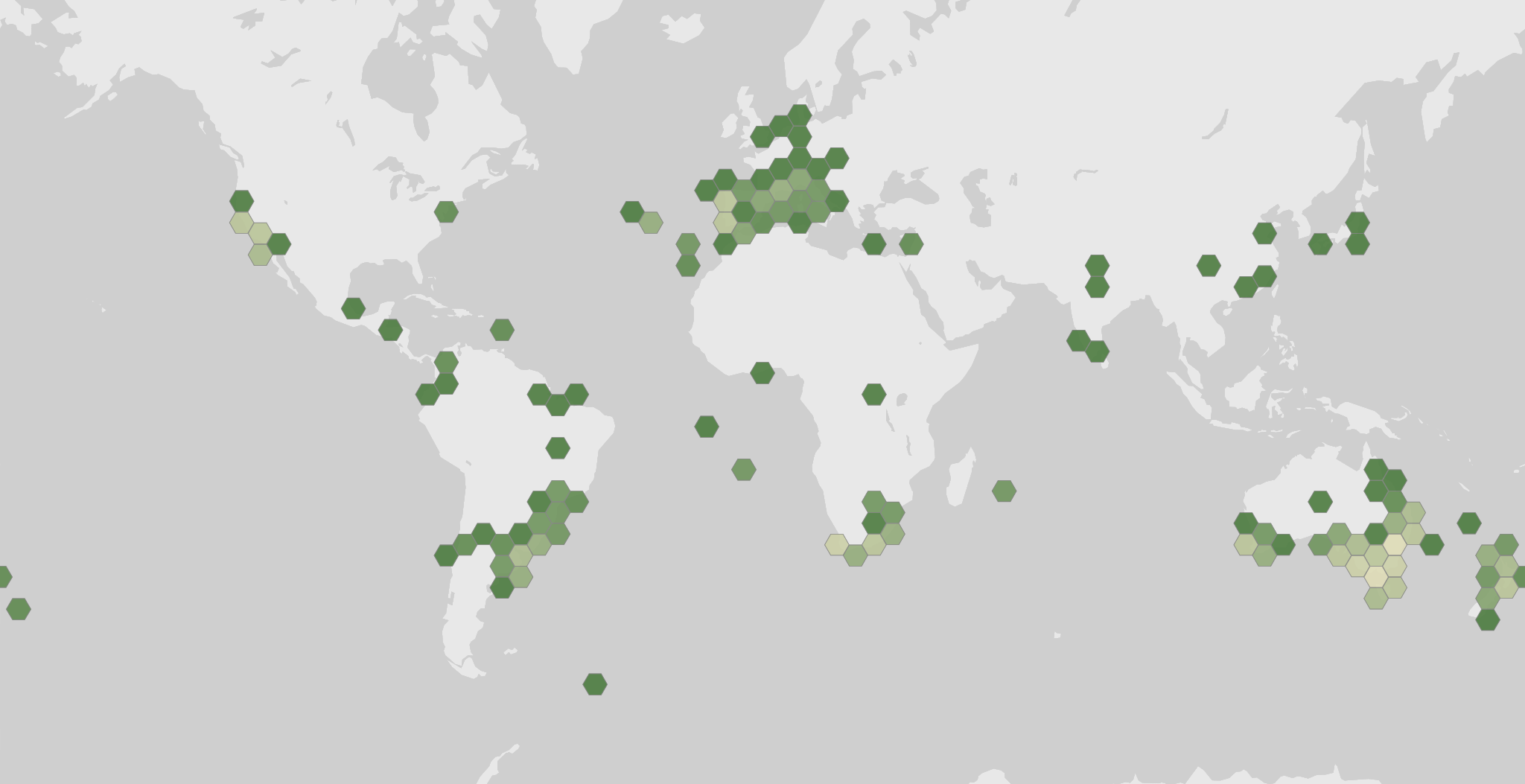
Sydney golden wattle is native to southeastern Australia, from the extreme southeast of Queensland through eastern New South Wales, Victoria, southeastern South Australia and Tasmania. In New South Wales it is common on the tablelands and along the coast.
The plant grows in a variety of habitats there, including foredunes, sclerophyll woodland, and coastal heath and scrub. In South Australia it occurs on the Eyre, Yorke and Kangaroo Island peninsulas and in the southern Mount Lofty Ranges, and across the south-east it is mostly restricted to sand dunes. In Tasmania a subspecies, sophorae, grows in coastal sand dunes.
Outside its native range, the species has become naturalized in coastal areas of southwestern Western Australia, from around Perth in the north to around Albany in the south. It is thought to have spread from escapes from gardens or from revegetation plantings.
It has also established in many countries outside Australia, including New Zealand, South Africa, Portugal, Spain, Italy and India.
Growth and Form
Sydney golden wattle is a perennial that grows rapidly. It is a shrub or erect, spreading tree, typically 1 to 10 meters tall, and it reaches a mature height of about 6.1 meters.
Its growth is fast enough that it is used where quick cover is needed. Its branchlets stay smooth throughout its life.
Ecology and Relationships
Insects visit the flowers, including bees, wasps, flies, beetles and butterflies, but these visits do not make them pollinators.
The plant's main parasites include a wasp, Trichilogaster acaciaelongifoliae, and the bacterium Agrobacterium tumefaciens.
The species grows in sand dunes, sclerophyll woodland and coastal heath, where it helps hold loose sand in place.
Cultivation and Care
Sydney golden wattle tolerates a range of conditions. It grows in soils with a pH from about 6 to 8.3 and copes with many soil types.
The plant handles both shade and drought well, and it is frost hardy, surviving temperatures down to about -10 degrees Celsius. It suits low-maintenance sites such as road batters, and it is valued as a hedge or screening plant.
It is regarded as a hardy, fast-growing species that is suitable for hydroseeding on banks to stabilize soil.
Uses and Human Relationships
Sydney golden wattle is widely cultivated in subtropical regions. It is planted to prevent soil erosion and to secure uninhabited sand in coastal areas, mainly where hard frosts are rare.
People have used its parts in several ways. The flowers yield a yellow dye, the pods yield a green dye, and the wood and bark have modest uses, with the bark used in tanning, mainly for sheepskin. In Tasmania, ripening pods and seeds were eaten.
In Southern California it is widely used as a street canopy tree. It grows quickly, reaching about five meters within a year or two of planting, and tolerates drought and heavy pruning.
Photos
Photographs from via iNaturalist, licensed under CC0 1.0., by Arnim Littek via iNaturalist, licensed under CC BY 4.0., by Emily Turteltaub Nelson via iNaturalist, licensed under CC BY 4.0., by Benjamin Fredlund via iNaturalist, licensed under CC BY 4.0., by Duarte Frade via iNaturalist, licensed under CC BY 4.0., by Tom Field via iNaturalist, licensed under CC BY 4.0., by Bee via iNaturalist, licensed under CC BY 4.0., by Barry Langdon-Lassagne via iNaturalist, licensed under CC BY 4.0., and by Shelomi Doyle via iNaturalist, licensed under CC BY 4.0., credited on each photo.
Ecology and classification
Classification
- Phylum
- Tracheophyta
- Class
- Magnoliopsida
- Order
- Fabales
- Family
- Fabaceae
- Genus
- Acacia
- Species
- Acacia longifolia
Sources
- GBIF Species names and classification
- iNaturalist Photos
- Wikidata Common names and conservation status
- Wikipedia Summary extract
- Plants of the World Online Native range, life form and climate (WCVP)
- USDA Plants US plants: growth habit and growing conditions
- GloBI What it eats, what eats it, parasites and pollinators
- Wardeh et al. 2015 (EID2)
- DoPI