The winged broom (Genista sagittalis) gets its name from its unusual stems: flattened and edged with wing-like ridges, giving the plant an arrow-shaped, almost sculptural look even without leaves doing much of the visual work.
This low-growing subshrub belongs to the pea family, Fabaceae, and is native to central and southern Europe, stretching from France and Spain through Germany, Italy, the Balkans, Ukraine, and into Anatolia in northwestern Türkiye. It carries an IUCN status of Least Concern.
Beyond its odd architecture, the winged broom draws in a wide range of bees and serves as food for birds and moths, making it a small but active part of its native grassland and scrub communities.
Identification and Appearance
The most useful field mark for Genista sagittalis is its winged, arrow-shaped stems — flattened, ridged stems that give the plant its common names, arrow-jointed broom and winged broom. This feature alone separates it from many other low-growing legumes at a glance.
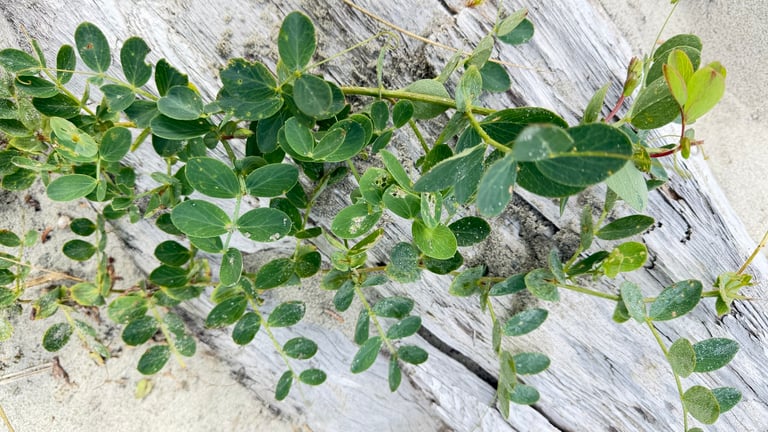
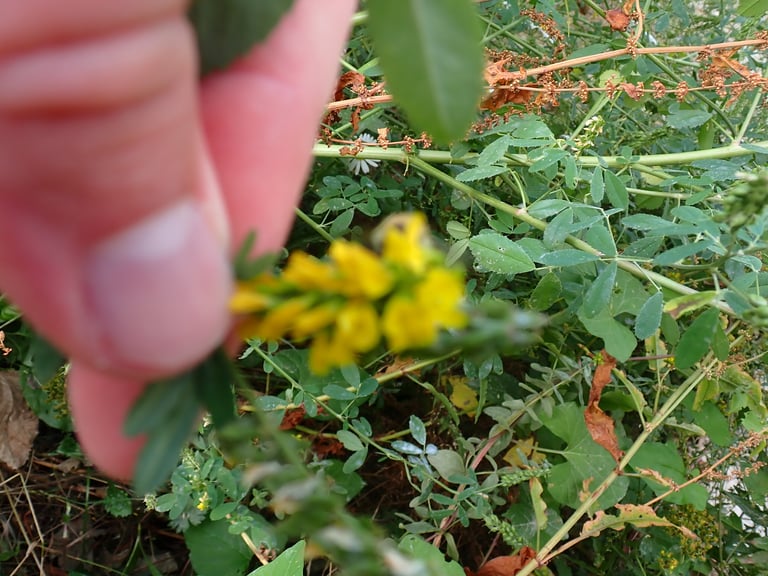
As a subshrub, it stays close to the ground, forming small clumps or mats rather than an upright bush. Its flowers follow the typical pea-family form, borne in small yellow clusters along the winged stems.
Distribution and Habitat
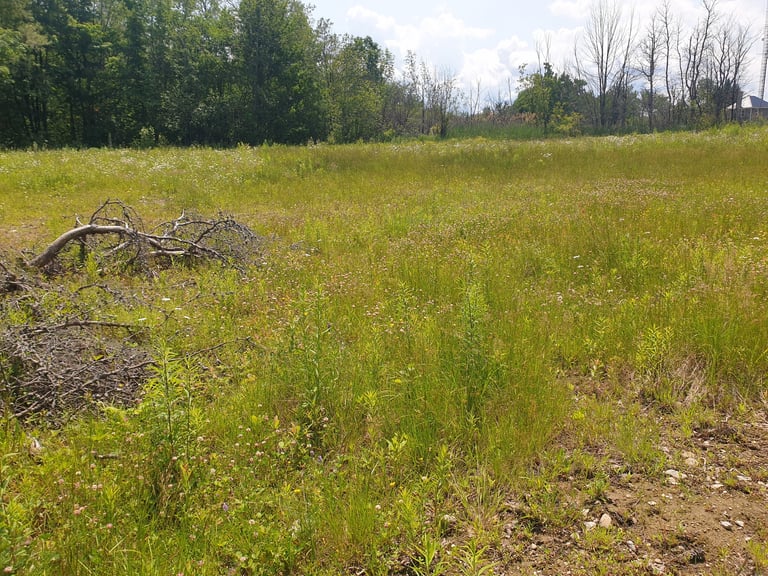
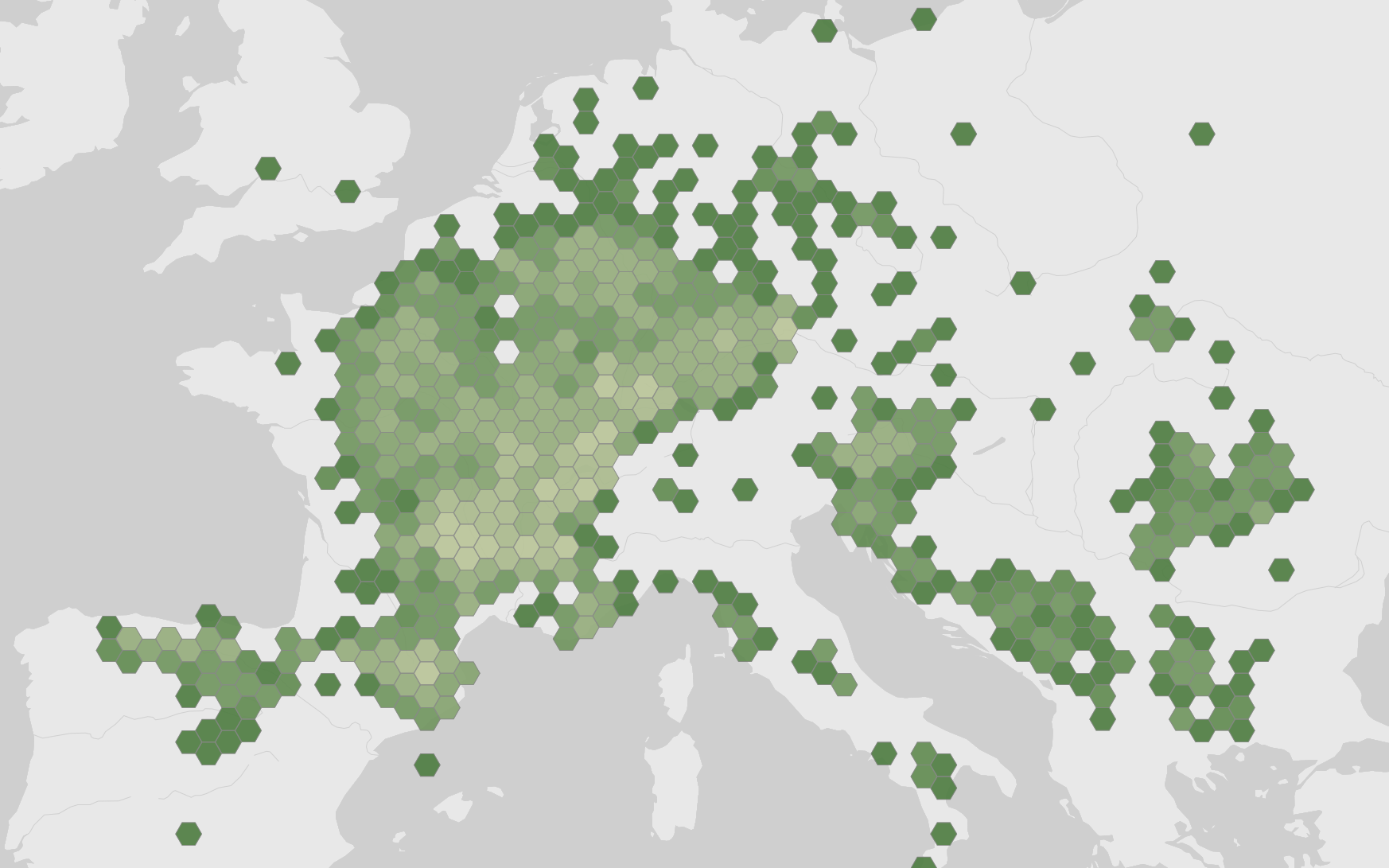
Genista sagittalis is native to a broad swath of west-central and southern Europe, occurring in Albania, Austria, Belgium, Bulgaria, Czechia, Slovakia, France, Germany, Greece, Italy, the Netherlands, the northwestern Balkan Peninsula, Romania, Spain, Switzerland, Ukraine, and northwestern Türkiye. It has also become established outside its native range in Poland.
The species occupies a temperate climate zone spanning west-central and southern Europe to northwestern Türkiye. Observation records show a seasonal pattern, with counts rising sharply in late spring and peaking around June, consistent with the plant's active growing and flowering period, before tapering off through the autumn and winter months. These figures reflect how often the plant was observed and reported, not its actual abundance or the full extent of its range.
Growth and Form
Genista sagittalis grows as a subshrub — a low, woody-based plant that stays close to the ground rather than developing into a tall shrub or tree. Its winged stems likely contribute to its compact, mat-forming habit, a growth strategy well suited to open grassland and scrub habitats across its European range.
Ecology and Relationships
The winged broom supports a notably wide range of bee visitors to its flowers, including several Andrena mining bees, Anthidium loti, Anthophora aestivalis, and bumblebees such as Bombus terrestris and the scarce Bombus inexspectatus. A flower visit does not confirm pollination, but the sheer number of bee genera recorded suggests the plant is a useful nectar or pollen source within its grassland habitats.
It also serves as food for a variety of animals. Birds recorded feeding on it include the common redpoll, skylark, rock partridge, mallard, greylag goose, citril finch, and common rosefinch. Moths such as Aspitates gilvaria and Charissa pullata are also recorded, along with the green hairstreak butterfly, Callophrys rubi, whose caterpillars are known to use broom species as host plants.
Uses and Human Relationships
In some cultures, the winged broom is associated with good luck, and it has been planted in gardens for this positive symbolism rather than for any practical or culinary use.
Fun Facts
- The plant's full scientific name, given by Linnaeus, is Genista sagittalis L.
- Its two most distinctive common names, arrow-jointed broom and winged broom, both come from the unusual flattened, angled stems rather than from its leaves or flowers.
- A subspecies, Genista sagittalis subsp. delphinensis, known as rock broom, has been singled out by the Royal Horticultural Society with its Award of Garden Merit.
Photos
Photographs from by petitcrabe via iNaturalist, licensed under CC BY 4.0., via iNaturalist, licensed under CC0 1.0., by Denys Vynokurov via iNaturalist, licensed under CC BY 4.0., by Claude Kolwelter via iNaturalist, licensed under CC BY 4.0., by bernhard_hiller via iNaturalist, licensed under CC BY 4.0., by R Heath via iNaturalist, licensed under CC BY 4.0., by Yokki via iNaturalist, licensed under CC BY 4.0., by Oriol Sastre via iNaturalist, licensed under CC BY 4.0., by Anne Heckmann via iNaturalist, licensed under CC BY 4.0., by Christoph Moning via iNaturalist, licensed under CC BY 4.0., by Michael Grundner via iNaturalist, licensed under CC BY 4.0., by Tom Field via iNaturalist, licensed under CC BY 4.0., by Denis Bastianelli via iNaturalist, licensed under CC BY 4.0., by Roland Godon via iNaturalist, licensed under CC BY 4.0., and by Lídia Carrera via iNaturalist, licensed under CC BY 4.0., credited on each photo.
Ecology and classification
Growth habit
- Subshrub
Classification
- Phylum
- Tracheophyta
- Class
- Magnoliopsida
- Order
- Fabales
- Family
- Fabaceae
- Genus
- Genista
- Species
- Genista sagittalis
Sources
- GBIF Species names and classification
- iNaturalist Photos
- Wikidata Common names and conservation status
- Wikipedia Summary extract
- Plants of the World Online Native range, life form and climate (WCVP)
- GloBI What it eats, what eats it, parasites and pollinators
- trophiCH